

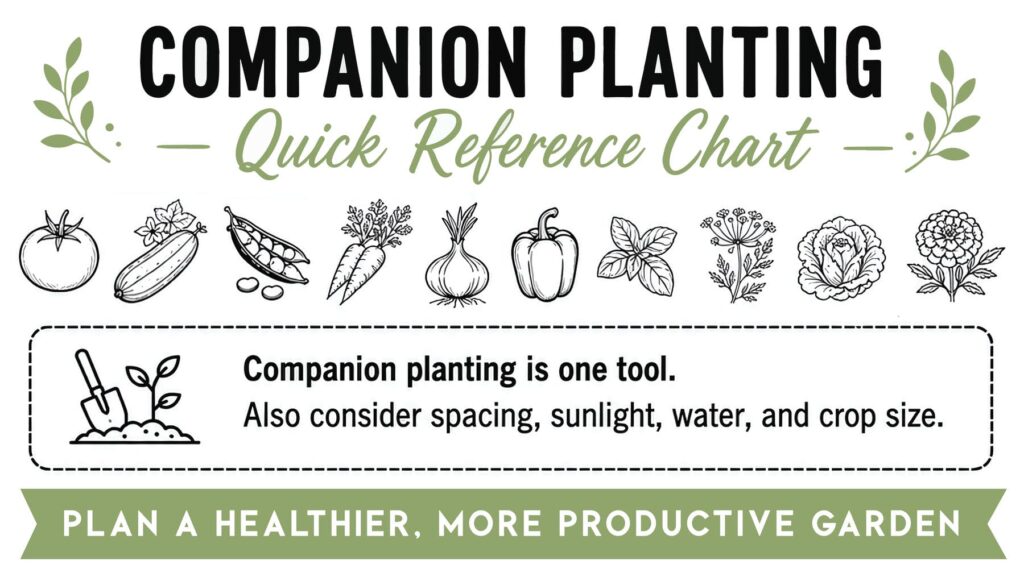
A companion planting chart helps you plan which vegetables, herbs, and flowers to grow near one another in your garden. It provides a quick reference when arranging raised beds, vegetable rows, containers, or a square-foot garden.
Our free printable companion planting charts show commonly recommended plant combinations, plants that may compete with one another, and useful flowers and herbs to include around food crops. Use the charts as a starting point, then consider the sunlight, spacing, water, soil, and growing conditions each plant needs.
Companion Planting Charts
Choose from our collection of companion planting charts for vegetables, herbs, flowers, raised beds, and small-space gardens.
Some charts provide a simple list of plant pairings, while others use tables, symbols, or individual plant guides to make garden planning easier.
Each chart is available as a printable image and PDF. The printables are designed primarily for standard US Letter paper.
To download a companion planting chart, click the printable image or PDF link and save it to your computer. Print the chart on US Letter paper using portrait orientation and the actual size or 100 percent scale setting.
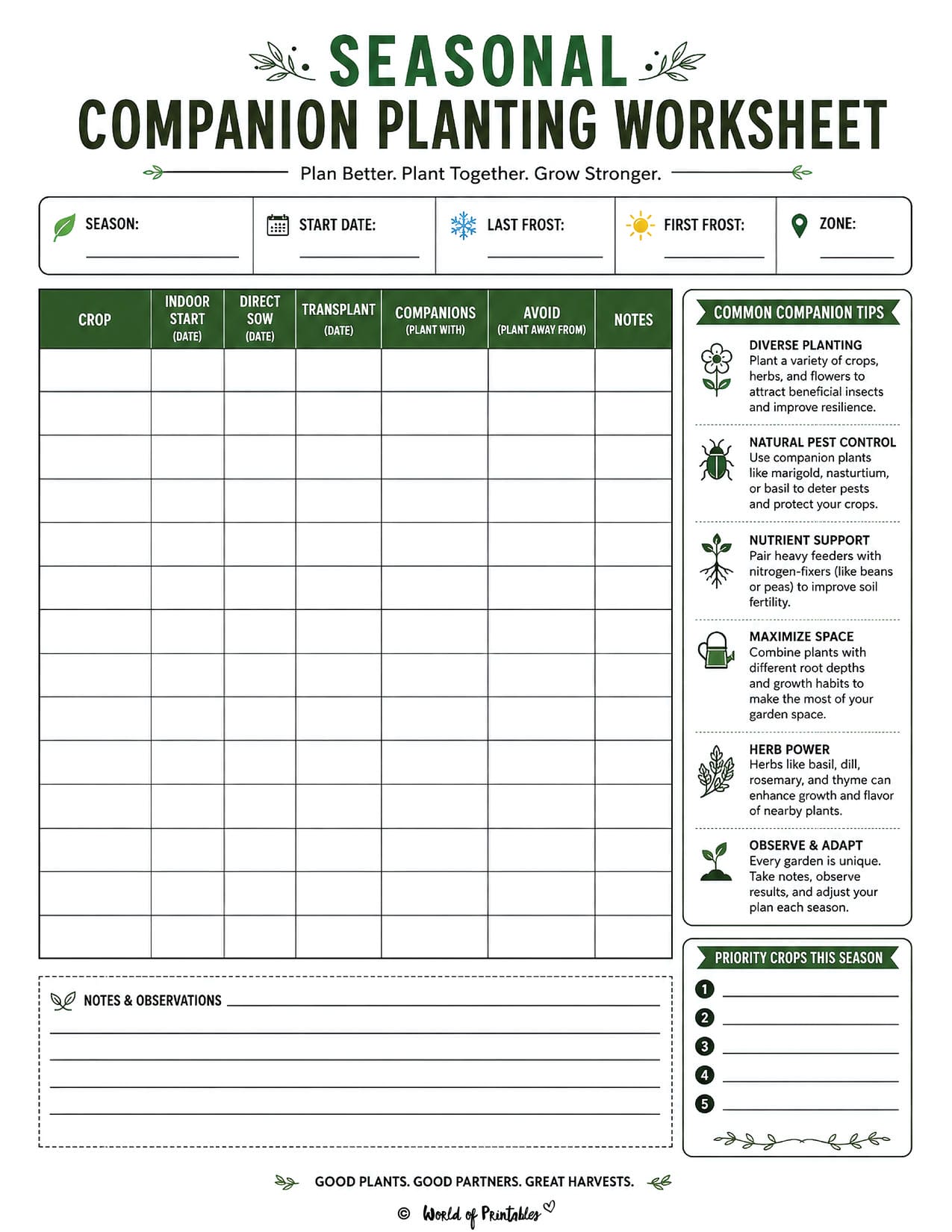
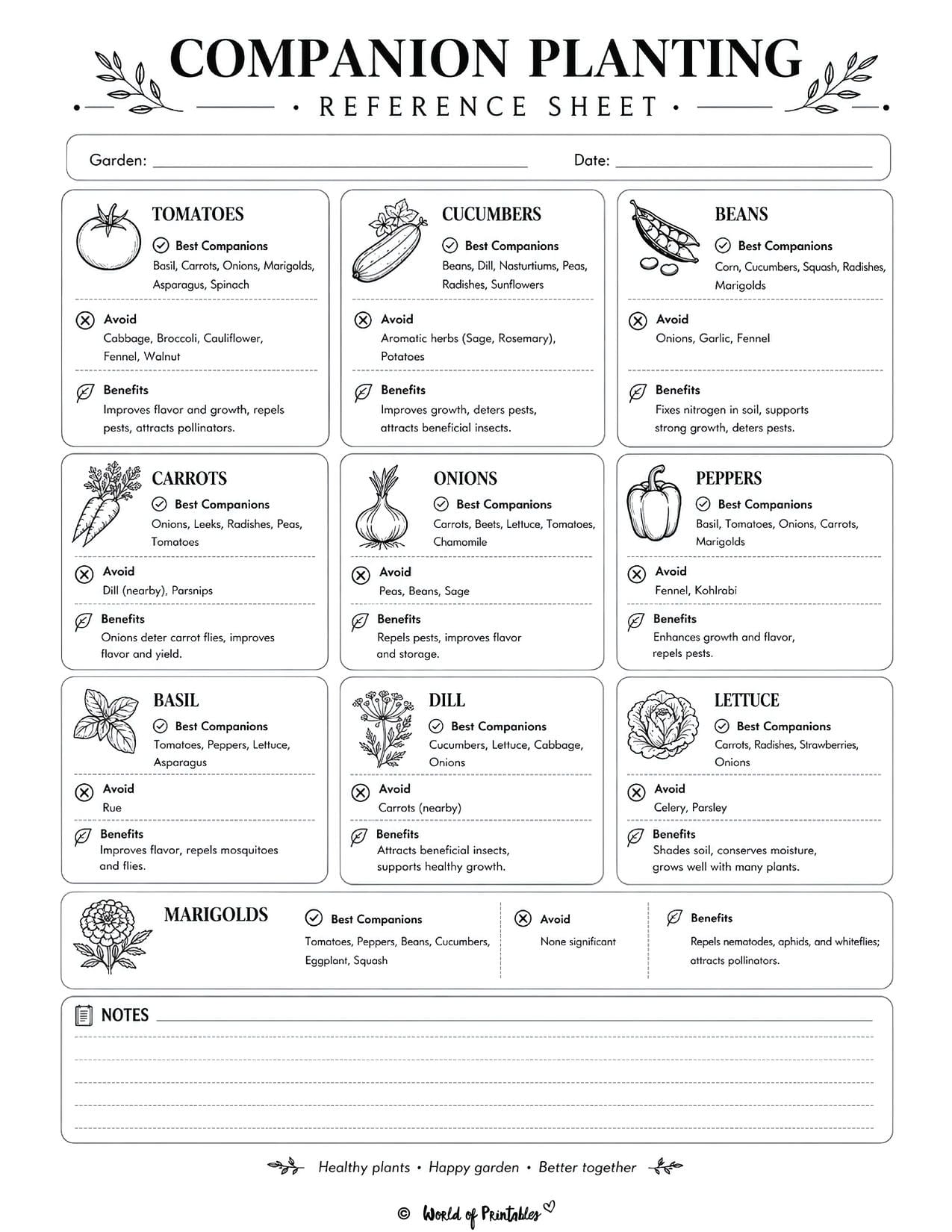
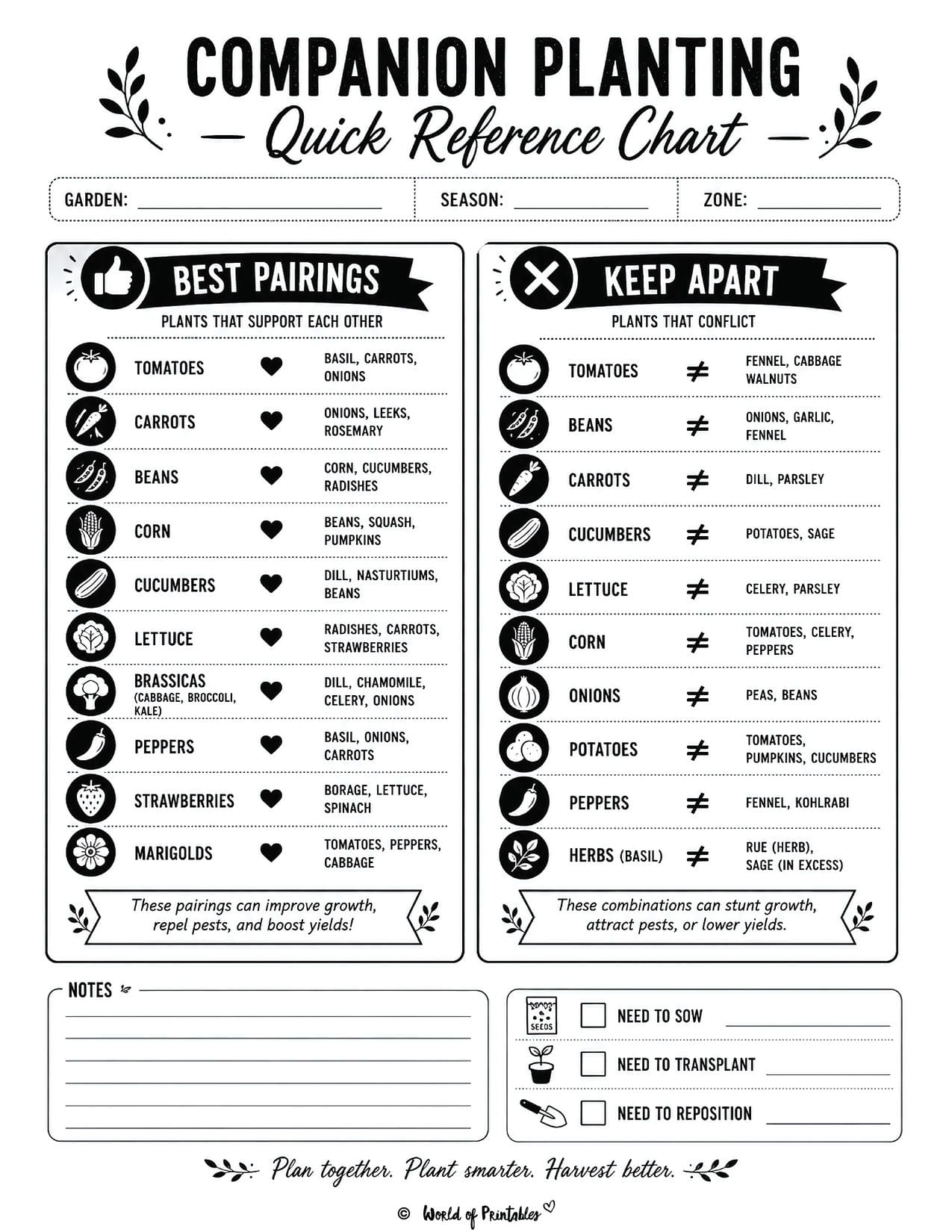
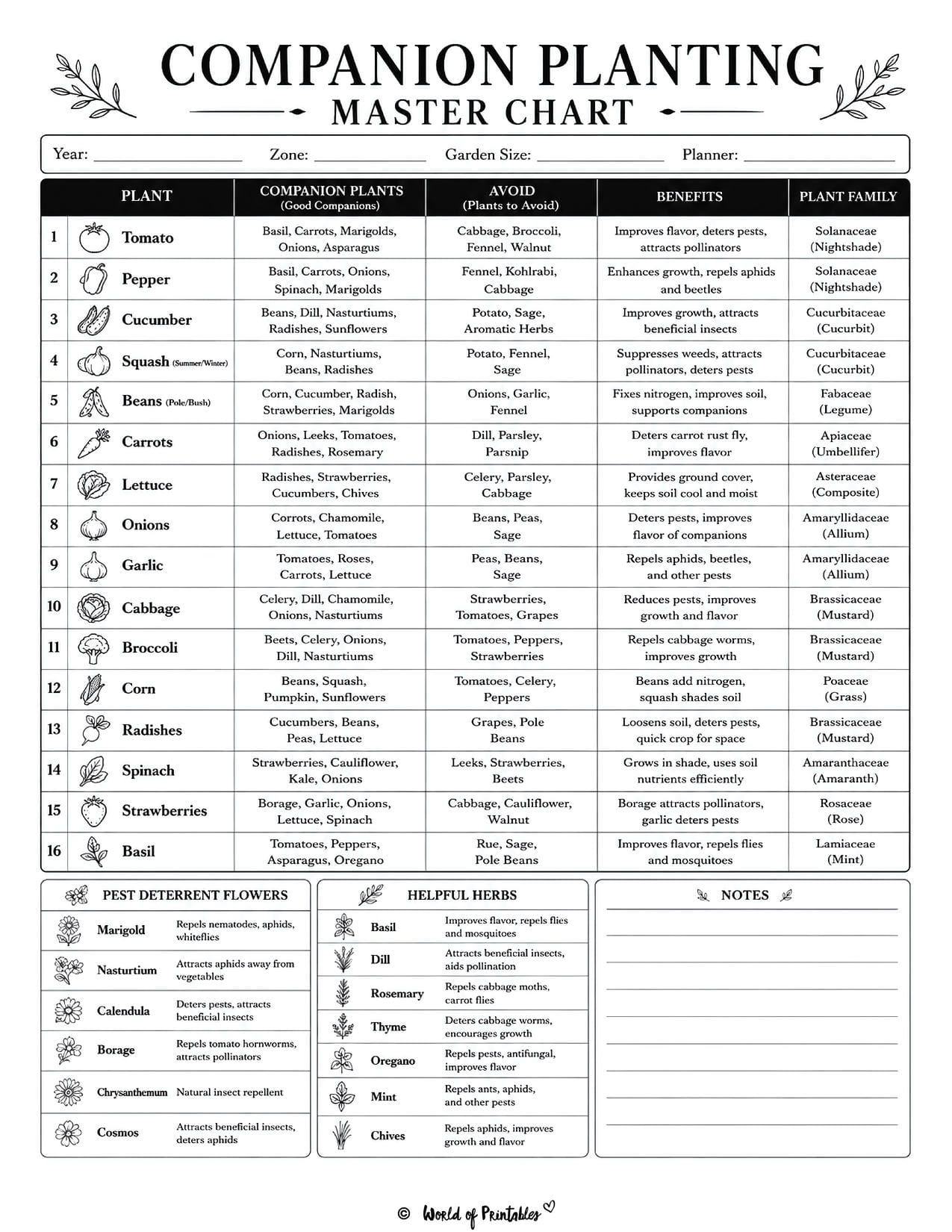
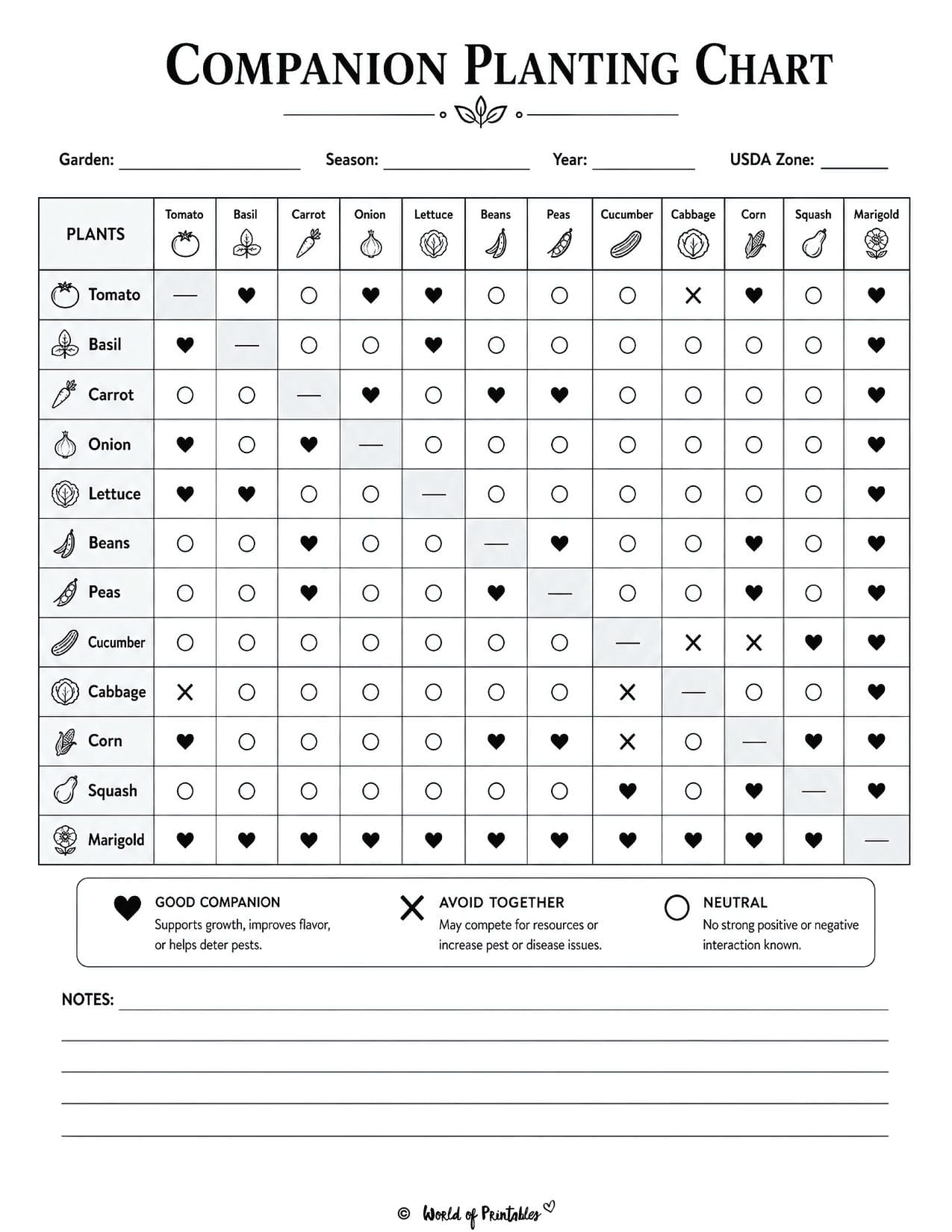
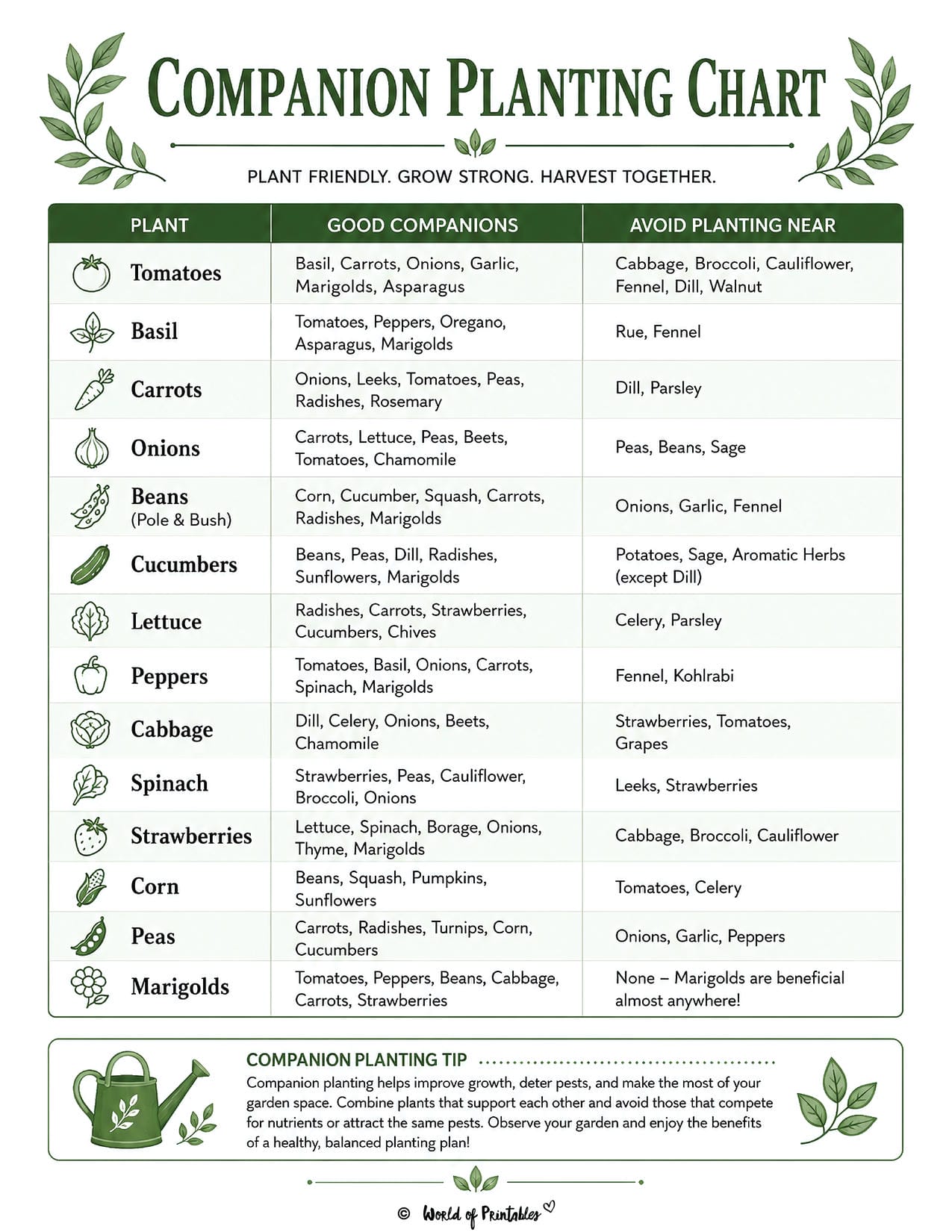
Vegetable Companion Planting Chart
Use this chart to find commonly recommended companions for popular garden vegetables, including tomatoes, peppers, cucumbers, carrots, beans, lettuce, squash, and cabbage-family crops.
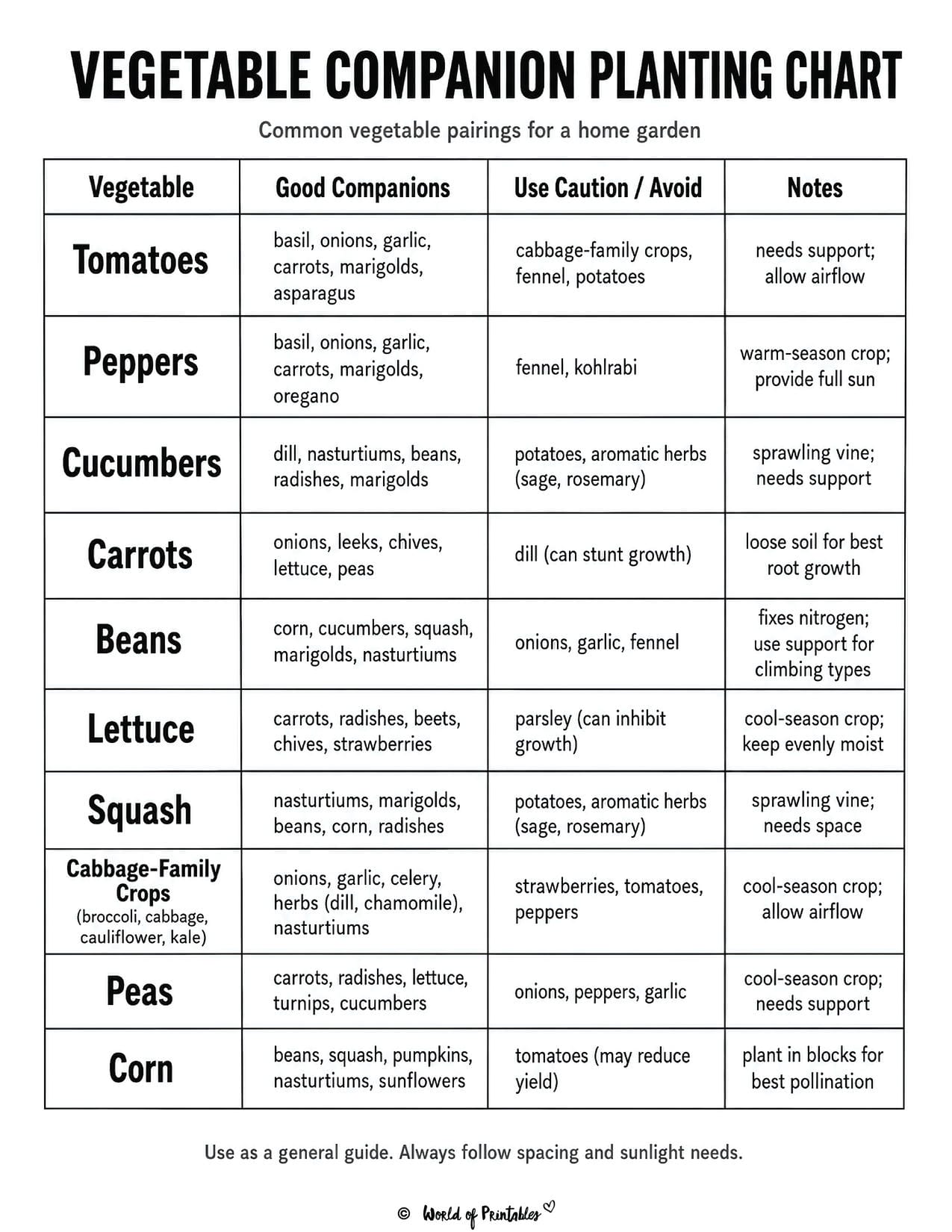
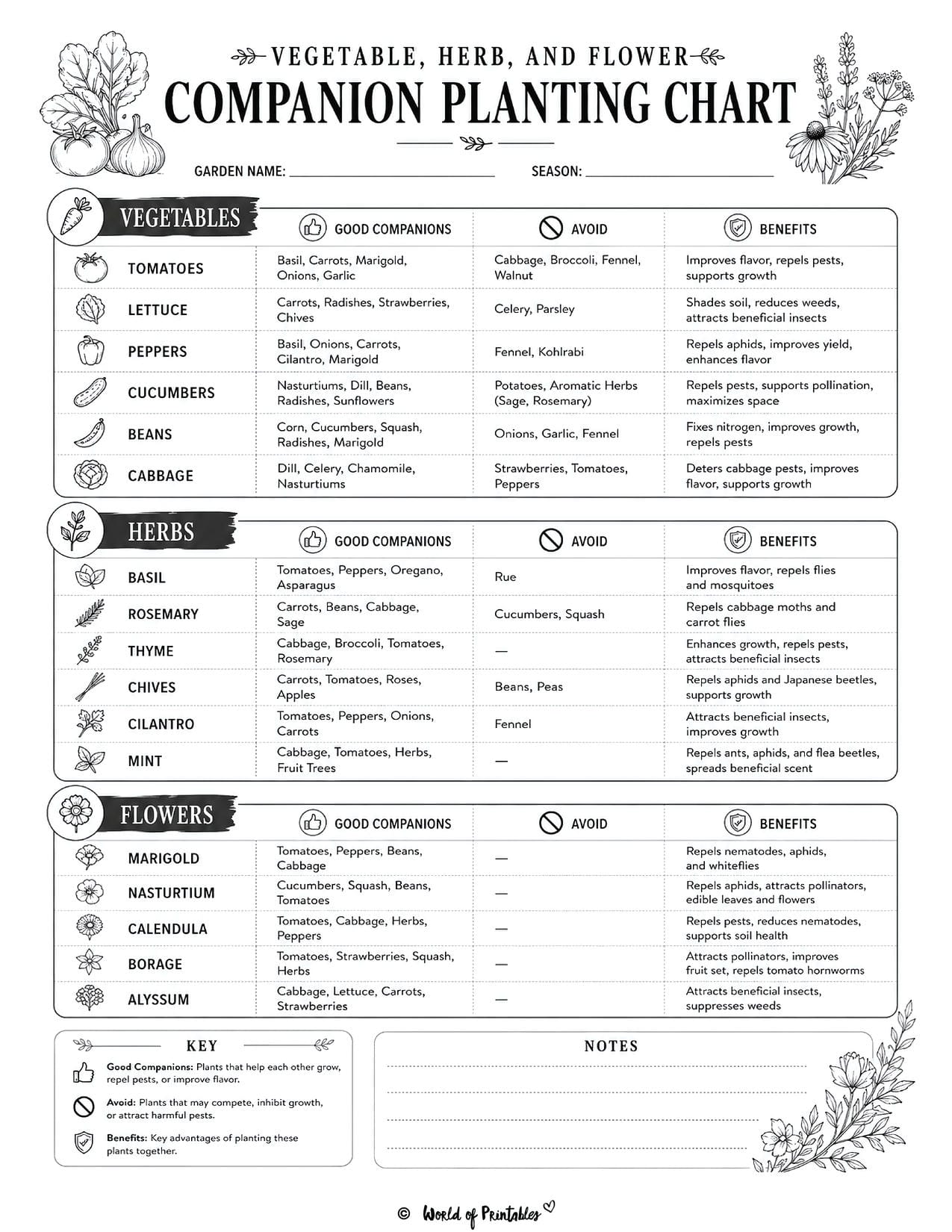
Companion Planting Chart With Flowers and Herbs
This chart includes herbs and flowers that can be planted throughout a vegetable garden to add diversity and attract pollinators and beneficial insects.
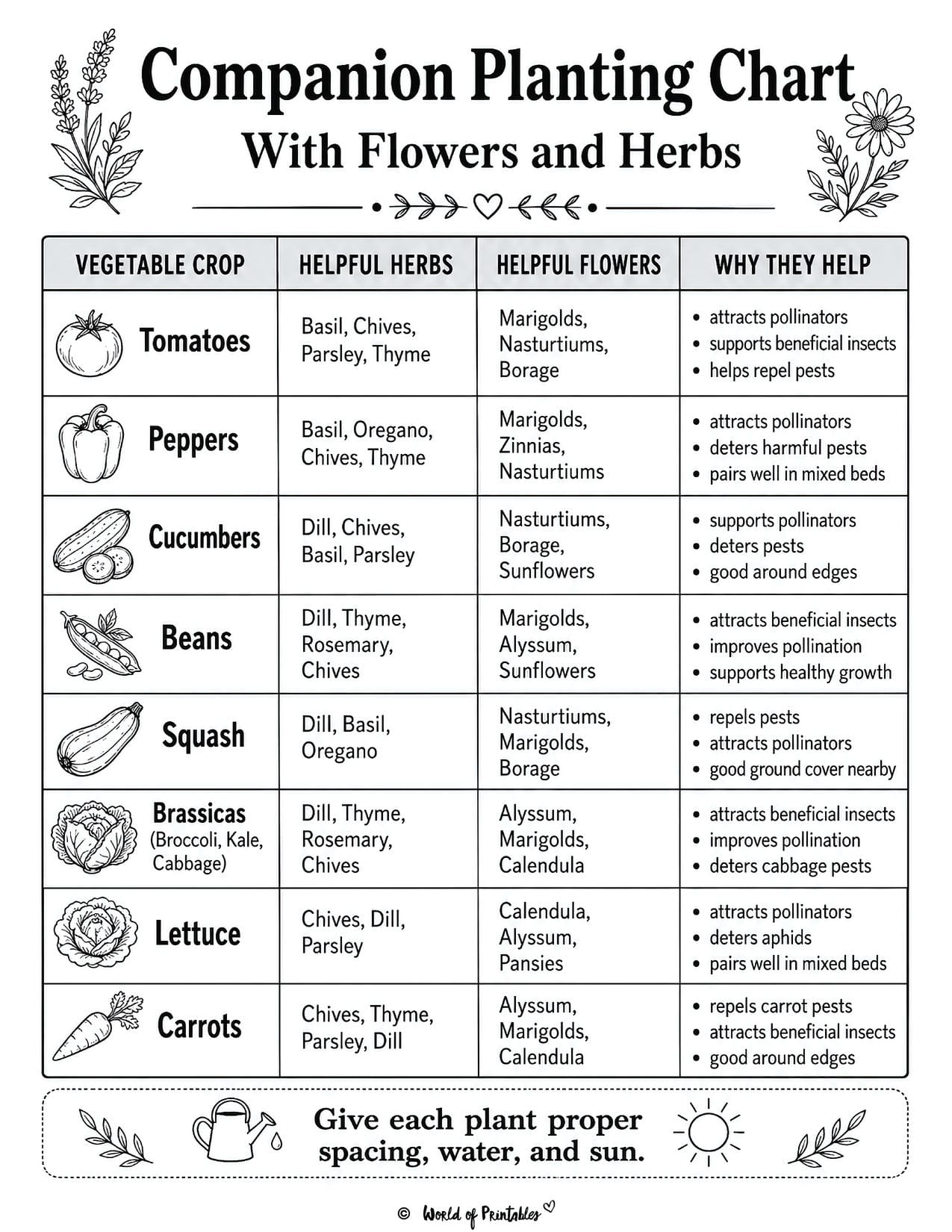
Companion Planting Guide
Look up a vegetable to see suggested plants to grow nearby and combinations that may be less suitable.
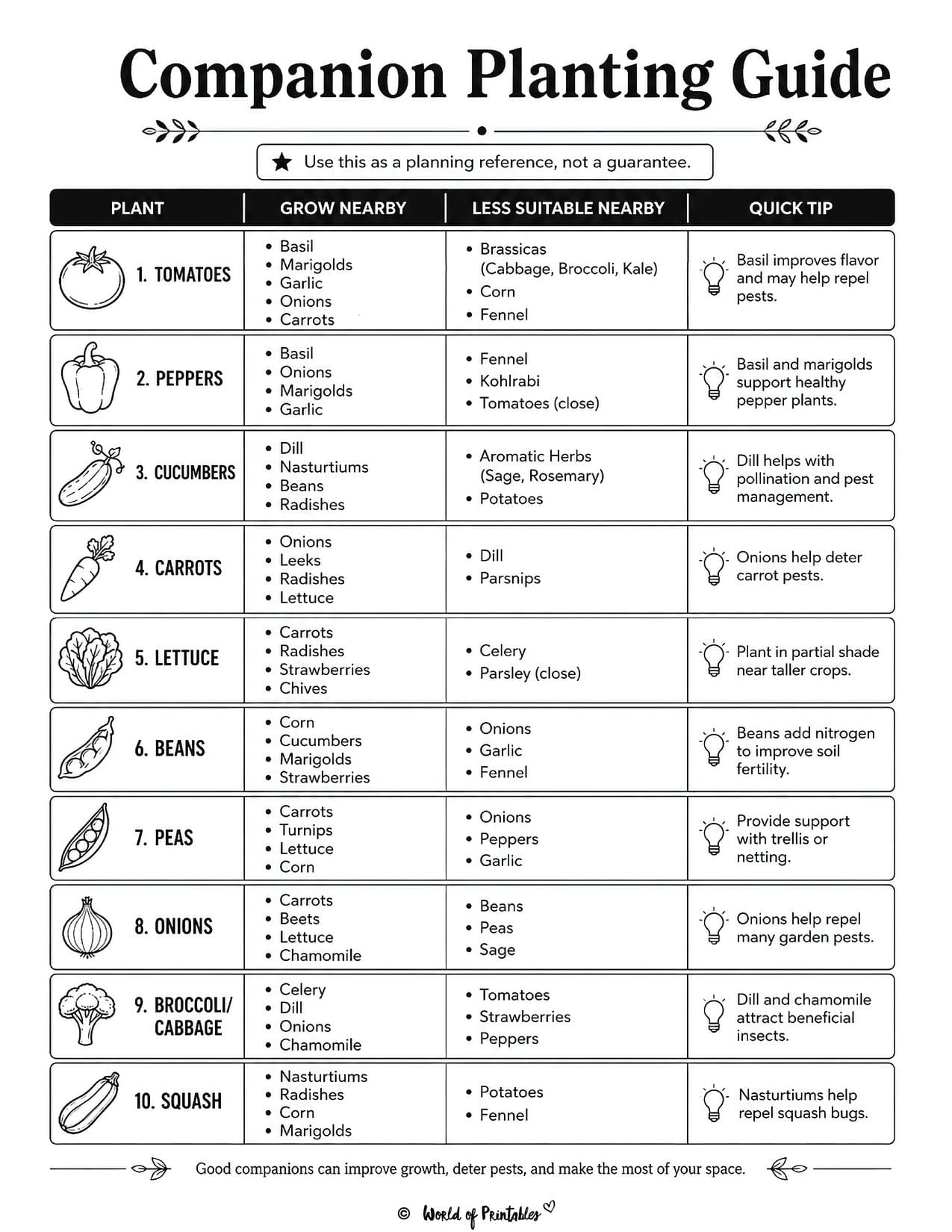
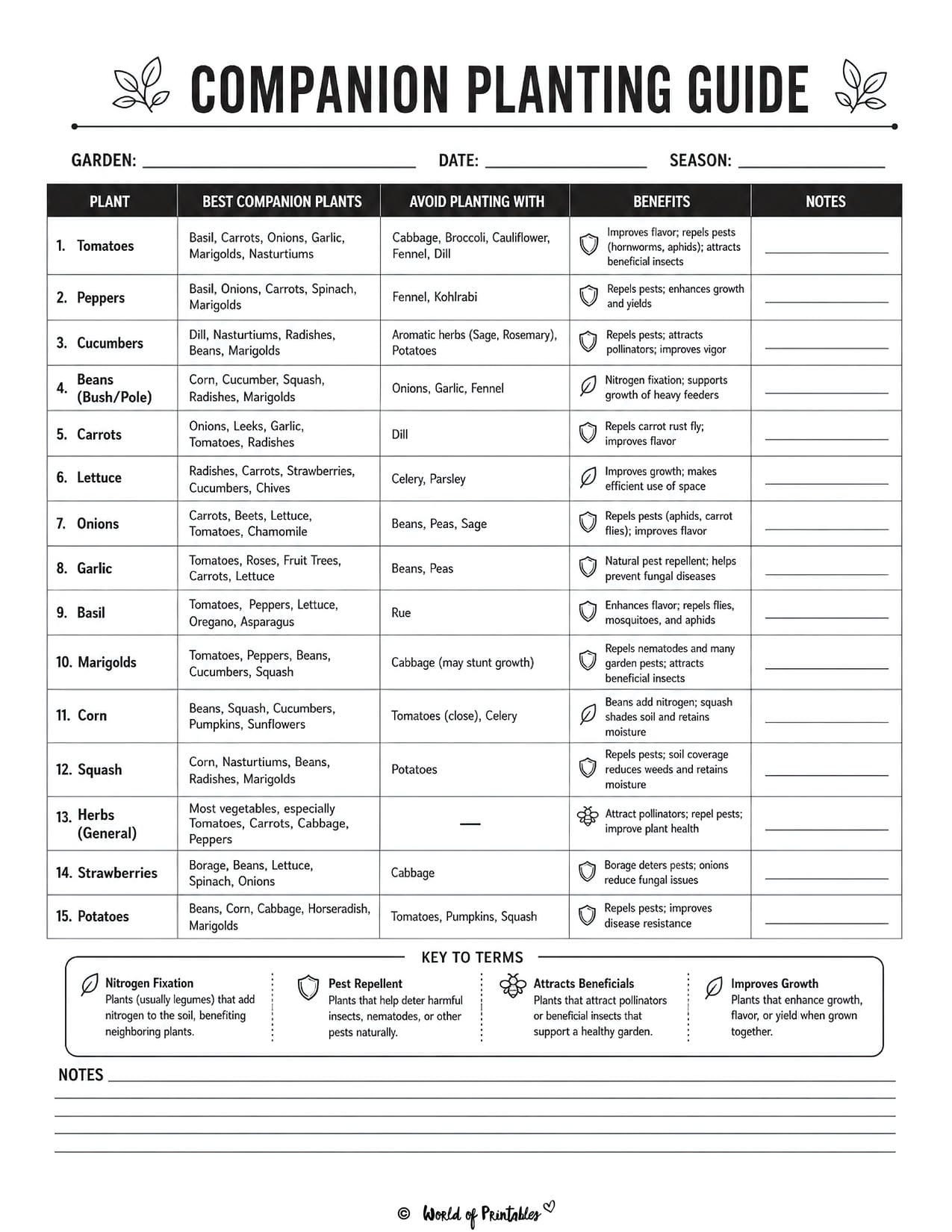
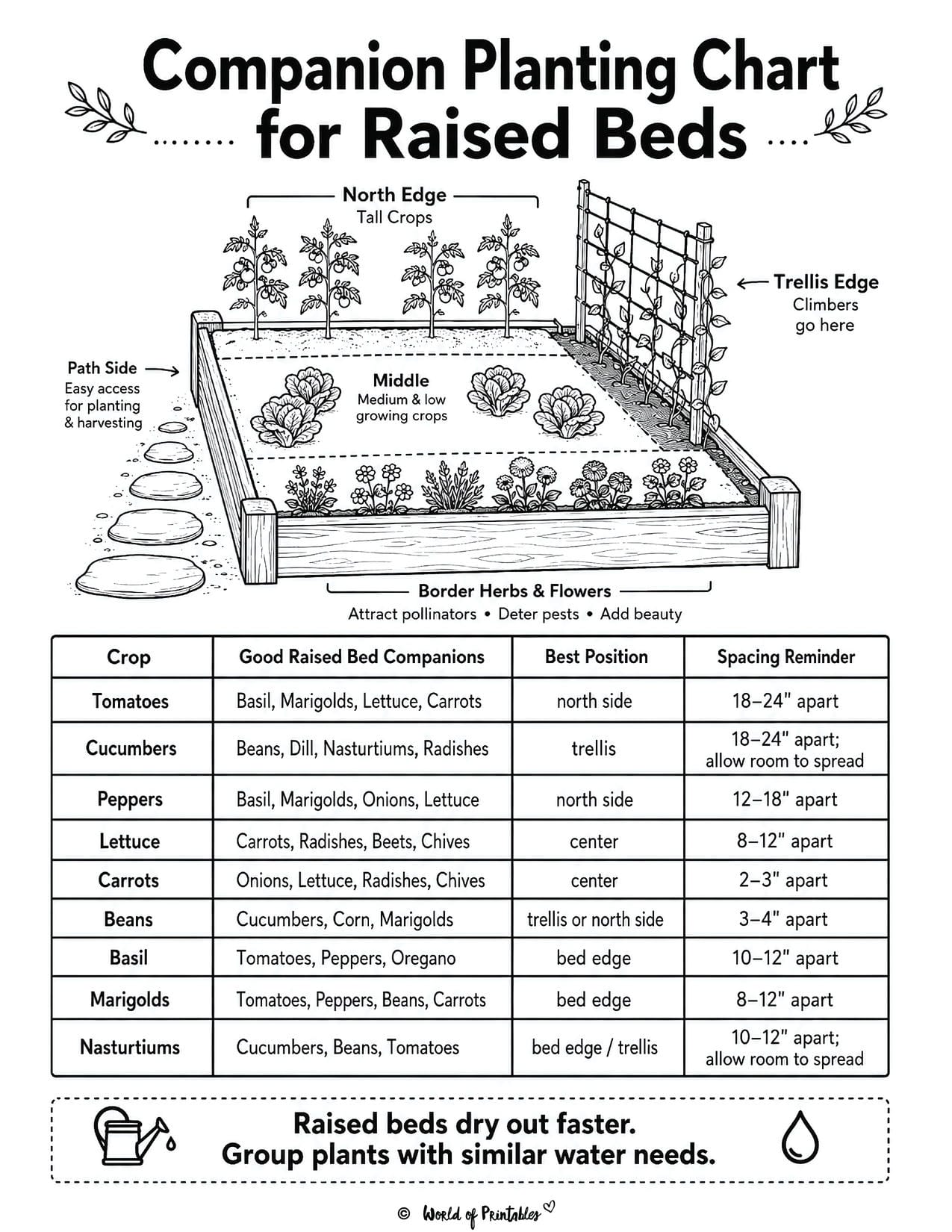
Companion Planting Chart for Raised Beds
Use this printable when arranging vegetables, flowers, and herbs within a raised garden bed.
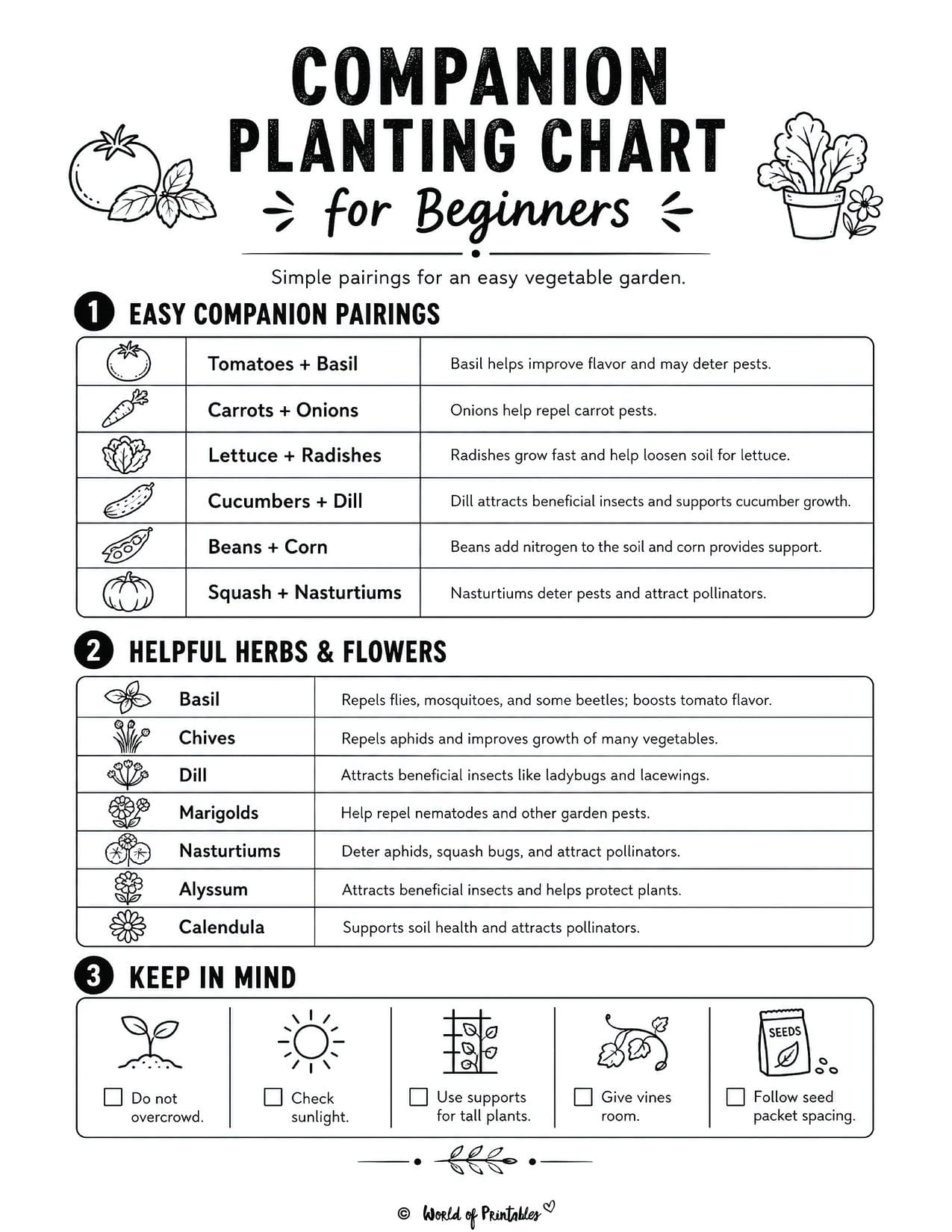
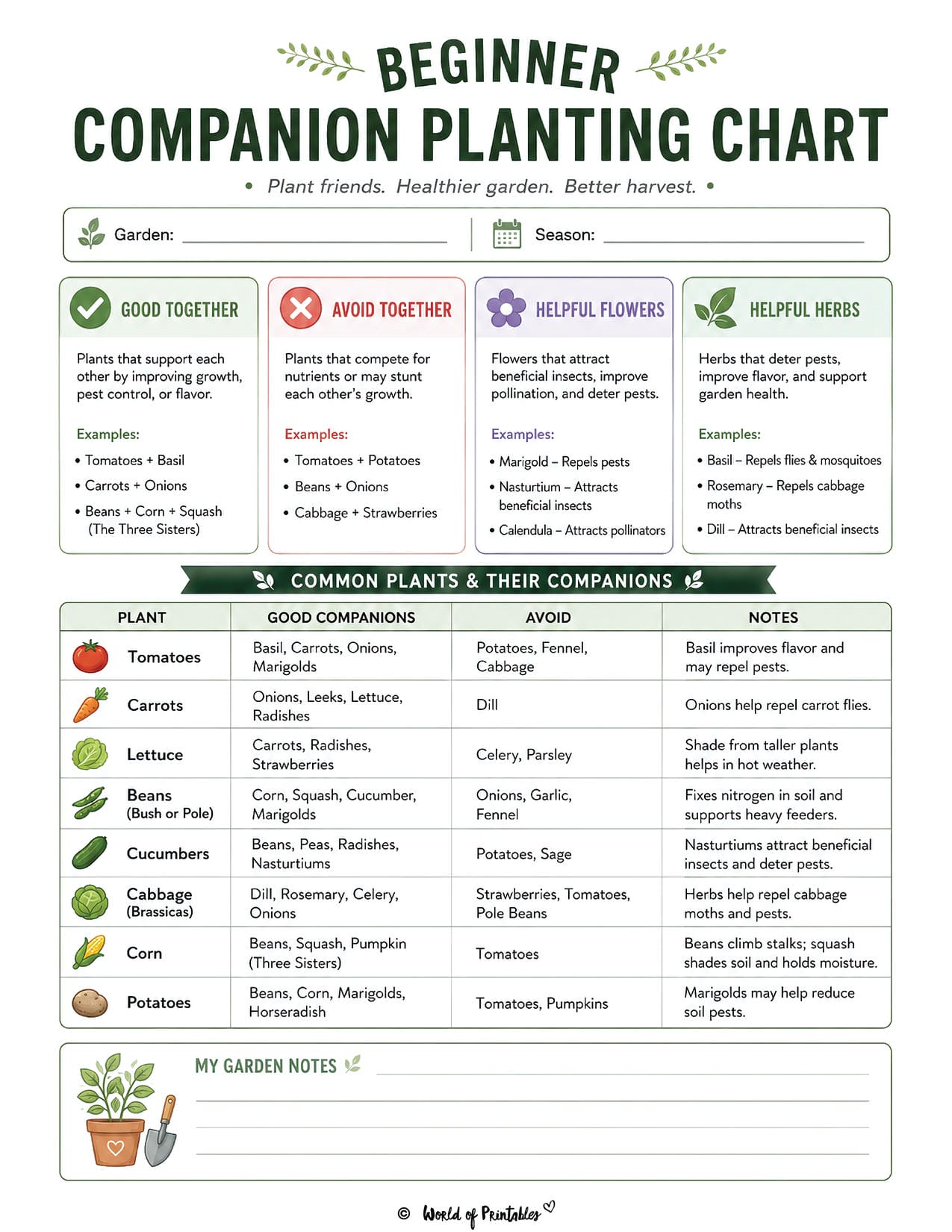
Companion Planting Chart for Beginners
This simplified chart focuses on familiar garden crops and easy-to-understand planting combinations.
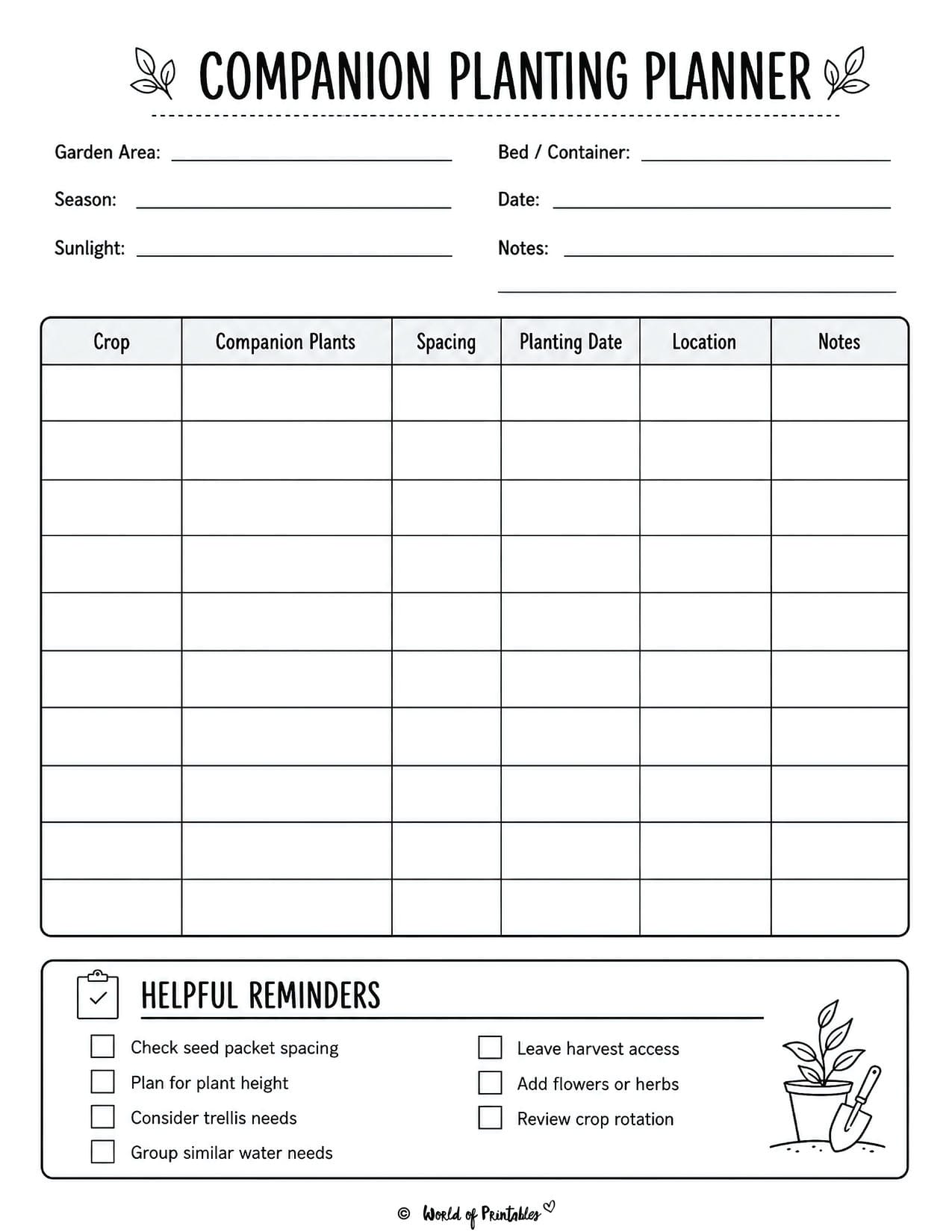
Companion Planting Grid
Use the grid to compare multiple plants and quickly identify commonly recommended combinations.
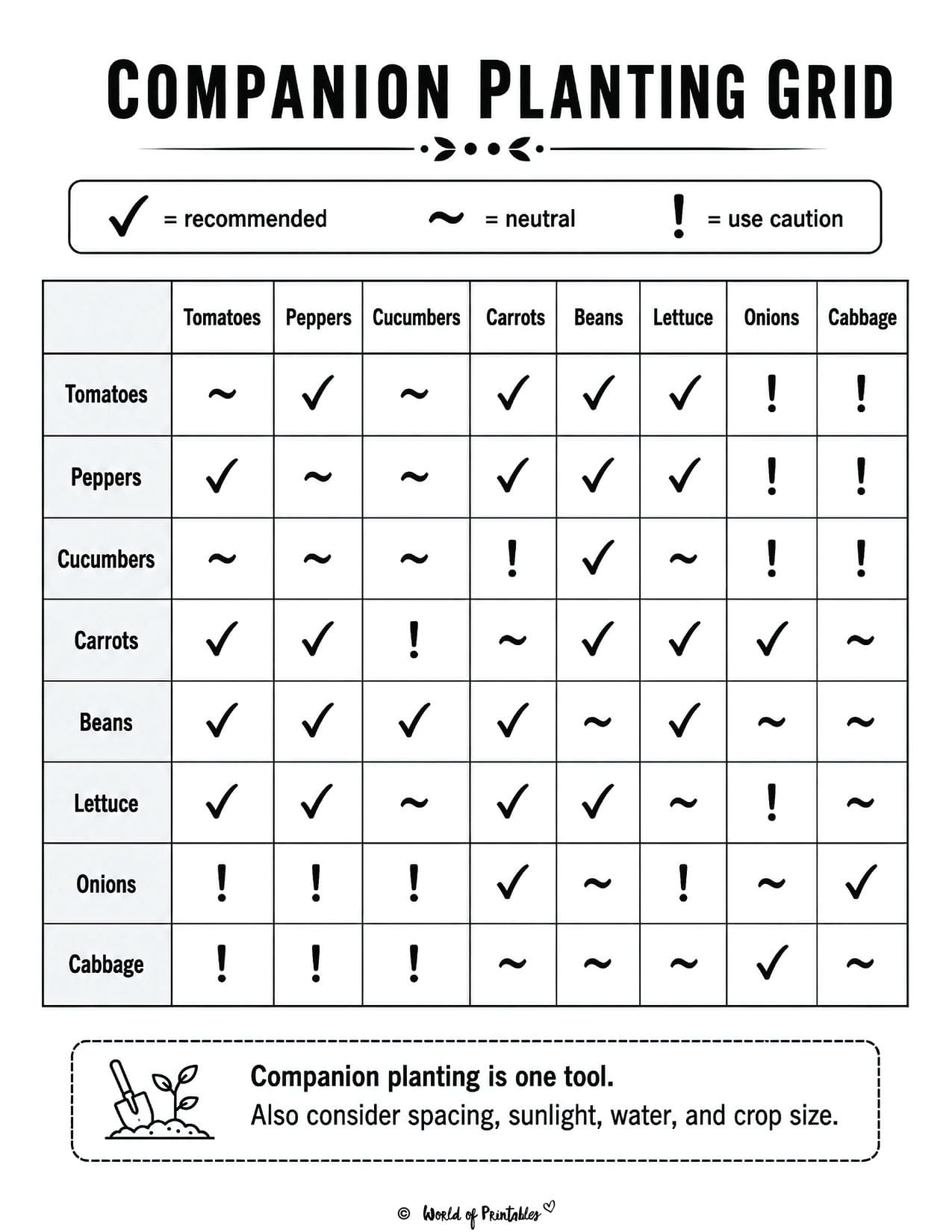
Herb Companion Planting Chart
Find vegetables and other herbs that can be grown near basil, dill, parsley, chives, thyme, sage, rosemary, oregano, and mint.
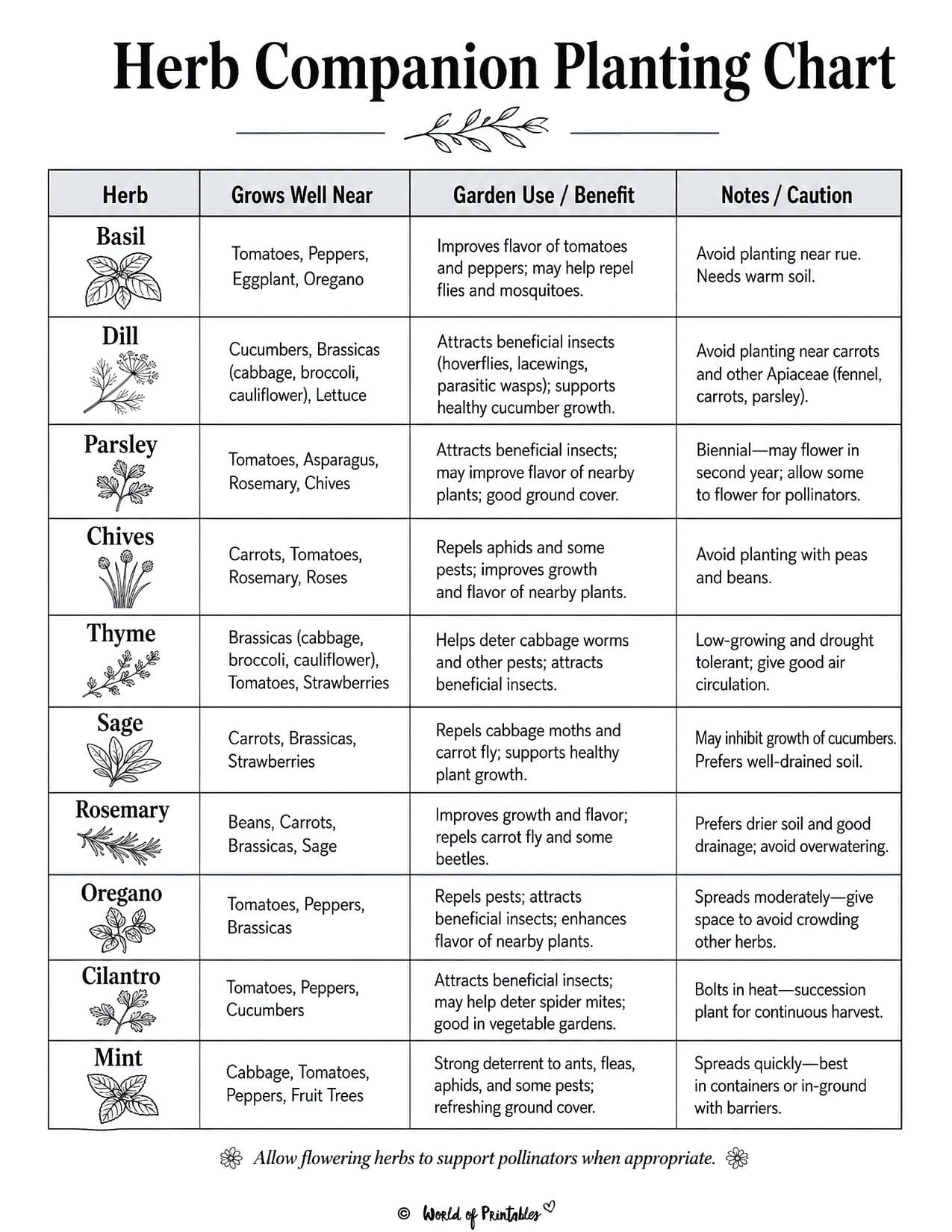
Flower Companion Planting Chart
Use this chart to add flowers such as marigolds, nasturtiums, calendula, alyssum, and sunflowers to your vegetable garden.
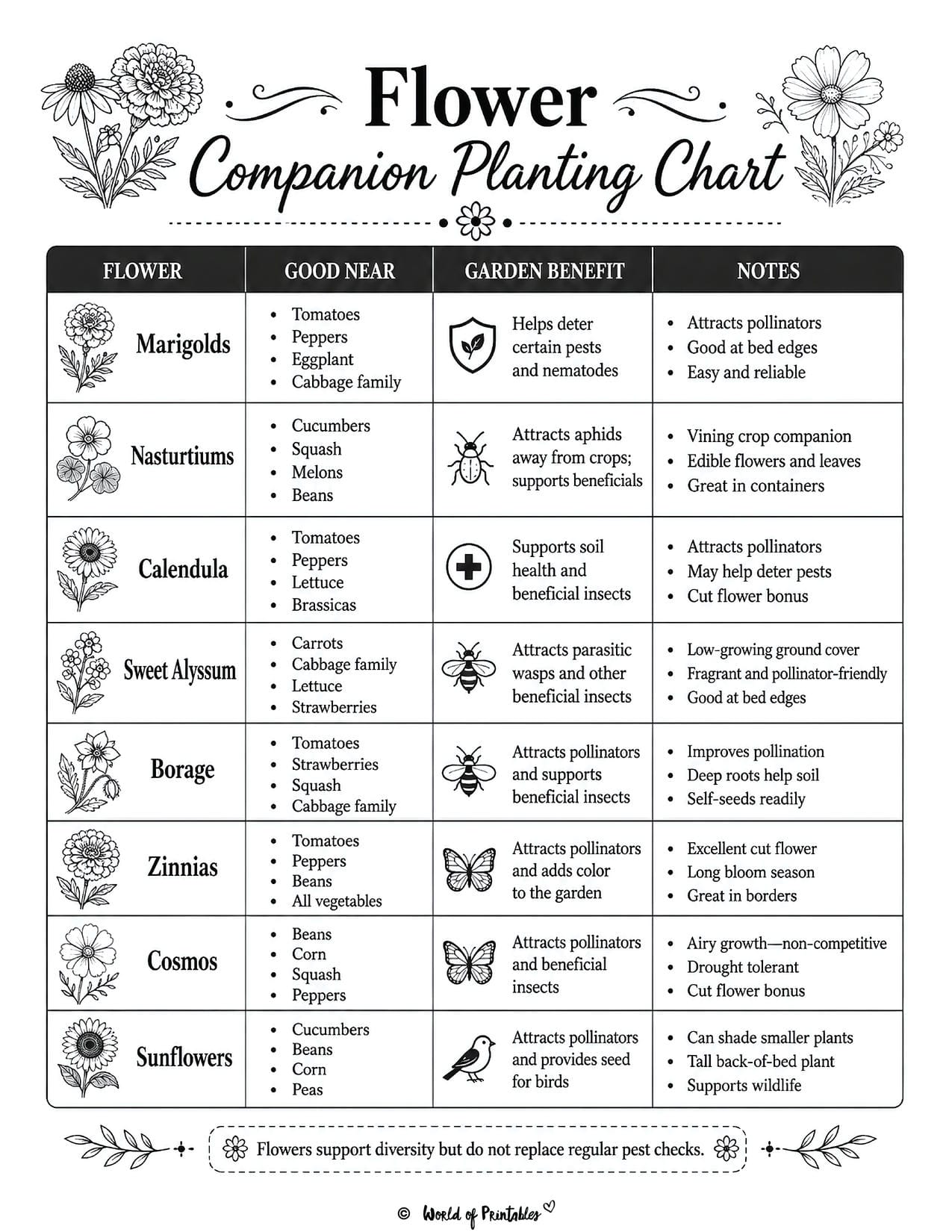
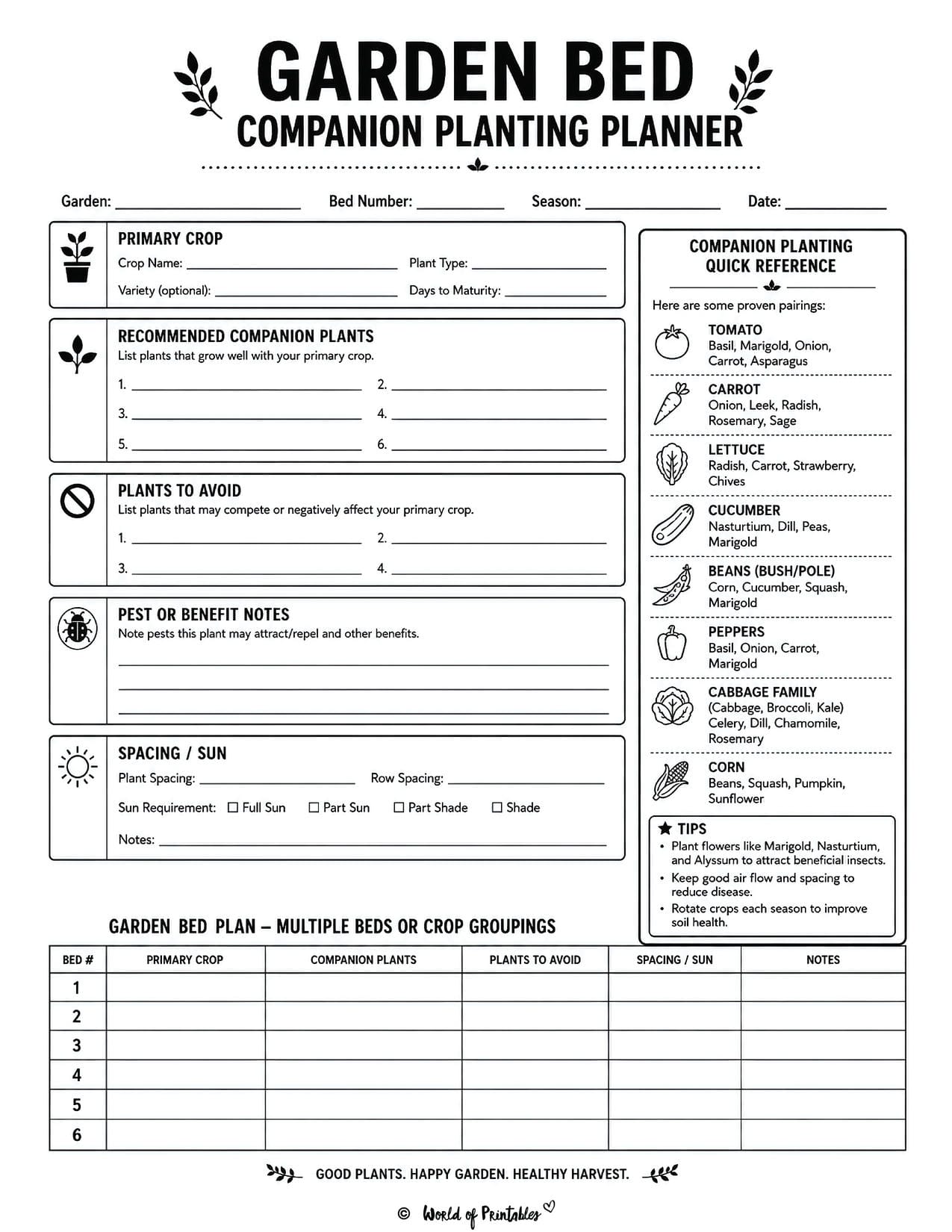
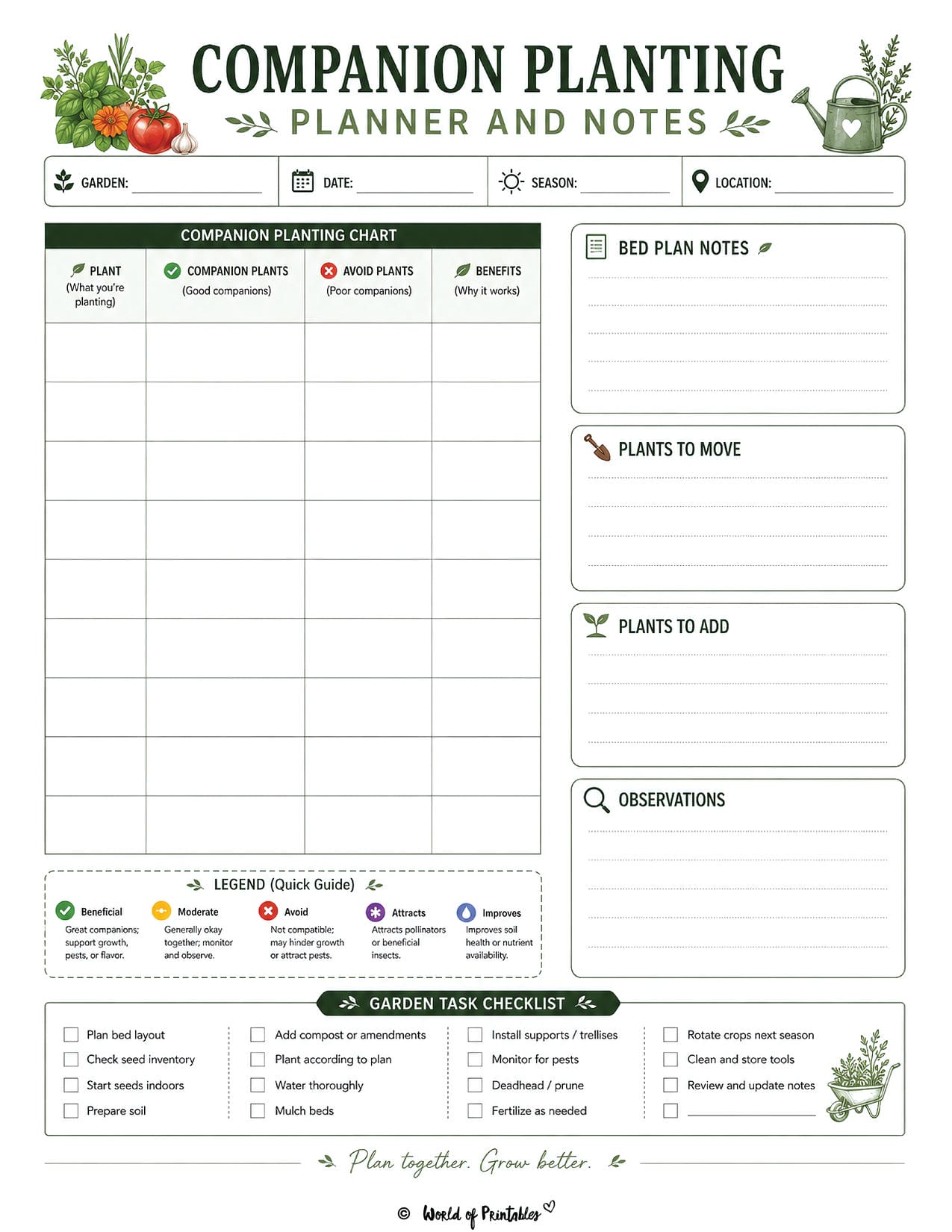
Companion Planting Planner
Plan your own garden layout by recording each crop, its companions, spacing requirements, and planting location.
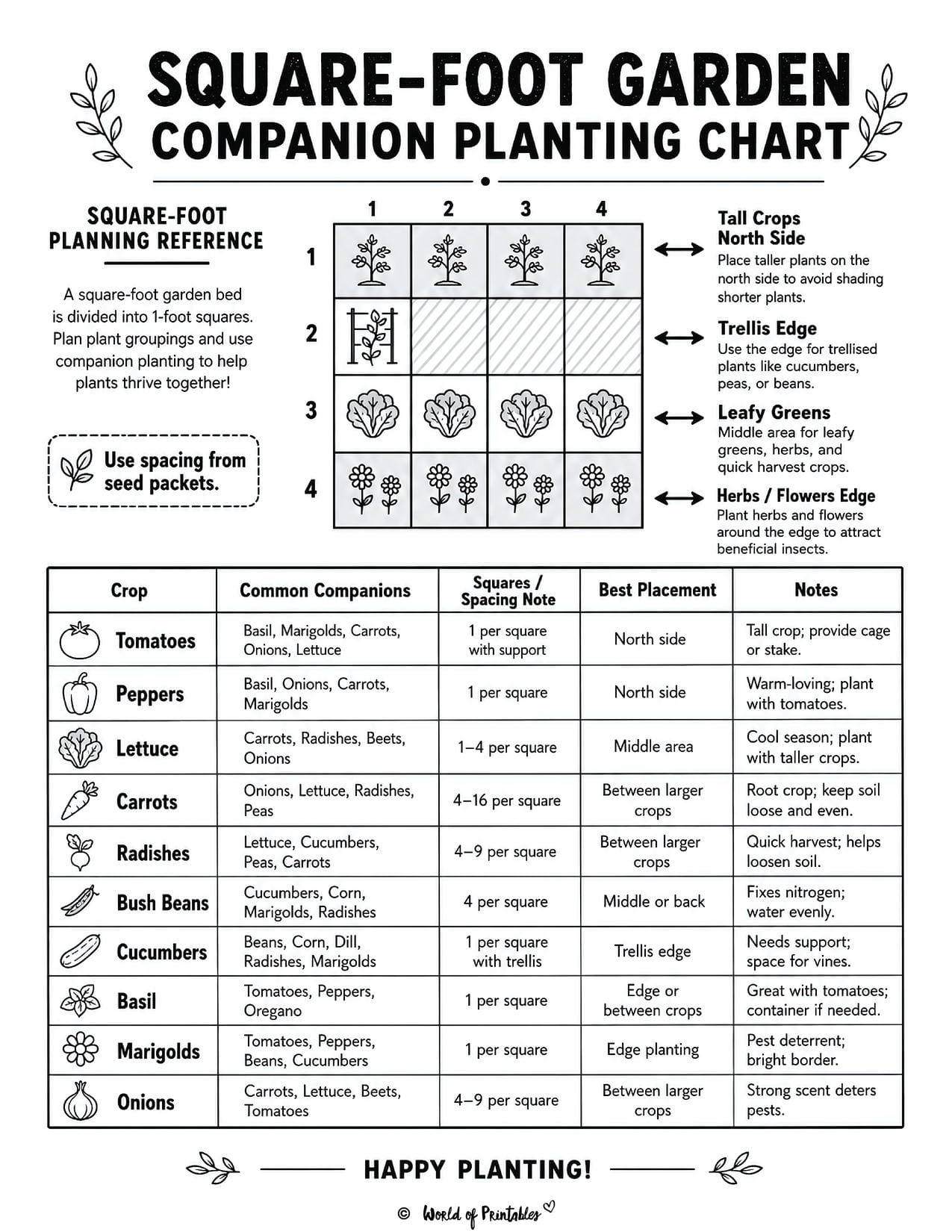
Square-Foot Garden Companion Planting Chart
Use this chart alongside the spacing instructions on your seed packets when planning a compact square-foot or grid-based garden.
What Is Companion Planting?
Companion planting is the practice of growing different plant species close together because their growth habits or characteristics may complement one another.
Useful plant combinations can make better use of garden space, provide shade or physical support, attract pollinators, support beneficial insects, or allow crops with different harvest times to share the same area. Increased plant diversity may also make a vegetable garden more resilient than a large planting of a single crop.
Companion planting does not mean that placing two plants beside one another will automatically increase the harvest or prevent every pest. Many traditional companion planting claims are based on observation or gardening folklore rather than strong research.
Use the chart as a planning tool rather than a guarantee.
How To Use the Companion Planting Chart
Begin by listing the vegetables you want to grow.
Find each vegetable on the chart and look at the suggested companions. You can then sketch a garden layout that groups compatible plants while still giving every crop enough room, sunlight, water, and airflow.
When planning, consider:
- The mature height and width of each plant
- Recommended plant and row spacing
- Sunlight requirements
- Water requirements
- Root depth
- Planting and harvest dates
- Whether the plant needs a trellis or support
- Whether a tall crop will shade a shorter crop
- How easily you will be able to reach each plant
- Crop rotation plans for future seasons
Always follow the spacing information on the seed packet or plant label. Companion planting does not mean crowding several plants into a space designed for one.
Keep Notes About What Works
Companion planting results can differ from one garden to another.
Use a garden planner or notebook to record:
- Where each crop was planted
- Planting and harvest dates
- Varieties grown
- Weather conditions
- Pest problems
- Disease problems
- Pollinator activity
- Yield
- Successful combinations
- Combinations you would change next year
Take photographs during the season so you can compare plant size, shade, and spacing when planning the following year.
Over time, your own records will become more useful than a general list because they reflect the conditions in your garden.
Disclaimer: These companion planting charts are intended as a general garden-planning reference.

Companion planting recommendations vary between sources, and not every traditional pairing has been supported by controlled research. Plant health and productivity depend on many factors, including climate, soil, sunlight, water, spacing, variety, pests, and garden management.

Follow the growing and spacing instructions supplied with your seeds or plants. For advice suited to your location, contact your local Cooperative Extension office or Master Gardener program
COPYRIGHT
The printables that you find here are the copyright of World of Printables – you cannot redistribute or sell any of these printables or templates, although you can link back to our website.

AI TRANSPARENCY: Whilst the majority of our creations have been created completely traditionally, occasionally we utilize AI tools in our design process. We acknowledge the advancements in AI technology and leverage them responsibly to optimize our creative output. However, it is important to note that our utilization of AI does not compromise the human element of our work. Our commitment to delivering high-quality designs through a balanced integration of traditional expertise and AI enhancements remains paramount.