

These air fryer conversion charts make it easy to adapt conventional oven cooking instructions for a countertop air fryer. These charts show how to reduce the temperature and shorten the cooking time so you can use familiar recipes without guessing where to start.
As a general rule, reduce the conventional oven temperature by 25°F and reduce the cooking time by approximately 20 percent. Our printable air fryer conversion charts put these calculations in one convenient place for quick reference while cooking.
Printable Air Fryer Conversion Charts
Choose from our collection of oven to air fryer conversion charts, cooking time guides, and temperature reference sheets.
Some charts provide a simple temperature conversion table, while others include converted cooking times, common food categories, and space to record settings that work well in your own air fryer.
Each chart is available as a printable image and PDF. To download an air fryer conversion chart, click the printable image or PDF link and save it to your computer. Print it on US Letter paper or A4 using portrait orientation and the actual size or 100 percent scale setting.
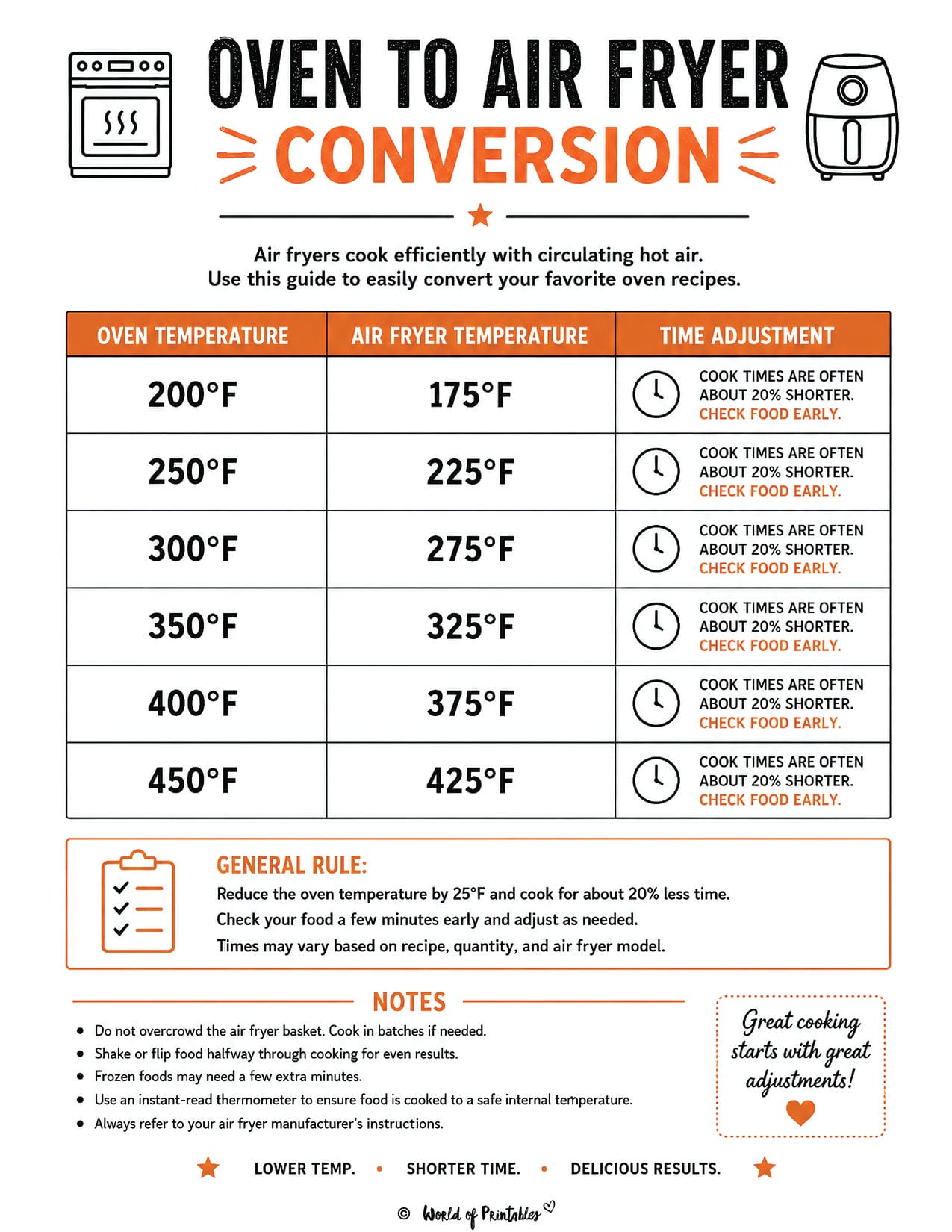
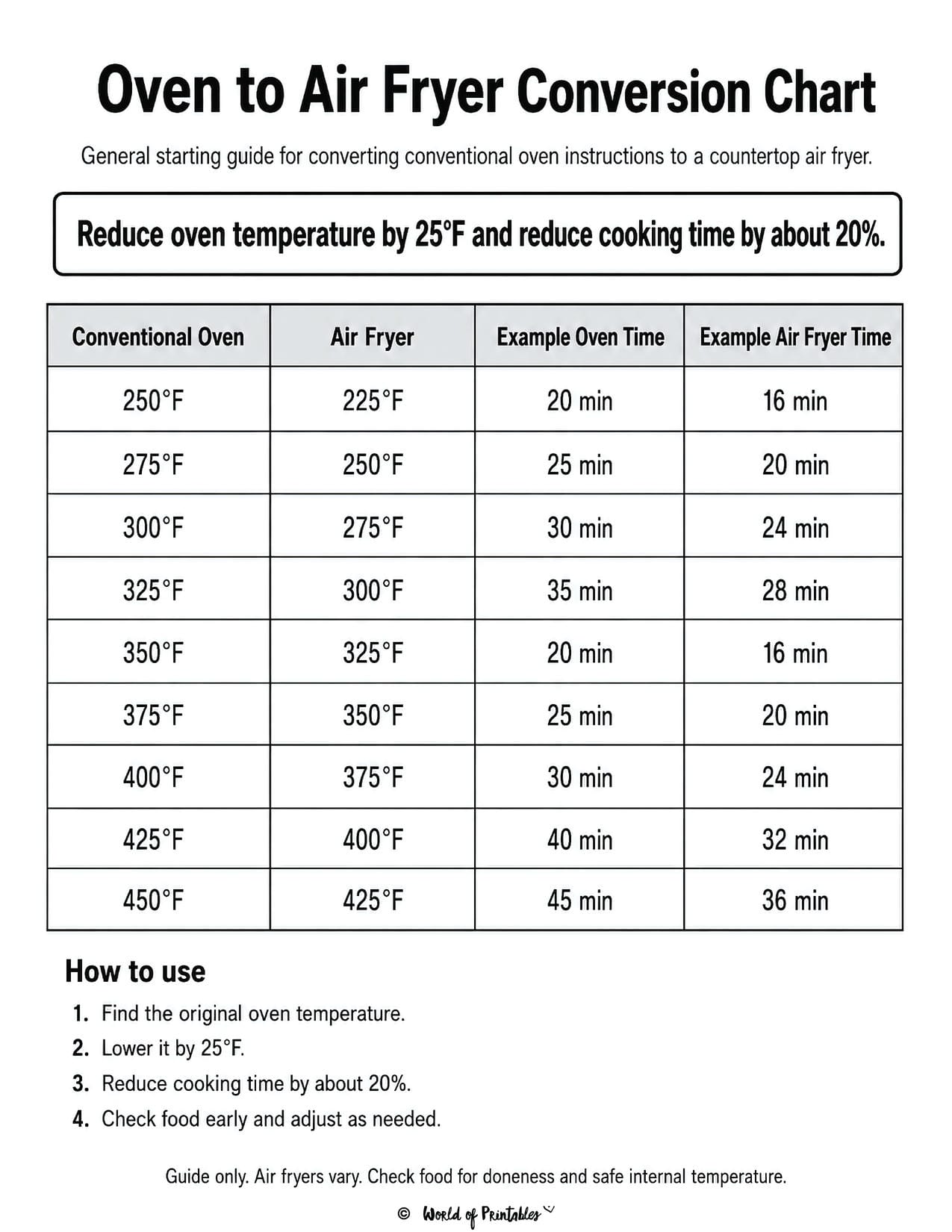
Oven to Air Fryer Conversion Chart
Use this chart to convert conventional oven temperatures and cooking times into suitable starting settings for an air fryer.
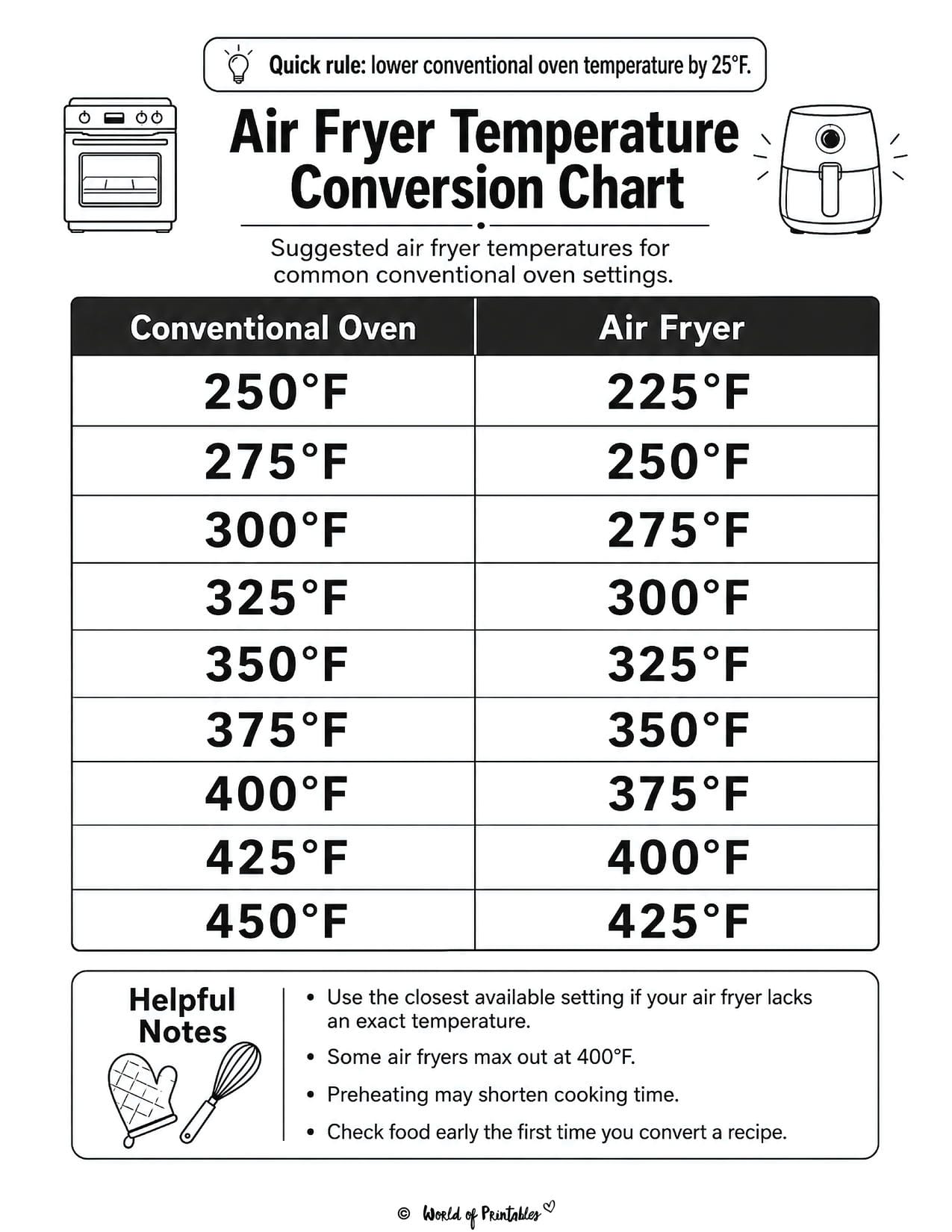
Air Fryer Temperature Conversion Chart
Quickly find the suggested air fryer temperature for common conventional oven settings from 250°F to 450°F.
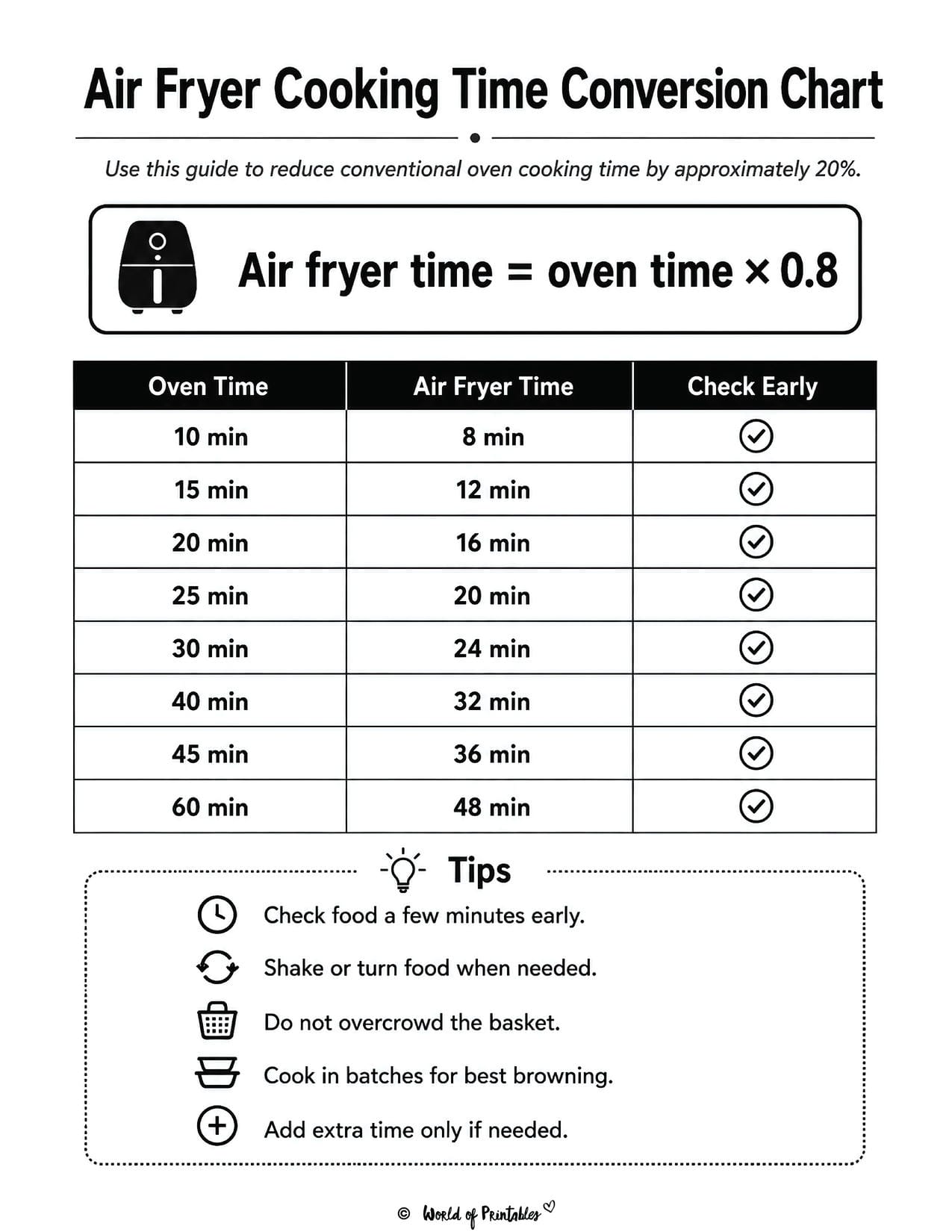
Air Fryer Cooking Time Conversion Chart
Use this printable chart to reduce oven cooking times by approximately 20 percent.
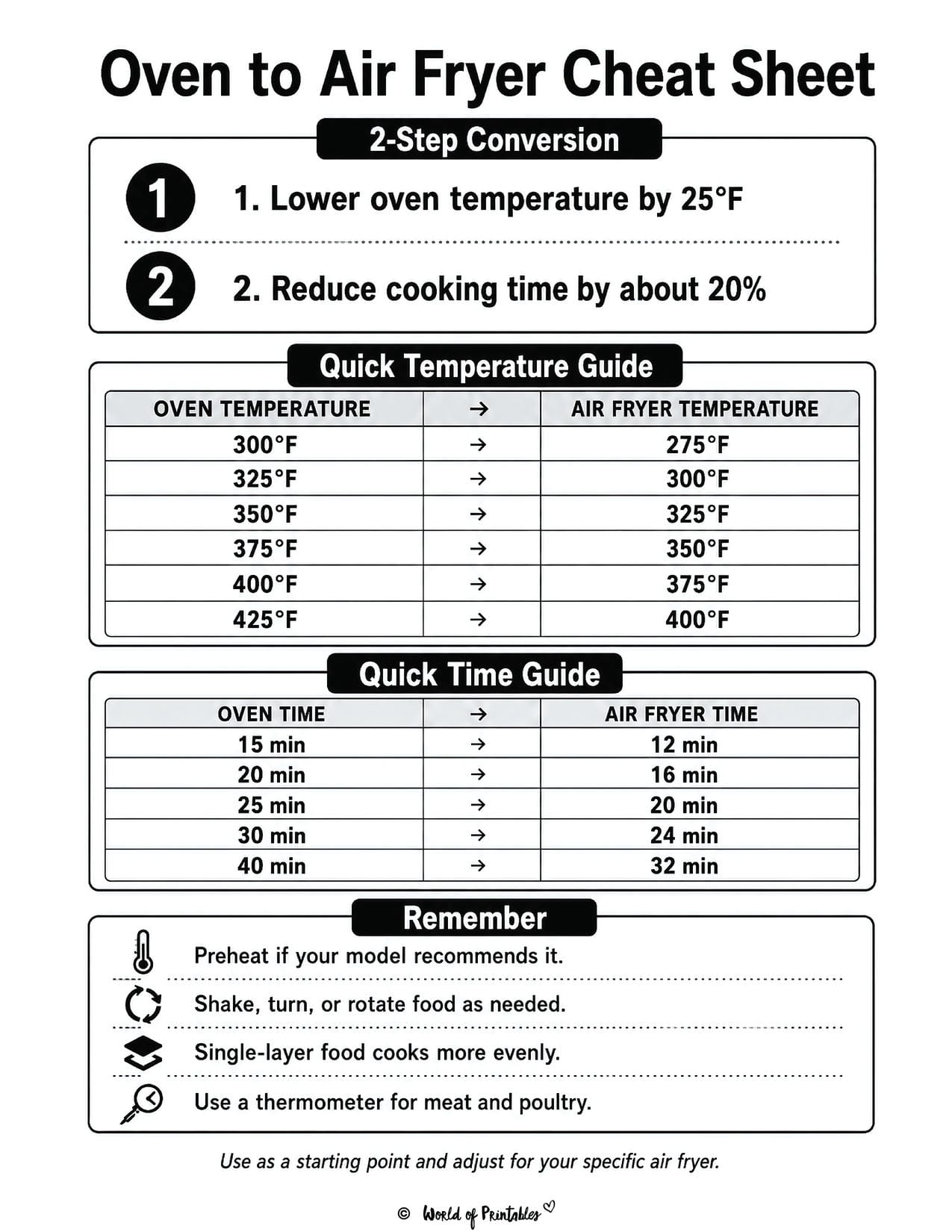
Oven to Air Fryer Cheat Sheet
This simple kitchen reference combines temperature and cooking time conversion instructions on one page.
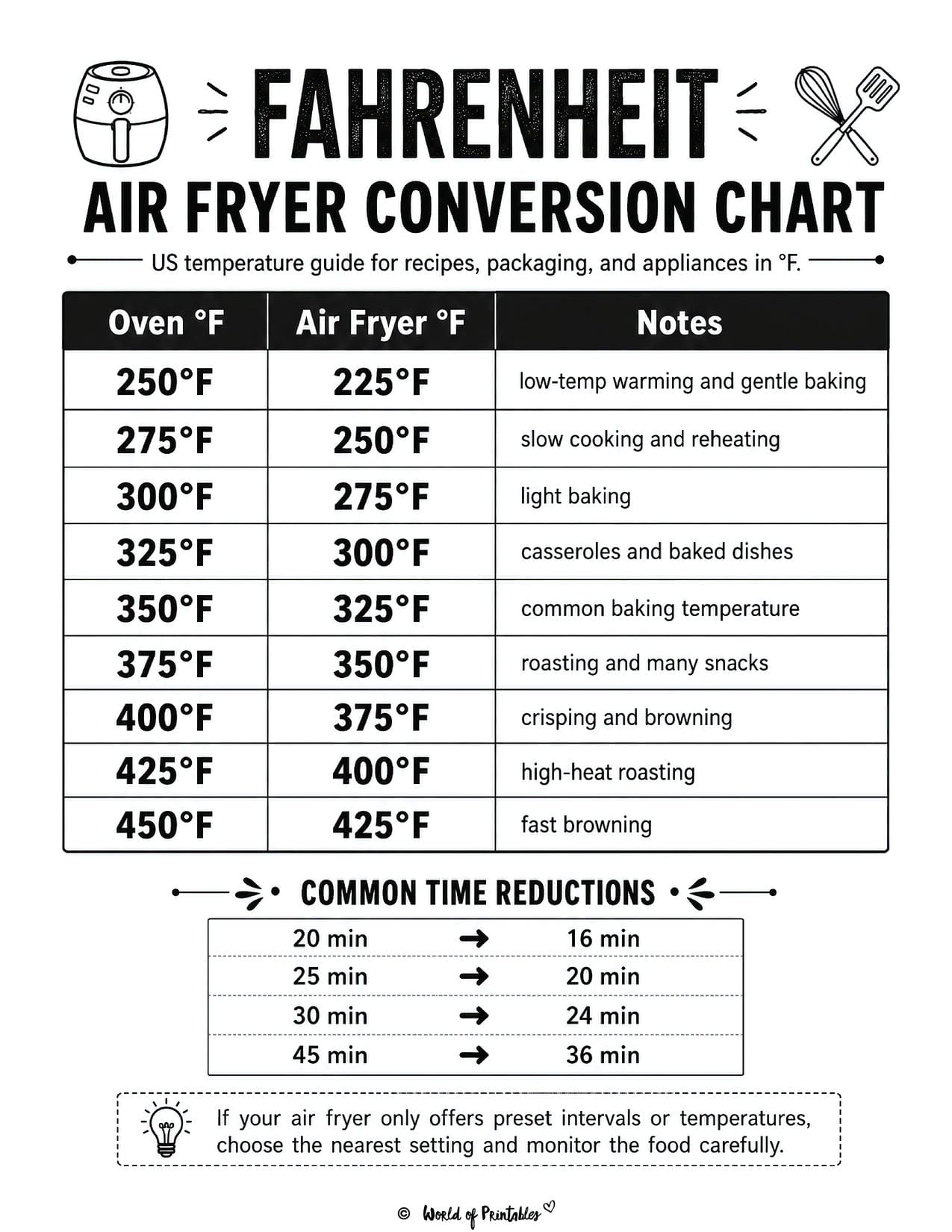
Fahrenheit Air Fryer Conversion Chart
Designed for US recipes, packaging, and appliances that use temperatures in degrees Fahrenheit.
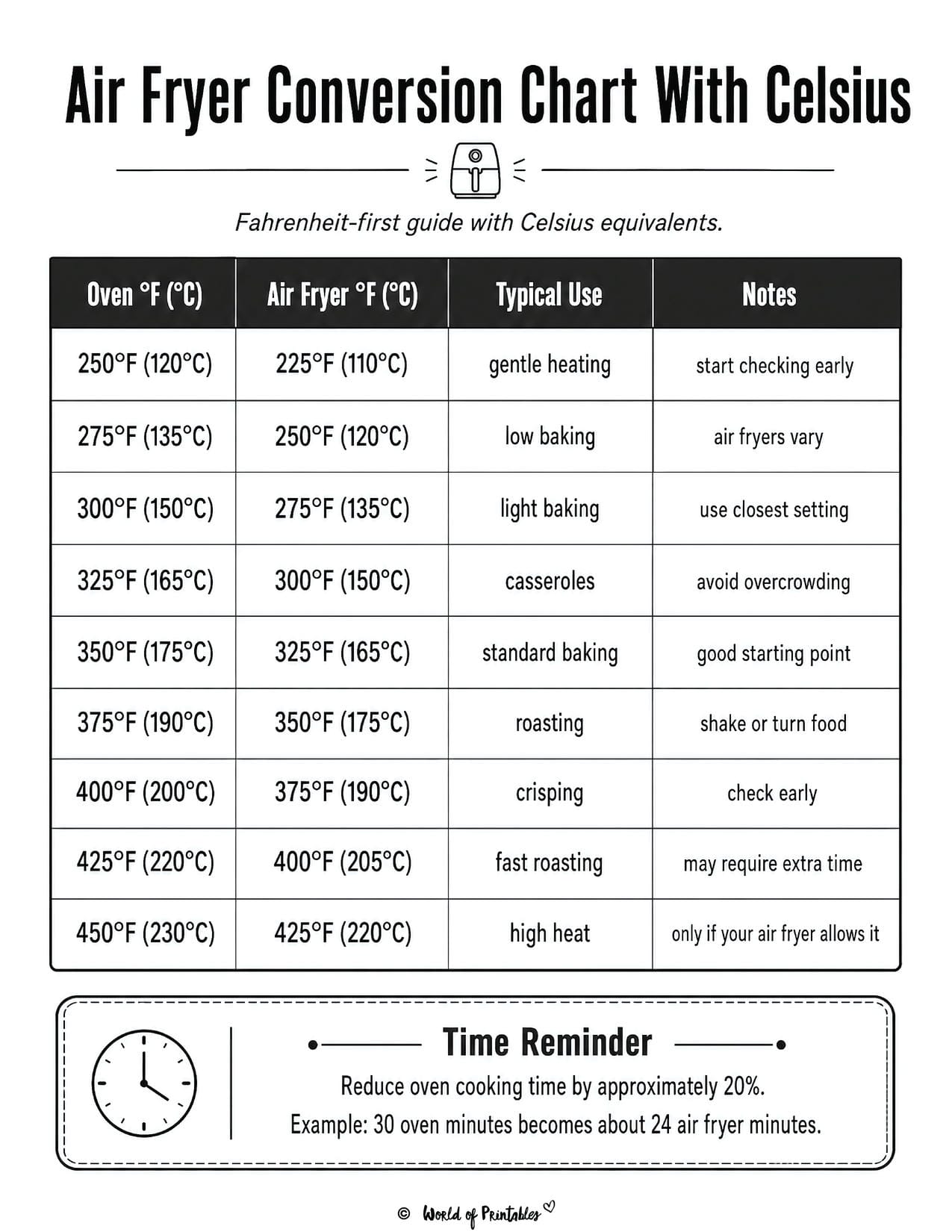
Air Fryer Conversion Chart With Celsius
This chart leads with Fahrenheit while also providing Celsius equivalents for recipes that use metric temperatures.
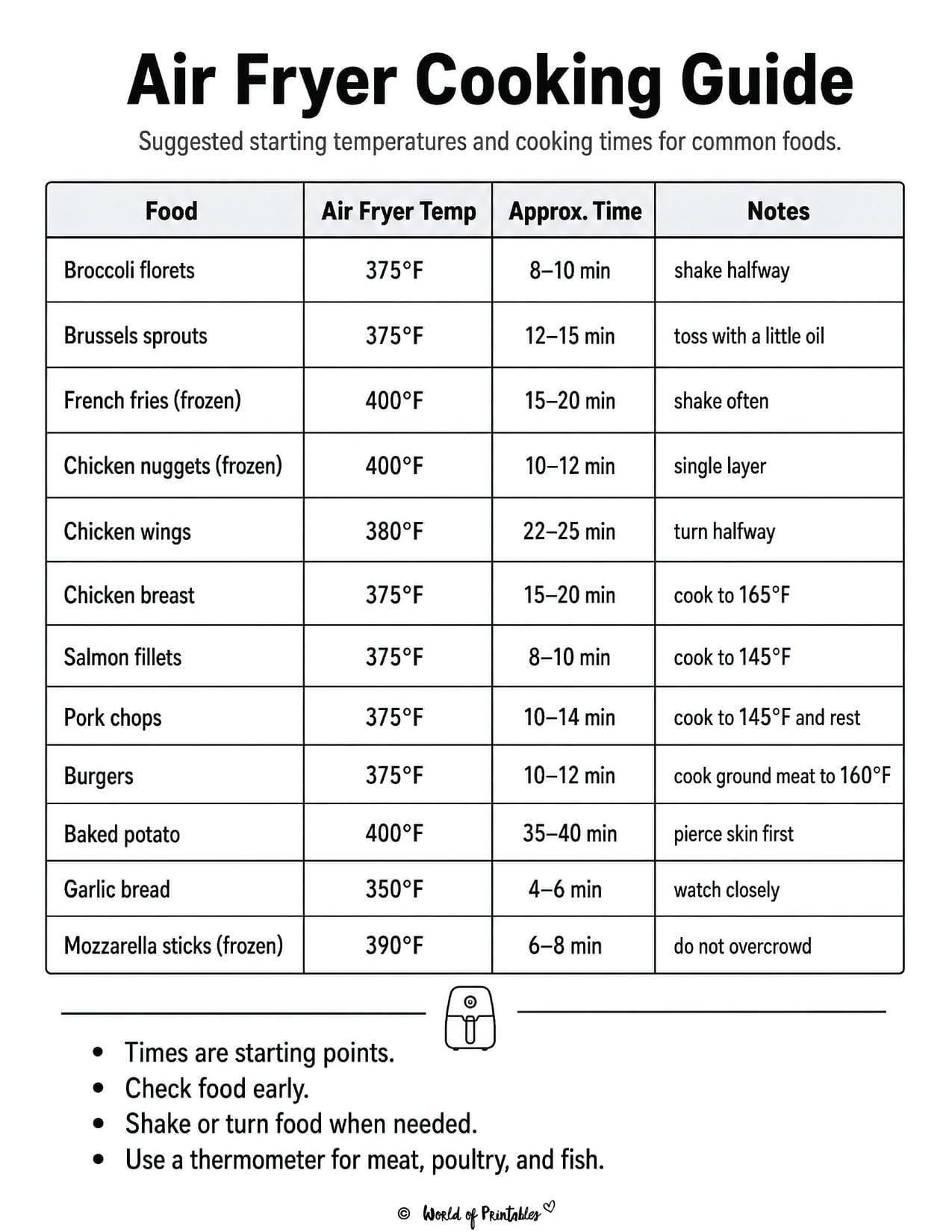
Air Fryer Cooking Guide
Find suggested starting temperatures and cooking times for common vegetables, frozen foods, meat, poultry, and snacks.
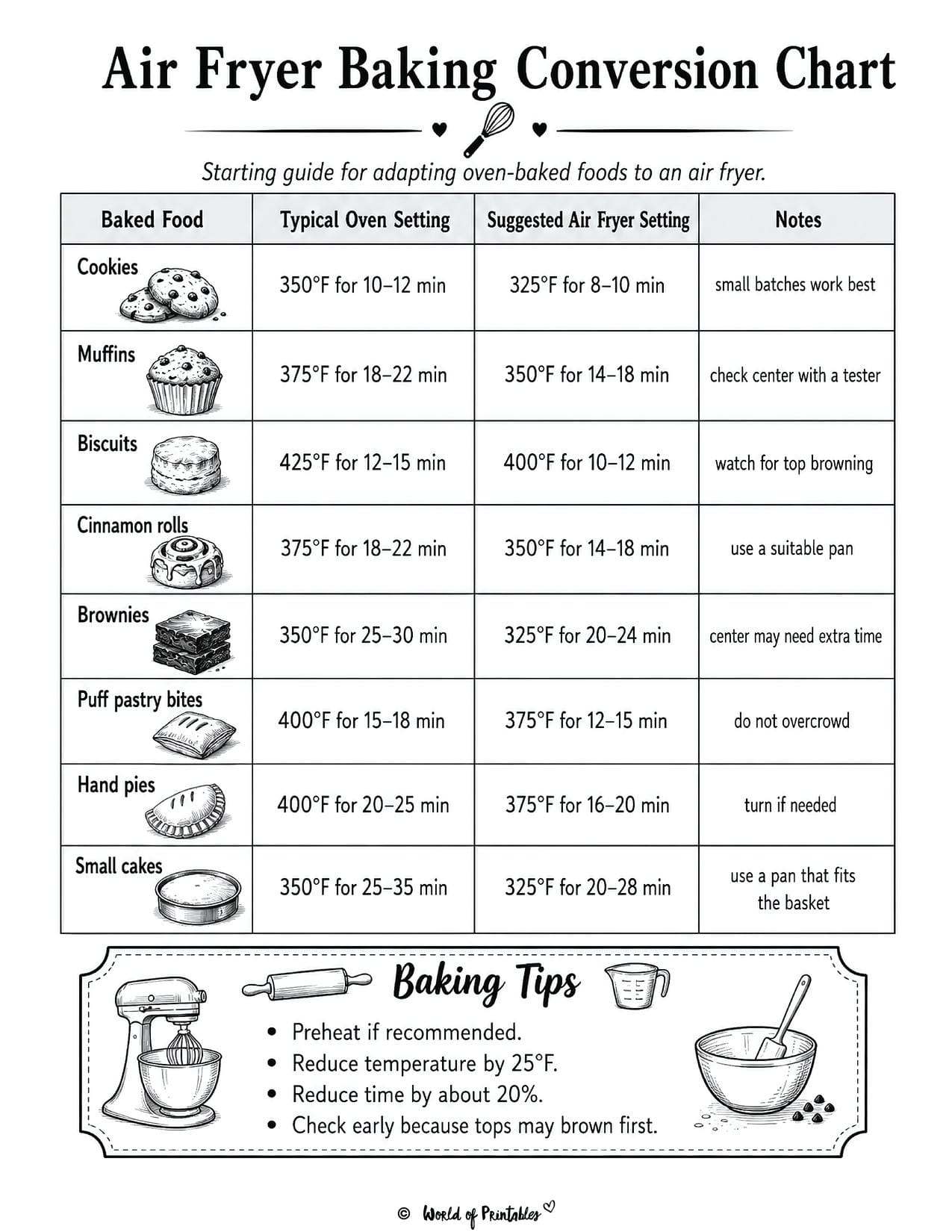
Air Fryer Baking Conversion Chart
Use this chart when adapting cookies, muffins, pastries, and other oven-baked foods for an air fryer.
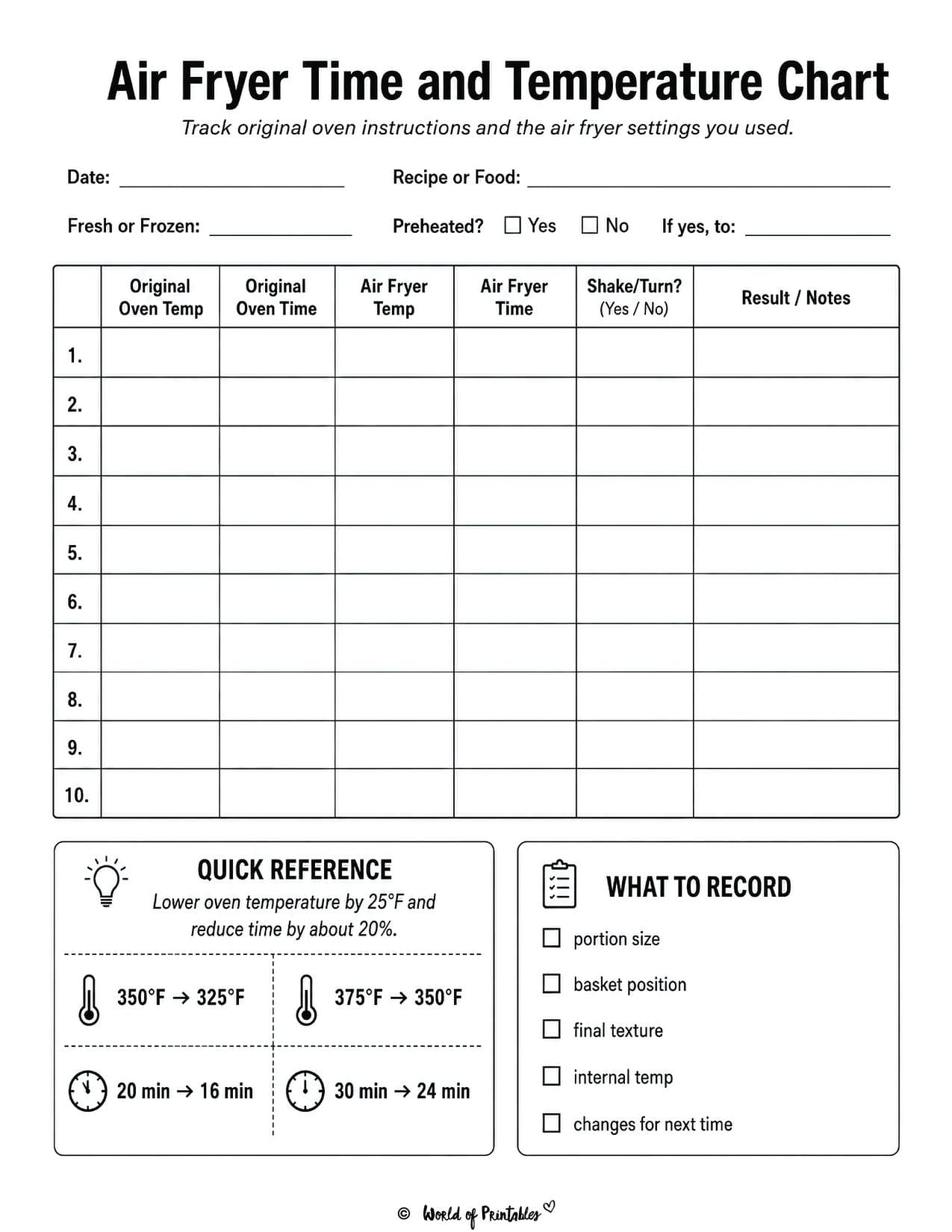
Air Fryer Time and Temperature Chart
This all-purpose reference provides space to compare the original oven instructions with the air fryer settings used.
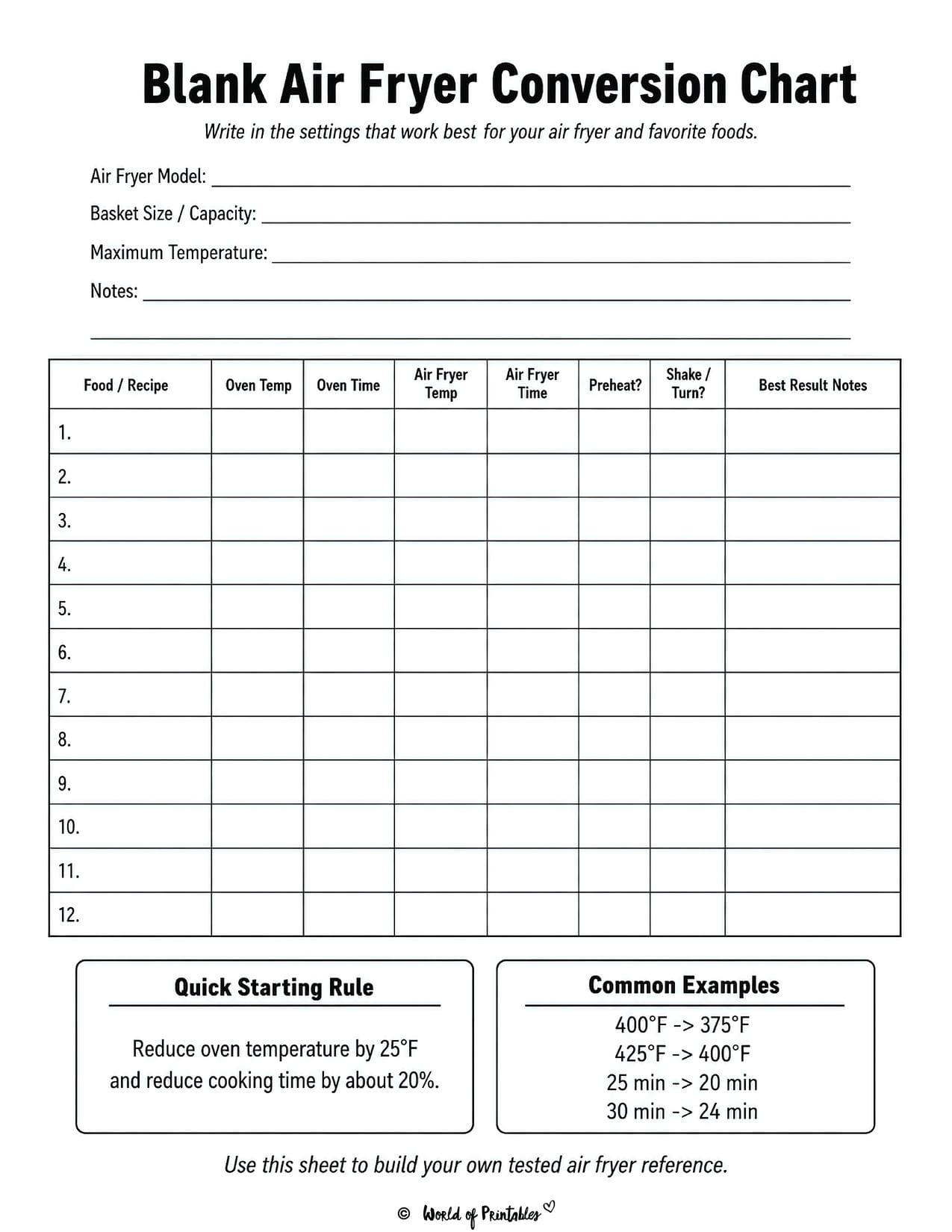
Blank Air Fryer Conversion Chart
Record the exact settings that work best for your air fryer, favorite foods, and frequently used recipes.
Oven to Air Fryer Temperature Conversion
Use the following temperature conversions as a quick starting reference:
| Conventional Oven | Air Fryer |
|---|---|
| 250°F | 225°F |
| 275°F | 250°F |
| 300°F | 275°F |
| 325°F | 300°F |
| 350°F | 325°F |
| 375°F | 350°F |
| 400°F | 375°F |
| 425°F | 400°F |
| 450°F | 425°F |
If your air fryer does not offer the exact converted temperature, choose the closest available setting and monitor the food carefully.
Some air fryers have a maximum setting of 400°F. When a recipe calls for a higher converted temperature, follow the manufacturer’s guidance and allow additional cooking time if needed.
How To Use the Printable Conversion Chart
Find the original conventional oven temperature on the chart and follow the row across to the suggested air fryer temperature.
Next, locate the original cooking time or calculate 80 percent of it. Enter the converted temperature and time into the air fryer.
Check the food early and record the final result in the notes section if your printable includes one.
Useful details to record include:
- Food or recipe name
- Fresh or frozen
- Portion size
- Air fryer temperature
- Cooking time
- Whether preheating was used
- Whether the food was turned or shaken
- Final internal temperature
- Changes to make next time
Keeping your own notes is particularly useful because two air fryers set to the same temperature may not cook identically.
Check Food With a Thermometer
Cooking time alone cannot confirm that meat, poultry, seafood, and egg dishes are safe to eat.
Use a food thermometer in the thickest part of the food, avoiding bone where possible. According to current US government food safety guidance, commonly used minimum internal temperatures include:
- Beef, pork, veal, and lamb steaks, chops, and roasts: 145°F, followed by a three-minute rest
- Fish: 145°F
- Ground beef, pork, veal, and lamb: 160°F
- Egg dishes: 160°F
- Chicken, turkey, duck, and other poultry: 165°F
- Leftovers and casseroles: 165°F
These temperatures should be measured with a food thermometer rather than judged by color or cooking time.
Our printable meat temperature chart is a useful companion to the air fryer conversion chart.
Disclaimer: These printable oven to air fryer conversion charts provides general starting temperatures and cooking times.

Air fryers vary in wattage, size, airflow, basket design, temperature accuracy, and cooking performance. Food thickness, quantity, starting temperature, and arrangement can also affect cooking time.

Always follow the appliance manufacturer’s instructions and any tested air fryer directions supplied with the food or recipe. Check meat, poultry, seafood, leftovers, and egg dishes with a food thermometer to confirm they have reached a safe internal temperature.

Do not rely on appearance, browning, or the estimated cooking time alone to determine whether food is safe to eat.
More Free Household Printables




COPYRIGHT
The printables that you find here are the copyright of World of Printables – you cannot redistribute or sell any of these printables or templates, although you can link back to our website.

AI TRANSPARENCY: Whilst the majority of our creations have been created completely traditionally, occasionally we utilize AI tools in our design process. We acknowledge the advancements in AI technology and leverage them responsibly to optimize our creative output. However, it is important to note that our utilization of AI does not compromise the human element of our work. Our commitment to delivering high-quality designs through a balanced integration of traditional expertise and AI enhancements remains paramount.