

Disclaimer: These printables are for personal budgeting and organization only and are not financial advice.
Trying to budget by month can feel frustrating when your money does not arrive monthly.
A lot of people are paid weekly, biweekly, or twice a month. Bills come out on different dates, groceries never cost exactly what you hoped, and one paycheck can feel fine while the next one feels stretched before it even lands. That is where a paycheck planner can make budgeting feel much more realistic.
Instead of trying to control the whole month in one go, a paycheck planner helps you break things down by payday. You can see when money is coming in, decide which bills that paycheck needs to cover, plan what is left for everyday spending, and review what actually happened before the next pay period begins.
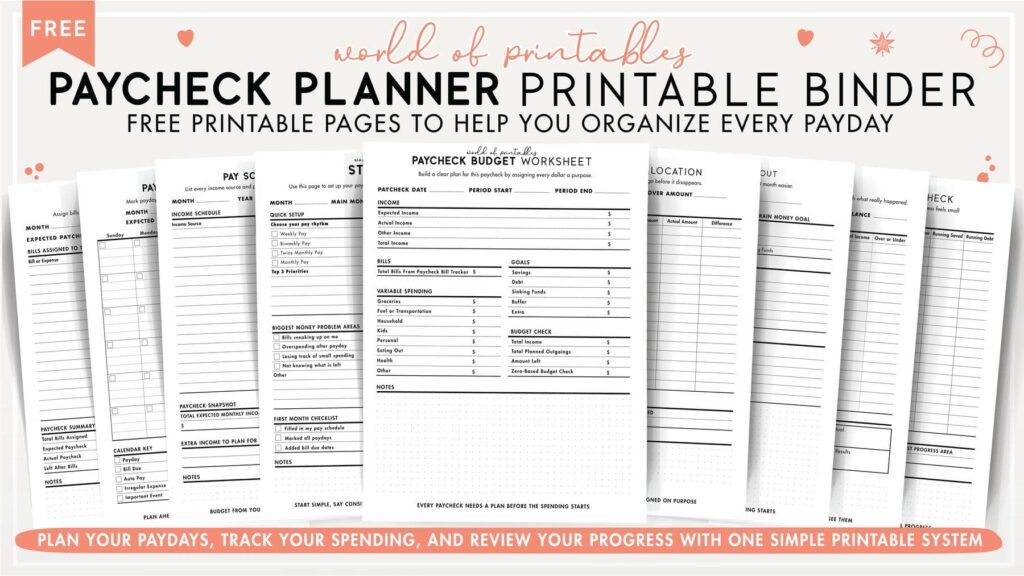
On this page, you’ll find all of our free paycheck planner printables in one place. Each page is available as a free individual PDF, so you can print exactly what you need. You’ll also find a simple explanation of how the system works, practical tips, and example ideas to help you get started without feeling overwhelmed.
If you want the full printable binder in one file, including the cover, dividers, Start Here page, and bonus binder pages, you can get the full bundle inside our Love & Pixels hub.
Quick Access to Free Paycheck Planner Pages
Want to find a specific page quickly? Use the links below to jump straight to each printable section, where you can preview the page, read how it works, and download the PDF.
- Start Here
- Pay Schedule Overview
- Payday & Bills Calendar
- Paycheck Bill Tracker
- Paycheck Budget Worksheet
- Paycheck Leftover Allocation
- Paycheck Spending Tracker
- Paid and Cleared Bill Tracker
- Spending Category Totals
- Monthly Paycheck Closeout
- Starting and Closing Balance
- Savings and Debt By Paycheck
If you want everything in one place, including the cover, dividers, This Planner Belongs To page, Start Here page, and bonus binder pages, you can get the full printable binder inside our Love & Pixels hub.
On this page you’ll find
- a simple explanation of what a paycheck planner is
- why planning around payday can work better than budgeting only by month
- the best order to use the printables
- every free paycheck planner page with a clear explanation of what it does
- ideas for filled examples
- practical tips for actually sticking with the system
- a full binder option inside Love & Pixels
Jump to what you need
- What is a paycheck planner
- Why planning around payday helps
- Common paycheck budgeting problems this planner helps with
- The best order to use these printables
- Free paycheck planner printables
- Example pages
- Tips for making your paycheck planner work
- Get the full binder
- Frequently asked questions
Looking for more printable budgeting tools? Browse our full Budget Binder printables for extra pages like monthly budget planners, bill calendars, debt trackers, and savings sheets that work alongside this paycheck planner.
What Is a Paycheck Planner?
A paycheck planner is a budgeting system that helps you plan around when your money actually arrives, not just around the calendar month.
That sounds simple, but it changes a lot.
A monthly budget can tell you how much you expect to spend in categories like groceries, bills, and debt payments. But it does not always answer the question people feel most urgently in real life:
What does this next paycheck need to cover?
That question matters because many money problems are not really about not caring about budgeting. They are about timing.
You can have enough money for the month overall and still feel stressed if:
- bills are due before the next payday
- one pay period has more expenses than another
- you spend too freely right after payday
- you lose track of what has actually left your account
- your budget looks fine on paper but not in your bank account
A paycheck planner helps by breaking the month into smaller, more usable decisions.
Instead of only asking:
- What am I spending this month?
you also ask:
- What is coming in this payday?
- Which bills belong to this paycheck?
- What is left for groceries, gas, household, and personal spending?
- What has already cleared my account?
- What changed this month that I need to pay attention to next time?
That makes budgeting feel more grounded, more practical, and often much less overwhelming.
A paycheck planner works especially well when you use it alongside a Monthly Budget Planner, because it helps you connect the bigger monthly picture with the day-to-day reality of what each payday needs to cover.
Why Planning Around Payday Helps
A lot of budgeting advice starts with the monthly view. That can be helpful, but for many households it does not tell the whole story.
When you plan around your actual paydays, your budget starts to reflect how your money really moves. Instead of relying only on monthly totals, you can work with the timing of your income, your bills, and your everyday spending in a way that feels much more practical.
That can make a big difference for households that are paid weekly, biweekly, or twice a month, especially when bills and everyday expenses do not line up neatly.
It helps you match bills to real paydays
This is one of the biggest advantages.
Instead of just listing bills and hoping there is enough money in the account when they hit, you can assign those bills to the paycheck that needs to cover them. That gives you a clearer sense of what is already spoken for before you start spending what feels like extra money.
If bill due dates are one of the main reasons your money feels hard to manage, our Bill Payment Calendar is a helpful companion printable for keeping those dates visible all month long.
It makes the space between paydays easier to manage
A lot of people feel fine right after payday and then feel confused a few days later. That usually happens when there was no clear plan for:
- bills
- daily spending
- transfers
- savings
- debt
- pending payments
A paycheck planner helps close that gap.
It gives you a better view of what is actually left
This is especially helpful if you tend to think in rough mental math.
A paycheck budget worksheet, bill tracker, and spending tracker help turn vague guesses into something more reliable. That means less wondering and more clarity.
It works better for weekly, biweekly, and twice-monthly pay
If your pay does not arrive once a month, then a planner built only around the month will often feel like it is missing part of the picture.
A paycheck planner is much more natural for:
- weekly pay
- biweekly pay
- twice monthly pay
- mixed or variable income households
It makes month-end review more meaningful
When you plan by paycheck and review by month, you get the best of both:
- short-term control
- big-picture awareness
That is where real progress starts.
Common Paycheck Budgeting Problems This Planner Helps With
If you have ever thought any of these things, this planner is designed to help.
“Monthly budgets never quite fit my pay schedule.”
This is one of the most common reasons people look for a paycheck planner in the first place. If your money comes in every week or two weeks, a monthly budget can feel too broad to be useful day to day.
“I need to know which bills this paycheck needs to cover.”
This is the heart of paycheck planning. It is not enough to know what your bills are. You need to know which payday is responsible for them.
“I lose track of spending after payday.”
This happens a lot when there is no spending tracker or when categories are too vague. Small spending can quietly pile up fast.
“I want something simple.”
This matters. A planner can only help if people actually use it. That is why the pages in this set are meant to be clean, clear, and practical.
“I need enough room to write.”
A lot of finance printables look nice but feel cramped in real use. These pages are designed to be workable, not just pretty.
“I want a printable system, not a spreadsheet.”
Some people love spreadsheets. Some do not. A printable paycheck planner gives you a physical, visual system you can use at your desk, kitchen table, or planner binder.
“I do not want to spend a lot just to get organized.”
That is why these pages are available as free individual PDF downloads on this post.
The Best Order to Use These Printables
One of the easiest ways to get overwhelmed by a budget binder is to print everything and then wonder what to do first.
This is the simplest way to use the core paycheck planner pages.
Step 1: Start Here
Use the Start Here page first. This helps you:
- choose your pay rhythm
- set your main money goal
- identify your biggest problem areas
- understand the order of the pack
Step 2: Pay Schedule Overview
Write down when your money comes in. This gives you the framework for the month or pay cycle before you start assigning bills.
Step 3: Payday & Bills Calendar
Map out the month visually. Mark paydays, bill due dates, and other key money dates so you can see pressure points clearly.
Step 4: Paycheck Bill Tracker
Assign bills to the paycheck that needs to cover them. This is one of the most important steps because it makes each payday feel less vague.
Step 5: Paycheck Budget Worksheet
Plan one paycheck at a time. Decide what that money needs to do before the next payday arrives.
Step 6: Paycheck Leftover Allocation
Take the money left after bills and assign it intentionally. This helps prevent leftover money from disappearing without a plan.
Step 7: Paycheck Spending Tracker
Track what you actually spend between paydays. This is what keeps the planner connected to real life.
Step 8: Paid and Cleared Bill Tracker
Track the difference between a bill being paid and it actually clearing your account.
Step 9: Review the month
At the end of the month, use:
- Spending Category Totals
- Monthly Paycheck Closeout
- Starting and Closing Balance
- Savings and Debt By Paycheck
That gives you a full view of what happened and what needs adjusting next time.
Free Paycheck Planner Printables
Below you’ll find each printable page in the planner, what it is for, who it helps most, and how to use it well.
1. Start Here
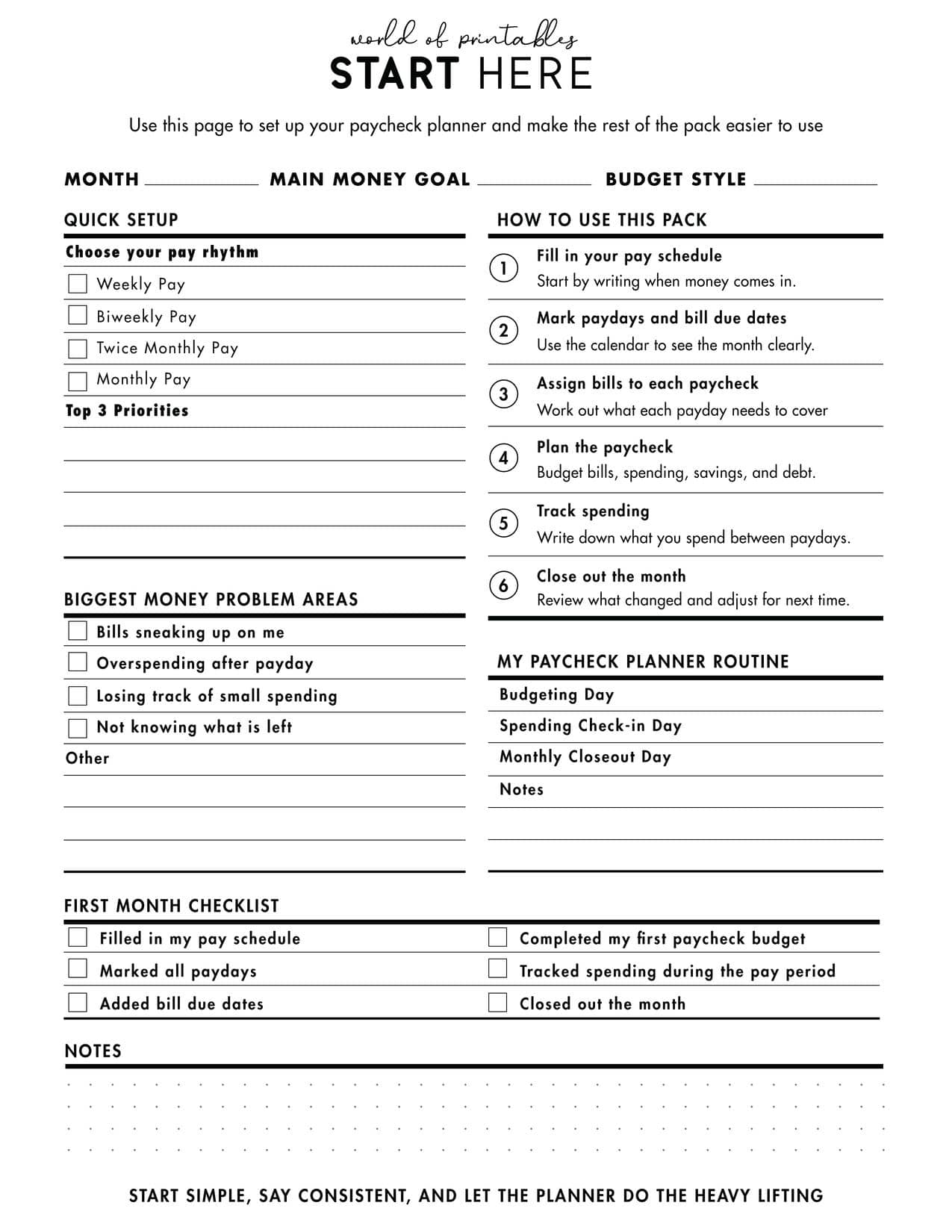
This is the page that helps everything else feel easier.
A lot of people do not need more complicated budgeting pages. They need a clear first step. The Start Here page is designed to reduce that “I downloaded this but now what?” feeling.
Use this page to:
- choose your budget style
- set your main money goal
- identify your biggest money problems
- understand the six-step process
- create a basic paycheck planning routine
- work through a first-month checklist
This page is especially helpful if you:
- are new to paycheck planning
- have tried budgeting before but stopped
- feel overwhelmed by starting
- want a simple orientation page at the front of your binder
The best way to use it is not as a page you fill in every week, but as a setup page you use at the beginning and come back to when you need a reset.
2. Pay Schedule Overview
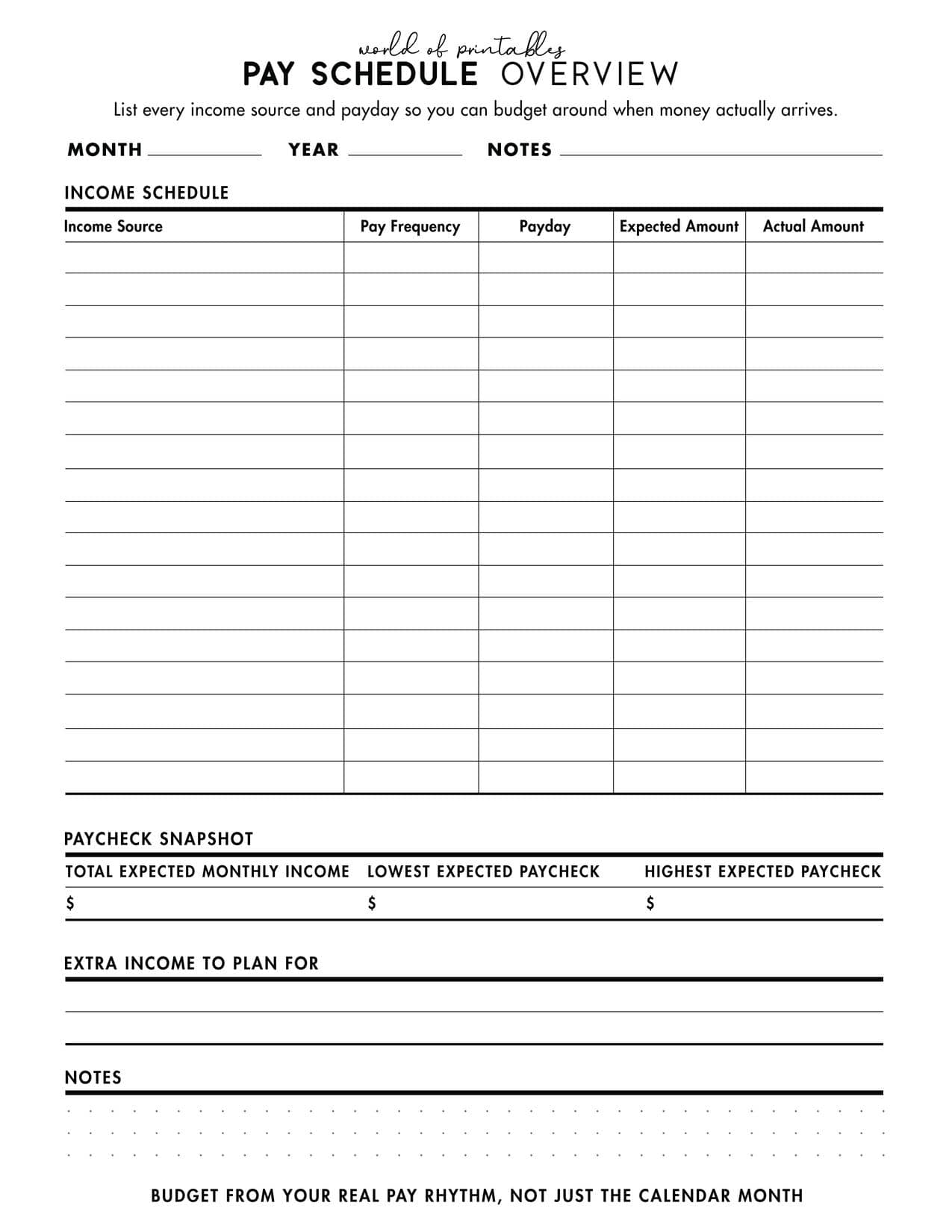
This page helps you work from real income timing instead of guesswork.
A lot of people go straight into budgeting without properly mapping their paydays. That makes everything harder than it needs to be. The Pay Schedule Overview gives you a clean place to list:
- income sources
- pay frequency
- payday
- expected amount
- actual amount
- notes
This is useful for:
- one-income households
- two-income households
- biweekly pay
- weekly pay
- changing pay patterns
- self-employed households with rough expected payday rhythms
Even if your payday feels obvious in your head, writing it down properly helps. It makes the rest of the planner more accurate and stops you budgeting from assumptions.
3. Payday & Bills Calendar
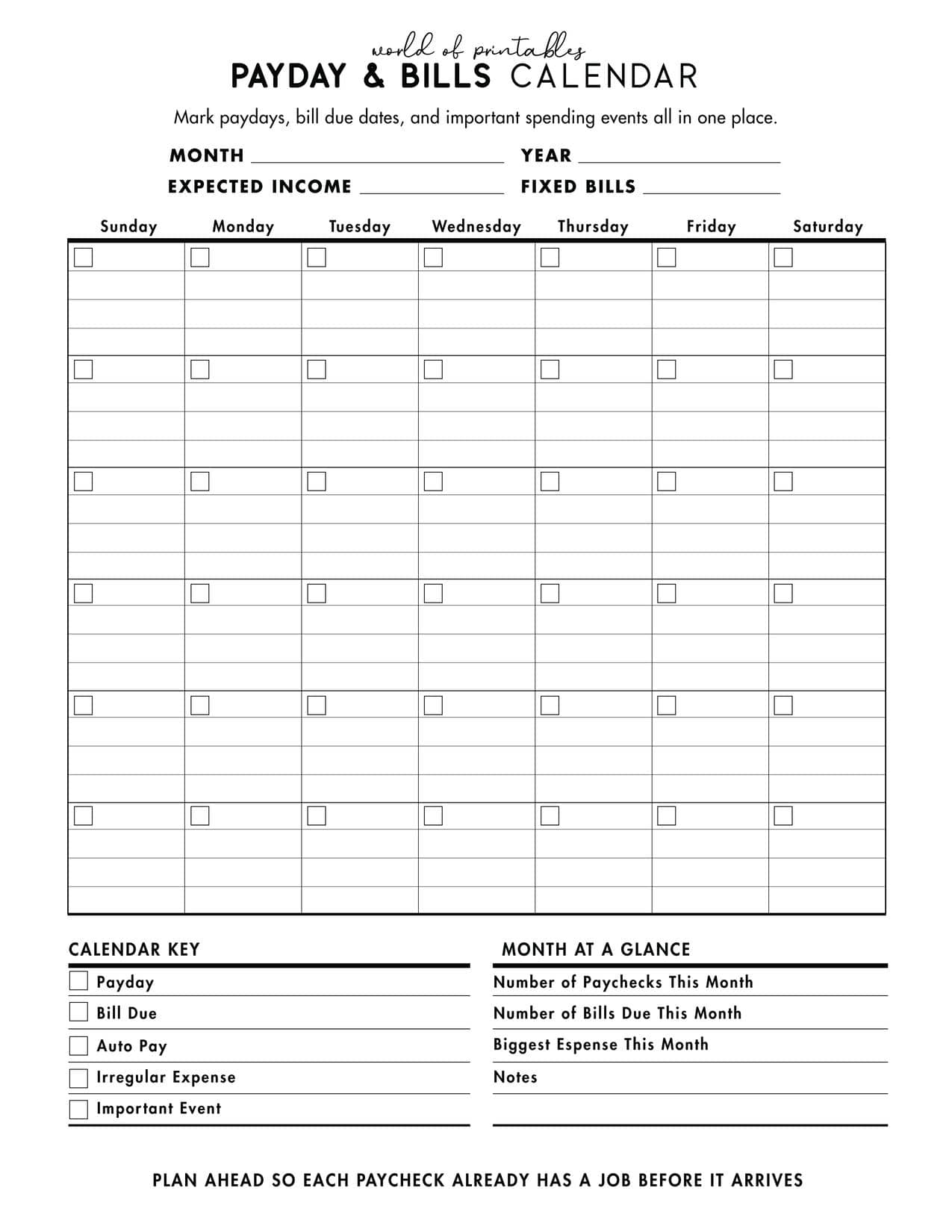
This is one of the most useful pages in the planner.
The Payday & Bills Calendar turns your month into something visual. Instead of holding dates in your head, you can see:
- when money comes in
- when bills are due
- where tight spots are likely to happen
- whether one payday carries more pressure than another
Use this page to mark:
- paydays
- rent or mortgage
- utilities
- debt payments
- subscriptions
- insurance
- school expenses
- birthdays, holidays, or events that affect spending
This page is especially helpful if one part of the month always feels tighter than the rest and you want to see the timing more clearly.
Need a separate page just for tracking due dates? Take a look at our Bill Payment Calendar for a simpler monthly bill overview you can use alongside this planner.
4. Paycheck Bill Tracker
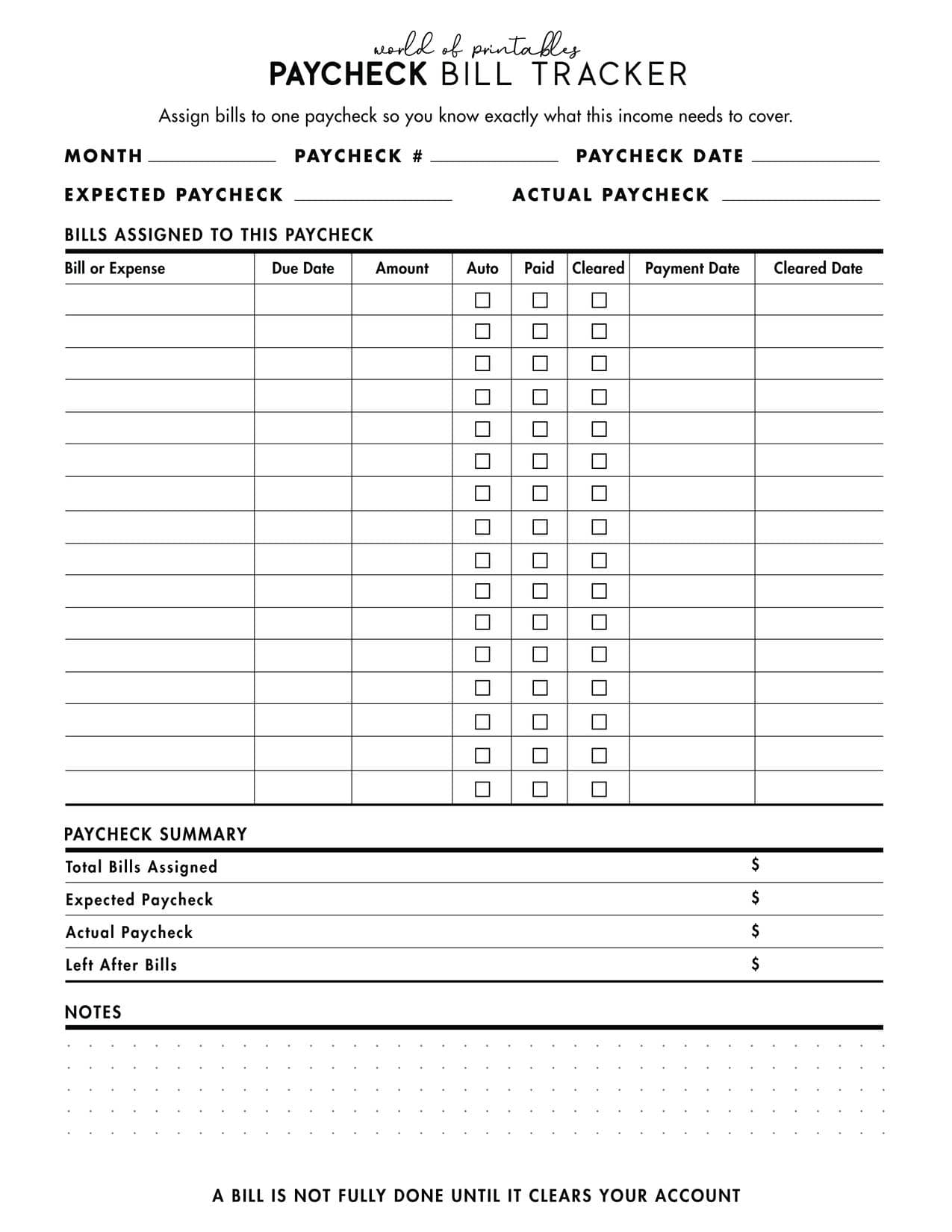
This page answers one of the most important paycheck budgeting questions:
What does this paycheck actually need to pay for?
That is why it is such a core page.
Instead of keeping a loose list of bills and hoping the timing works out, this sheet helps you assign bills to a specific paycheck. That creates much more clarity and often reduces financial stress immediately.
Use this page to record:
- bill or expense name
- due date
- amount
- auto-pay status
- paid
- cleared
- payment date
- cleared date
- notes
This page is especially helpful if:
- you tend to forget smaller recurring bills
- some bills land awkwardly between paydays
- you want to stop mentally double-counting money that is already spoken for
- you need to see what this one paycheck must cover before anything else
5. Paycheck Budget Worksheet
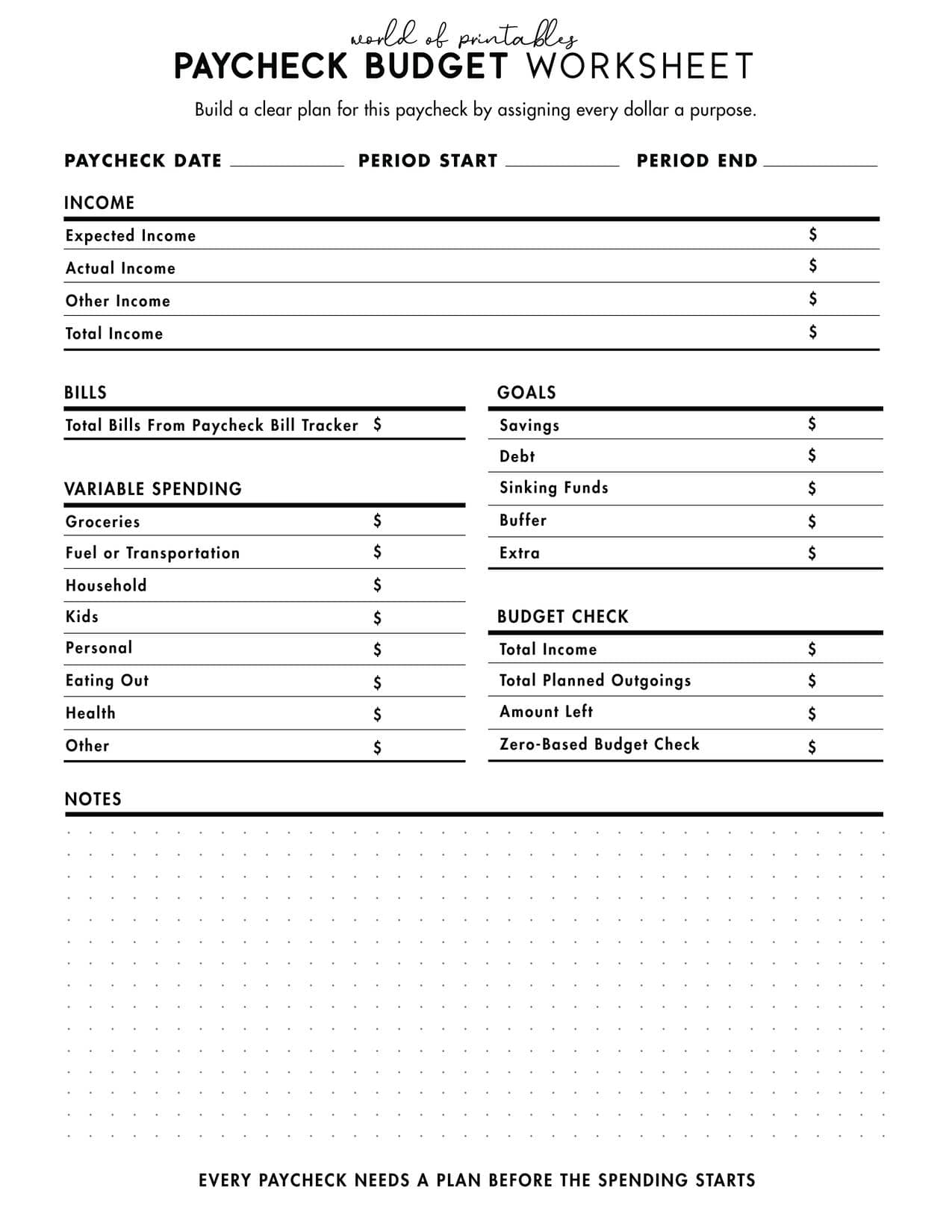
This is the heart of the paycheck planner.
The Paycheck Budget Worksheet takes everything you know so far:
- how much came in
- what bills belong to this paycheck
- what categories matter most
- what you want to put toward savings or debt
and turns it into a real plan for this pay period.
Use it to write down:
- paycheck date
- budget period
- income
- bills
- variable spending
- savings
- debt
- total allocated
- amount left
- notes
This page is useful because it helps payday feel intentional instead of reactive. Instead of just checking your account and hoping for the best, you can decide where that money needs to go while it is still fresh.
6. Paycheck Leftover Allocation
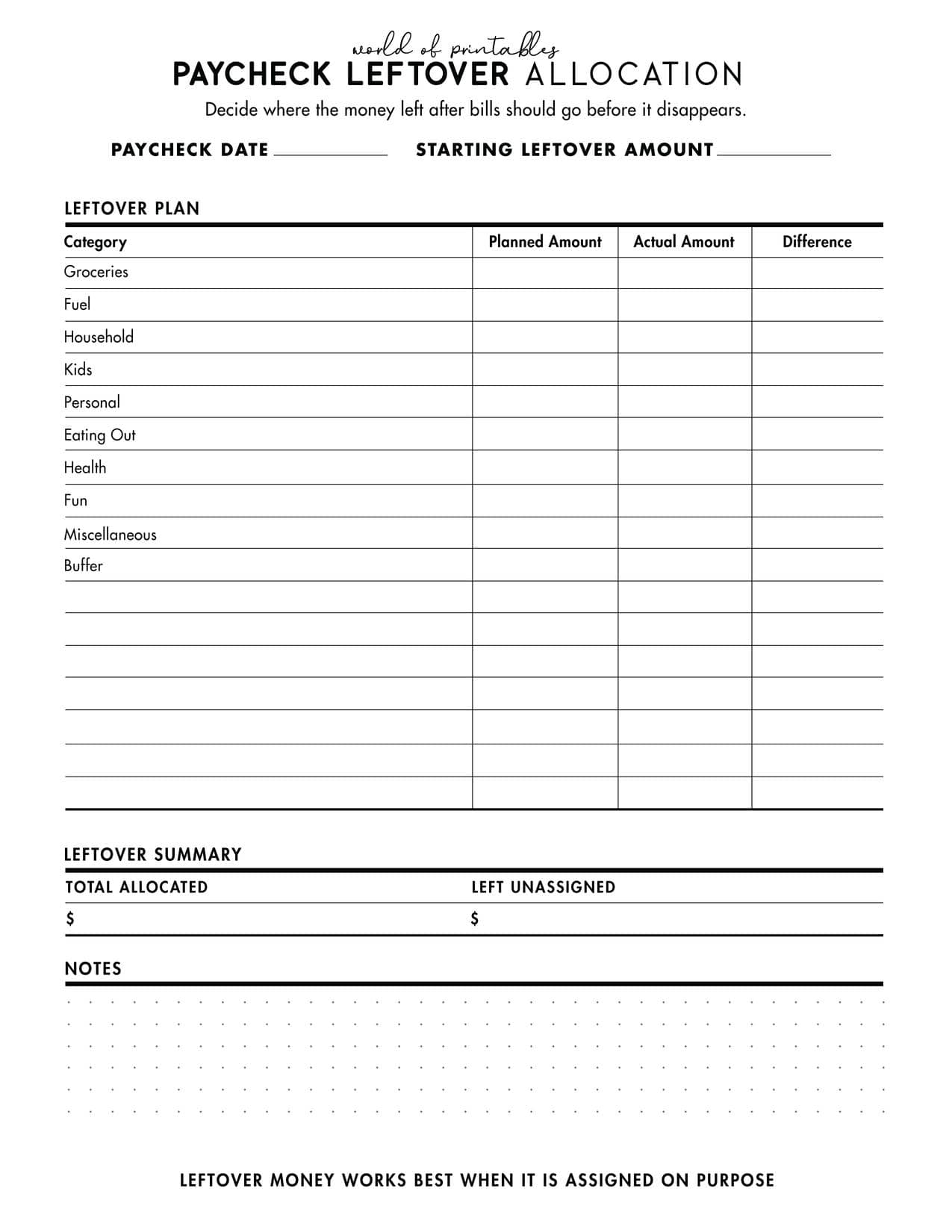
This page exists because leftover money is often the easiest money to lose track of.
Once bills are covered, it is easy to feel like the rest is flexible. Sometimes that is fine. Sometimes that is exactly where the budget starts drifting.
The Paycheck Leftover Allocation page helps you decide where the remaining money should go:
- groceries
- gas
- household
- kids
- personal
- eating out
- health
- fun
- buffer
- miscellaneous
This page is especially helpful if you often feel like you did “fine” on bills but still ended up wondering where the rest went.
If part of your leftover money needs to be set aside for irregular expenses, our Sinking Funds Tracker is a great next step for planning things like holidays, car costs, birthdays, and annual bills.
7. Paycheck Spending Tracker
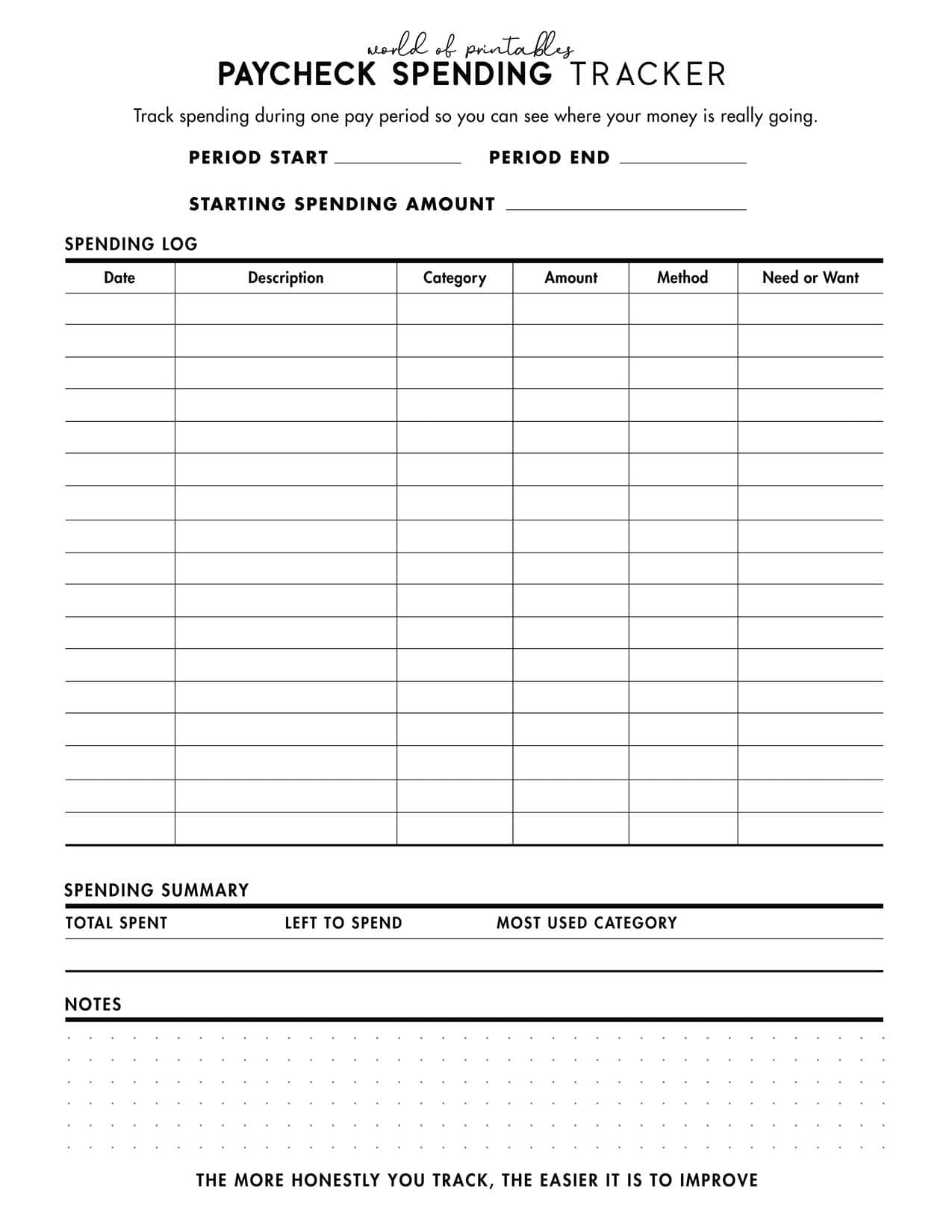
This page helps keep the planner connected to real life.
Planning is useful. Tracking is what shows you whether the plan is holding up.
The Paycheck Spending Tracker helps you record:
- date
- description
- category
- amount
- payment method
- need or want
- running total
- notes
This page is especially valuable if:
- small purchases are your weak spot
- you often underestimate one category
- you need a visual reminder of how spending is building through the pay period
- you want awareness without needing an app
This is one of the pages people are most likely to come back to often.
For an even simpler day-to-day spending page, you might also like our Daily Spending Log, which works well if you want a lighter way to keep track of smaller purchases and everyday money habits.
8. Paid and Cleared Bill Tracker
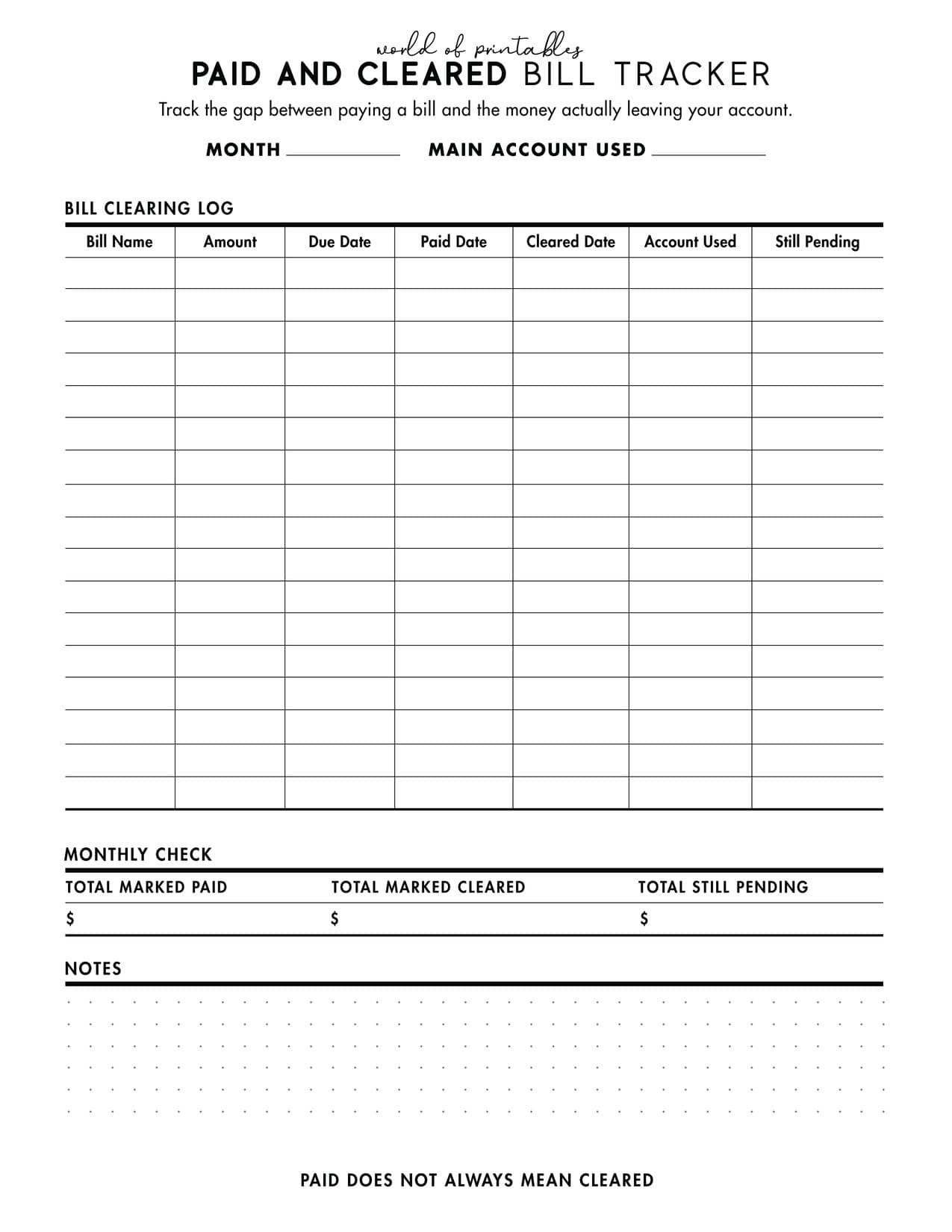
This page is simple but very useful.
A lot of people check their bank balance and feel safer than they actually are because some payments are still pending. A bill can be marked paid but not yet cleared. This tracker helps you bridge that gap.
Use it to record:
- bill name
- amount
- due date
- paid date
- cleared date
- account used
- still pending
- notes
This page is especially helpful if:
- you use auto-pay
- your account often has pending charges
- you get confused between what is paid and what is truly gone
- you want tighter control between paydays
9. Spending Category Totals
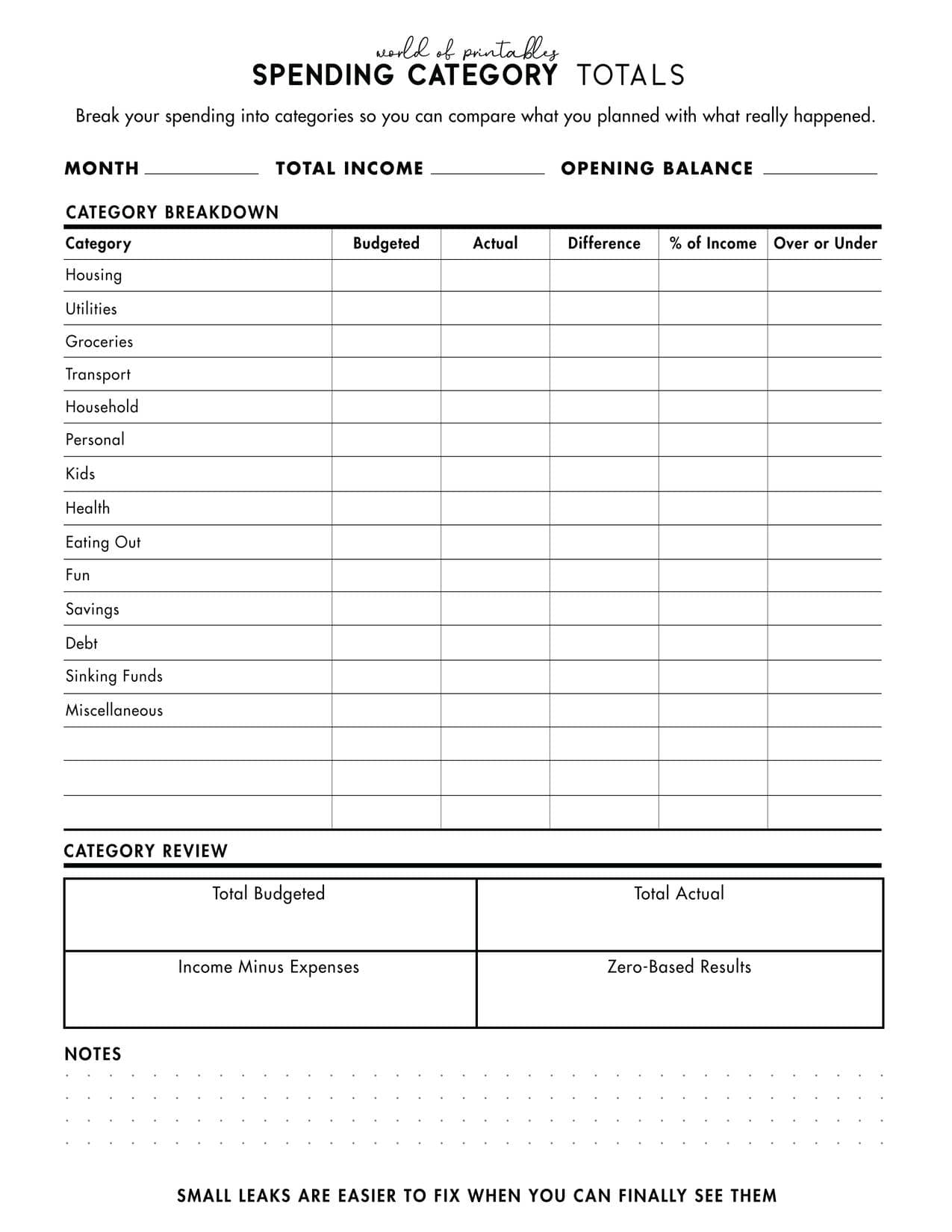
This page turns information into insight.
Tracking spending is useful, but category totals are what make patterns obvious. They help you step back and see:
- where the money really went
- what category was higher than expected
- which budgets were unrealistic
- where you are doing better than you thought
Use this page to compare:
- budgeted amount
- actual amount
- difference
- percent of income
- notes
This page is especially useful at the end of the month or after a difficult pay period when you want to understand what happened instead of just feeling bad about it.
10. Monthly Paycheck Closeout
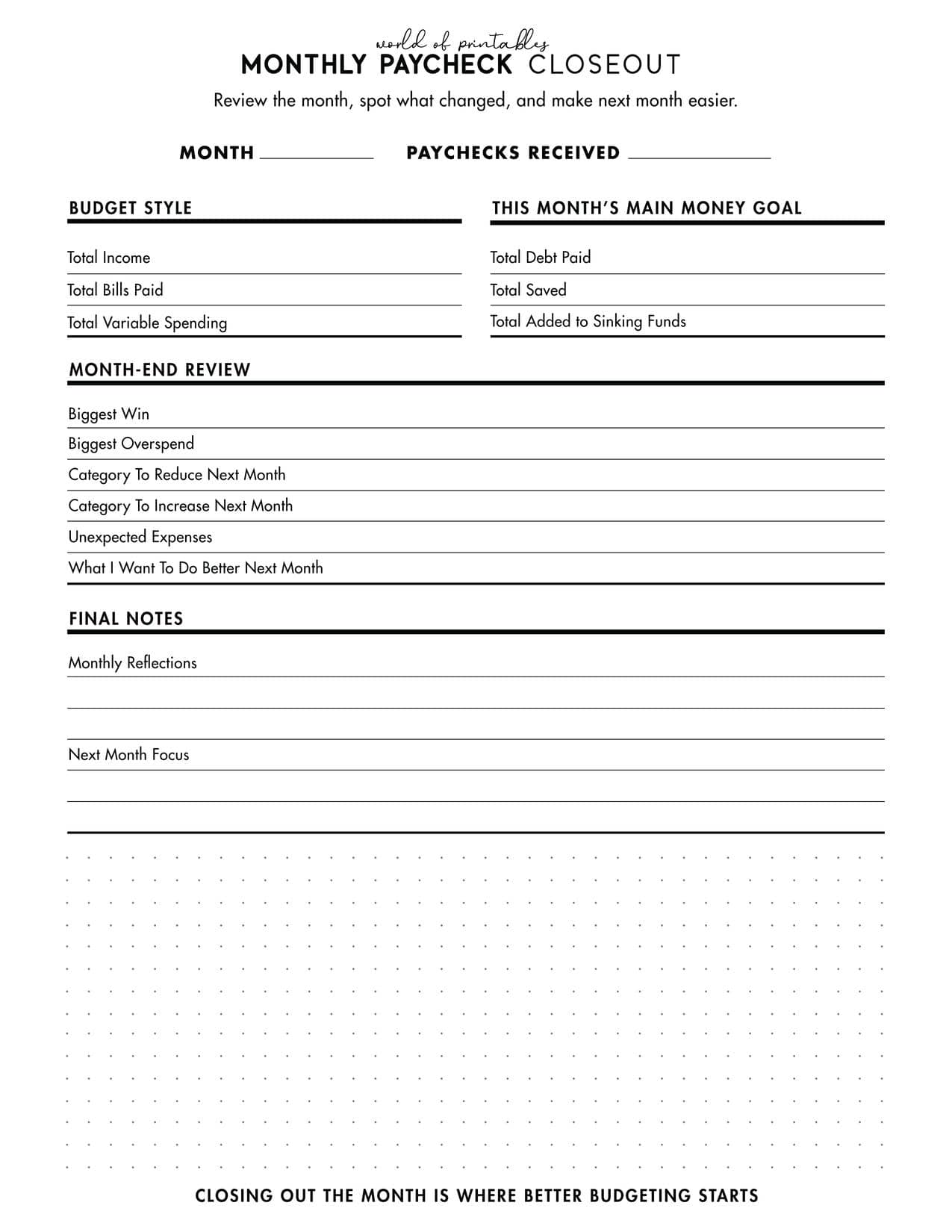
This is the page that helps you learn from the month instead of just ending it.
The Monthly Paycheck Closeout is where you review:
- total income
- bills paid
- variable spending
- debt paid
- savings added
- biggest win
- biggest overspend
- category to reduce
- category to increase
- next month focus
This page is useful because a good budget binder should not only help you plan. It should also help you improve over time.
Want to look at your progress from a wider angle too? Our Net Worth Tracker is useful for seeing how your savings, debt, and overall financial position are changing over time.
11. Starting and Closing Balance
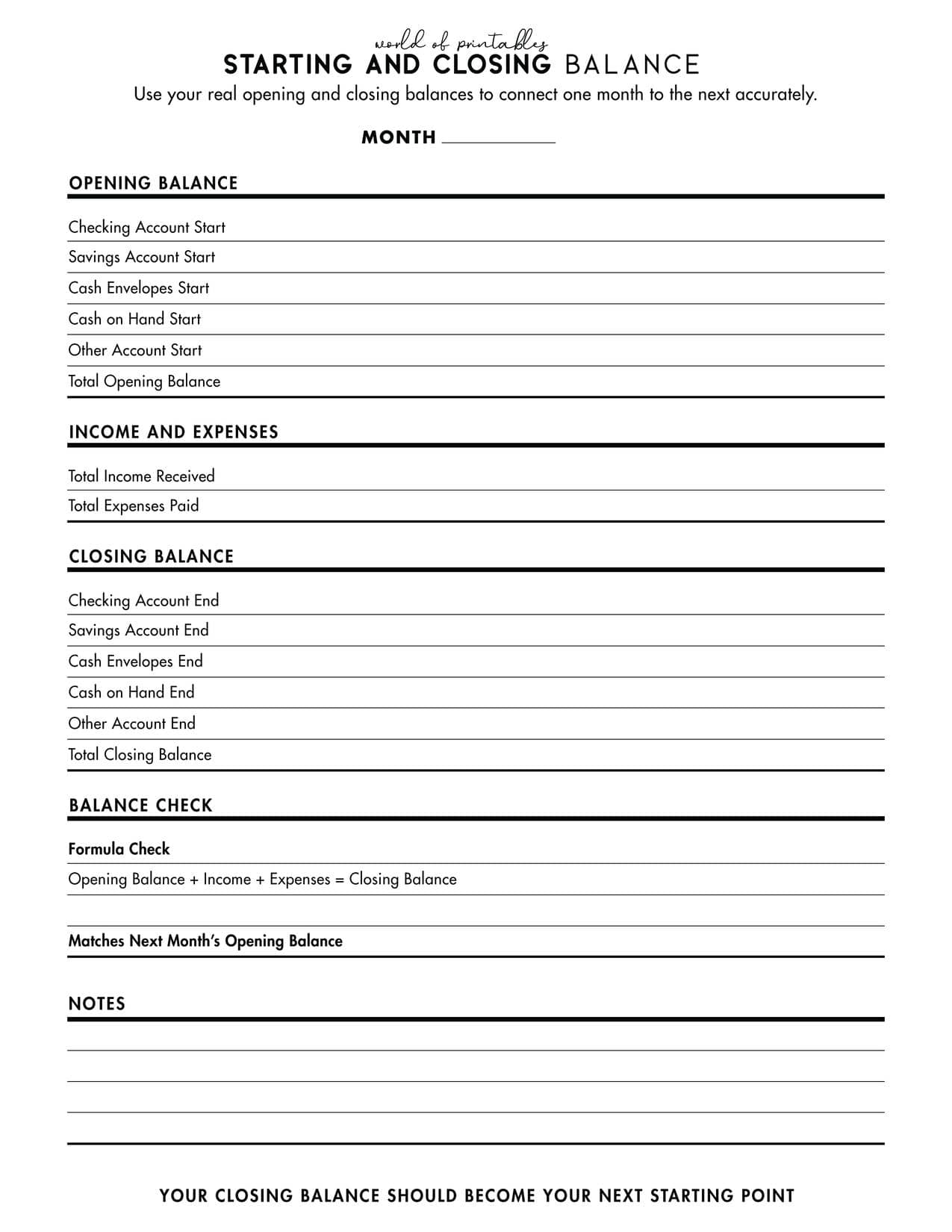
This page helps give you a clearer month-end picture.
A lot of people budget their spending but never clearly record:
- what they started the month with
- what came in
- what went out
- what they ended with
That makes it harder to spot whether the month truly improved your position or just felt busy.
Use this page to record:
- opening balances
- total income
- total expenses
- closing balances
- formula check
- notes
This page is especially helpful if you want more confidence in your month-end review and want the next month to begin from real numbers instead of rough memory.
12. Savings and Debt By Paycheck
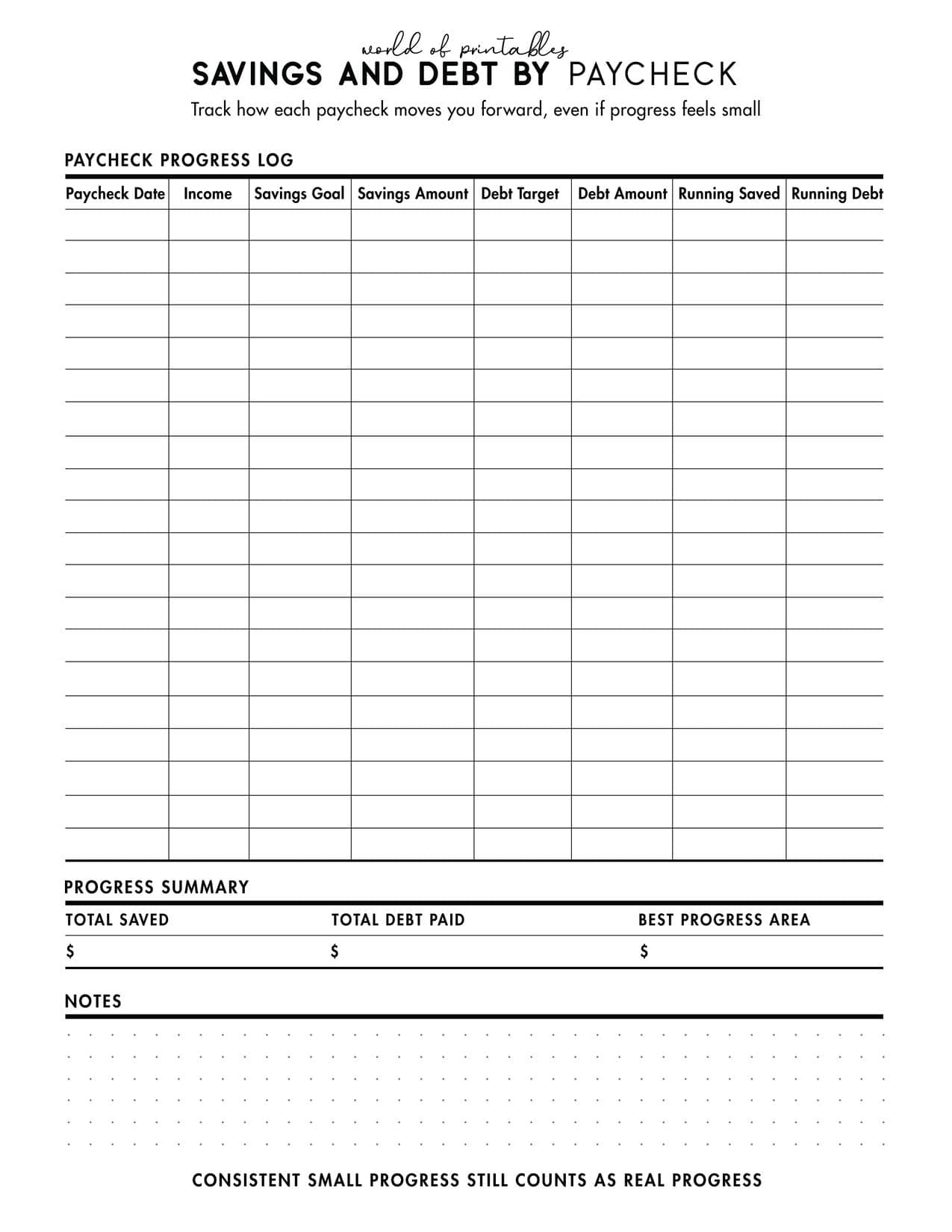
This page helps make progress visible.
When money feels tight, it is easy to feel like you are standing still. This sheet helps show that even small consistent payments still matter.
Use it to record:
- paycheck date
- income
- savings goal
- savings amount
- debt target
- debt amount
- extra payment
- running totals
- notes
This page works well because it links your day-to-day paycheck planning to your bigger financial goals.
If one of your biggest goals right now is paying off debt, you can also use this page alongside our Debt Snowball Tracker or Debt Avalanche Tracker to stay focused on the payoff method that suits you best.
Example Pages
If you’re new to using a paycheck planner, seeing a filled example can make the pages much easier to understand. Blank printables can look great, but an example helps you see how the planner works in real life.
To make things simple, the examples below follow the same fictional household and the same monthly setup, so you can see how the pages connect from one step to the next.
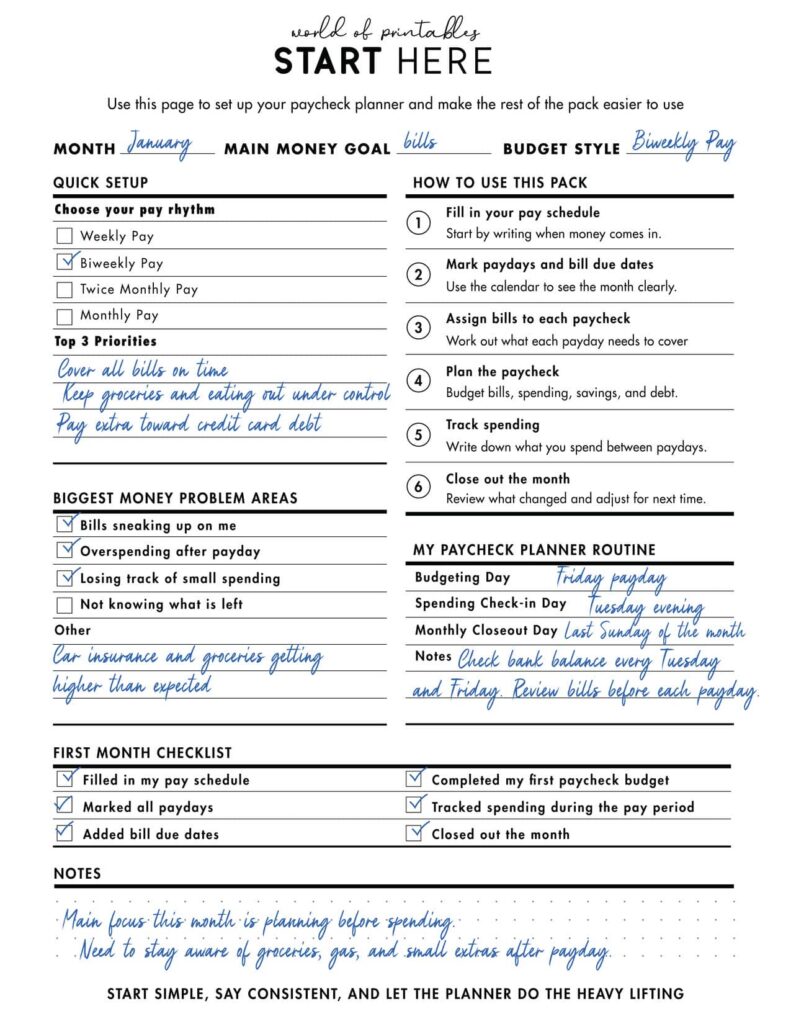
Example 1: Filled Start Here Page
This example shows how someone with a biweekly pay schedule might set up the planner at the start of the month. It includes a simple money goal, a few common problem areas, and a realistic routine for checking in on spending and closing out the month.
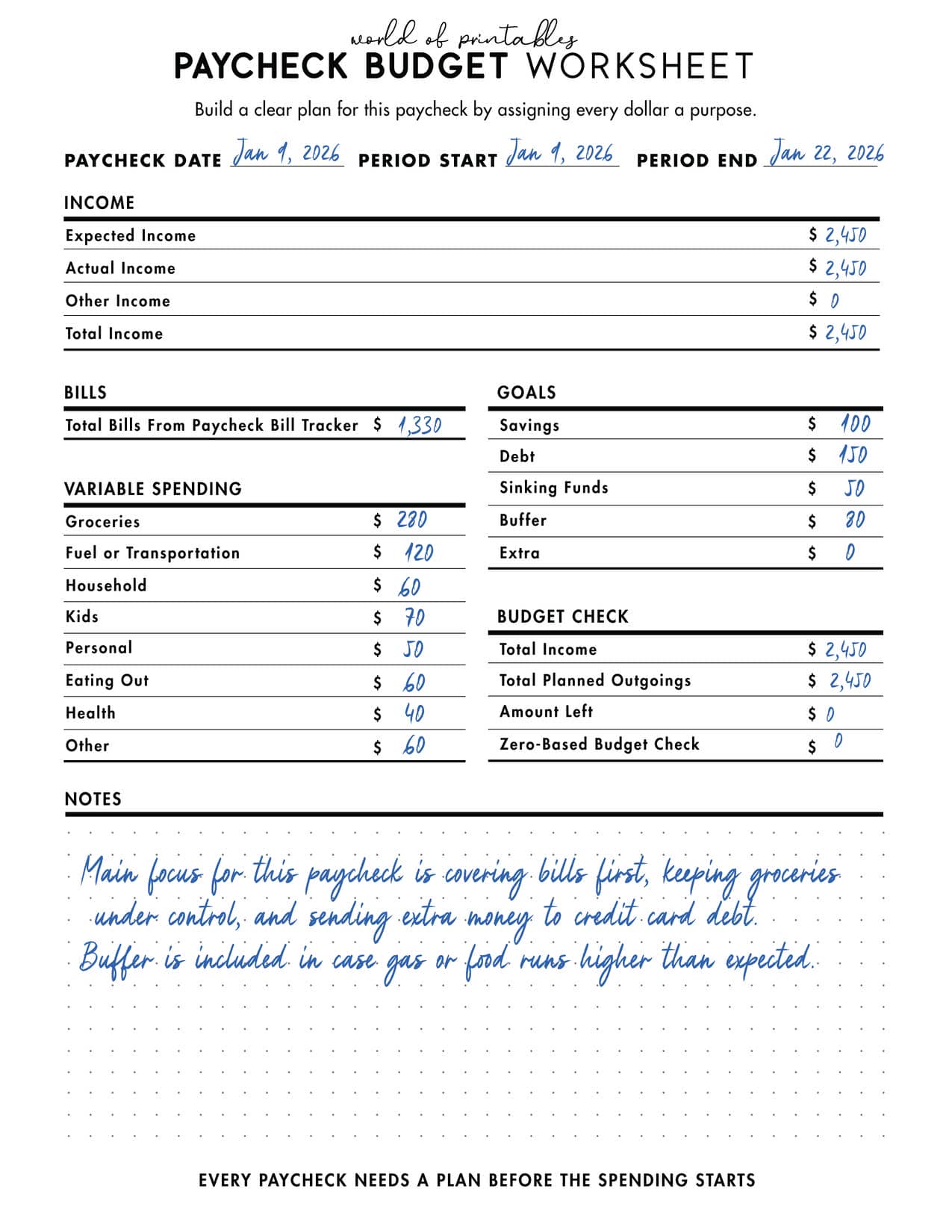
Example 2: Filled Paycheck Budget Worksheet
This example shows how one paycheck can be planned clearly before any spending starts. It includes income, bills, variable spending, savings, debt, and a zero-based budget check so you can see how each dollar is assigned a job.
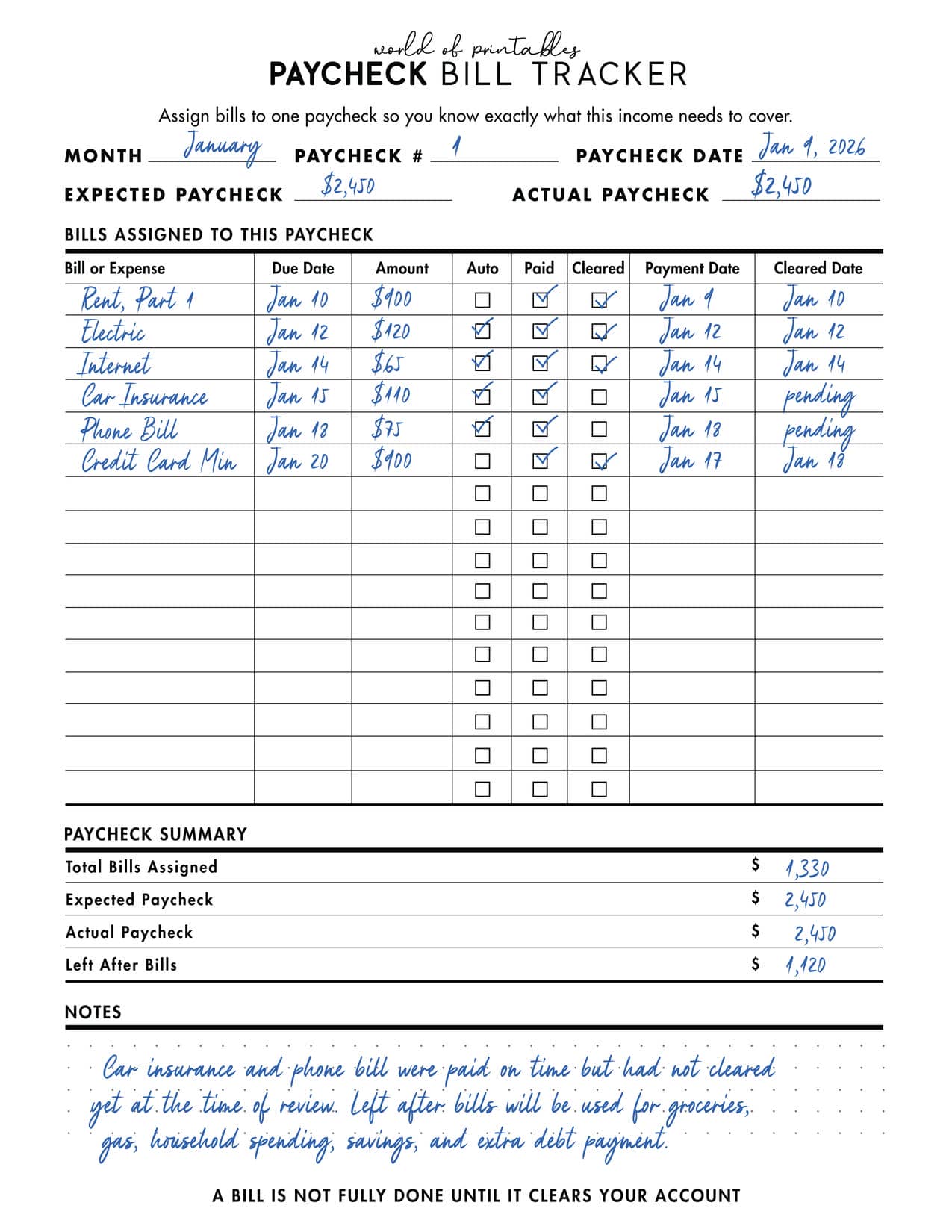
Example 3: Filled Paycheck Bill Tracker
This example shows how specific bills can be assigned to one paycheck, with paid and cleared dates included for extra clarity. It is a helpful way to see exactly what that payday needs to cover before the rest of the money is used elsewhere.
Example 4: Filled Payday & Bills Calendar
This example shows how paydays, bill due dates, and a few important spending events can be mapped out across the month. Seeing everything in one place makes it much easier to spot pressure points and plan ahead before bills pile up.
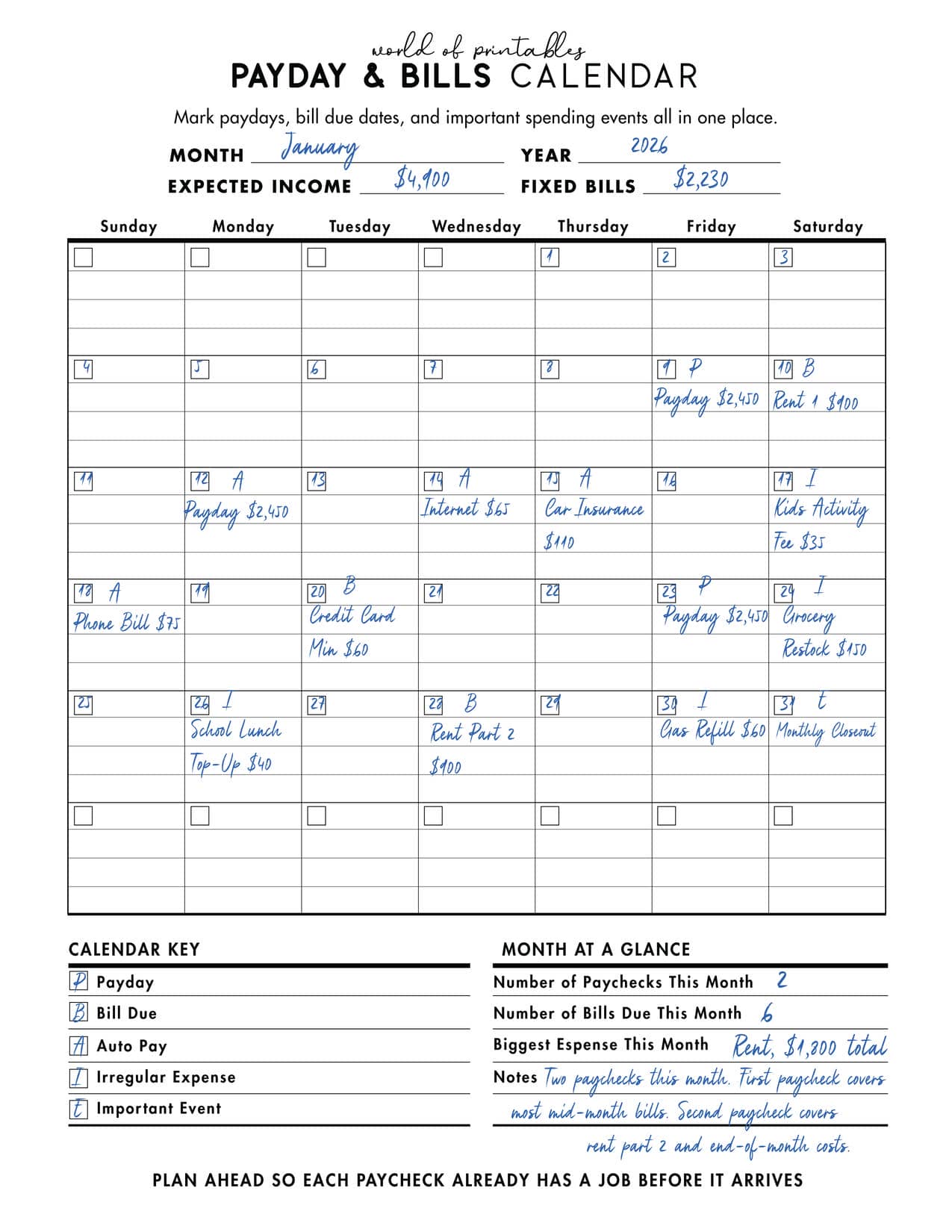
You do not need to use the pages perfectly to make them helpful. The goal is simply to make your paydays, bills, and spending feel clearer and easier to manage one step at a time.
Tips for Making Your Paycheck Planner Work
A planner can be well designed and still sit unused if the process feels too big. These tips help keep it practical.
Start with the next paycheck, not the whole year
You do not need to fix everything at once. Start with one payday and one pay period.
Write fixed bills first
Before you plan groceries, personal spending, or extras, write down the bills that must be covered.
Keep your categories consistent
If you call it groceries one month and food the next, the review pages become less useful. Pick category names that work and stick with them.
Check spending briefly, not perfectly
A short regular check-in is more sustainable than trying to catch up on everything once you are already behind.
Use review pages even after messy months
Those are often the months that teach you the most.
Print what you will actually use
You do not need every page every week. Use the pages that genuinely make things easier.
Treat the planner like a working tool
This is not meant to stay pristine. It is meant to help you make better decisions.
Why These Pages Are Free
We wanted to make a practical paycheck planner that people could actually use without needing to spend money just to get organized.
A lot of people looking for a paycheck planner are trying to get control of real pressure:
- rising bills
- awkward payday timing
- overspending between paydays
- uncertainty about what is actually left
That is why each core planner page on this post is available as a free individual PDF.
If you want the full binder experience in one file, including the cover, Start Here page, dividers, and bonus pages, that full version is available inside our Love & Pixels hub.
This paycheck planner is part of a wider set of budgeting tools, so once you’ve worked through the core pages here, you can also explore our full Budget Binder printables for more money management worksheets and trackers.
Get the Full Paycheck Planner Binder
The free pages on this post give you the core planner. The full Love & Pixels binder gives you the complete printable experience in one ready-to-use PDF.
The full binder includes:
- Cover
- This Planner Belongs To
- Section dividers
- All core paycheck planner pages
- Bonus binder pages
The bonus binder pages include:
- Financial Goals Planner
- Recurring Subscription Audit
- Savings Goal Tracker
- Yearly Financial Overview
- Budget Category Planner
- Yearly Bill Tracker
- Cash Envelope Breakdown
- Expense Tracker
- Debt Payoff Plan
This is a good option if you want:
- everything in one file
- a full binder format
- more than just the core paycheck pages
- a ready-to-use printable planner system
Frequently Asked Questions
A paycheck planner is a budgeting system that helps you plan around when your income actually arrives instead of only budgeting by month.
Yes. It is especially useful for weekly, biweekly, and twice-monthly pay schedules.
Yes. You can still use the pages if your income varies. Start with the Pay Schedule Overview and work from the next paycheck you are planning.
Start with the Start Here page, then move to the Pay Schedule Overview and Payday & Bills Calendar.
Yes. The core pages on this post are available as free individual PDF downloads.
The full binder includes the core paycheck planner pages, cover, dividers, Start Here, This Planner Belongs To, and the bonus binder pages.
No. You can print only the pages you actually want to use.
More Budgeting Printables
If you want to build out your own printable budgeting system, these pages pair especially well with the paycheck planner:
- Monthly Budget Planner
- Bill Payment Calendar
- Daily Spending Log
- Sinking Funds Tracker
- Debt Snowball Tracker
- Debt Avalanche Tracker
- Net Worth Tracker
About This Planner
This paycheck planner was created to help real households budget around real paydays in a way that feels clear, practical, and manageable.
It is designed for people who want:
- a simple printable budgeting system
- more clarity between paydays
- better visibility around bills and spending
- an easier way to review what changed each month
This planner is a printable budgeting tool for personal organization and planning. It is not financial advice.
Final Thoughts
If budgeting has ever felt too broad, too confusing, or too disconnected from the way your money actually arrives, a paycheck planner can make a real difference.
You do not need to do everything perfectly.
Start with one page.
Then one paycheck.
Then one month.
That is how things start to feel clearer.
Get the full Paycheck Planner Binder in Love & Pixels

AI TRANSPARENCY: Whilst the majority of our creations have been created completely traditionally, occasionally we utilize AI tools in our design process. We acknowledge the advancements in AI technology and leverage them responsibly to optimize our creative output. However, it is important to note that our utilization of AI does not compromise the human element of our work. Our commitment to delivering high-quality designs through a balanced integration of traditional expertise and AI enhancements remains paramount.