

A fraction to decimal chart provides a quick way to compare common fractions with their decimal equivalents. It is useful for math assignments, cooking, sewing, woodworking, construction, measuring, and any task where measurements need to be converted between fractions and decimals.
Our free printable fraction conversion charts include common halves, thirds, fourths, eighths, sixteenths, thirty-seconds, and sixty-fourths. Keep one in a classroom, math binder, workshop, kitchen, or tool box whenever you need a fast conversion without using a calculator.
Fraction to Decimal Charts
Choose from our collection of fraction to decimal conversion charts and learning guides.
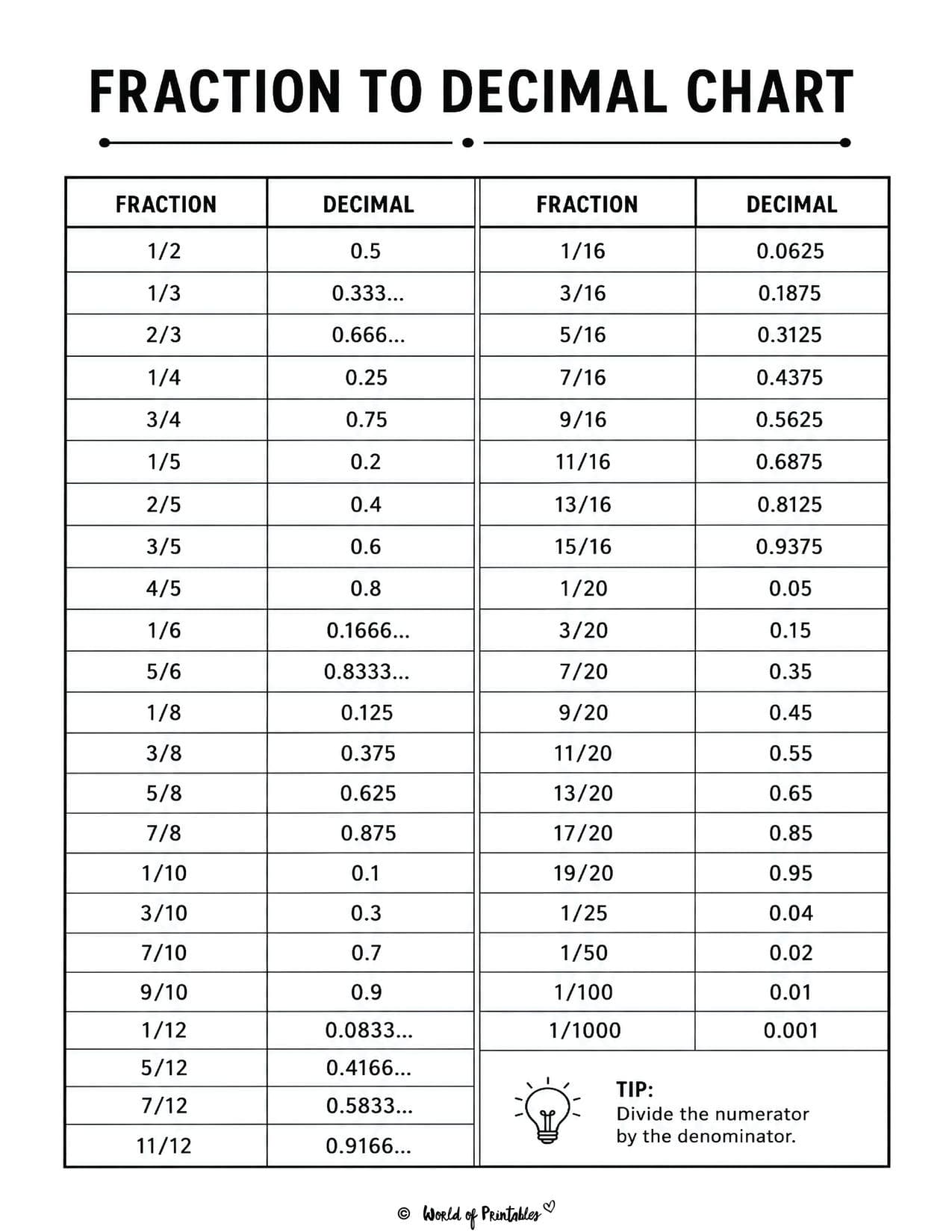
Use this general reference chart to compare common fractions with their decimal equivalents.
Some charts focus on simple fractions for students, while others include detailed inch fractions commonly used with rulers, tape measures, drill bits, tools, and construction plans.
Each chart is available as a printable image and PDF. To download a fraction to decimal chart, click the printable image or PDF link and save it to your computer. Print it on standard US Letter or A4 paper.
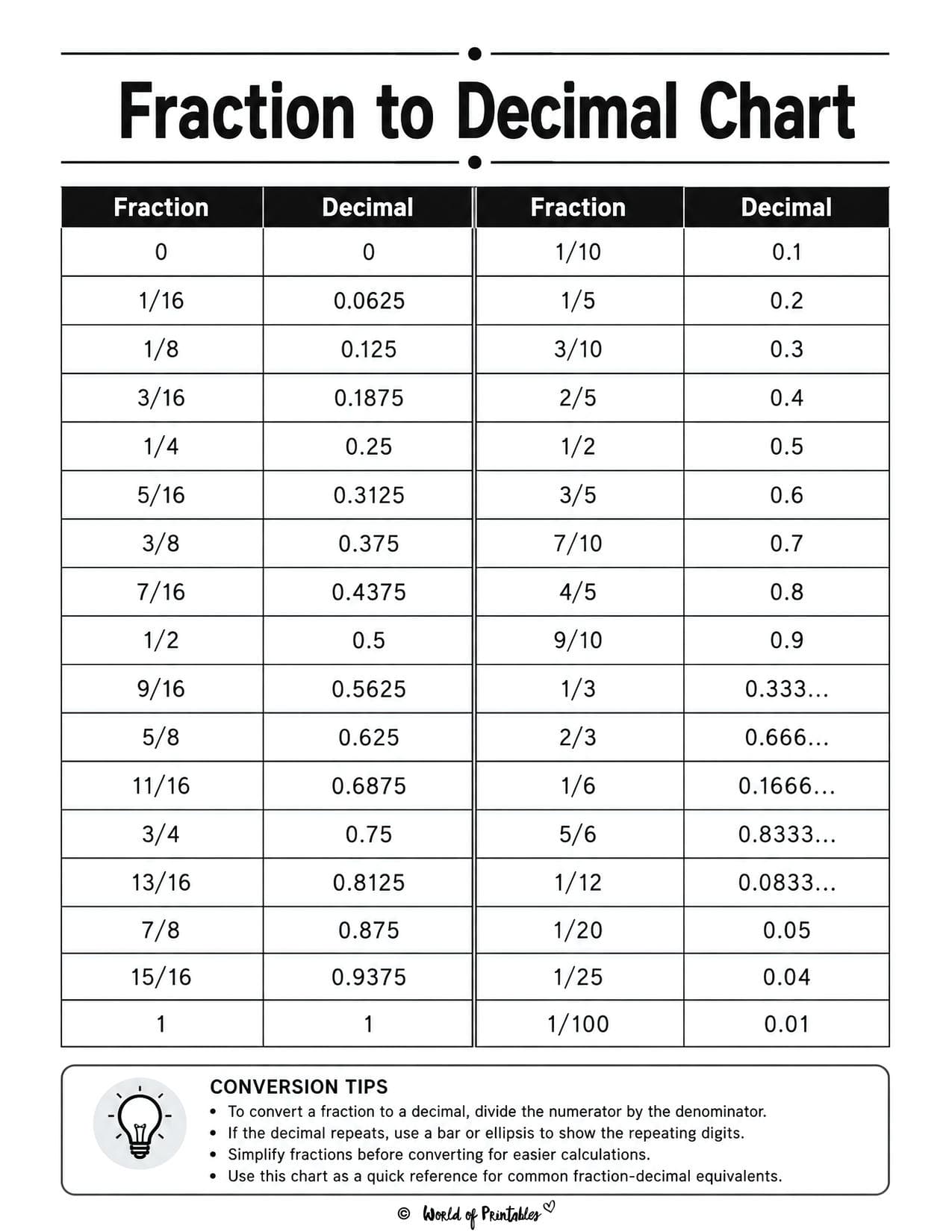
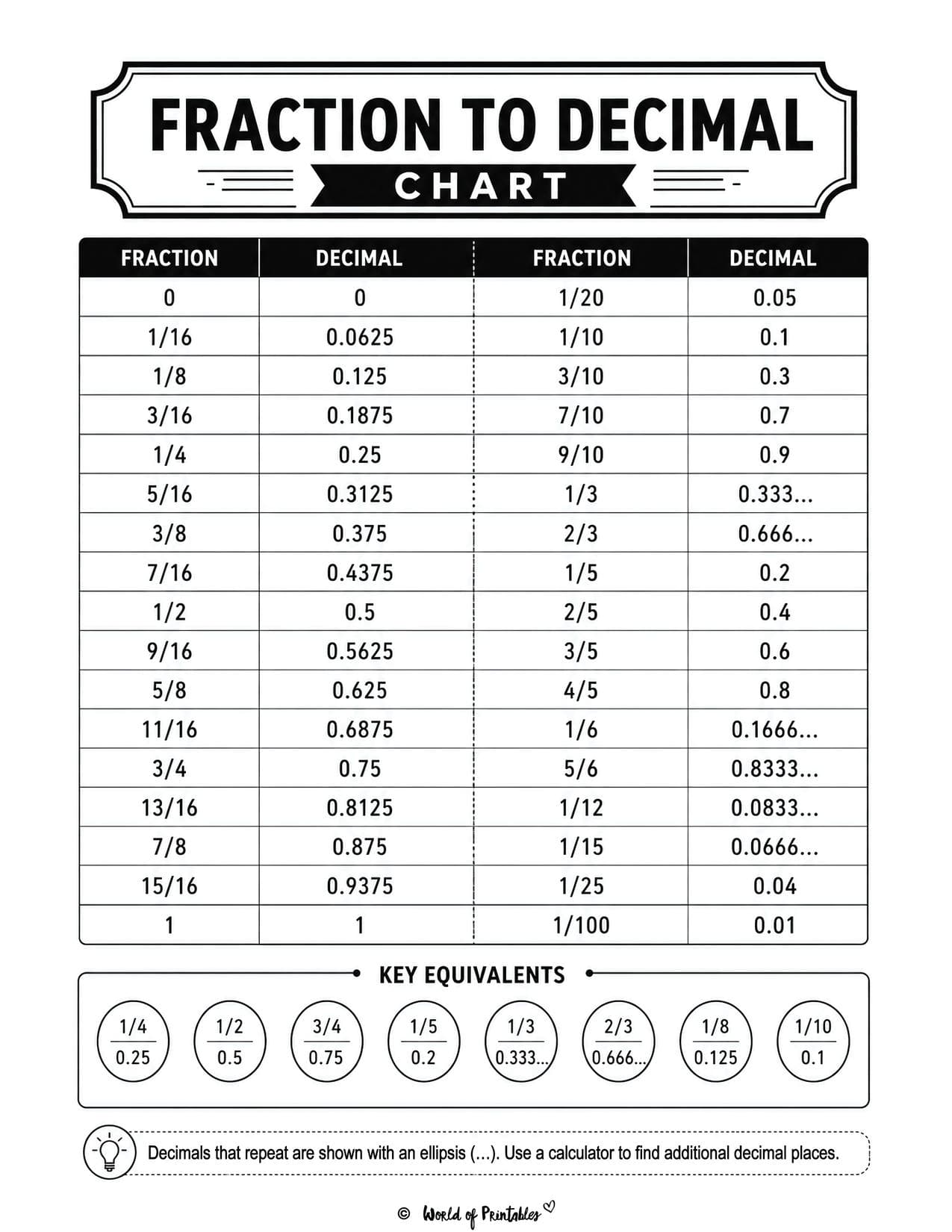
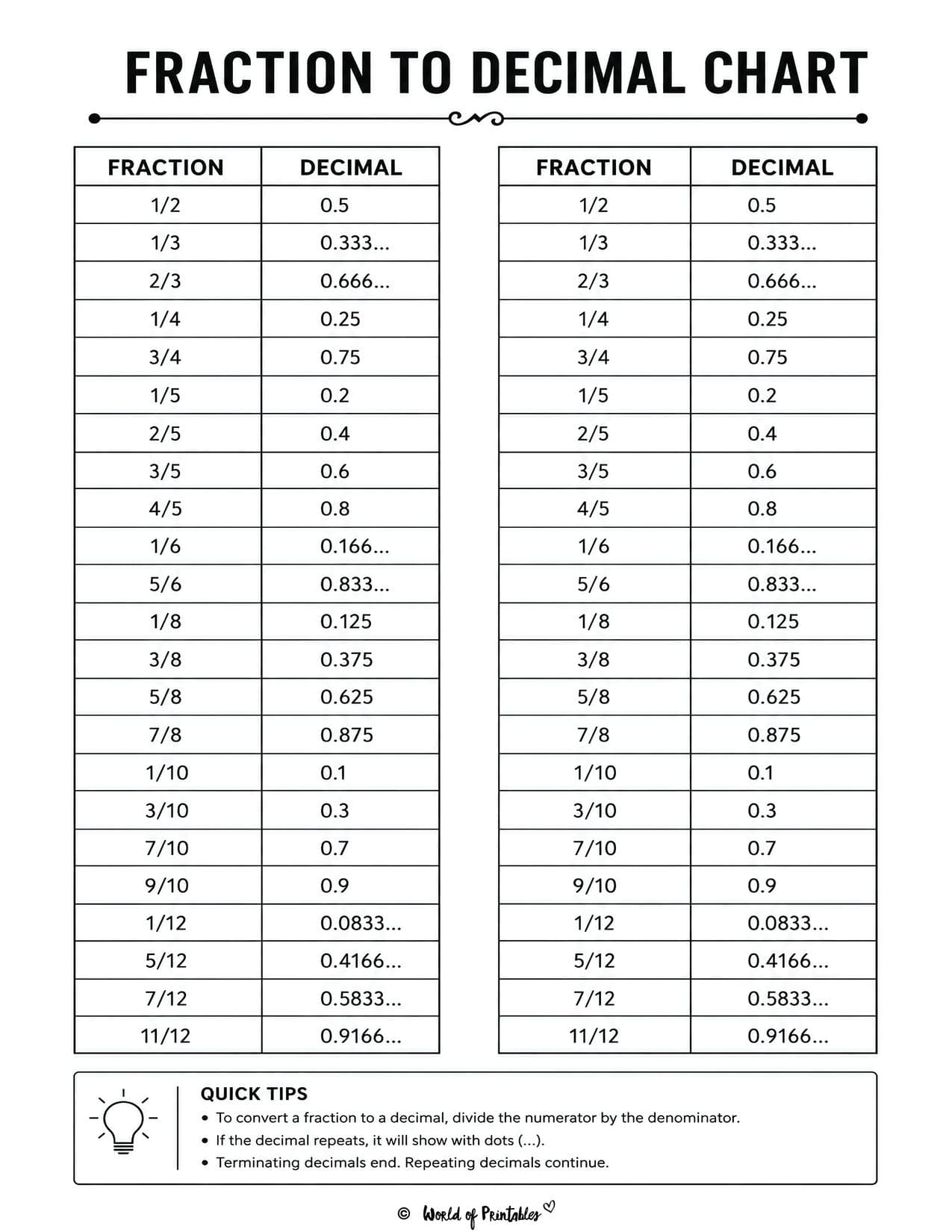
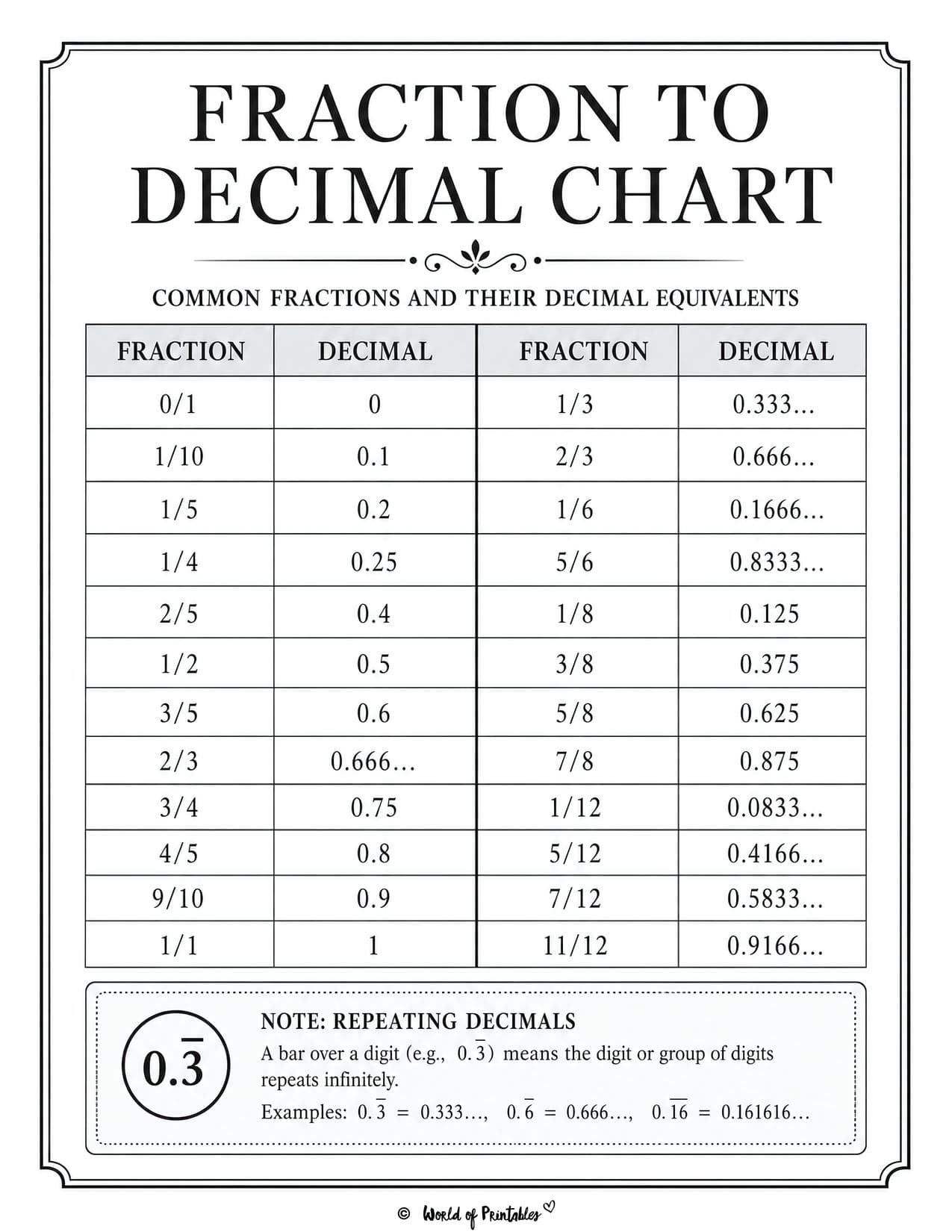
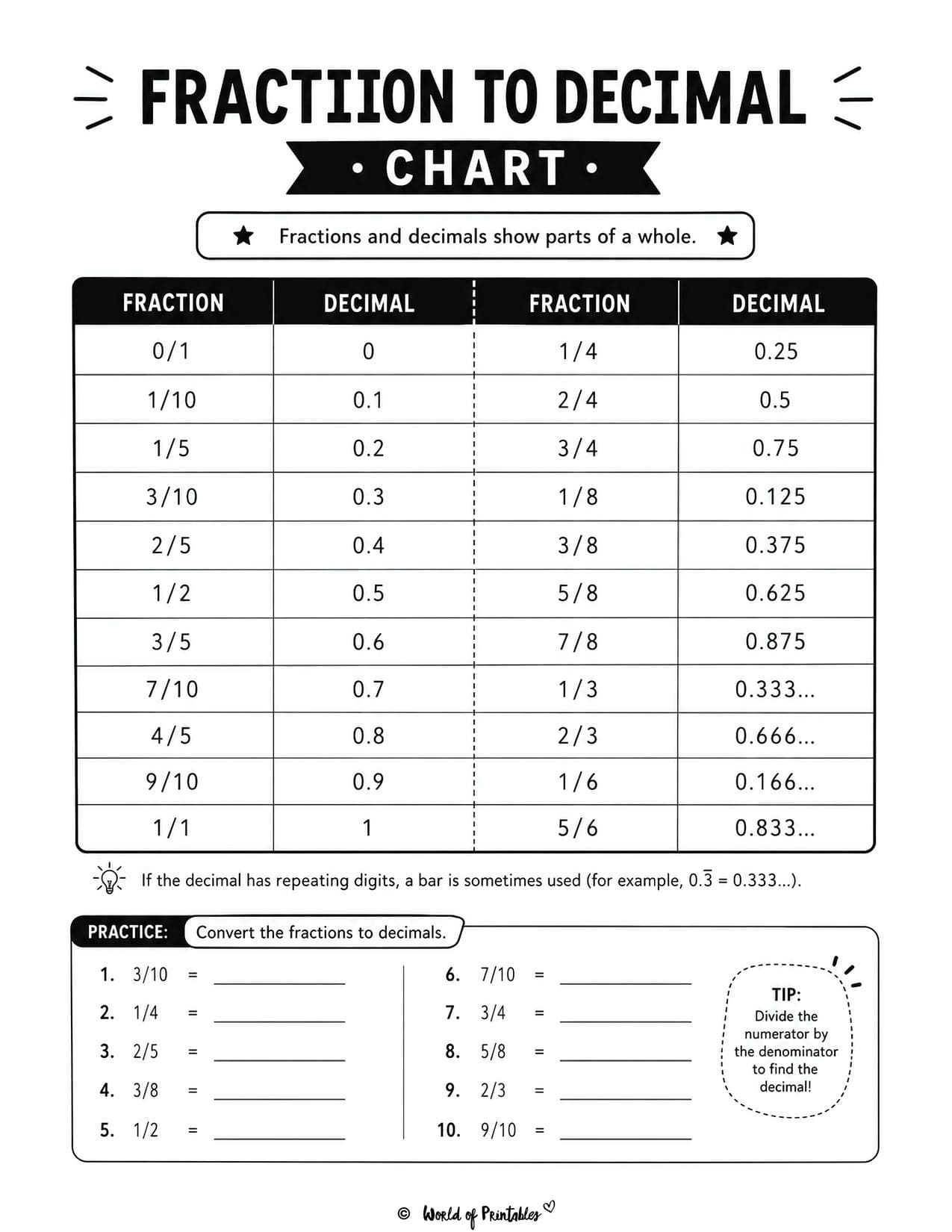
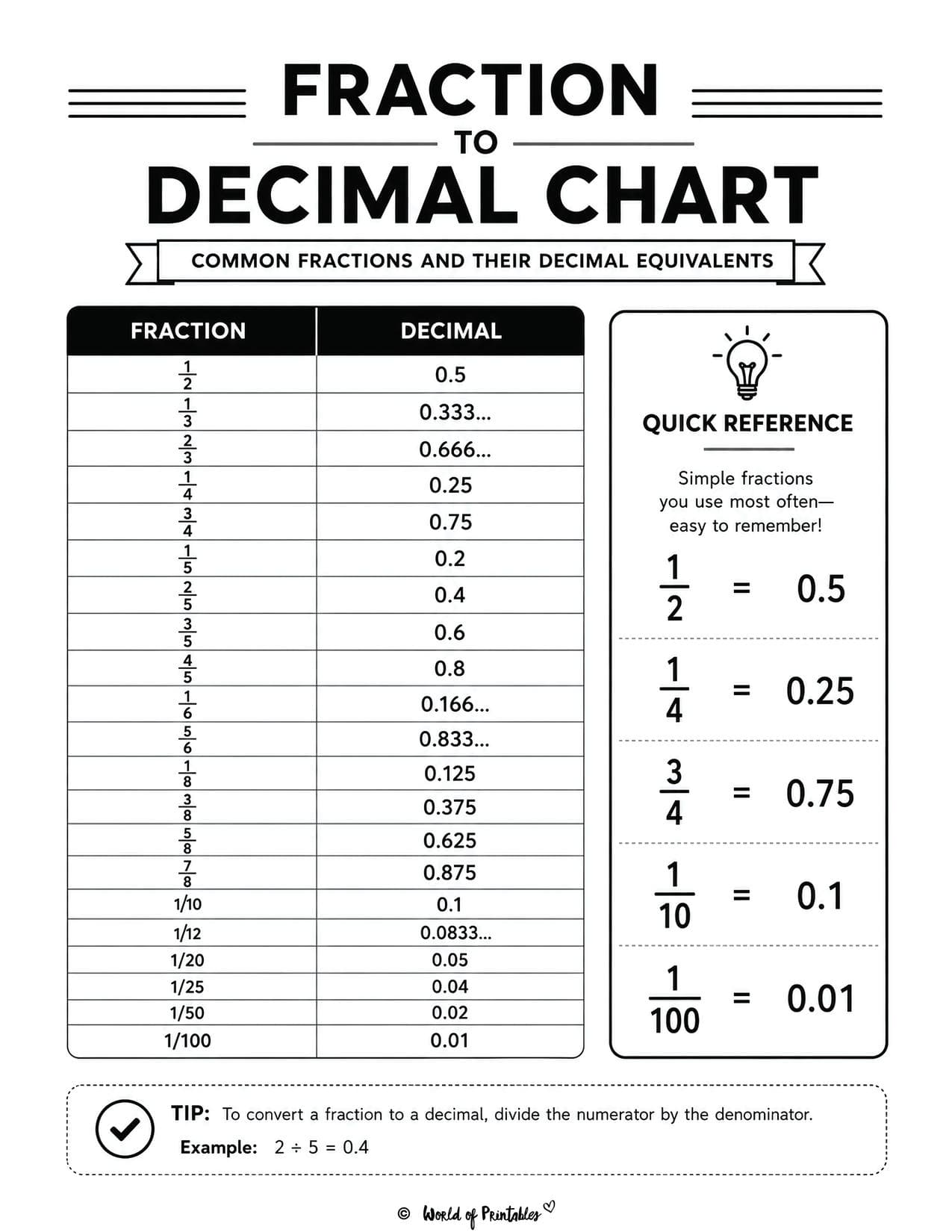
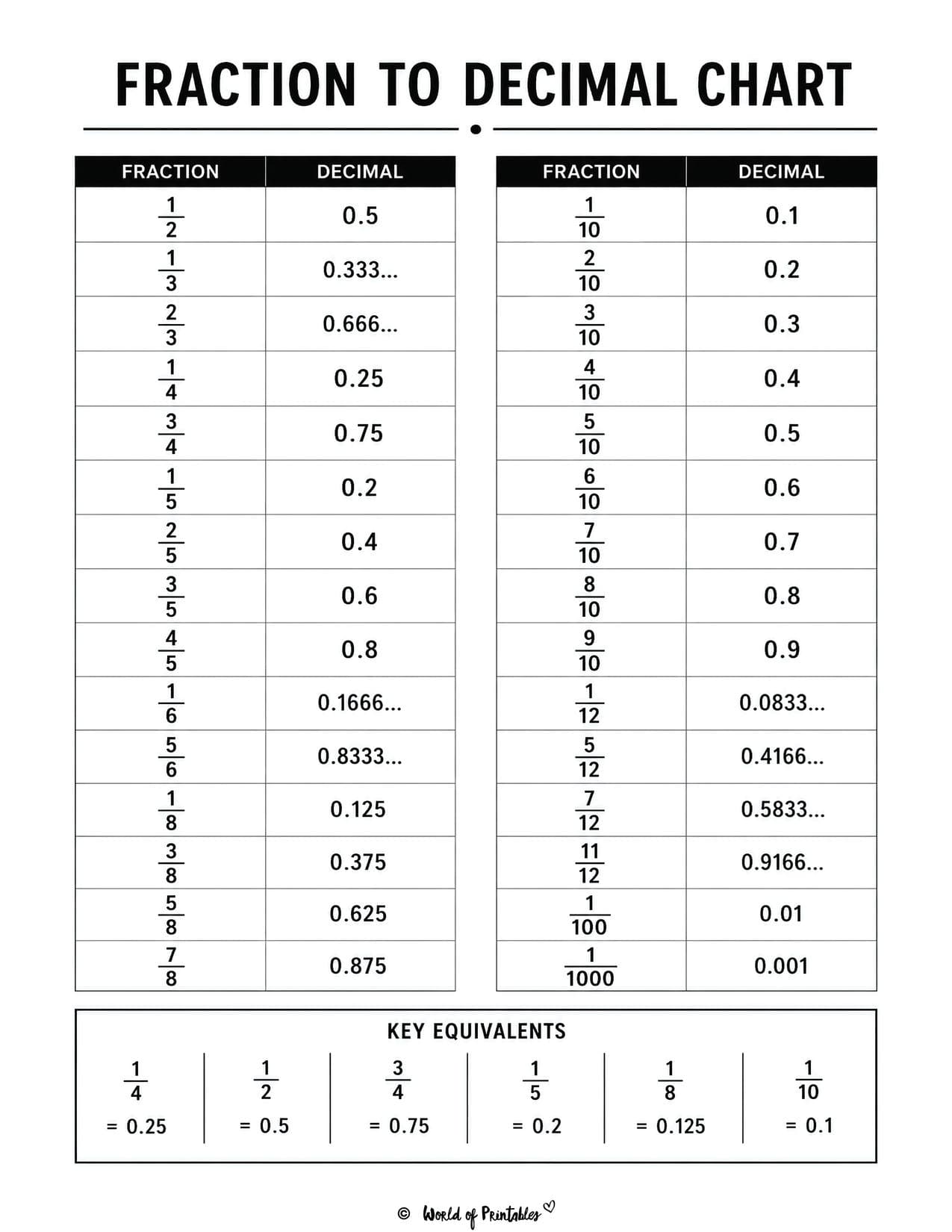
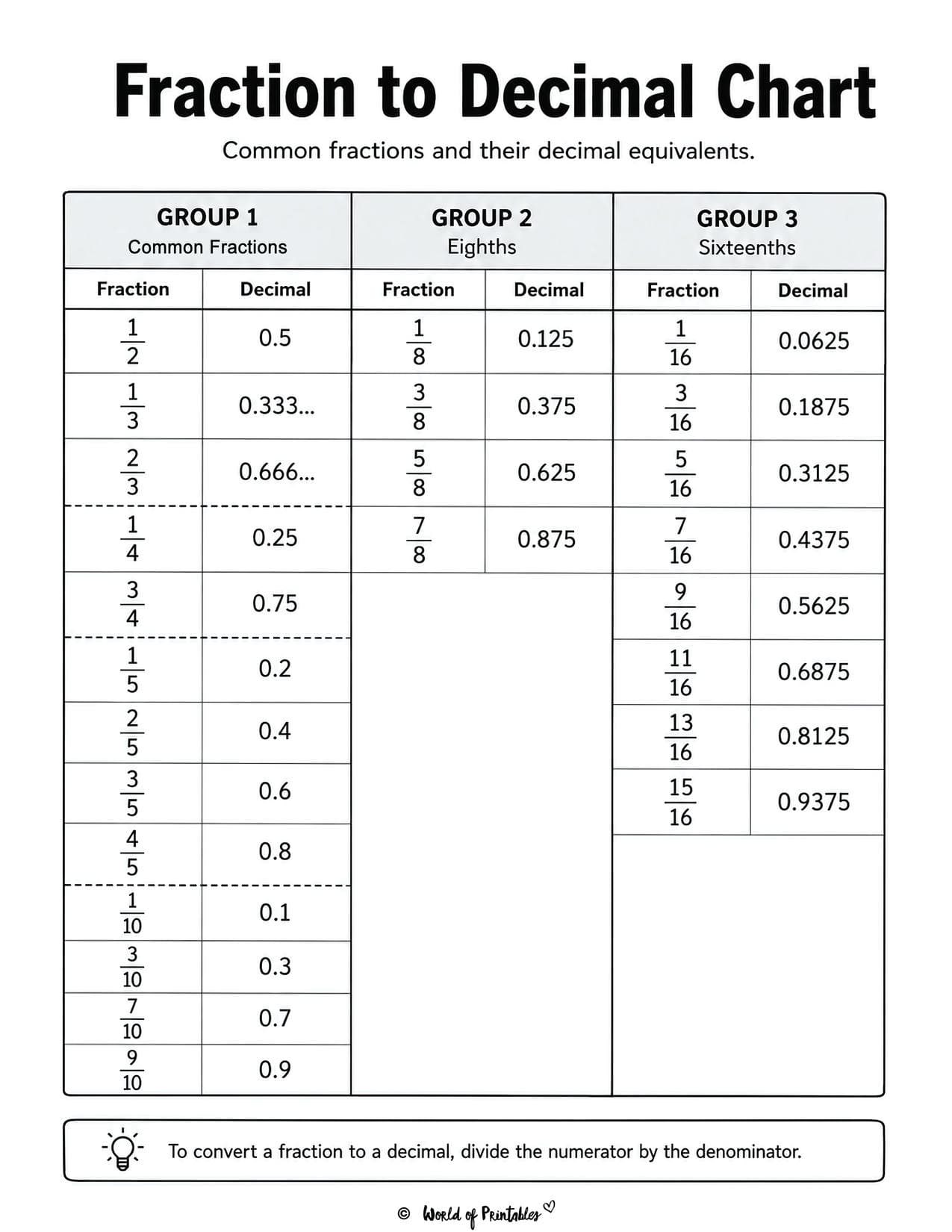
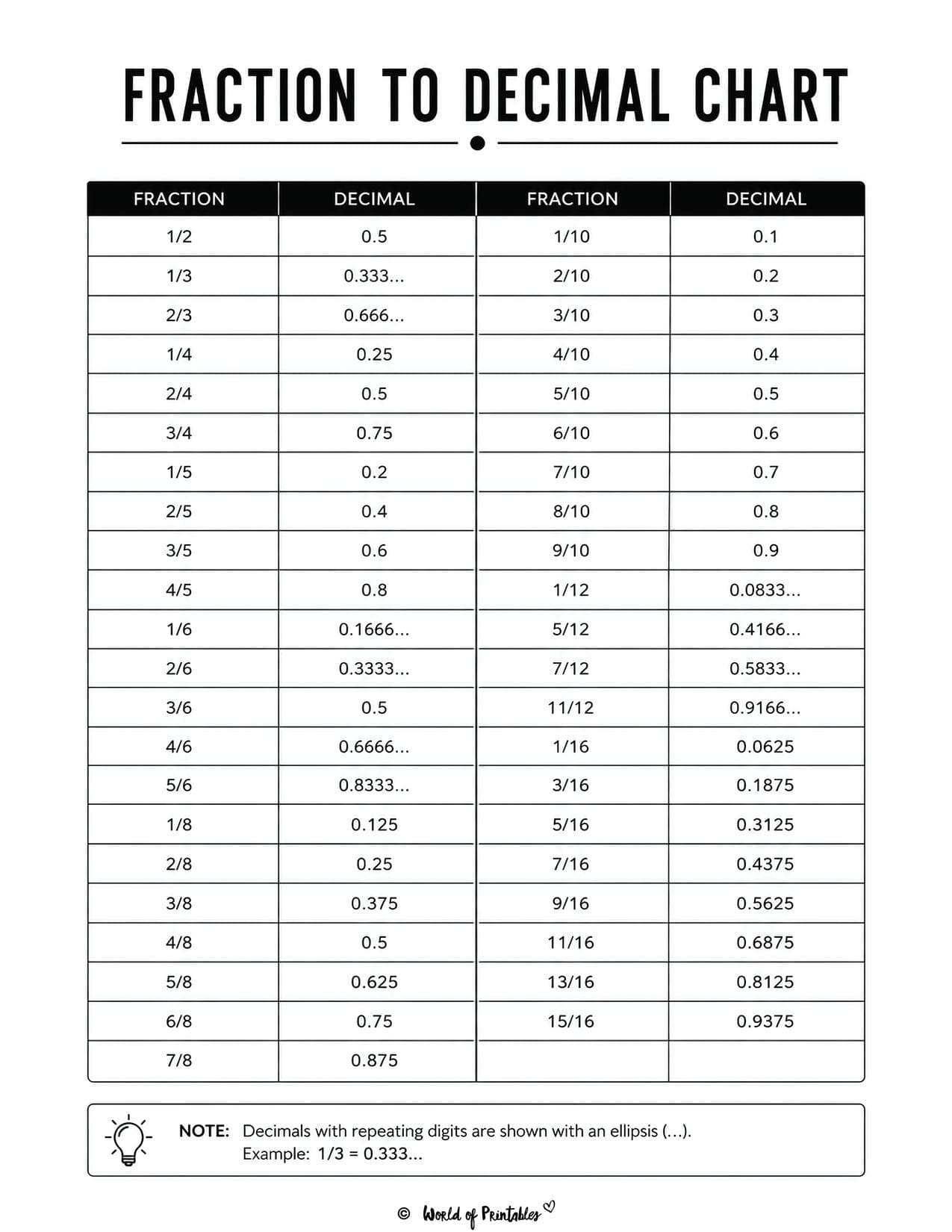
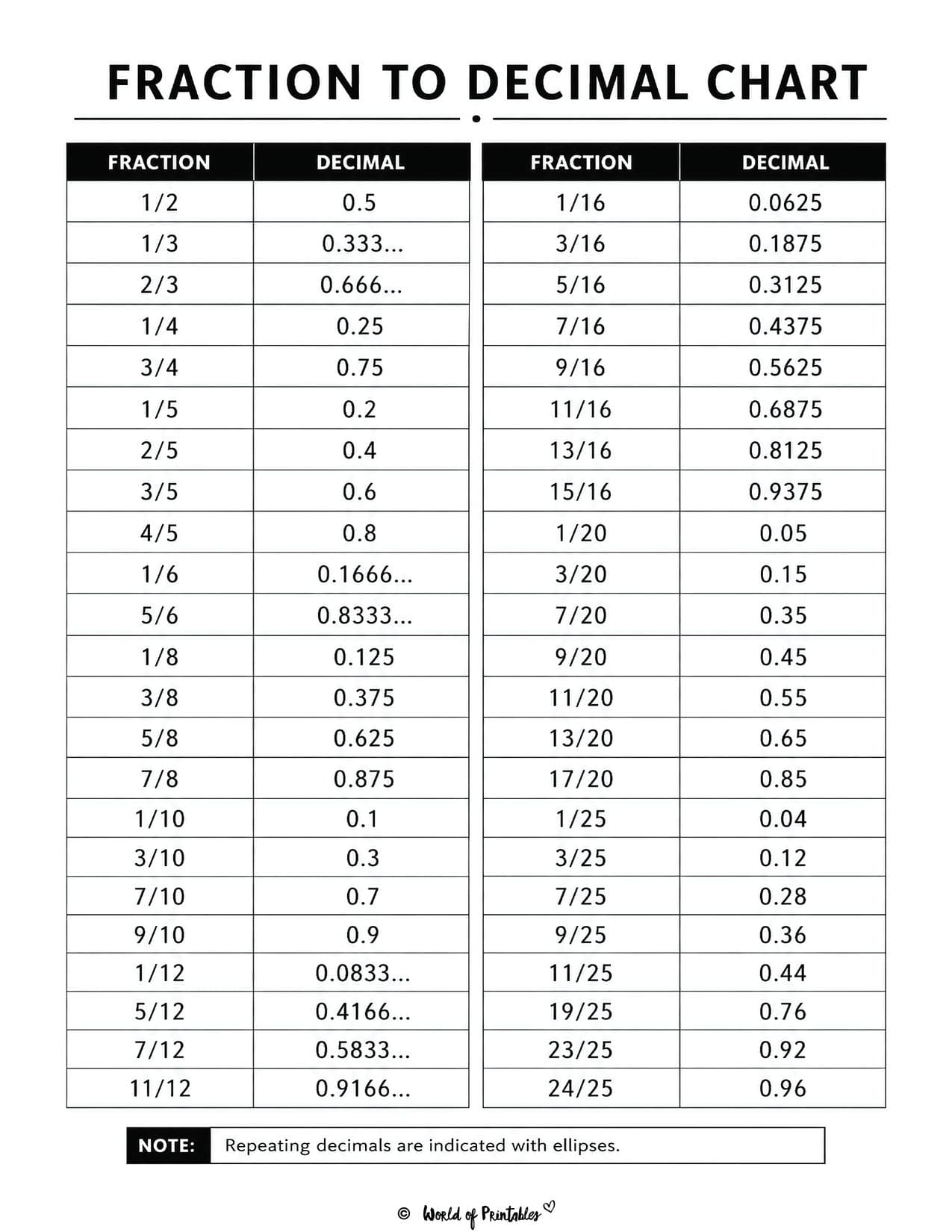
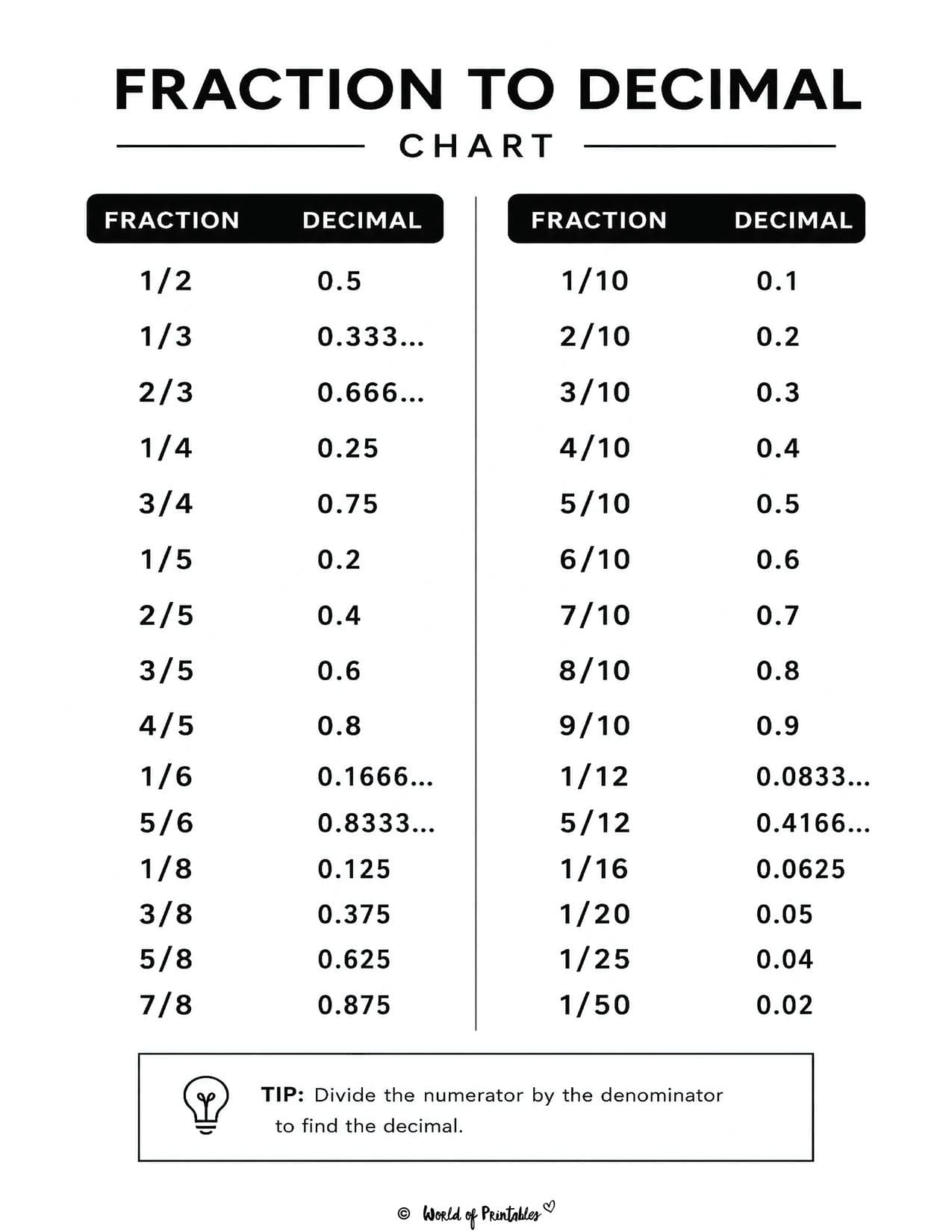
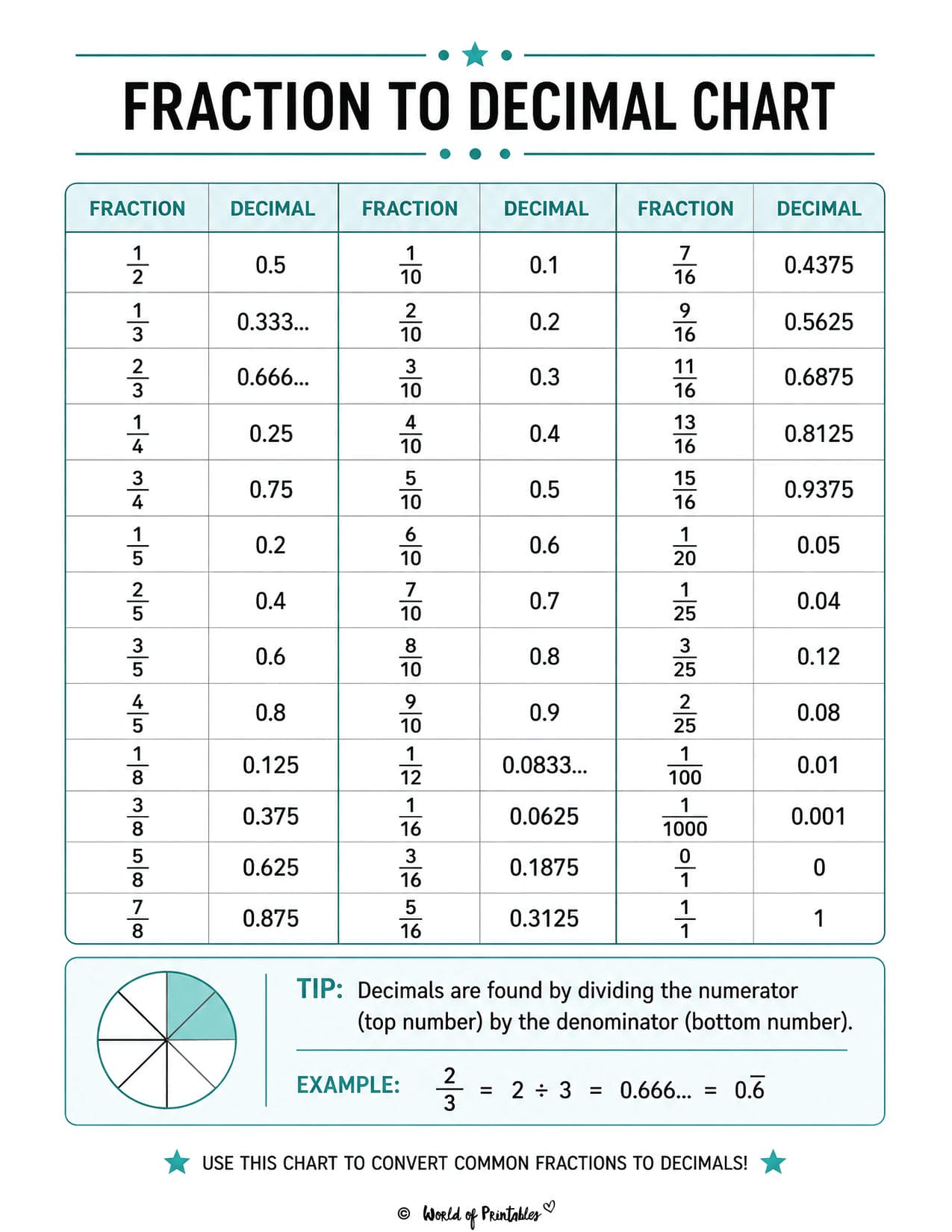
Fraction to Decimal Conversion Chart
Find a fraction in the first column and follow the row across to see its decimal value.
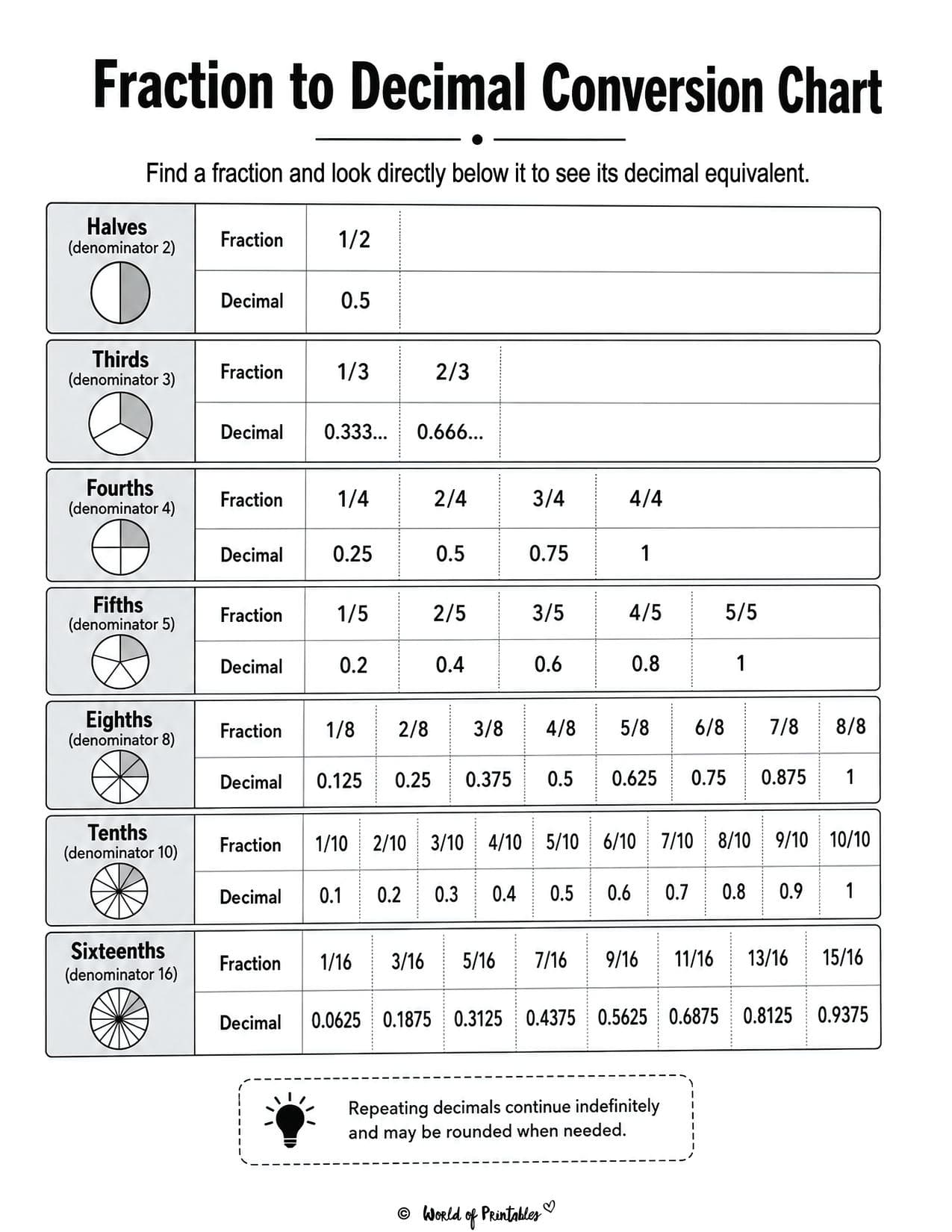
Fractions to Decimals and Percentages Chart
Compare each common fraction with its equivalent decimal and percentage.
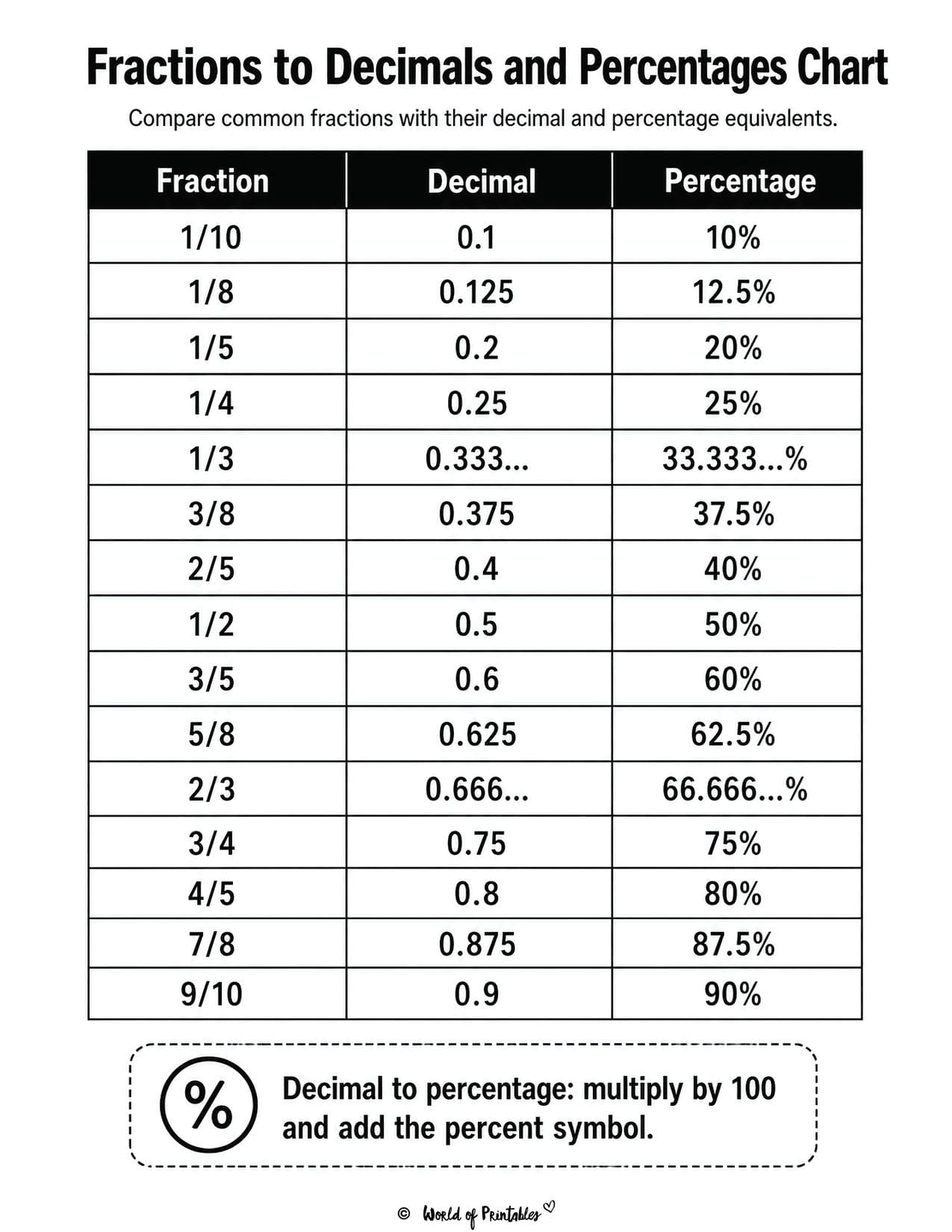
Fraction to Decimal Chart for Kids
This simple classroom chart includes familiar fractions such as halves, thirds, fourths, fifths, eighths, and tenths.
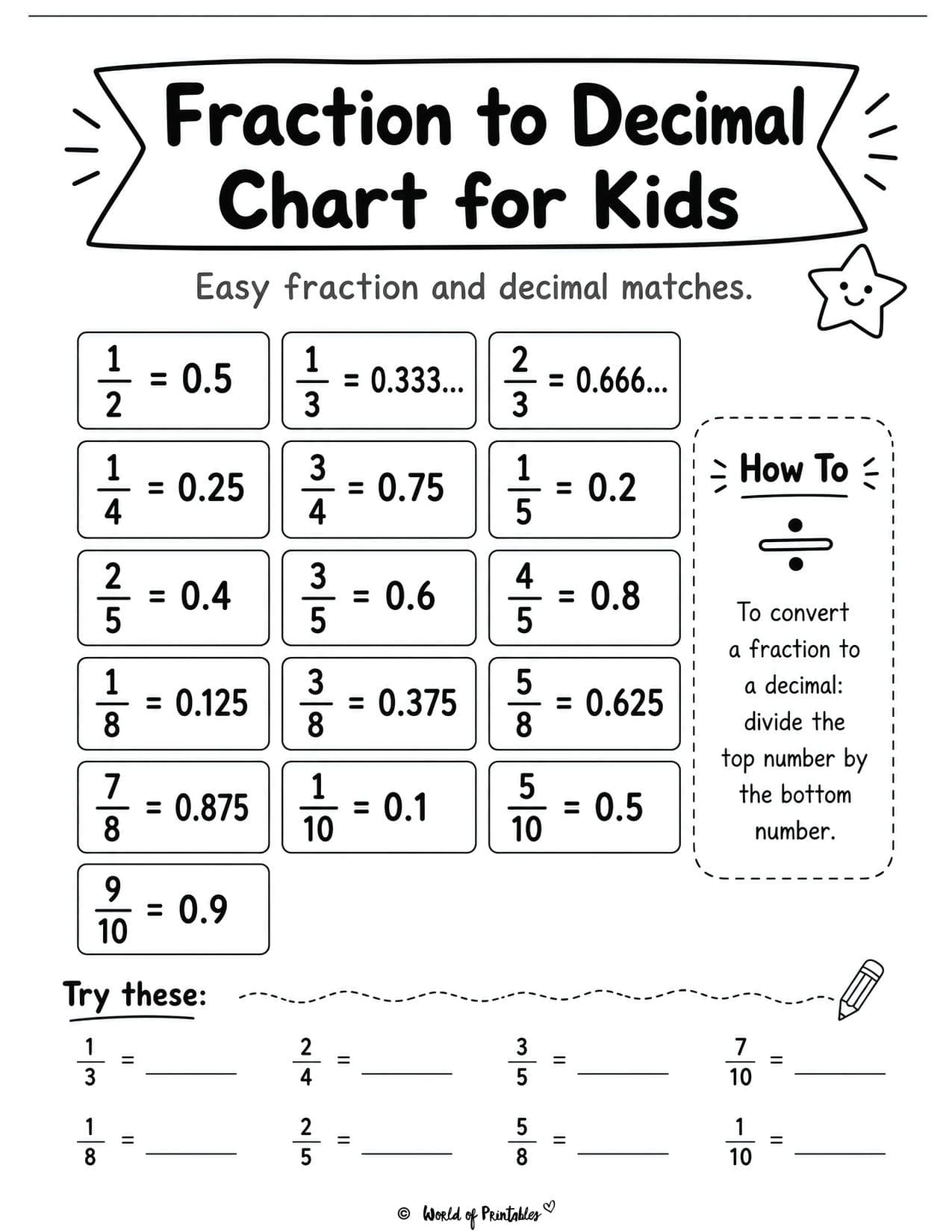
Fraction to Decimal Inches Chart
Convert fractional inch measurements into decimal inches for woodworking, construction, sewing, and other measuring tasks.
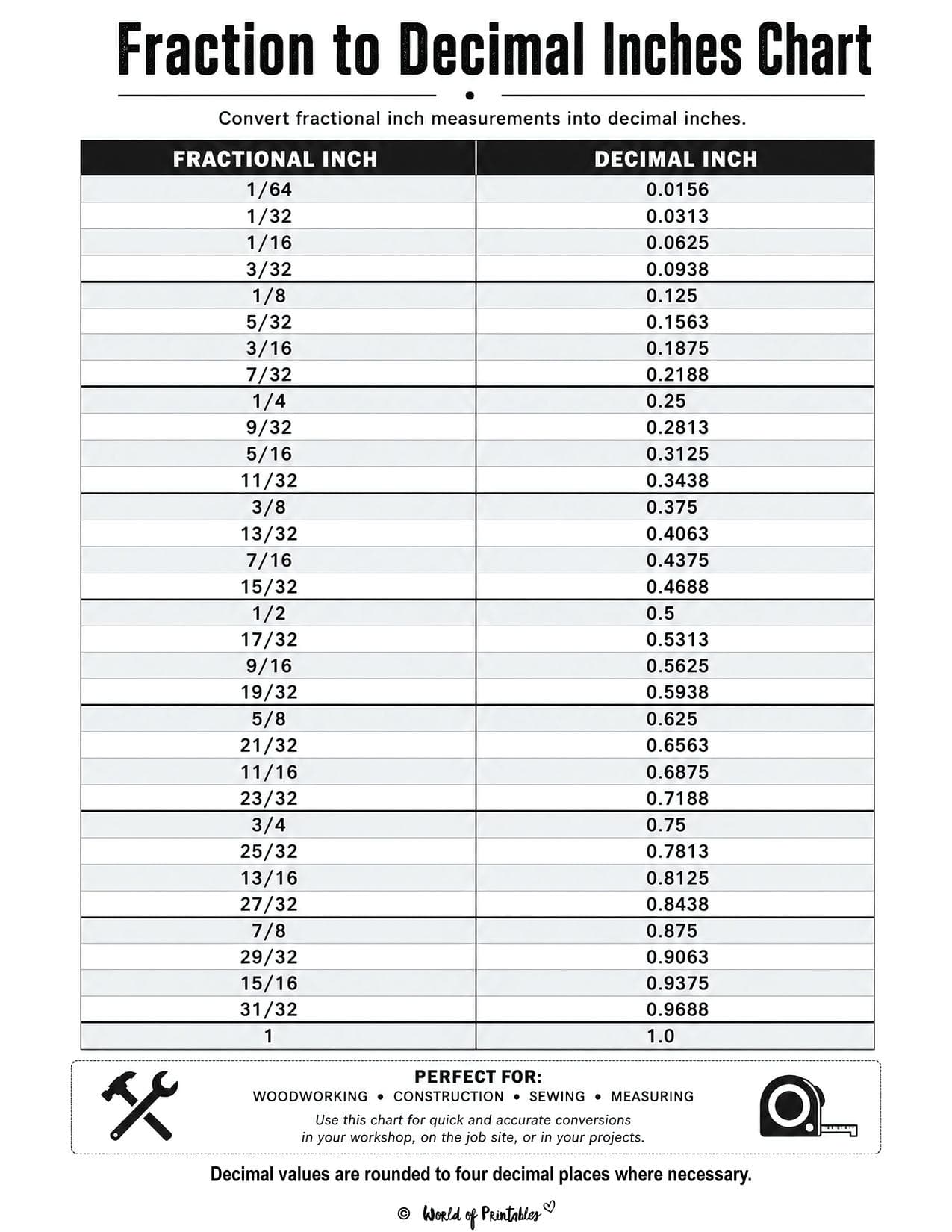
Fraction to Decimal Chart in Sixteenths
Use this printable to convert inch fractions from 1/16 through 15/16.
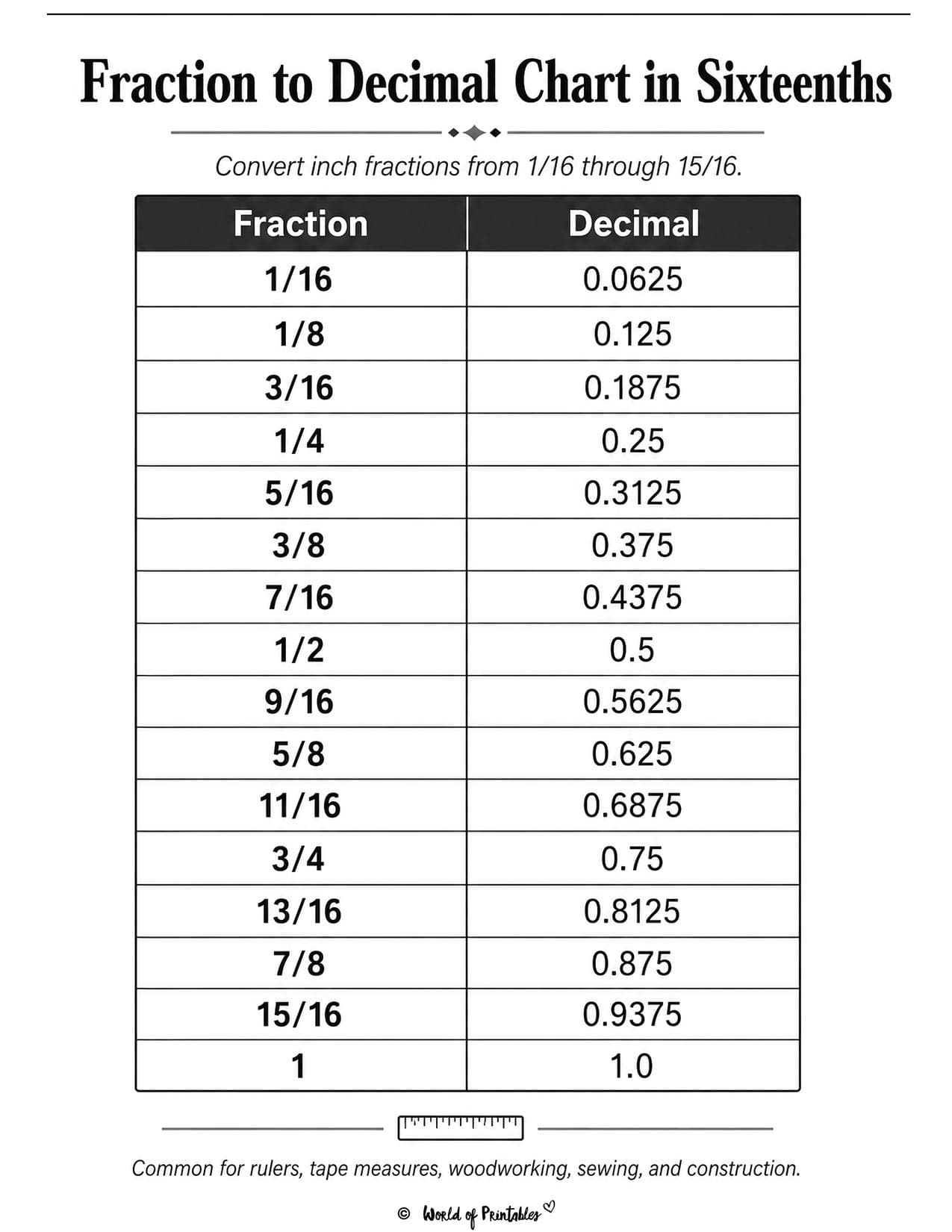
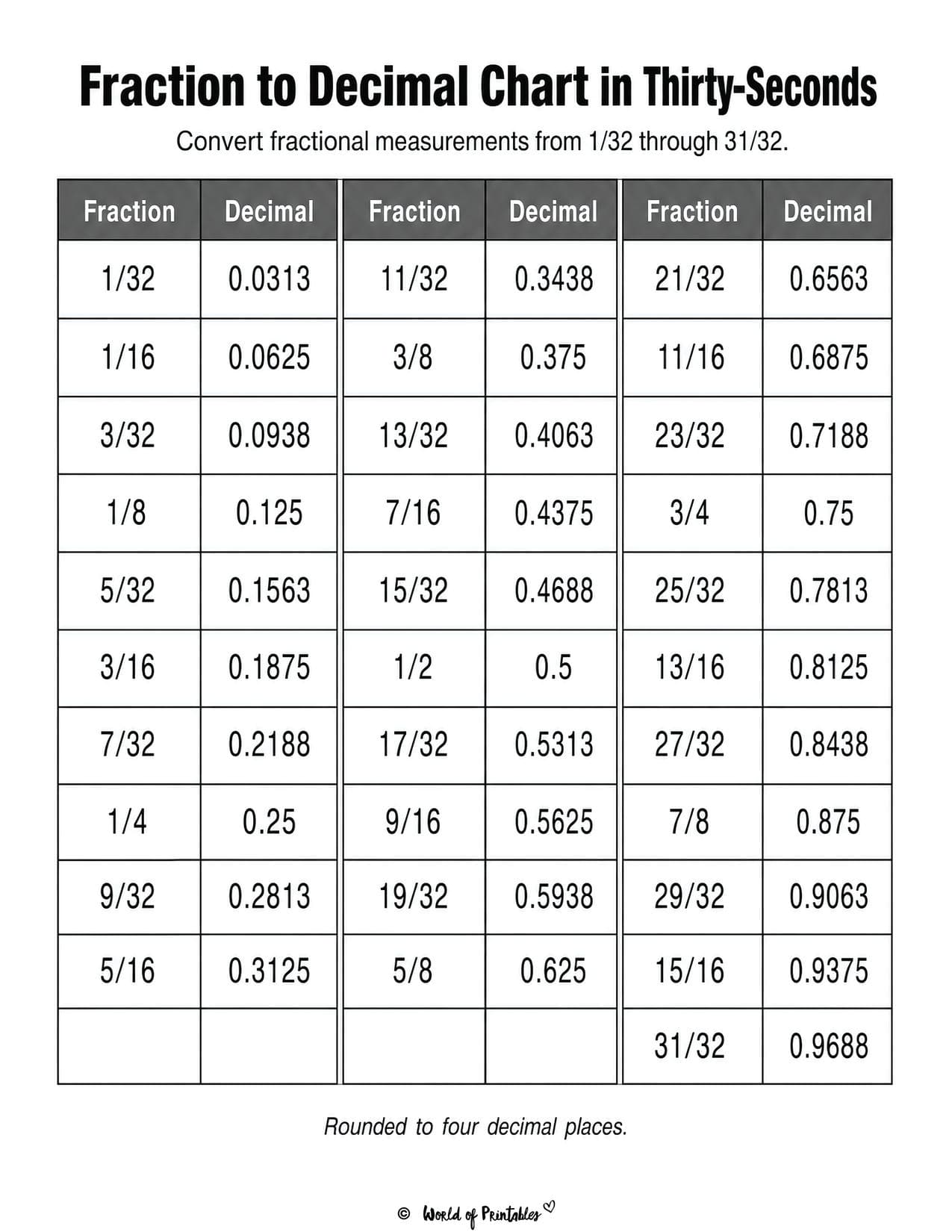
Fraction to Decimal Chart in Thirty-Seconds
This detailed chart includes fractional measurements from 1/32 through 31/32.
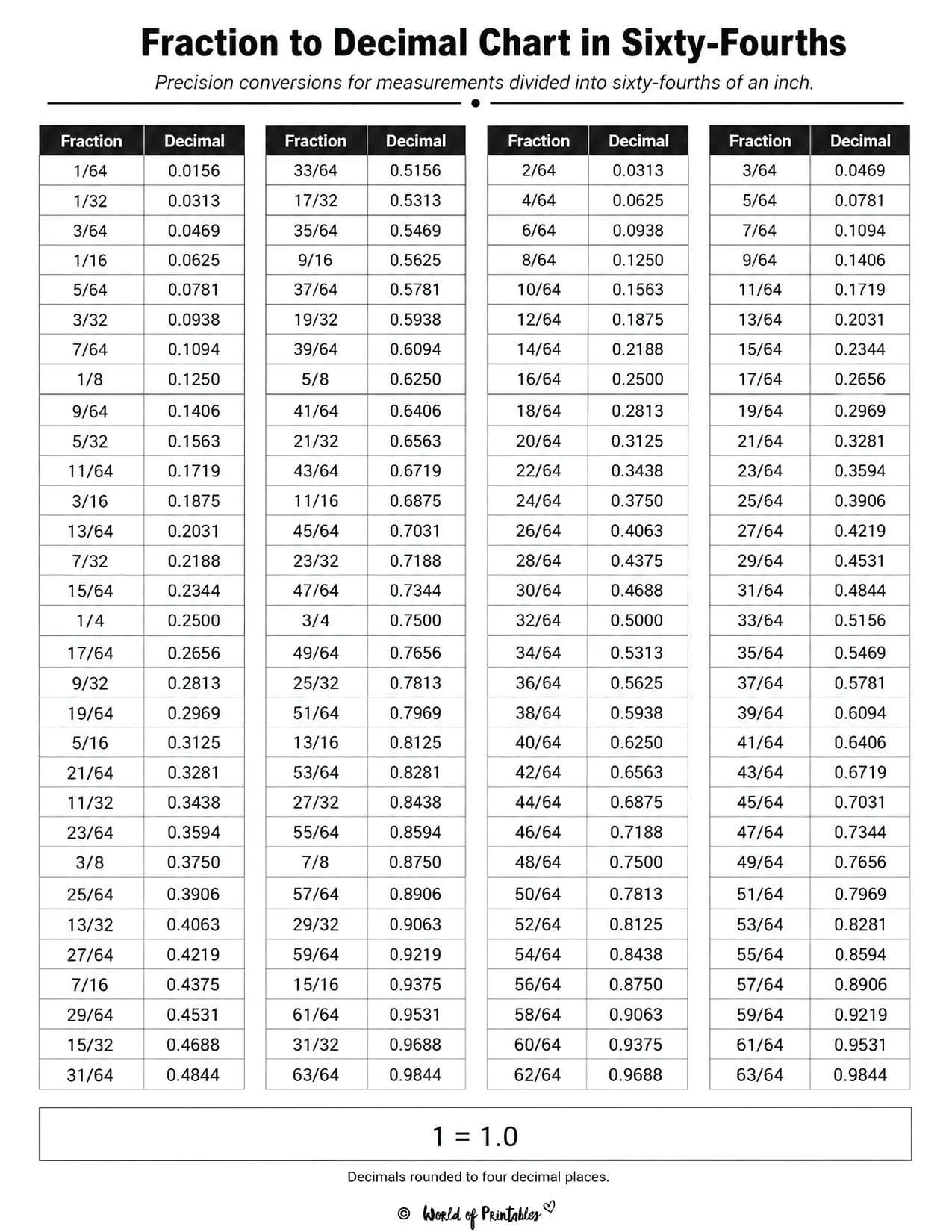
Fraction to Decimal Chart in Sixty-Fourths
Use this precision chart for measurements divided into sixty-fourths of an inch.
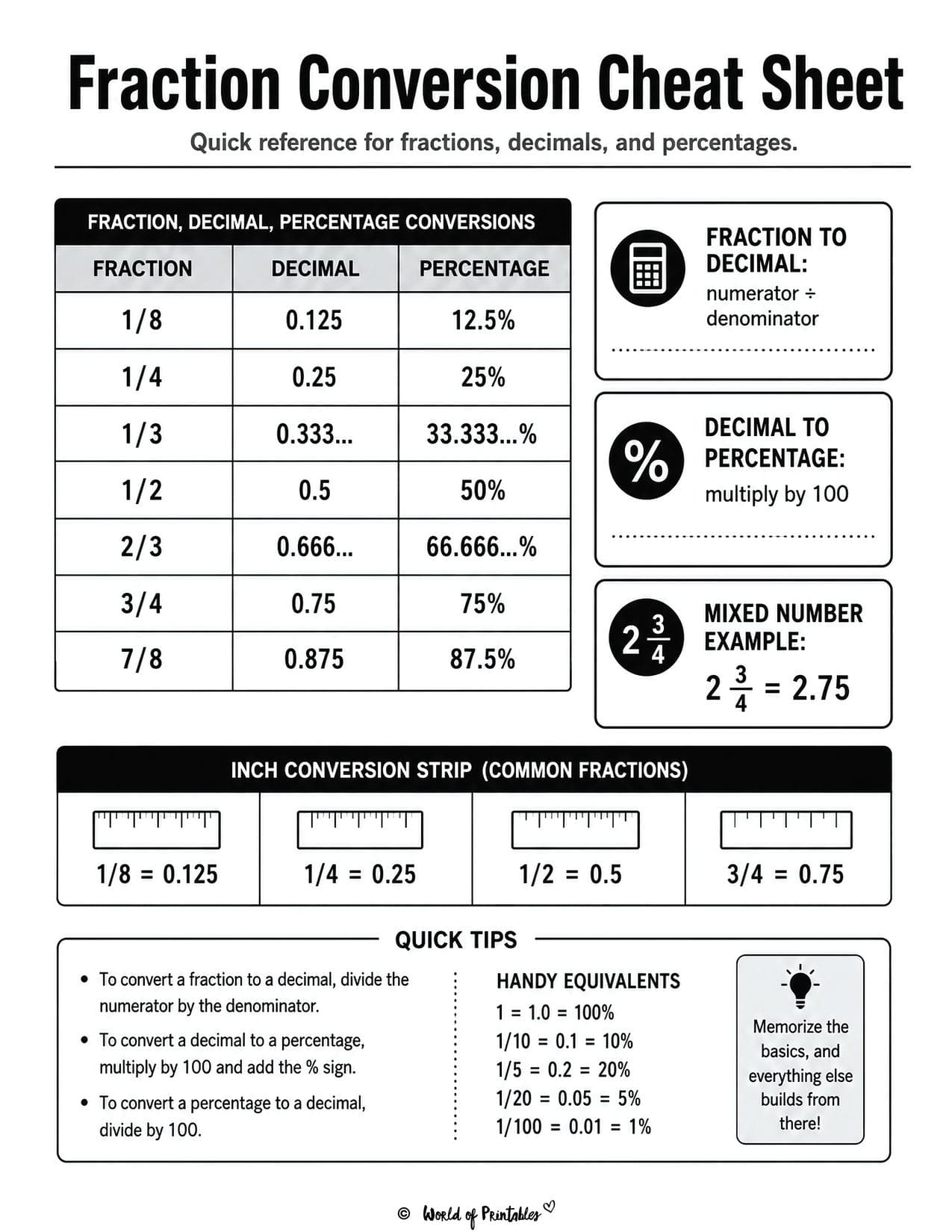
Fraction Conversion Cheat Sheet
This compact reference combines fractions, decimals, and percentages on one page.
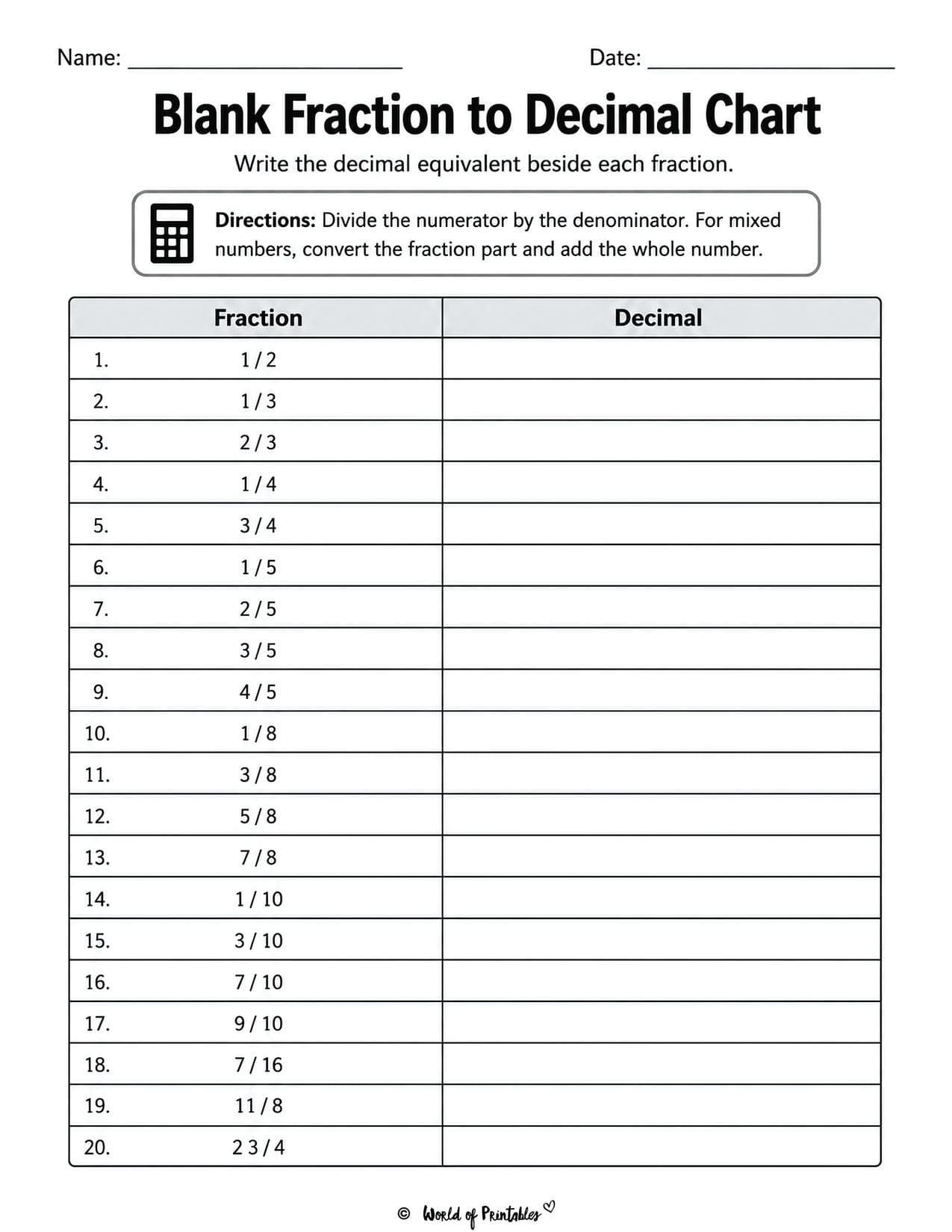
Blank Fraction to Decimal Chart
Students can calculate and write the decimal equivalent beside each fraction.
Using a Fraction to Decimal Chart for Math
Students can use these printable charts to:
- Check fraction conversions
- Compare the sizes of fractions
- Learn common decimal equivalents
- Connect fractions with percentages
- Complete homework
- Practice ordering numbers
- Identify equivalent fractions
- Check calculator answers
- Review for tests
- Complete measurement activities
Encourage students to calculate the answer first and use the chart to check their work. This helps develop the conversion skill rather than relying only on memorization.
Using these Charts for Cooking and Baking
US recipes commonly use fractions for cup, tablespoon, and teaspoon measurements.
A conversion chart can help when:
- Scaling a recipe
- Dividing a recipe
- Using a digital kitchen scale
- Recording ingredient quantities
- Comparing serving sizes
- Entering values into a calculator or spreadsheet
For example, 3/4 cup can be entered as 0.75 cup when using a recipe calculator.
Remember that decimal volume and decimal weight are not interchangeable. A decimal cup measurement does not tell you how many ounces an ingredient weighs.
Using these Charts for Sewing and Crafts
Sewing patterns, quilting instructions, and craft projects often use measurements in halves, fourths, eighths, and sixteenths of an inch.
A fraction to decimal inches chart can help when using:
- Digital measuring tools
- Design software
- Cutting machines
- Pattern drafting programs
- Spreadsheets
- Quilting calculators
- Printable templates
Check whether the project uses inches or metric measurements before converting.
Using these Charts for Woodworking and Construction
Woodworking and construction plans in the United States often use fractional inches, while digital calipers, calculators, and some tools display decimals.
The chart can help convert measurements such as:
- 1/8 inch to 0.125 inch
- 1/4 inch to 0.25 inch
- 3/8 inch to 0.375 inch
- 1/2 inch to 0.5 inch
- 5/8 inch to 0.625 inch
- 3/4 inch to 0.75 inch
- 7/8 inch to 0.875 inch
Use the detailed thirty-seconds or sixty-fourths chart when a project requires finer measurements.
Always follow the tolerance specified in the project plans. A rounded decimal may not be precise enough for machining, engineering, or close-fit components.
Printing the Fraction to Decimal Charts
Print these charts on standard US Letter or A4 paper.
Use portrait orientation for smaller classroom charts and landscape orientation for detailed thirty-second or sixty-fourth conversion tables.
Choose actual size or 100 percent scale in your printer settings.
You can laminate the chart or place it in a clear page protector for repeated use. Keep a copy in a math binder, workshop, classroom, kitchen, sewing room, or tool box.
Fraction to Decimal Chart Accuracy Note
These charts provide standard mathematical conversions, but some fractions produce repeating decimals that must be rounded for display.
Use an appropriate number of decimal places for your task. Classroom assignments may specify a rounding place, while woodworking, construction, engineering, machining, and other precision tasks may require tighter tolerances.
Always follow the measurements, accuracy requirements, and safety instructions provided for the specific project.
More Free Math and Conversion Charts
Use these related printables for math, measuring, cooking, and practical conversions:
- Multiplication Chart Printable
- 100 Chart Printable
- Roman Numerals Chart
- MM to Inches Conversion Chart
- Drill Bit Size Chart
- Printable Ruler
- Printable Tape Measure
- Baking Conversion Chart
- Oven to Air Fryer Conversion Chart
- Printable Protractor

COPYRIGHT
The printables that you find here are the copyright of World of Printables – you cannot redistribute or sell any of these printables or templates, although you can link back to our website.

AI TRANSPARENCY: Whilst the majority of our creations have been created completely traditionally, occasionally we utilize AI tools in our design process. We acknowledge the advancements in AI technology and leverage them responsibly to optimize our creative output. However, it is important to note that our utilization of AI does not compromise the human element of our work. Our commitment to delivering high-quality designs through a balanced integration of traditional expertise and AI enhancements remains paramount.