

Our printable drill bit charts provide a quick workshop reference for woodworking, metalworking, home repairs, fastener work, and threaded holes. Use the chart to find the nearest comparison size, then confirm the exact bit required by your plans, hardware manufacturer, or tap chart before drilling.
About the charts: Decimal and metric equivalents may be rounded for readability. “Nearest” fractional, number, letter, or metric sizes are comparisons only and may be slightly larger or smaller than the original diameter. Where a manufacturer or project specification gives a required drill size, use that specified size.
Drill Bit Size Charts
Choose from our collection of drill bit size charts and conversion guides.
Use these general charts to compare common US fractional drill sizes with decimal-inch and metric equivalents.
Some charts focus on common fractional drill bits, while others compare fractional, numbered, lettered, decimal, and metric sizes.
Each printable is available as an image and PDF. To download a drill bit size chart, click the printable image or PDF link and save it to your computer.
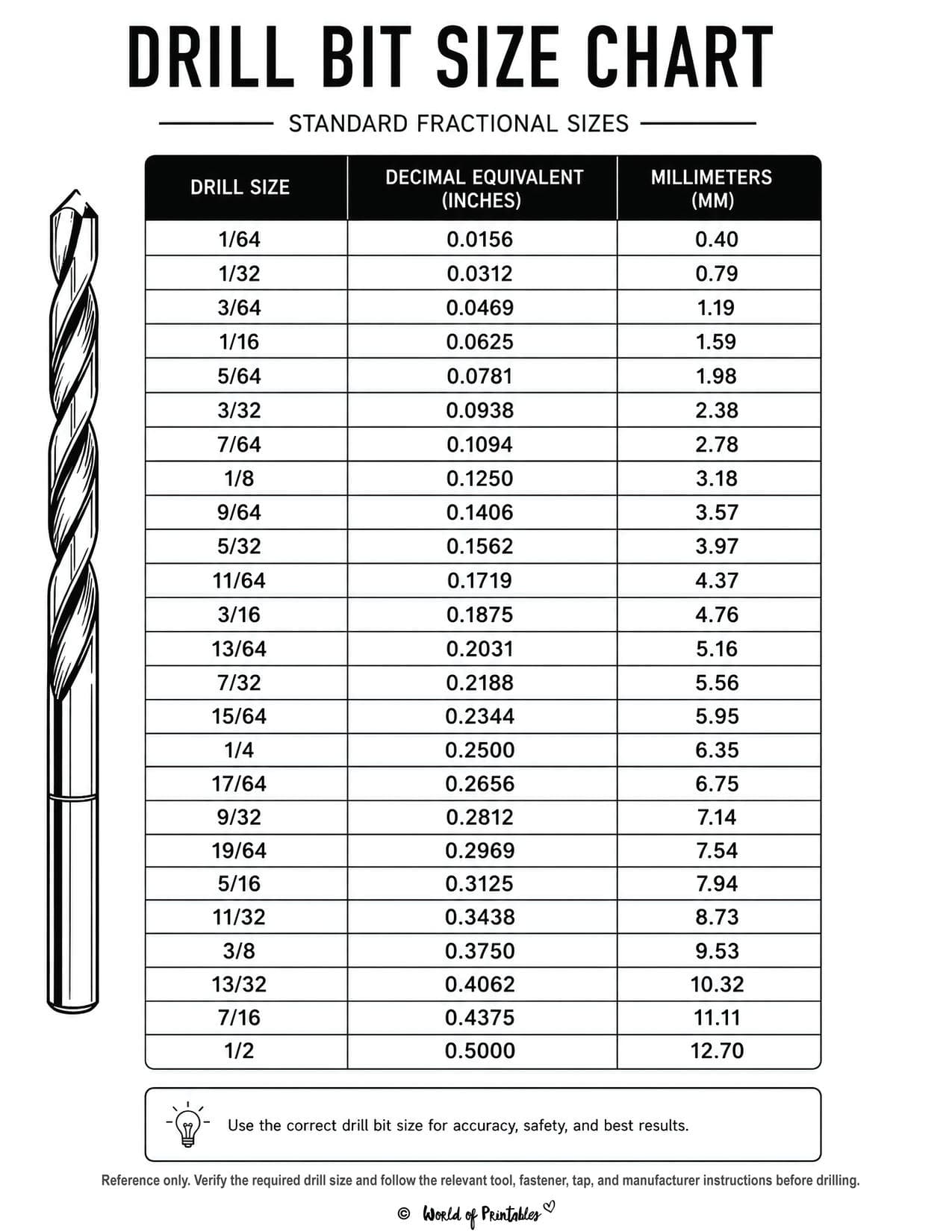
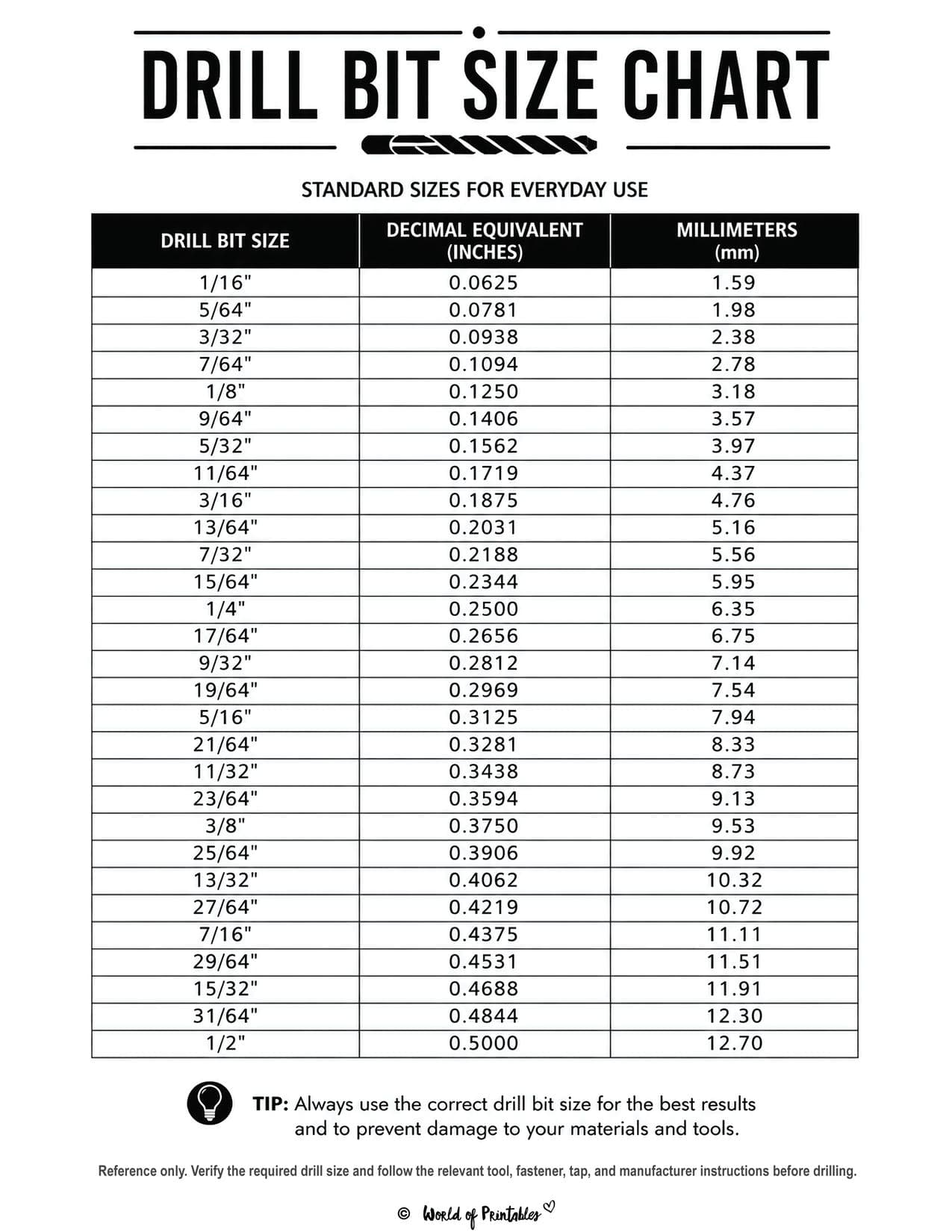
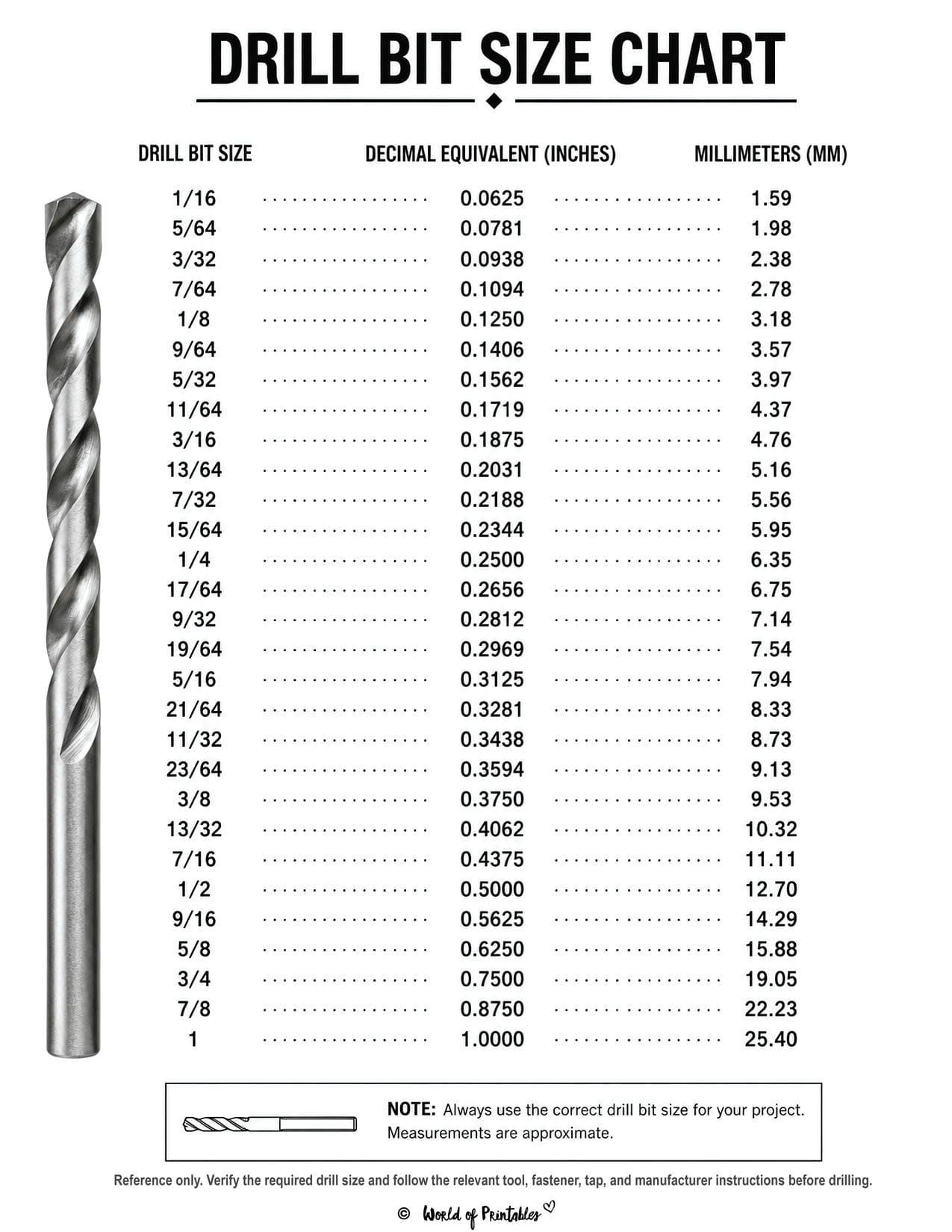
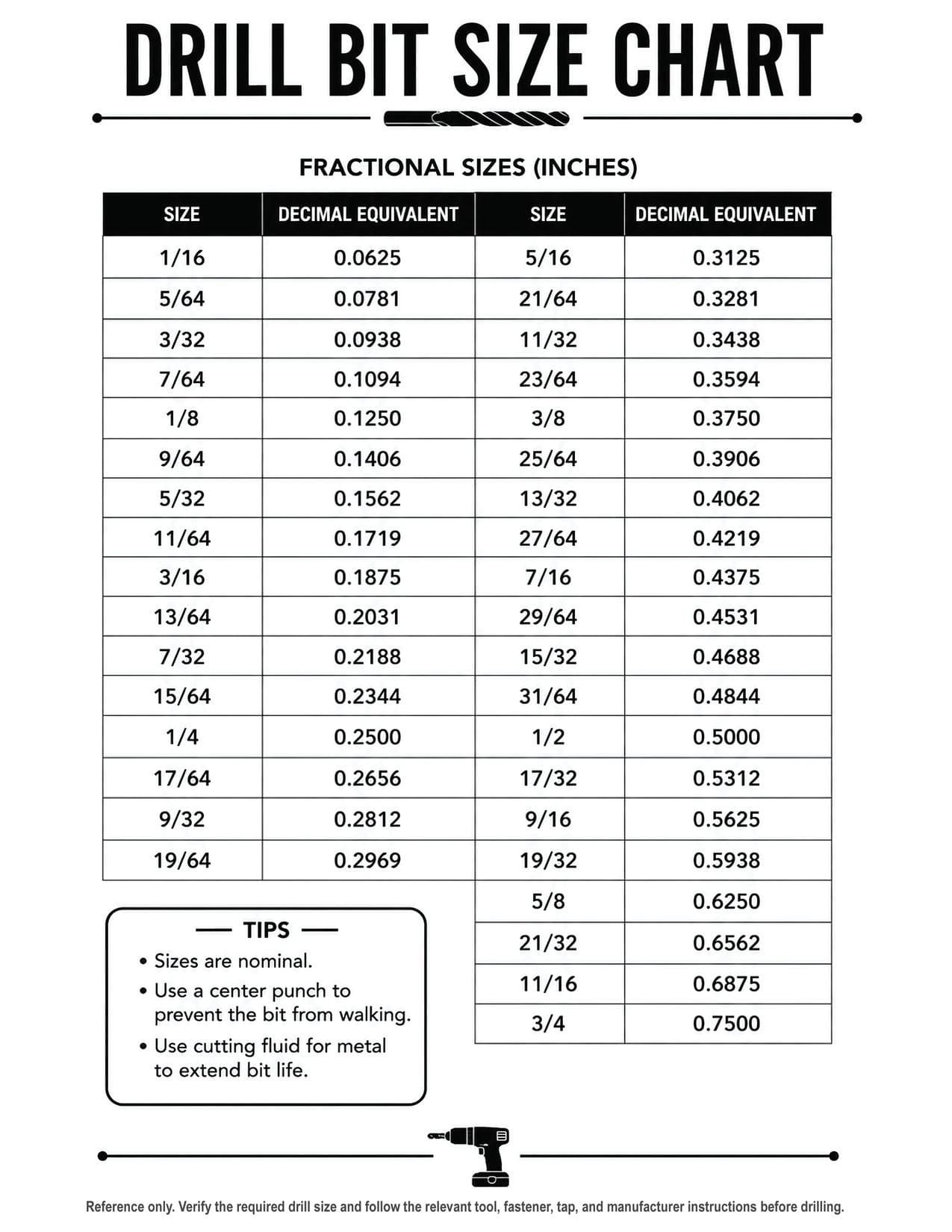
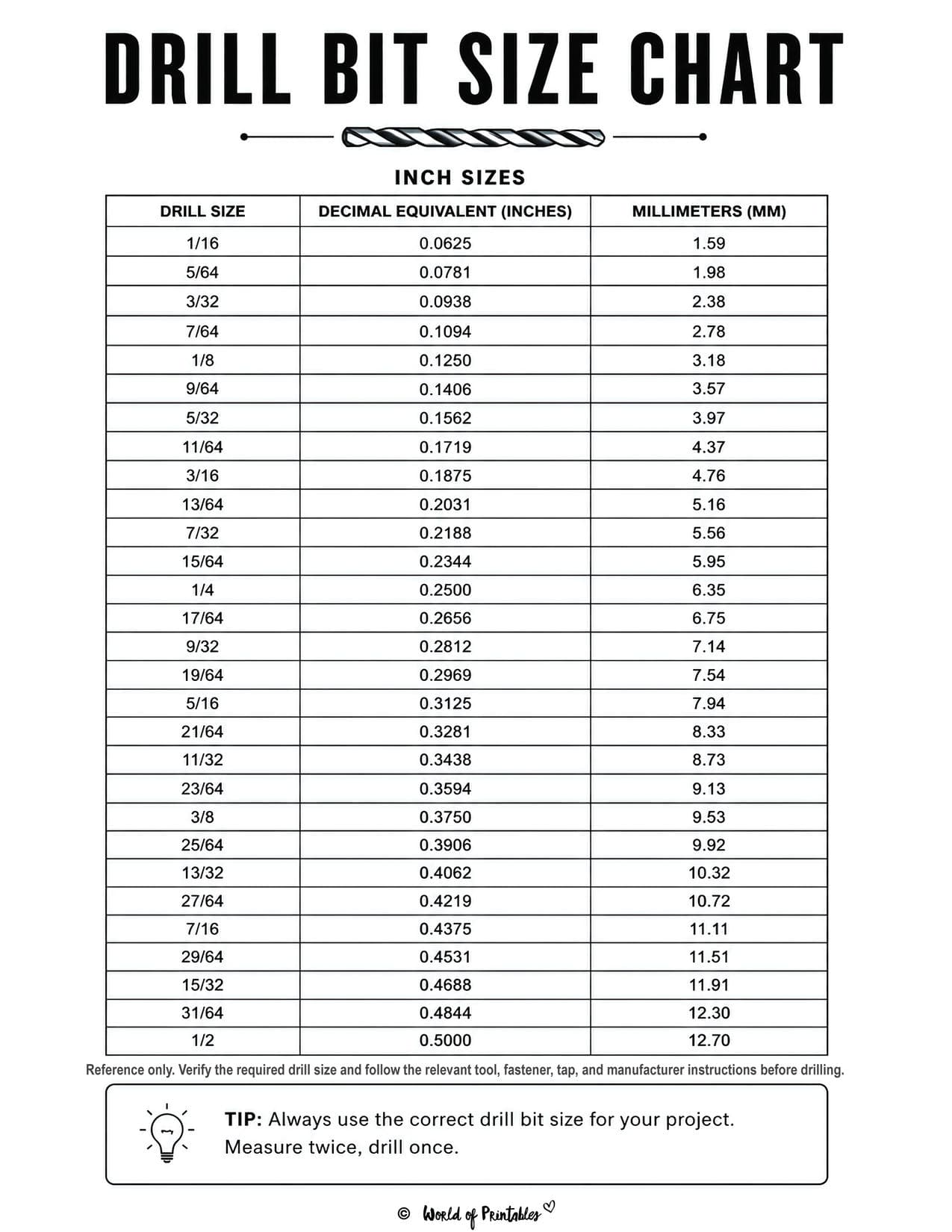
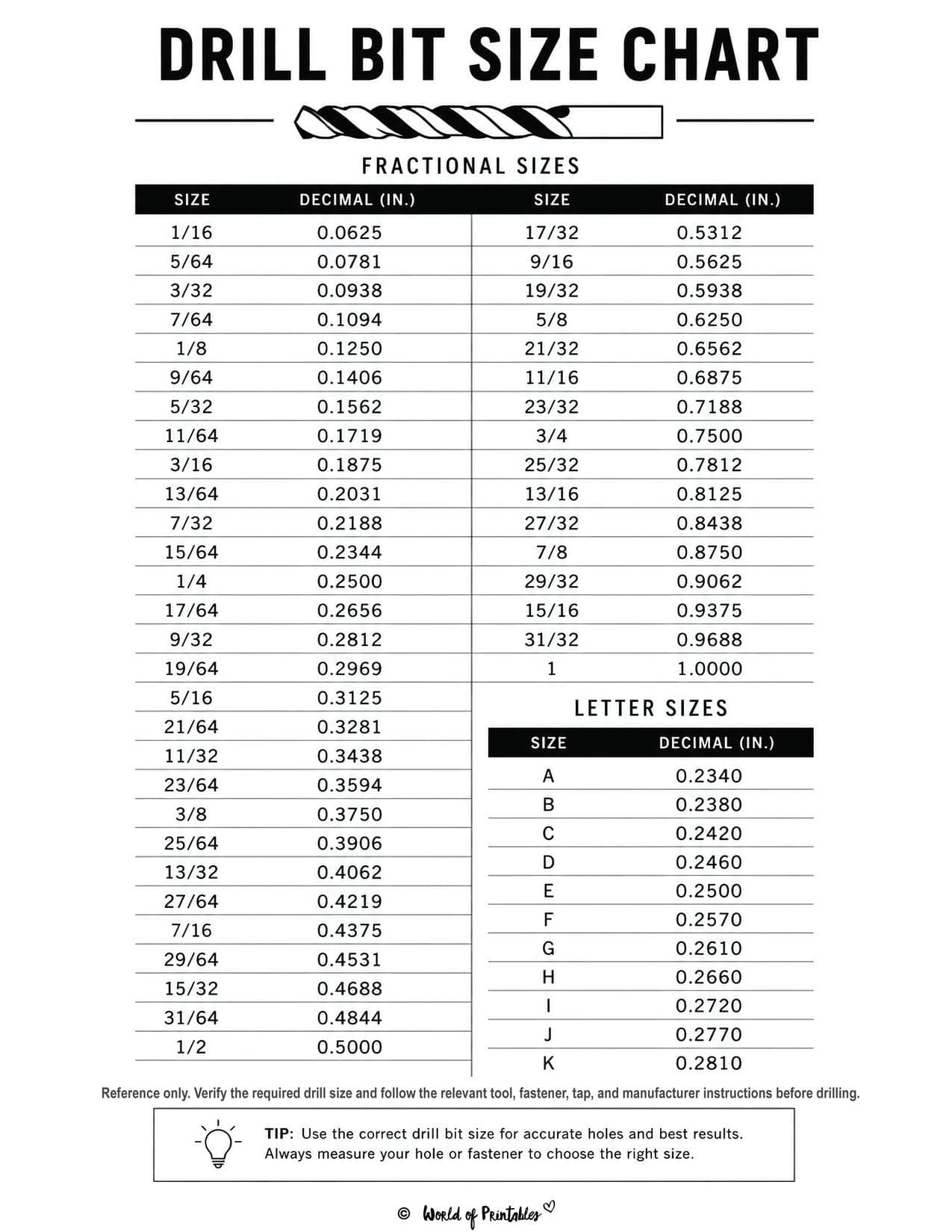
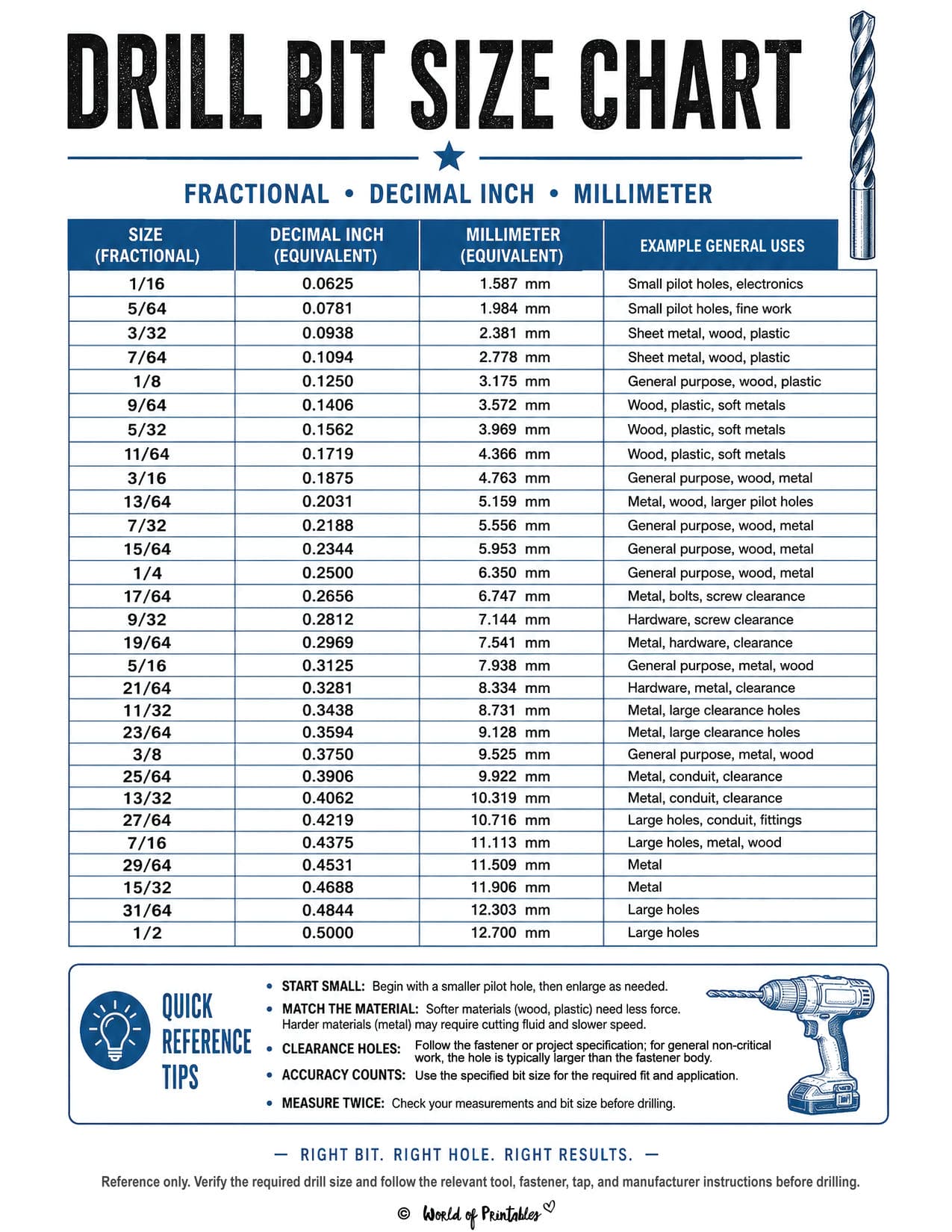
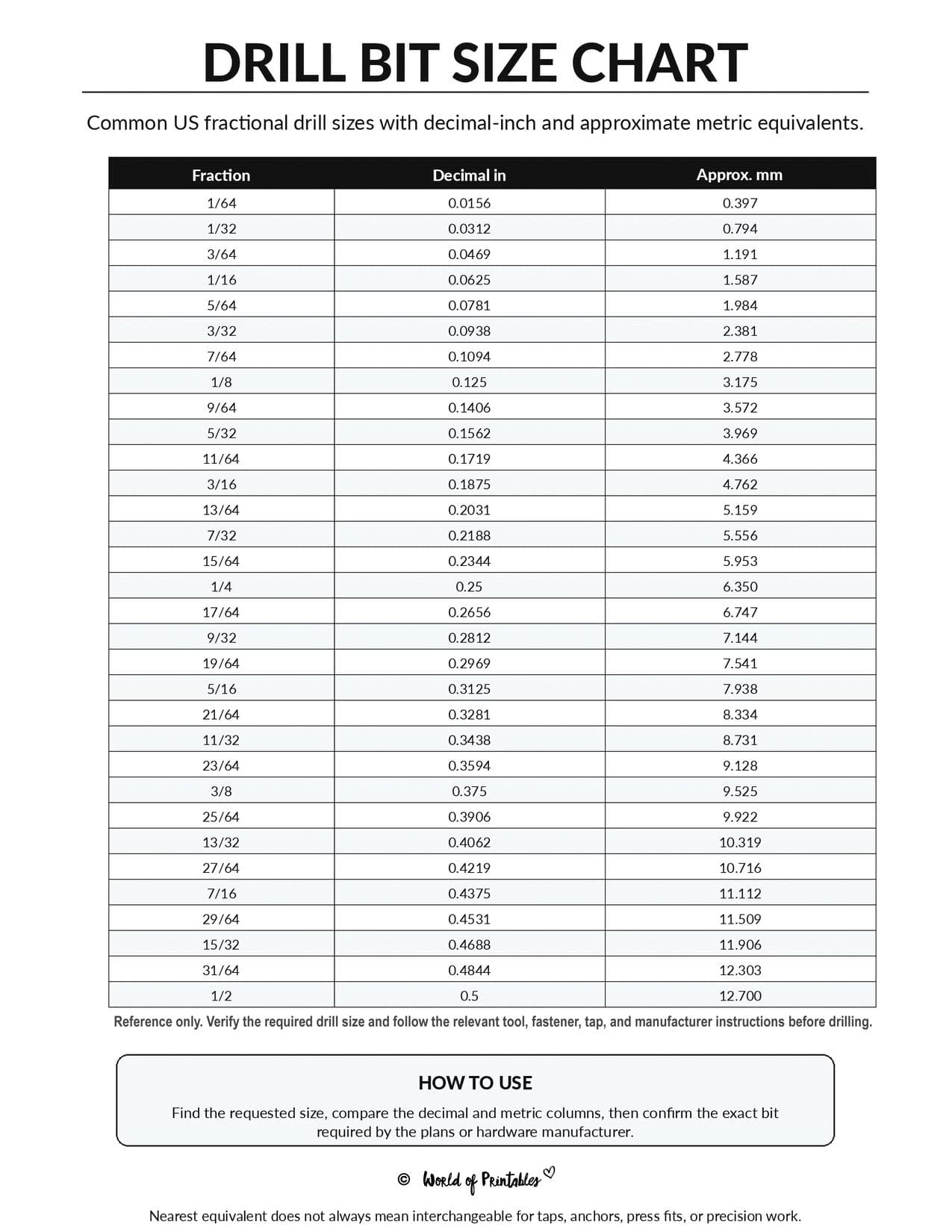
Fractional Drill Bit Size Chart
Find fractional drill bit sizes from 1/64 through 1/2 inch, arranged in numerical order for quick reference.
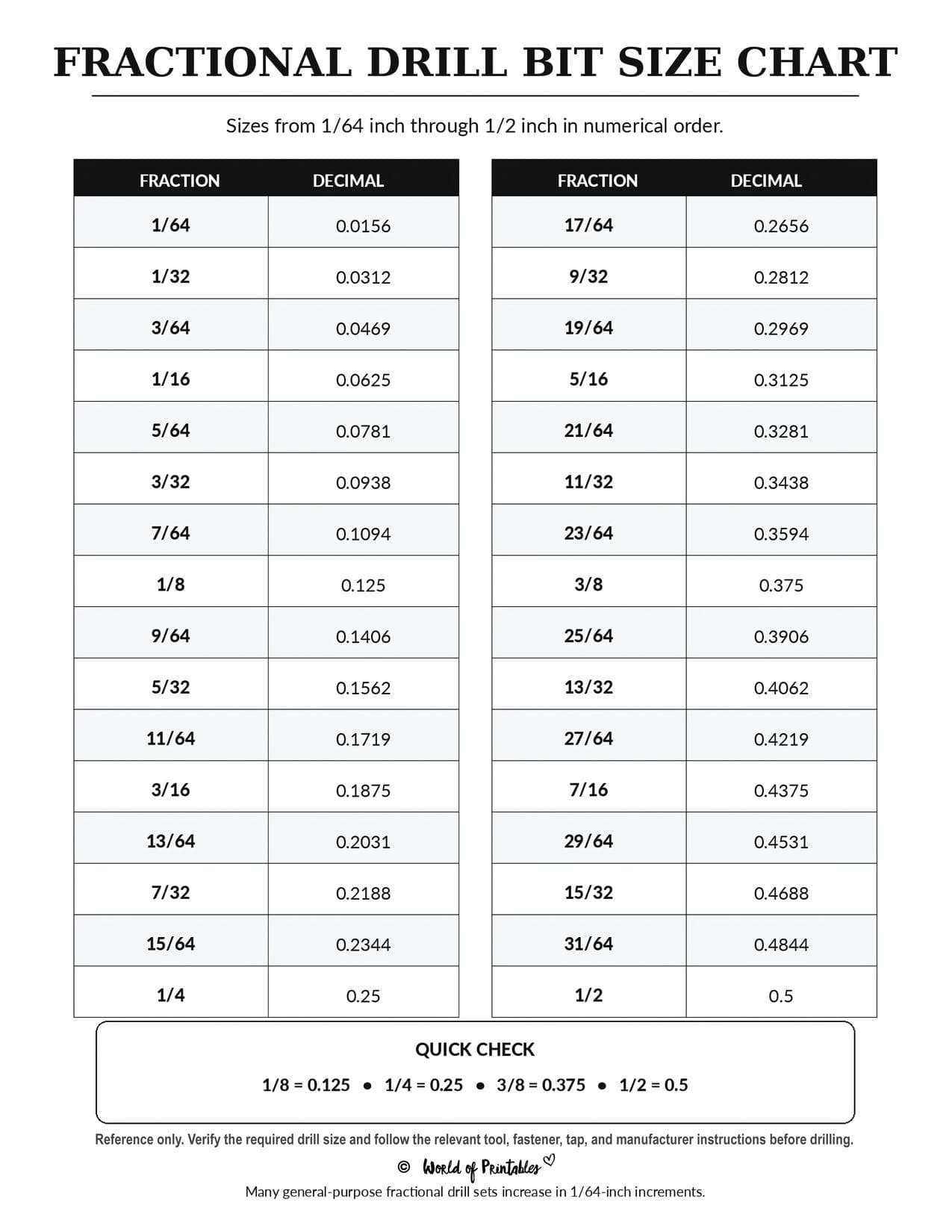
Drill Bit Decimal Equivalent Chart
Convert fractional, number, letter, and metric drill sizes into decimal inches.
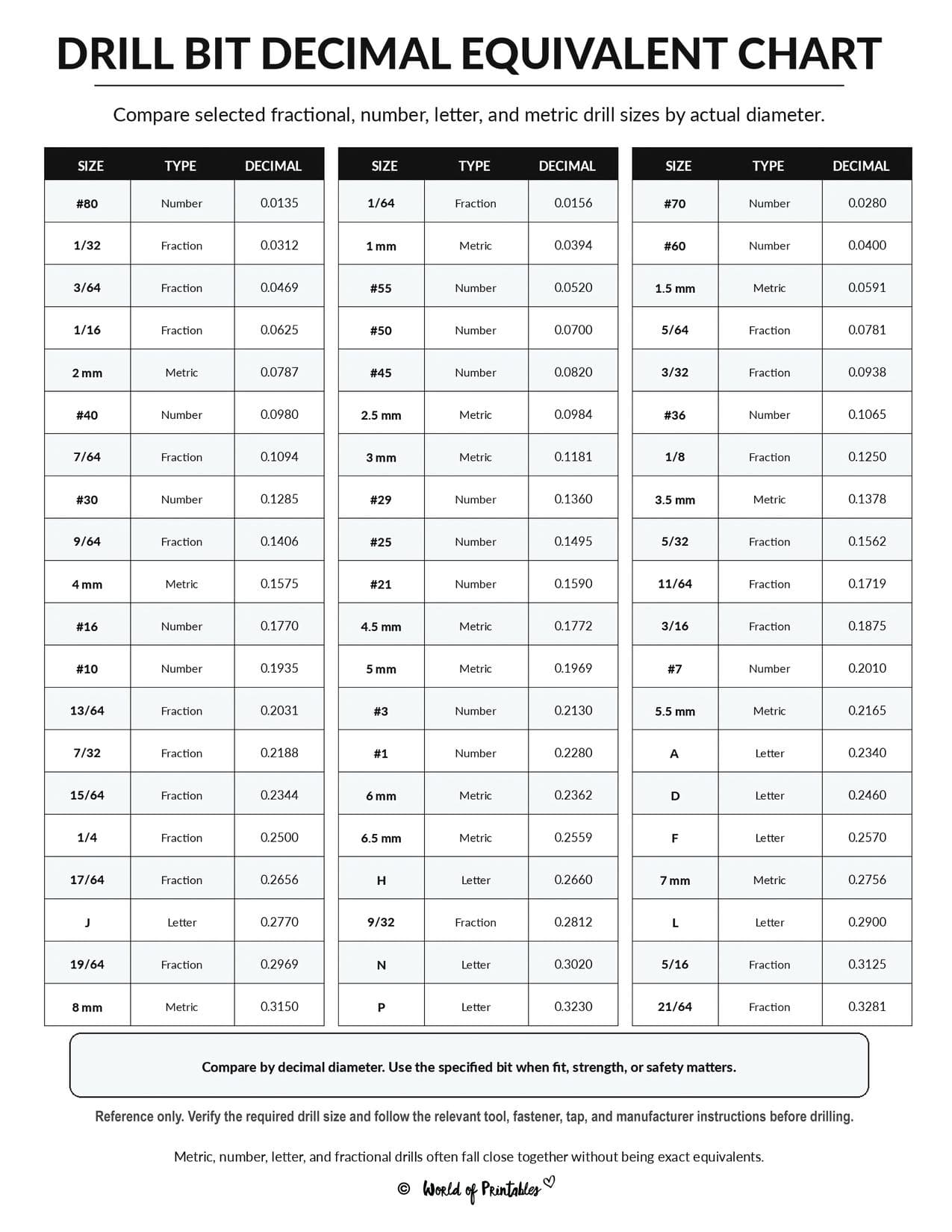
Number Drill Bit Size Chart
Compare numbered drill bits from the smallest sizes toward No. 1 with their decimal-inch equivalents.
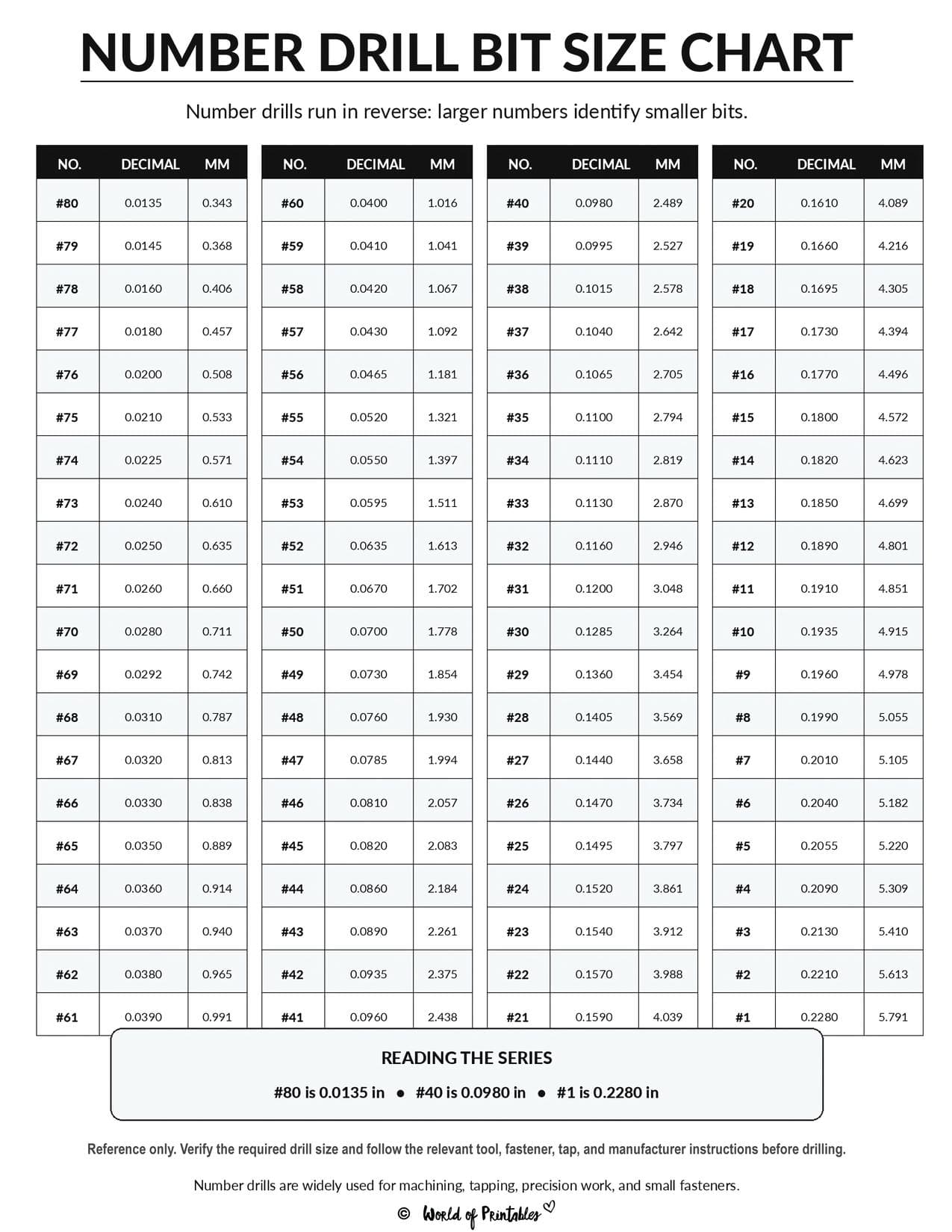
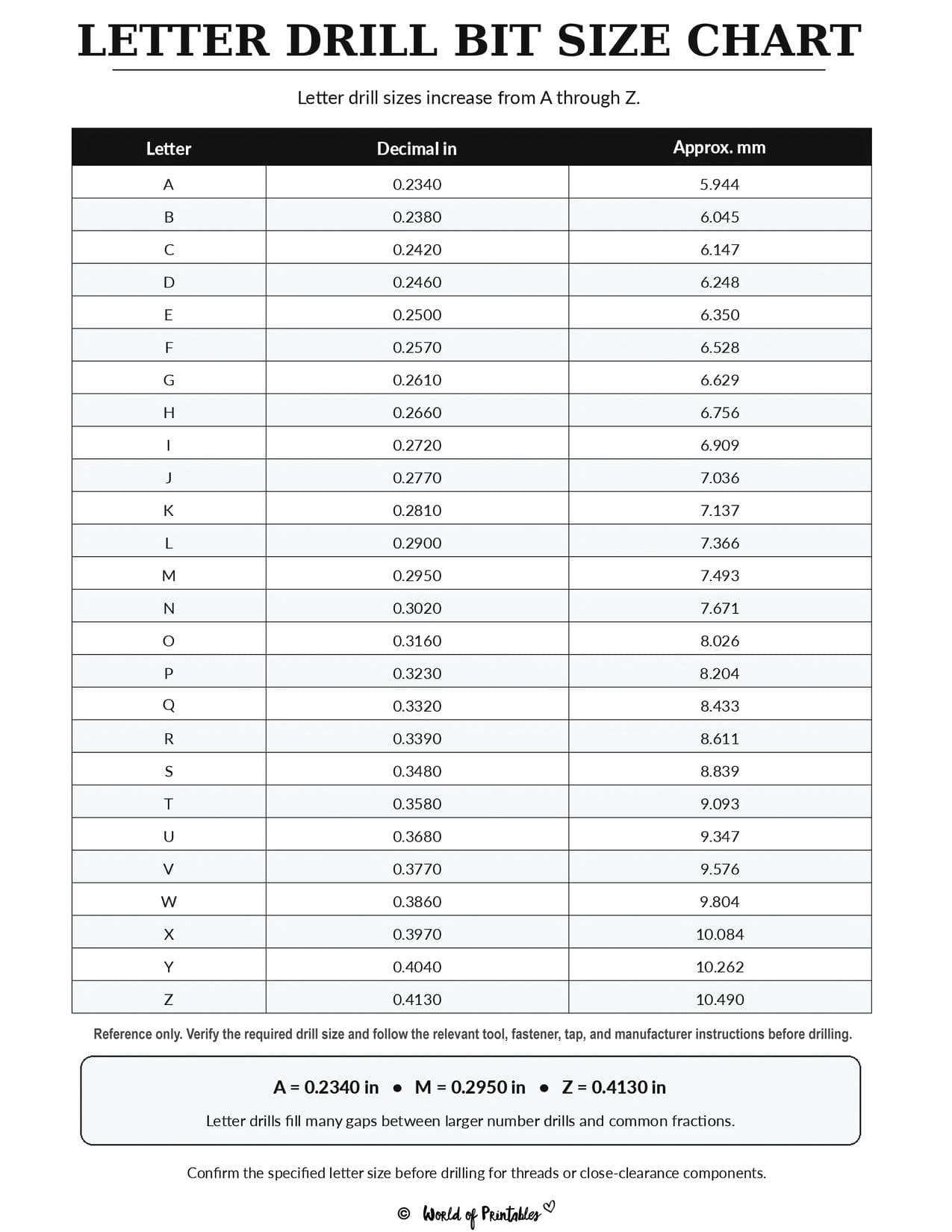
Letter Drill Bit Size Chart
Use this chart to compare letter drill sizes from A through Z with decimal and metric measurements.
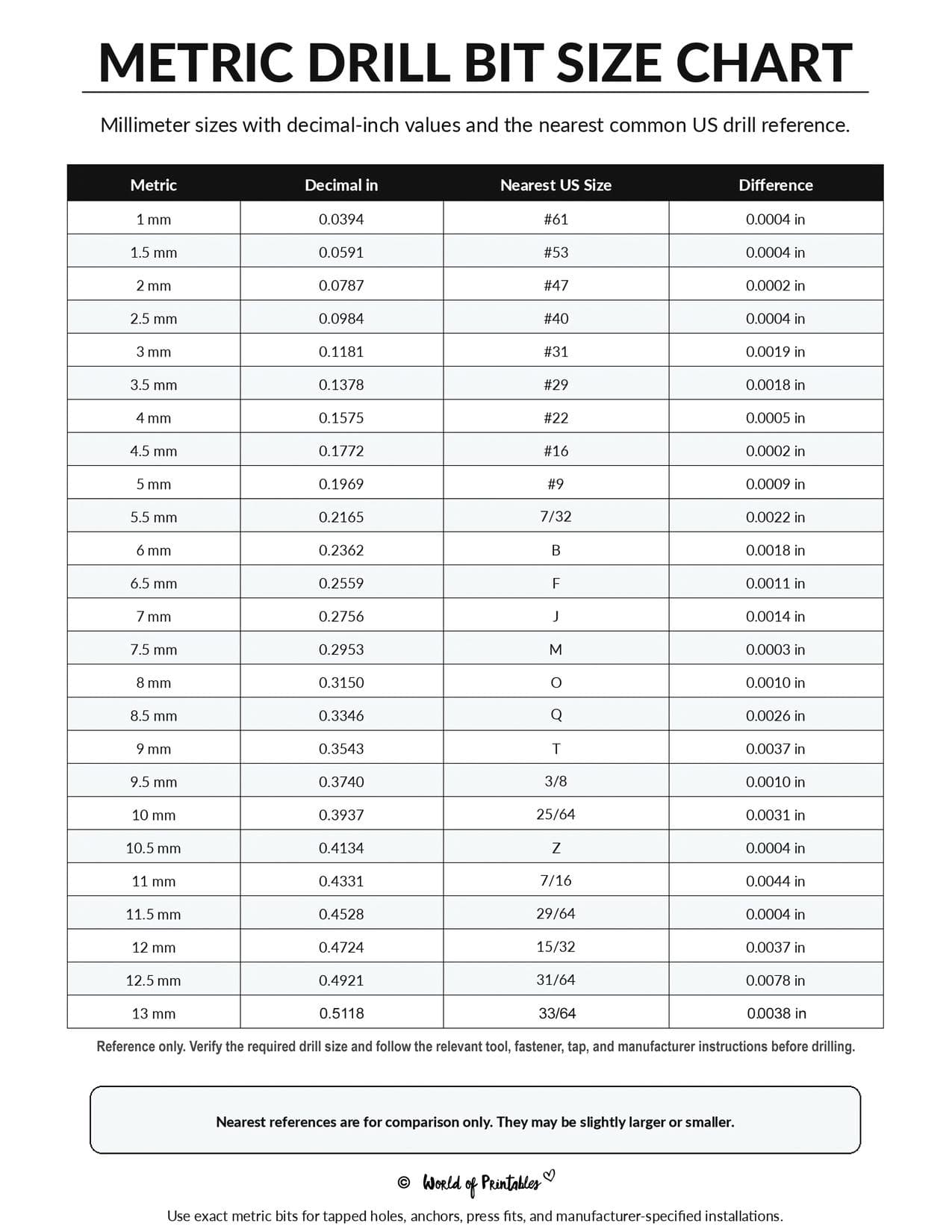
Metric Drill Bit Size Chart
Compare millimeter drill bits with their nearest common fractional, number, or letter size.
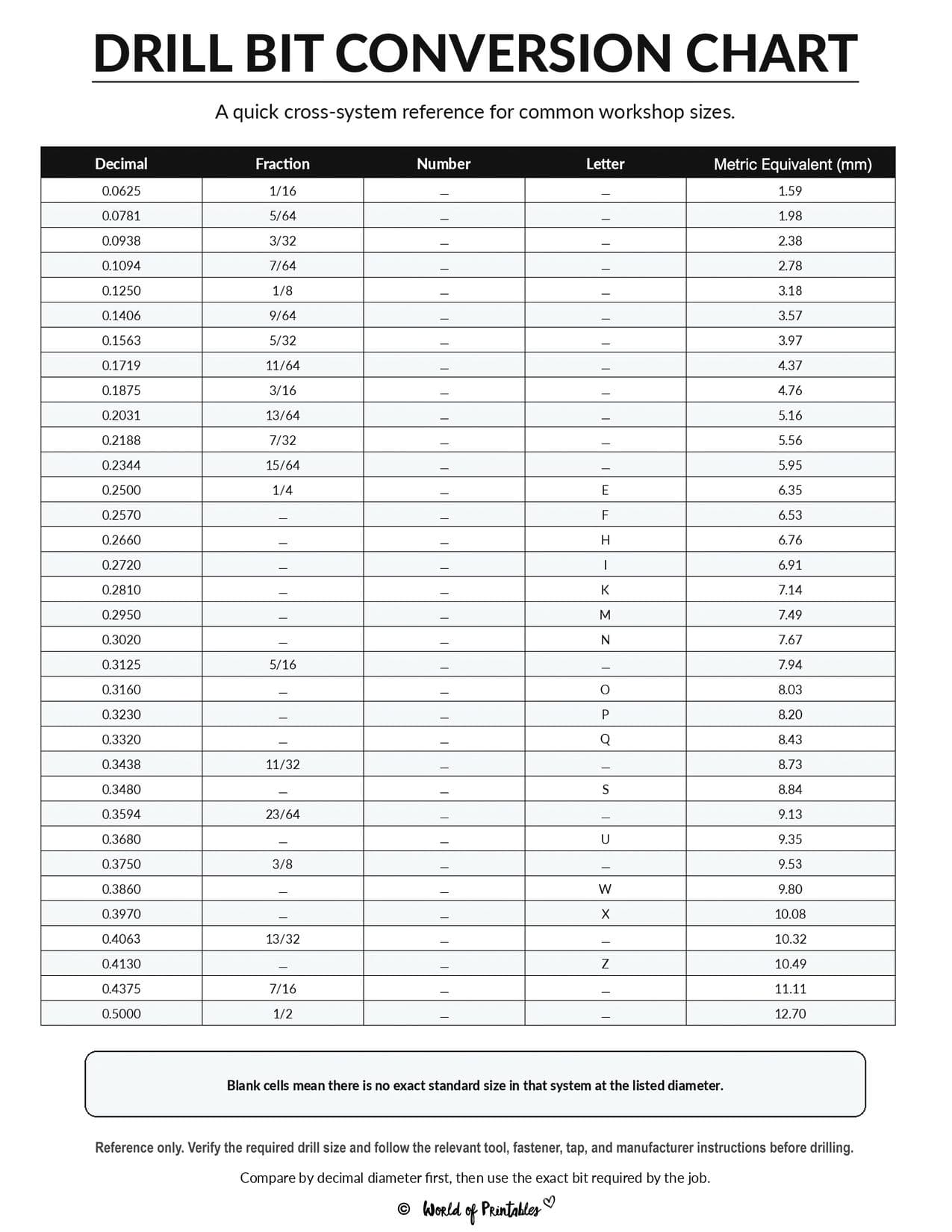
Drill Bit Conversion Chart
Use this combined chart when a project gives a measurement in a different sizing system from the drill bits you own.
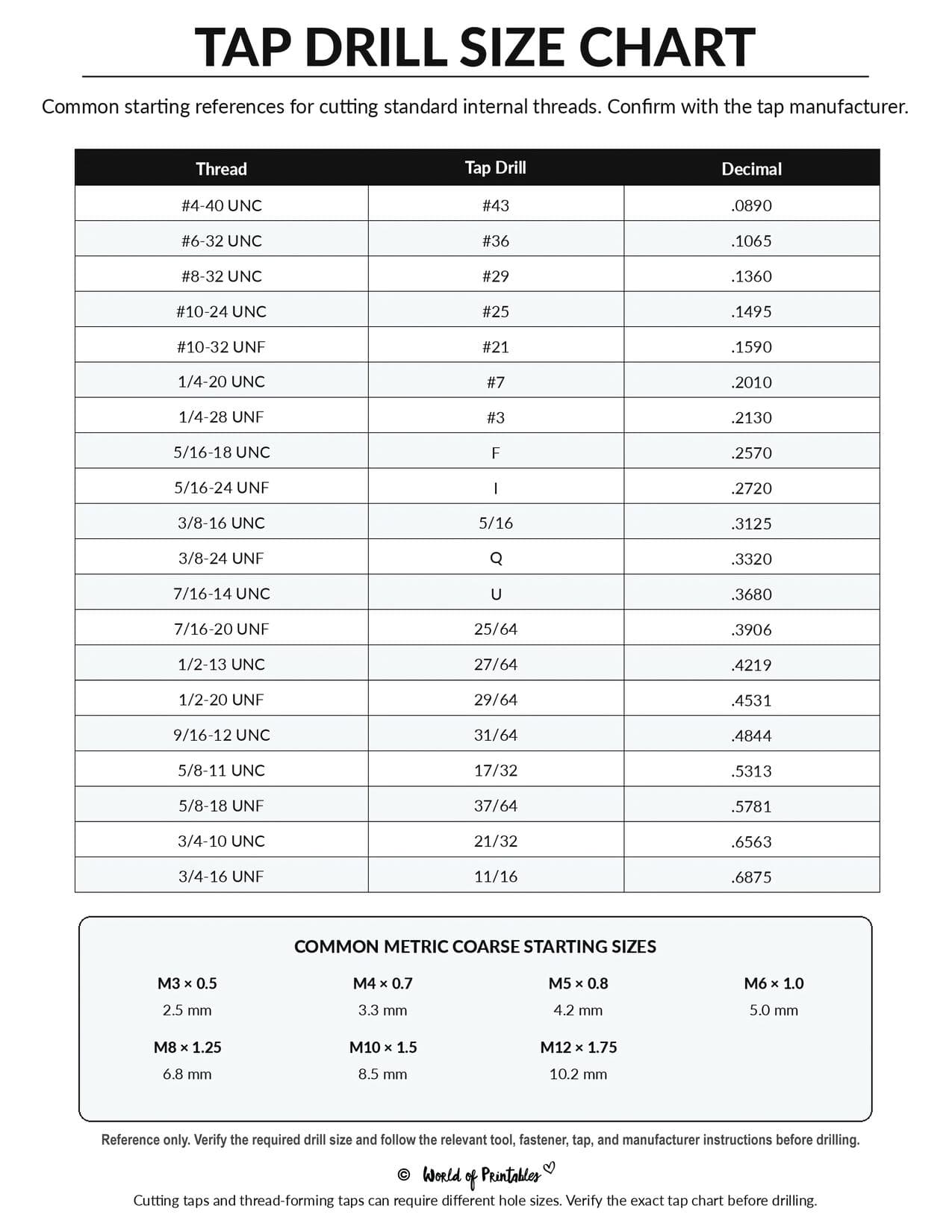
Tap Drill Size Chart
Find common starting drill sizes for holes used with cutting taps. Always verify the drill size recommended for the specific tap, material, and application.
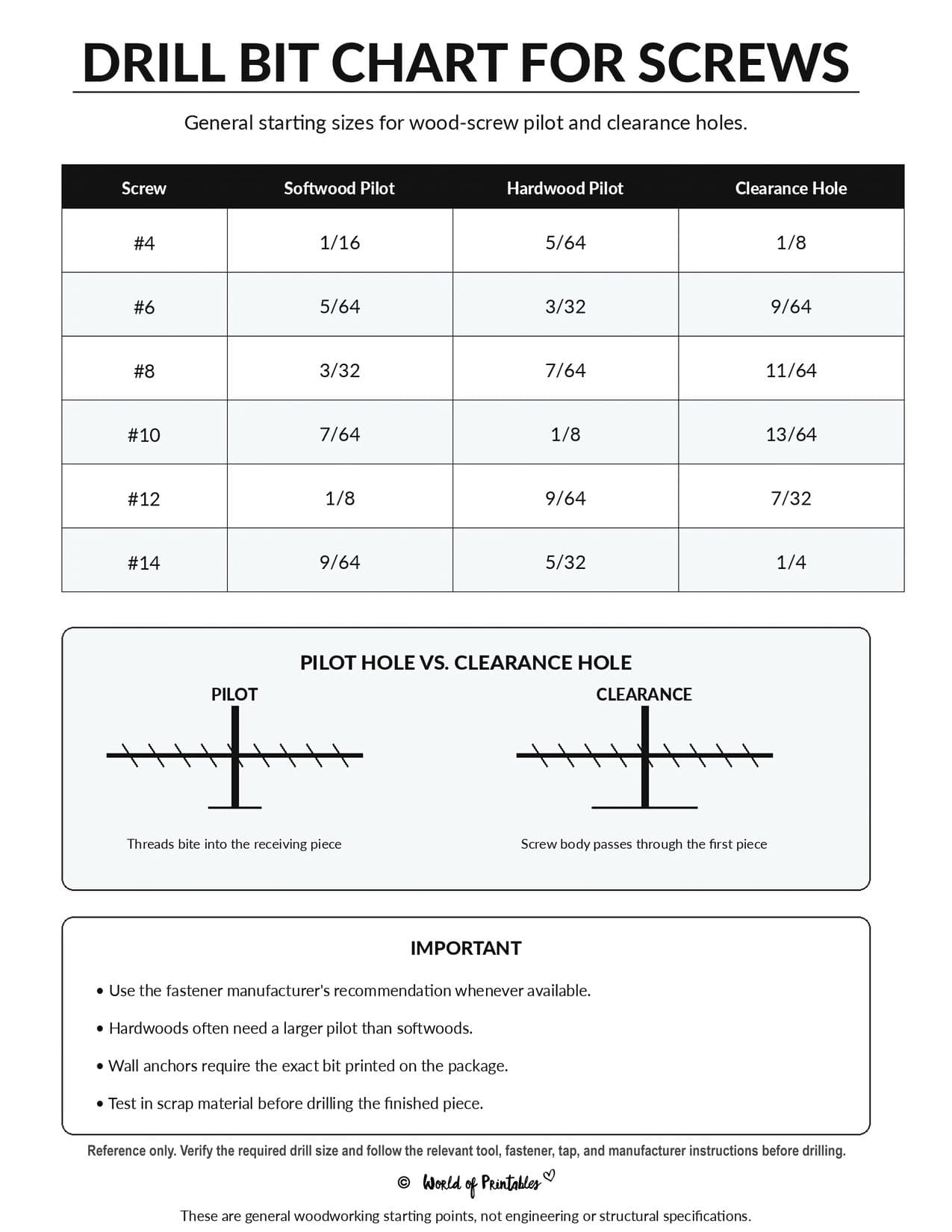
Drill Bit Chart for Screws
Use this reference when selecting general starting sizes for pilot holes in softwood and hardwood and for clearance holes with common screws.
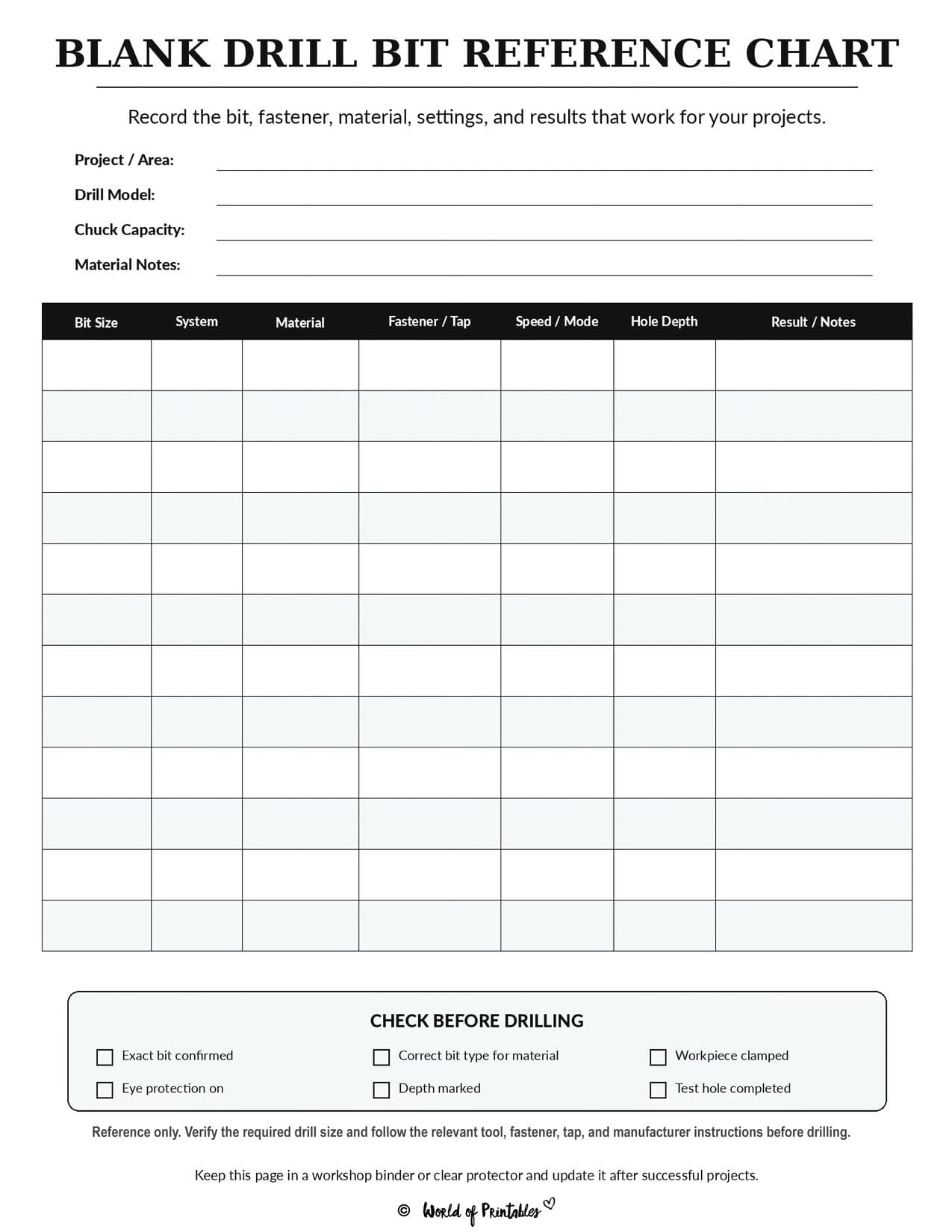
Blank Drill Bit Reference Chart
Record frequently used bits, fasteners, materials, drill settings, and successful hole sizes for your own projects.
How To Use the Drill Bit Size Chart
Start by finding the size specified in your instructions, drawing, fastener guide, or hardware packaging.
Follow the row across the chart to compare it with:
- Decimal inches
- Millimeters
- Number drill sizes
- Letter drill sizes
- Nearby fractional sizes
For example, if a project specifies a decimal diameter but your bits are labeled as fractions, look for the closest matching decimal in the fractional column.
Before substituting a nearby size, consider how accurately the hole must fit.
A close substitute may be acceptable for a rough woodworking pilot hole. It may not be suitable for a threaded hole, precision component, press fit, anchor, or safety-critical installation.
Printing the Drill Bit Size Chart
Print the chart on standard US Letter paper.
Landscape orientation is usually best for detailed conversion tables containing fractional, number, letter, decimal, and metric columns.
Choose actual size or 100 percent scale in the printer settings. Do not select fit to page if the printable contains a size-check reference.
A conversion table does not normally need to be printed at a precise physical scale, but correct scaling is important if the printable includes measuring marks or diameter references.
Laminate the chart or place it in a clear page protector to keep it clean in a garage, workshop, maintenance room, or toolbox.
Disclaimer: These printable drill bit size charts are provided for general informational and reference purposes only.

They do not replace manufacturer instructions, engineering specifications, approved anchor installation requirements, tap charts, project specifications, building codes, equipment manuals, or professional guidance.

Decimal and metric conversions may be rounded, and “nearest” size references are for comparison only. Small differences in hole diameter can affect thread strength, fastener grip, anchor performance, fit, and safety. Always verify the exact drill size and bit type specified for the tool, material, fastener, anchor, tap, or component.

Follow all manufacturer instructions and applicable safety requirements. Wear appropriate personal protective equipment and use tools only as directed.
More Free Measurement Printables

COPYRIGHT
The printables that you find here are the copyright of World of Printables – you cannot redistribute or sell any of these printables or templates, although you can link back to our website.

AI TRANSPARENCY: Whilst the majority of our creations have been created completely traditionally, occasionally we utilize AI tools in our design process. We acknowledge the advancements in AI technology and leverage them responsibly to optimize our creative output. However, it is important to note that our utilization of AI does not compromise the human element of our work. Our commitment to delivering high-quality designs through a balanced integration of traditional expertise and AI enhancements remains paramount.