

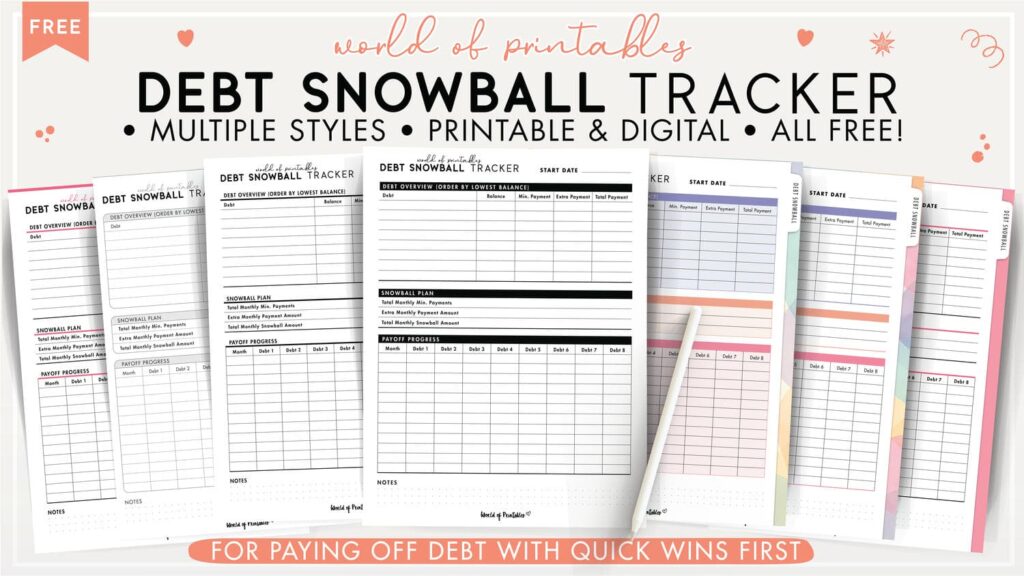
Disclaimer: We provide high-quality, free printable templates to help you organize your personal data. We are not certified financial planners or investment advisors. The tools and information provided below are for educational and organizational purposes only. Always consult a licensed financial professional before making high-stakes decisions regarding investments, asset allocation, tax strategy, or debt consolidation.
Paying only the minimum on your debts can feel like you are doing something, but often it just keeps you treading water.
The balances move slowly, the interest keeps building, and it can start to feel like you are throwing money at debt without ever getting the satisfaction of actually clearing anything.
That is exactly why the Debt Snowball Method has helped so many people.
Instead of focusing on interest rates first, this method focuses on something just as important: momentum. You start by paying off your smallest balance first, then roll that payment into the next smallest debt, and then the next. With each balance you clear, your confidence grows and your available payment power gets bigger.
If you are building a budget binder, a Debt Snowball Tracker is one of the most motivating pages you can include because it turns debt payoff into something you can actually see, track, and stick with.
What is the Debt Snowball Method?
The Debt Snowball Method is a debt payoff strategy where you list your debts from smallest balance to largest balance, regardless of the interest rate.
Then you:
- make the minimum payment on all debts
- put any extra money toward the smallest balance first
- fully pay that one off
- roll the amount you were paying into the next smallest balance
That is where the “snowball” idea comes from.
As each debt disappears, the amount you can throw at the next one gets bigger and bigger.
Why this method works so well for so many people
Mathematically, the debt snowball is not always the cheapest route in terms of total interest paid.
For many people, the biggest challenge is not understanding debt. It is staying motivated long enough to finish paying it off.
That is where the debt snowball shines.
It helps because:
- you get quicker wins
- you see balances disappear sooner
- you free up monthly cash flow as each debt is cleared
- the process feels encouraging instead of endless
- motivation builds as your list gets shorter
For many people, that feeling of progress is what keeps the plan going.
A debt snowball works best when you know exactly what each paycheck can realistically send toward debt. Our Paycheck Planner helps you organize bills, spending, and extra payments so your debt payoff plan feels much easier to follow.
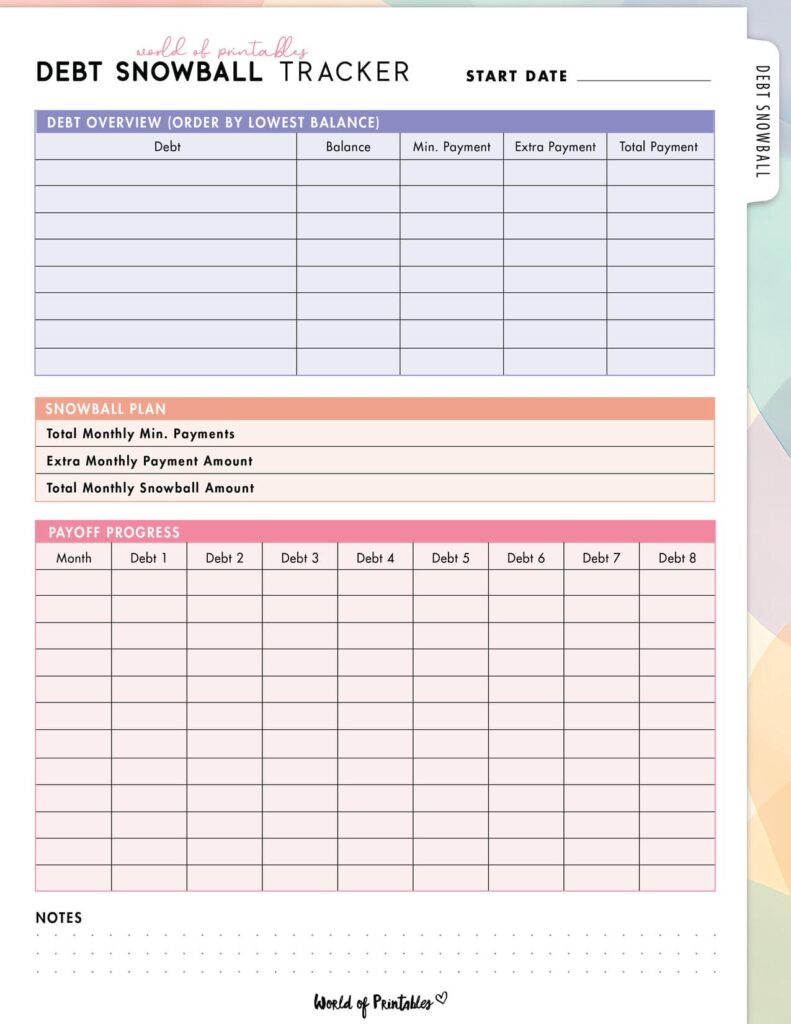
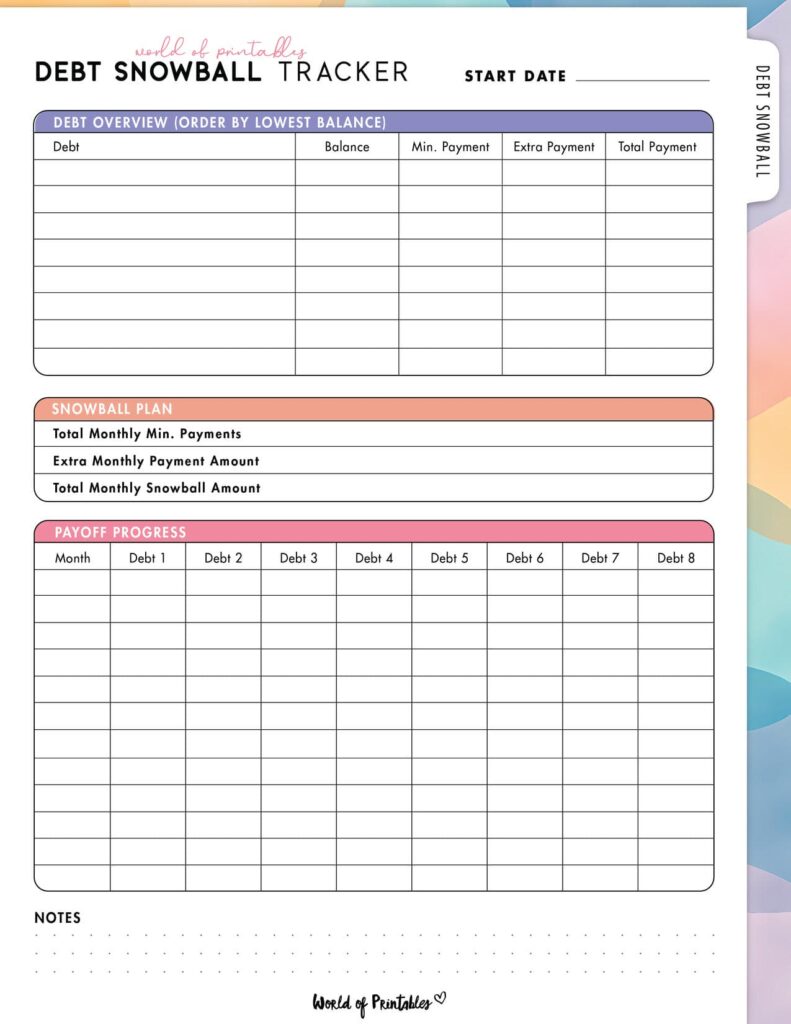
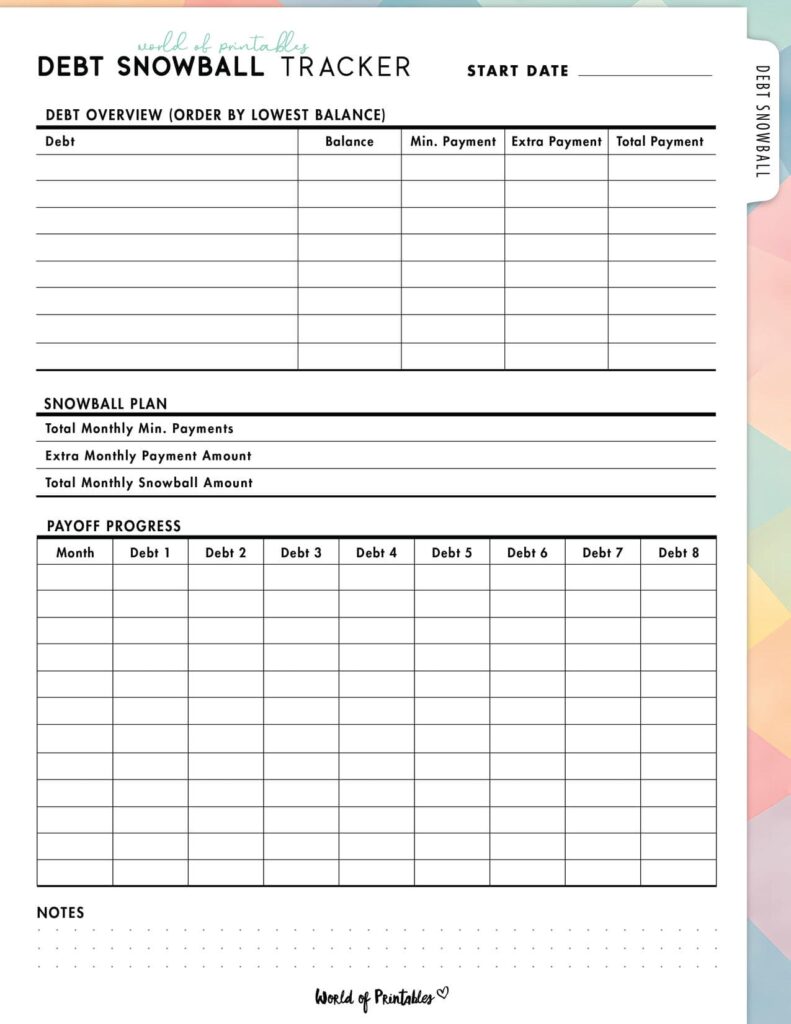
Choose a design theme that fits your style
This printable comes in a range of layouts so you can choose the version that suits your binder and planning style best.
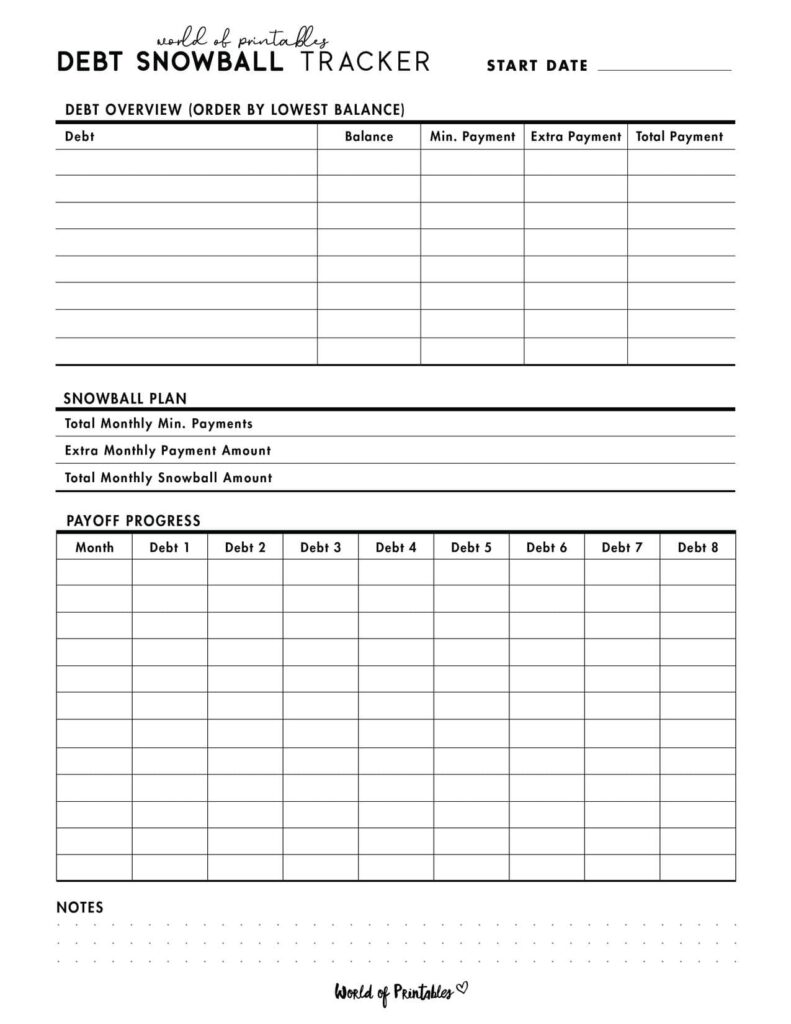
Minimalist and simple styles
These are ideal if you want a clean, straightforward tracker that keeps the focus on balances and payoff order.
They work especially well in a more traditional budget binder.
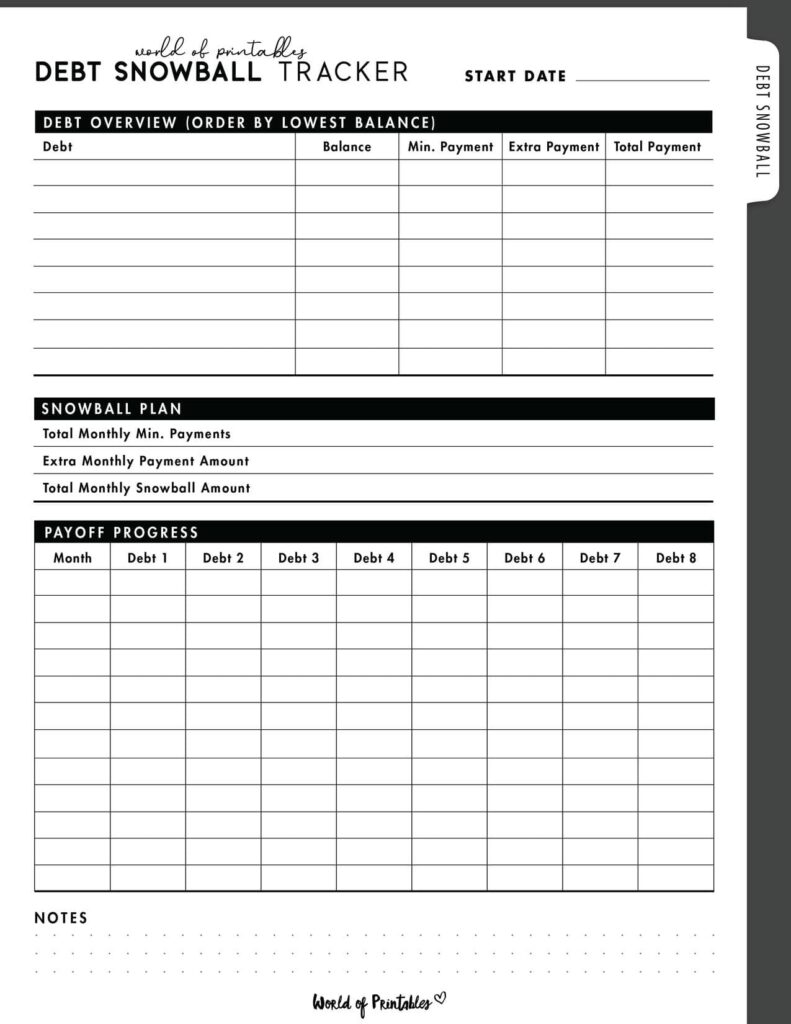
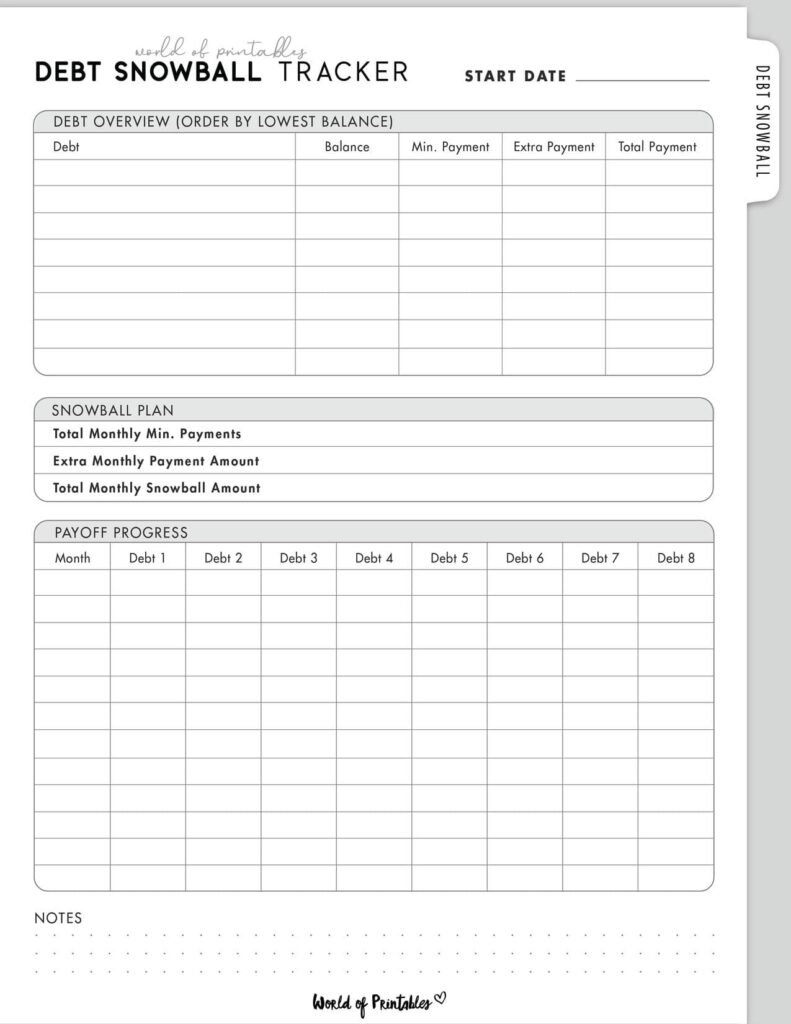
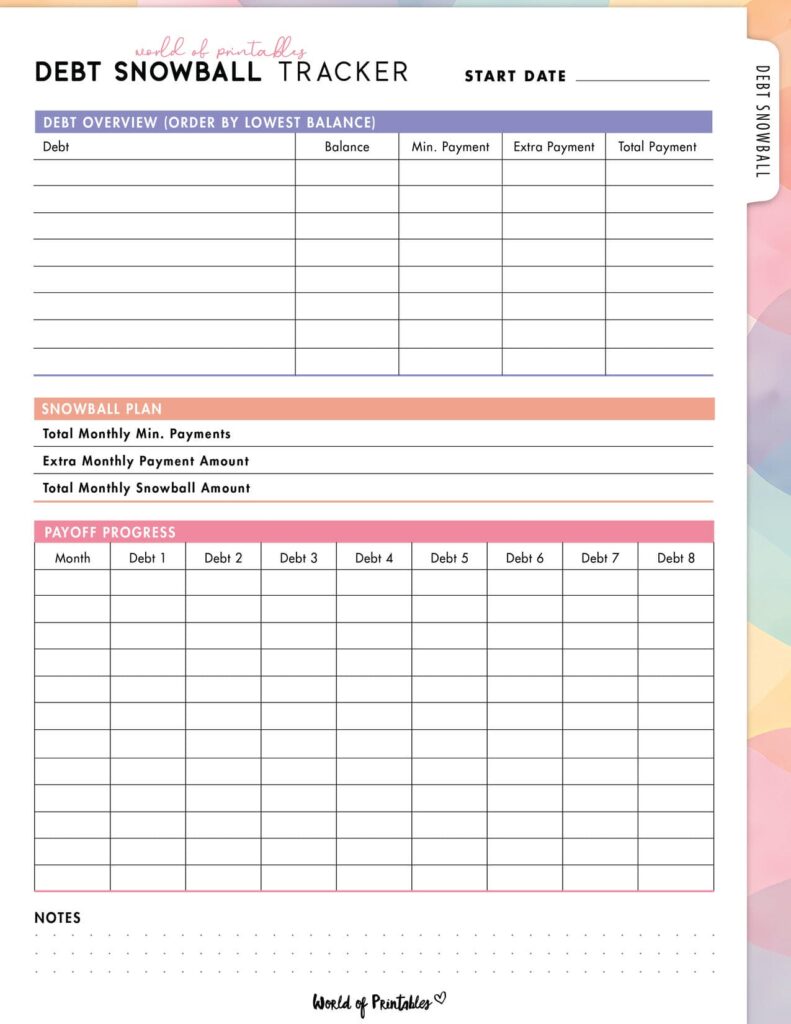
Colorful and visual styles
These are great if you love seeing progress clearly and want the debt snowball to feel more motivating as you go.
They can make the page feel much more satisfying to update.
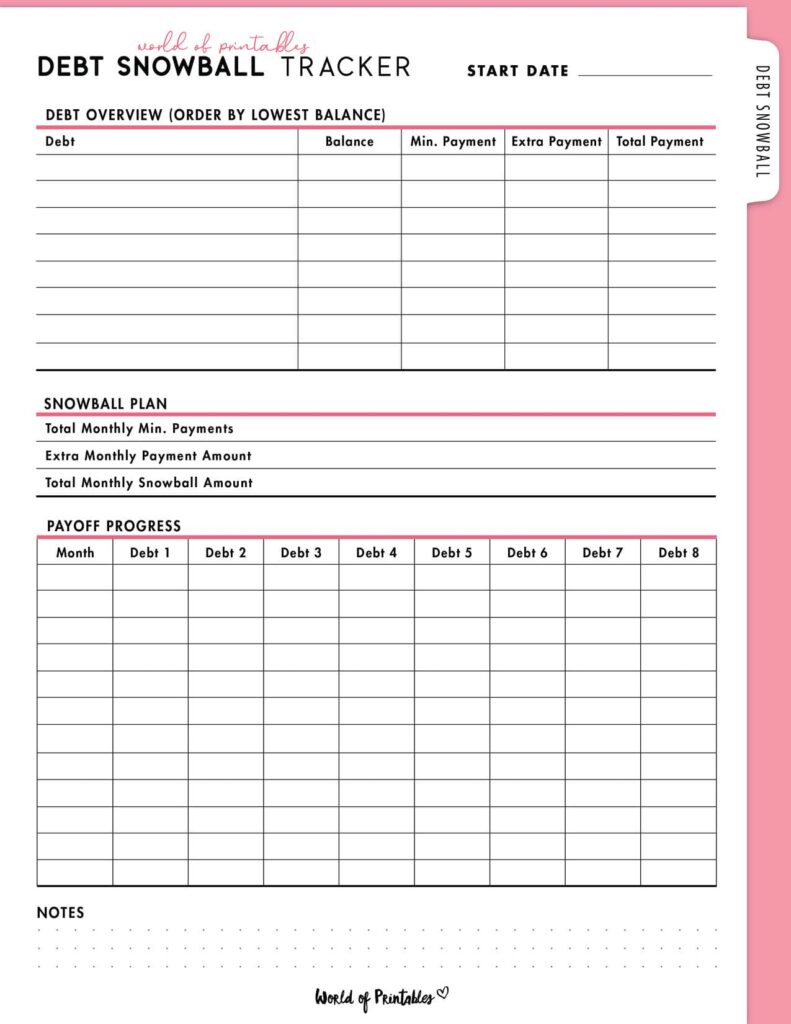
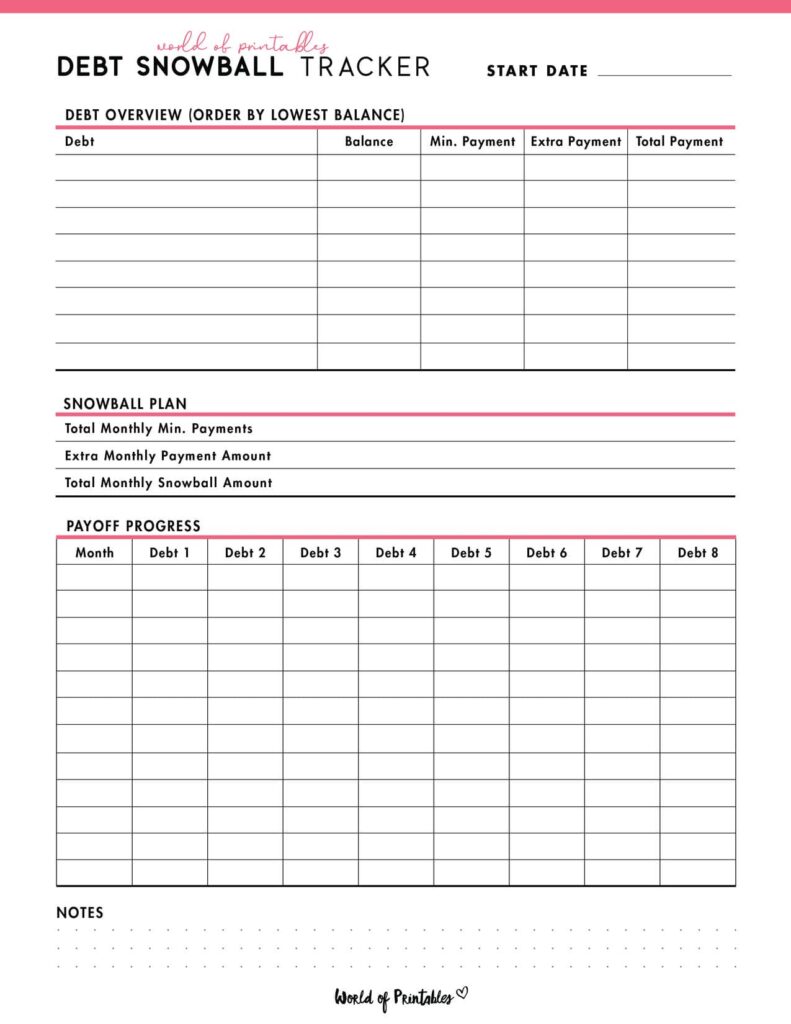
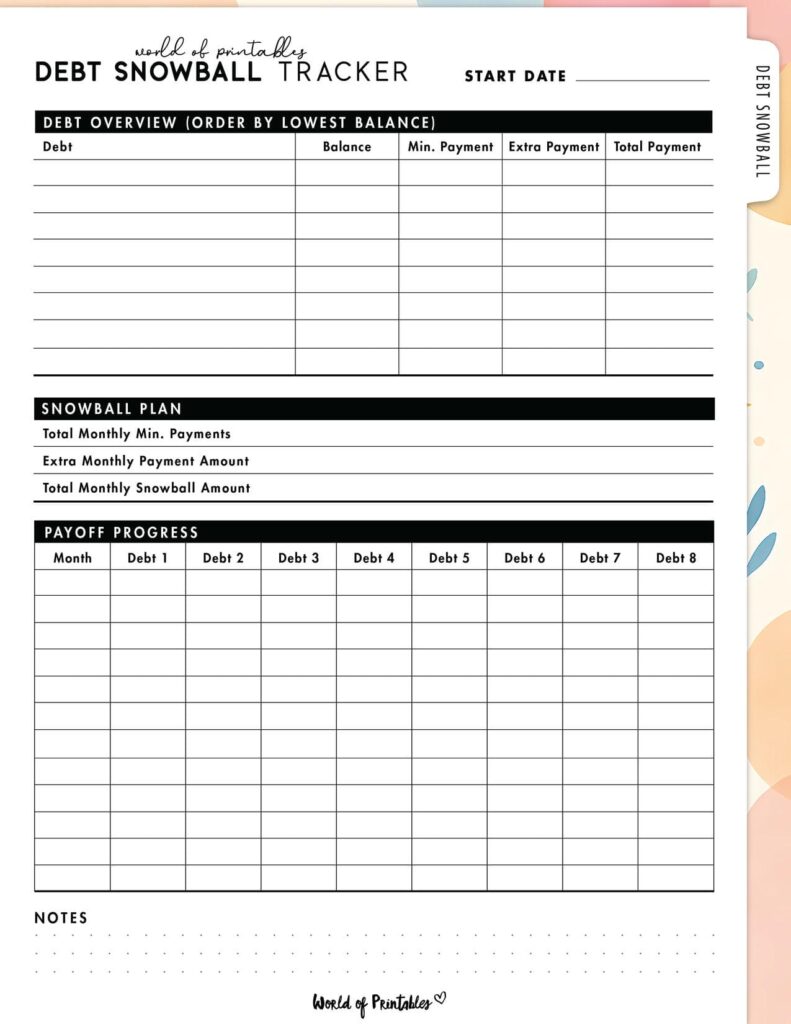
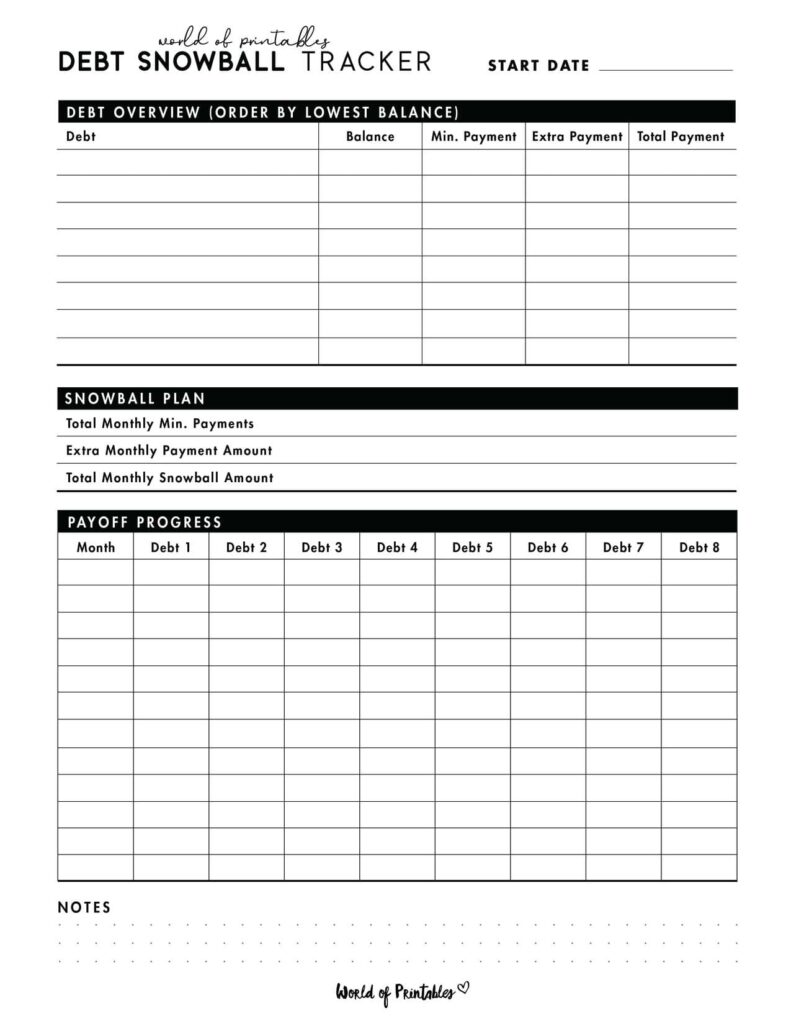
Ink-saving options
If you prefer practical, low-ink printables, these are a smart option.
They still feel polished and organised while being efficient to print.
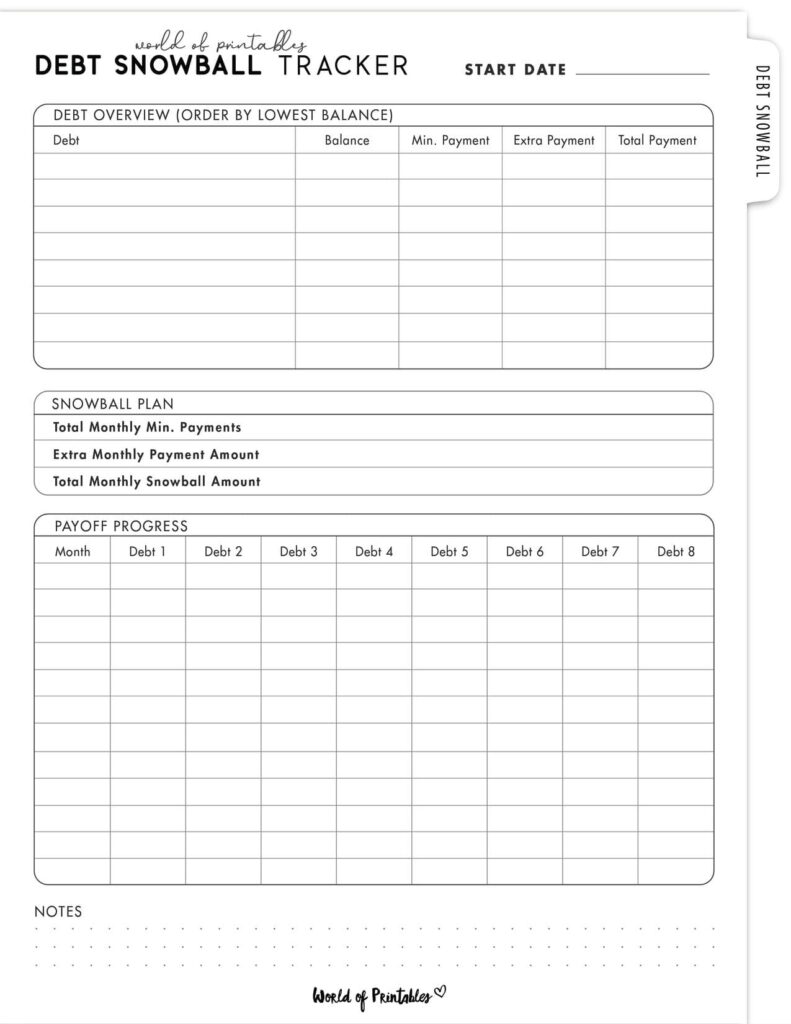
Free Download and Printing Instructions
To download your free Debt Snowball Tracker, click the text link directly beneath the image of your preferred design. This will open the high-resolution PDF.
For the best printing results:
- download the PDF directly to your device
- open the file and select Print
- make sure your printer is set to US Letter
- choose Fit to Page or Scale to Fit so the margins print correctly
If you want the page to hold up well in your binder, it can be worth printing it on slightly thicker paper.
A premium 28 lb or 32 lb paper gives it a more durable, high-quality feel.
Debt snowball vs debt avalanche
These are the two most common debt payoff methods.
Debt snowball
You pay off the smallest balance first.
Best for:
- people who want quick wins
- people who stay motivated by visible progress
- people who need momentum more than maths
Debt avalanche
You pay off the highest interest rate first.
Best for:
- people who want the most mathematically efficient route
- people motivated by logic and total interest savings
- people who do not mind waiting longer for the first win
Neither method is automatically better for every person.
If you know that clearing one account fast will keep you engaged and consistent, the snowball can be incredibly effective.
How to Use a Debt Snowball Tracker
The Debt Snowball method is incredibly popular right now, and moms absolutely love the psychological win of paying off those smaller balances first!
To make this realistic, the golden rule of the Debt Snowball is that you list debts from smallest balance to largest balance, regardless of the interest rate. You pay the minimum on everything, but throw every single extra penny at the smallest debt until it’s gone. Then, you take that entire payment and “roll it over” to the next one.
Here is a typical example of a filled-in debt snowball tracker:
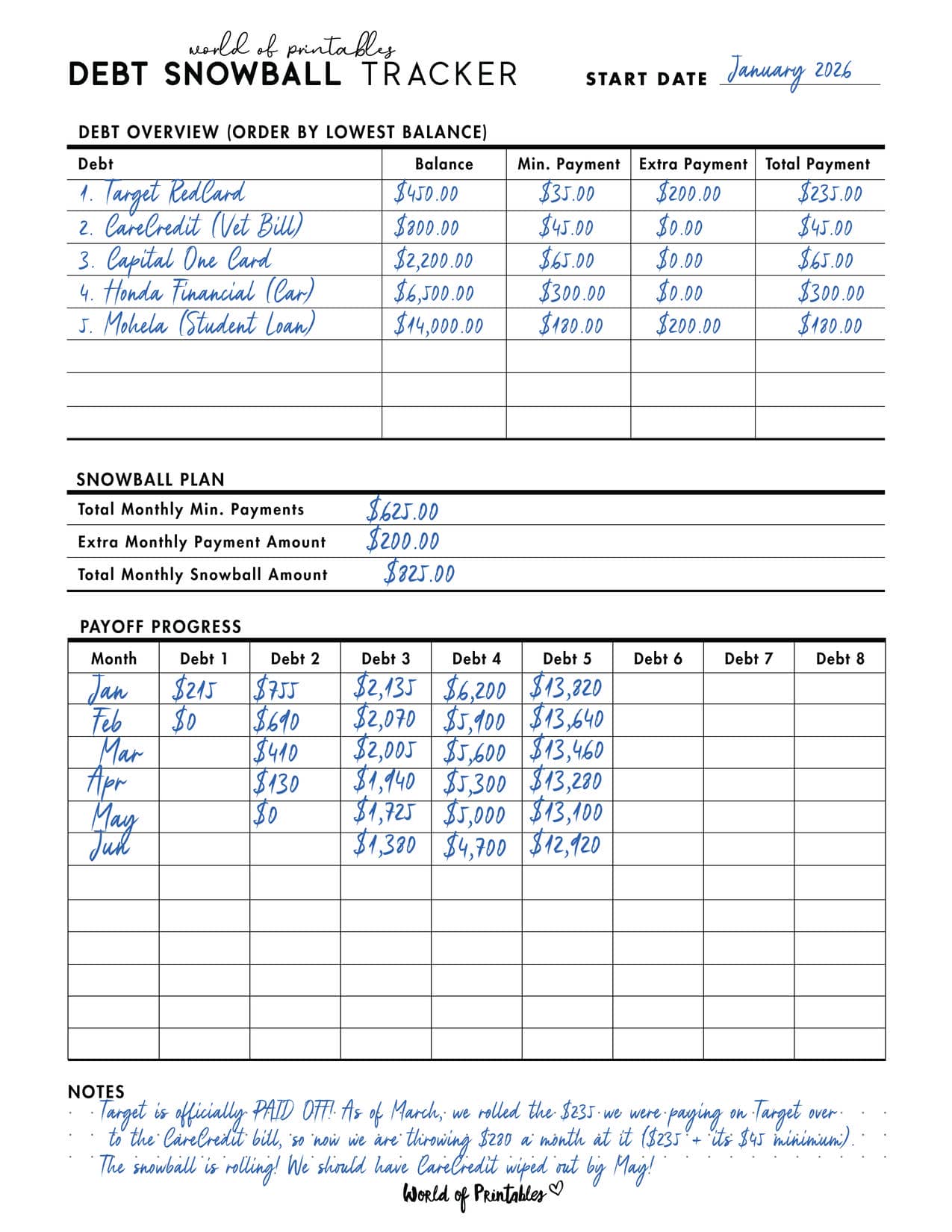
A Debt Snowball Tracker helps you take the method off the screen and turn it into a visible payoff plan.
Here is how to use it:
Step 1: List all of your debts from smallest to largest
Write down every debt you want to include.
This might include:
- credit cards
- store cards
- personal loans
- medical bills
- overdrafts
- car finance
- other consumer debts
For each one, note:
- creditor name
- current balance
- minimum monthly payment
Then sort them in order from smallest balance to largest balance.
With the debt snowball, balance size is what matters most for the ranking.
Step 2: Keep paying the minimum on everything
To stay current and avoid more financial stress, continue paying the minimum required amount on every debt.
This keeps your accounts in good standing while you focus your extra effort on one target at a time.
The minimum payments protect the structure of the plan.
Step 3: Put every extra pound or dollar toward the smallest balance
Once the minimums are covered, send every extra bit of money you can toward the smallest debt on your list.
That might be:
- an extra $20
- an extra $50
- an extra $100
- whatever your budget allows
The important thing is that you keep the focus narrow.
You are not spreading extra money around. You are aiming it at one balance until it is gone.
Step 4: Roll the payment into the next debt
Once the first debt is fully paid off, take the full amount you were sending to it and roll it onto the next smallest debt.
That includes:
- the minimum payment that debt used to require
- plus any extra money you were throwing at it
Now your next target gets a bigger payment.
And when that debt is gone, the snowball rolls again.
This is what makes the method feel more and more powerful over time.
Why a tracker makes the debt snowball easier to stick with
Debt feels heavier when it is vague.
A Debt Snowball Tracker gives you something concrete:
- a list in order
- a current target
- visible progress
- proof that debts are disappearing
That matters because debt payoff is emotional as much as it is financial.
When you can see:
- one debt crossed off
- one balance shrinking
- one payment rolling into the next
the plan feels real.
A tracker turns the debt snowball from an idea into a system.
What to include on your Debt Snowball Tracker
A useful tracker should feel clear and motivating.
Helpful sections include:
- creditor name
- starting balance
- current balance
- minimum payment
- extra payment
- payoff order
- progress notes
Some people also like:
- payoff bars
- boxes to colour in
- milestone totals
- a “debt paid off” section
That visual progress can be a huge part of what makes this method so satisfying.
Why this works so well in a budget binder
A Debt Snowball Tracker fits perfectly into a budget binder because it gives your debt plan structure and visibility.
It works especially well alongside:
- monthly budget planners
- emergency fund trackers
- credit card information sheets
- annual financial goals worksheets
- net worth trackers
Those pages help you manage the wider picture.
This page helps you stay locked onto the next win.
It is especially useful if you want your binder to feel encouraging, not just administrative.
Who this printable is especially helpful for
This page is a great fit if you:
- feel overwhelmed by multiple debts
- want a simple payoff order to follow
- stay motivated by visible progress
- need small wins to keep going
- are building a budget binder
- want a debt method that feels practical and encouraging
It is especially helpful if your current debt strategy feels too slow or too abstract to stay motivating.
A helpful tip before you start
Before you fill in your tracker, double-check your latest balances and minimum payments from your most recent statements.
That way, your tracker reflects what is actually true right now, not what the balances used to be a month or two ago.
A clear, current starting point makes the whole plan feel more solid.
A good question to ask before choosing the snowball
Ask yourself:
Would clearing one smaller debt quickly make me feel more likely to keep going?
If the answer is yes, the debt snowball may be exactly the right method for you.
Because sometimes the best debt payoff method is not the one that looks best on a spreadsheet. It is the one that keeps you engaged long enough to actually become debt-free.
Next Step: Build Your Complete Financial Command Binder
Paying off debt is only half the battle. To ensure you never have to rely on high-interest credit cards again, you need to protect your newly freed cash flow.
A Debt Snowball Tracker helps you create momentum and reduce debt step by step, but it works even better when it is part of a bigger system.
Helpful pages to add next include:
- a monthly budget planner
- an emergency fund tracker
- a credit card information sheet
- a net worth tracker
- an annual financial goals worksheet
Together, these pages help you pay down debt with more structure, more visibility, and a much stronger sense of progress.
Continue building your system by adding the next essential tools to your binder:
- Return to the Ultimate Budget Binder Index.
- Prefer to prioritize high-interest rates over quick wins? Download our Debt Avalanche Tracker instead.
- Protect your progress. Download the Emergency Fund Tracker to build your liquid savings and avoid creating new debt.
More budgeting templates
You’ll find many more budgeting templates right here on World of Printables.




AI TRANSPARENCY: Whilst the majority of our creations have been created completely traditionally, occasionally we utilize AI tools in our design process. We acknowledge the advancements in AI technology and leverage them responsibly to optimize our creative output. However, it is important to note that our utilization of AI does not compromise the human element of our work. Our commitment to delivering high-quality designs through a balanced integration of traditional expertise and AI enhancements remains paramount.