

Disclaimer: We provide high-quality, free printable templates to help you organize your personal data. We are not certified financial planners or investment advisors. The tools and information provided below are for educational and organizational purposes only. Always consult a licensed financial professional before making high-stakes decisions regarding investments, asset allocation, tax strategy, or debt consolidation.
Missing a bill payment is rarely just about one forgotten date. It can mean a late fee, extra stress, an awkward scramble to move money around, or that sinking feeling when you realise something should have been paid days ago. And even when autopay is turned on, bills can still cause problems if the money is not sitting there at the right time.
That is exactly why a Bill Payment Calendar is so useful.
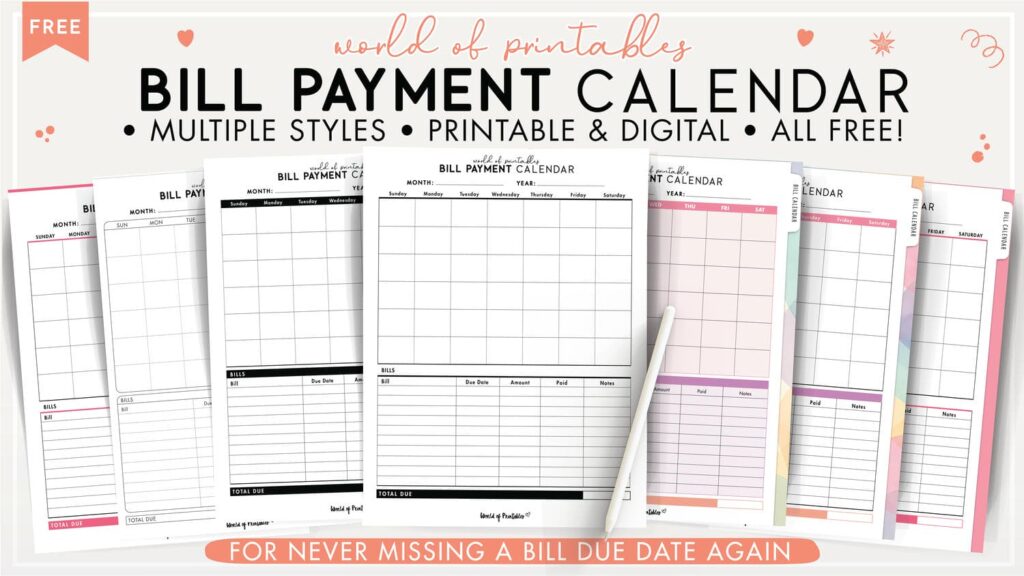
This printable gives you one clear place to see all of your recurring bills for the month, track when they are due, and mark them off once they are paid. Instead of trying to remember everything in your head or hunting through banking apps and emails, you have a simple visual system that helps you stay ahead of your monthly obligations.
If you are building a budget binder, this is one of the most practical pages to include because it makes your cash flow easier to see and much easier to manage.
What is a Bill Payment Calendar?
A Bill Payment Calendar is a printable that helps you map out your bill due dates across the month.
It gives you a visual overview of:
- what bills are due
- when they are due
- which ones are on autopay
- which ones need to be paid manually
- whether they have already cleared
Instead of seeing your bills as one long list, you can see them in time.
That makes a huge difference.
Because many money problems are not caused by not having enough for the month overall. They happen because too many payments are clustered at one point in the month, or because a bill slips through the cracks.
A bill calendar helps stop that.
Why this printable is so helpful
A lot of people know roughly what bills they have, but do not have a clear picture of when everything is leaving the account.
That is where trouble starts.
You may have enough money for the month, but still run into stress if:
- several bills hit before payday
- an autopay comes out earlier than expected
- you forgot a manual payment
- a subscription charge gets lost among bigger bills
- you are relying on memory instead of a system
A Bill Payment Calendar brings all of that into one visible place.
It helps you:
- see busy bill weeks in advance
- avoid late payments
- reduce overdraft risk
- feel less mentally cluttered
- check off paid bills with confidence
It is one of those pages that makes the whole month feel more manageable.
Why a physical bill calendar can work so well
There is something very helpful about seeing your bills on paper.
Apps and online banking are useful, of course, but a printable bill calendar gives you a fixed visual overview that does not disappear behind tabs, notifications, or login screens.
You can quickly see:
- which dates are heavy
- which bills are automatic
- what still needs attention
- whether your monthly budget and pay schedule actually line up
That kind of visibility can remove a surprising amount of low-level money stress.
Choose a design theme that fits your style
This printable comes in a range of layouts so you can choose the one that suits your binder and planning style best.
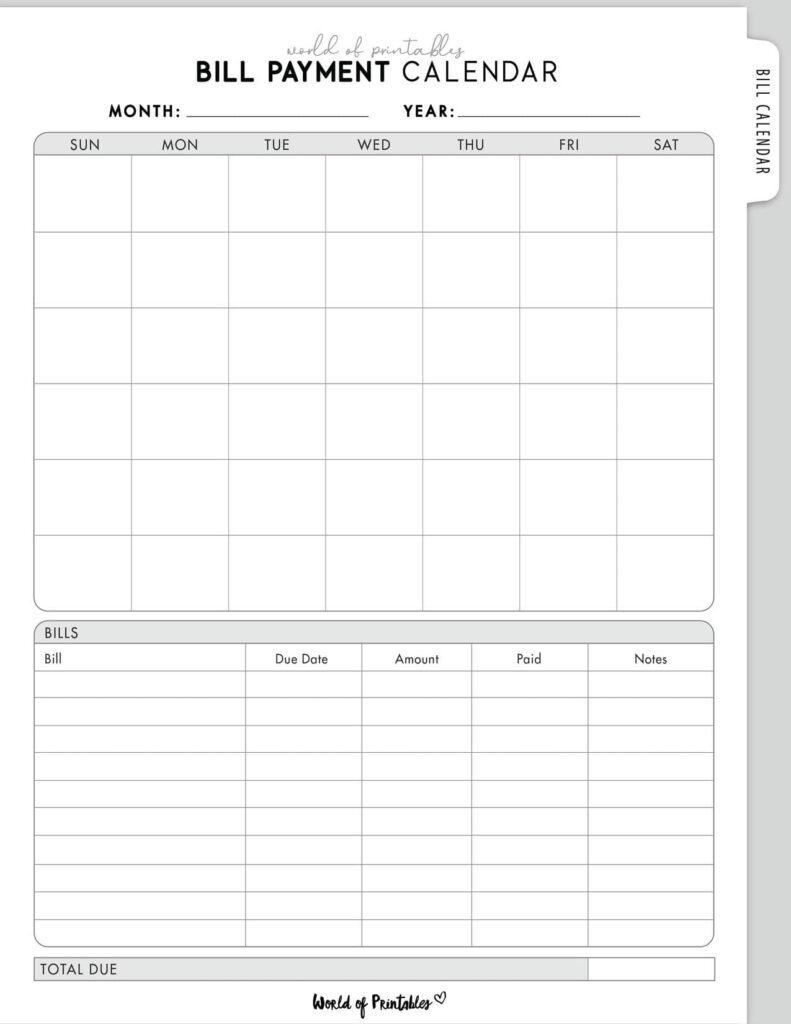
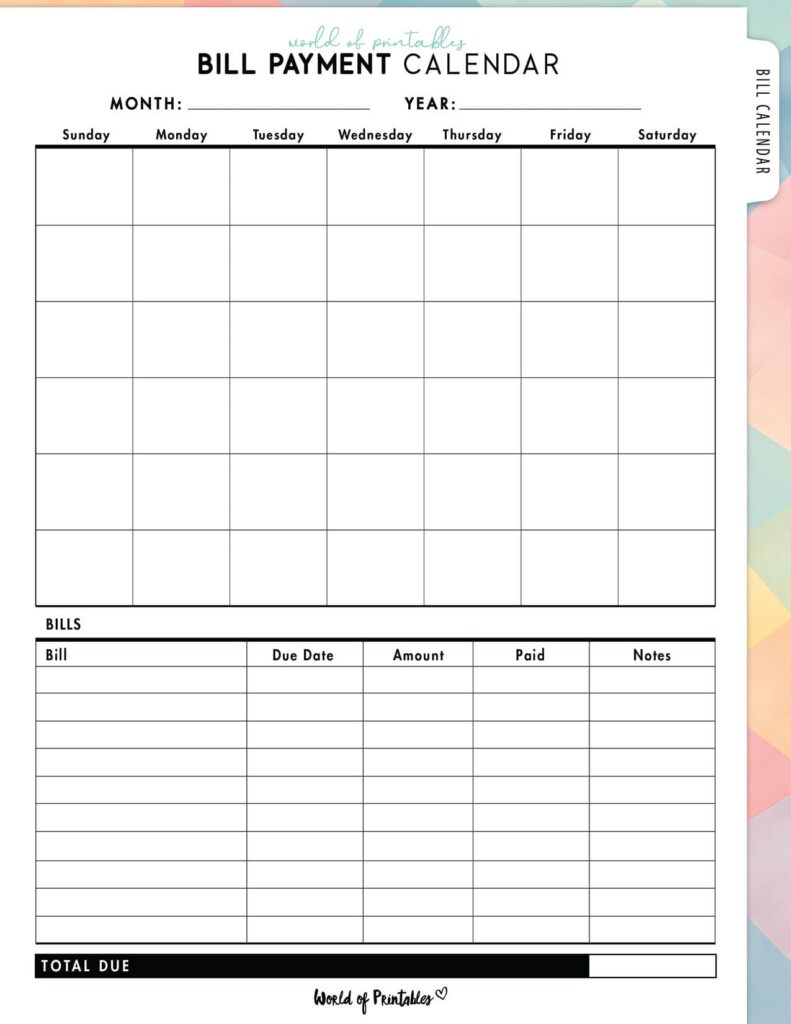
Minimalist and simple styles
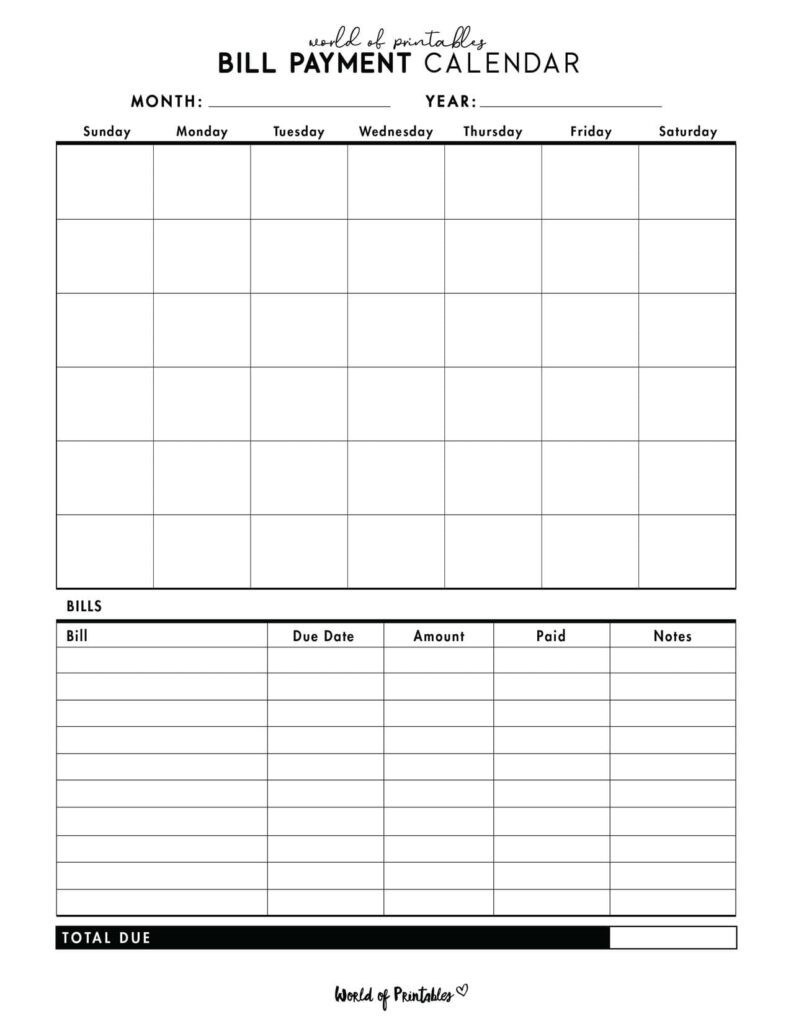
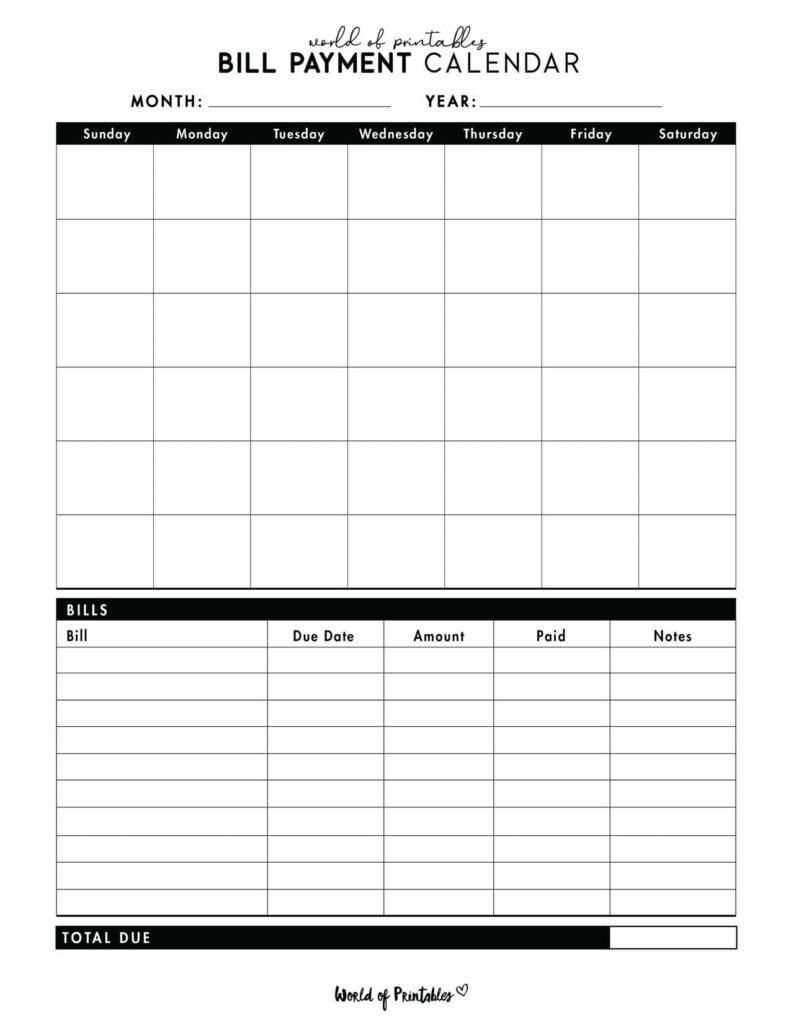
These are ideal if you want a clean, practical calendar that keeps the focus on due dates, amounts, and paid status.
They work especially well in a more classic budget binder setup.
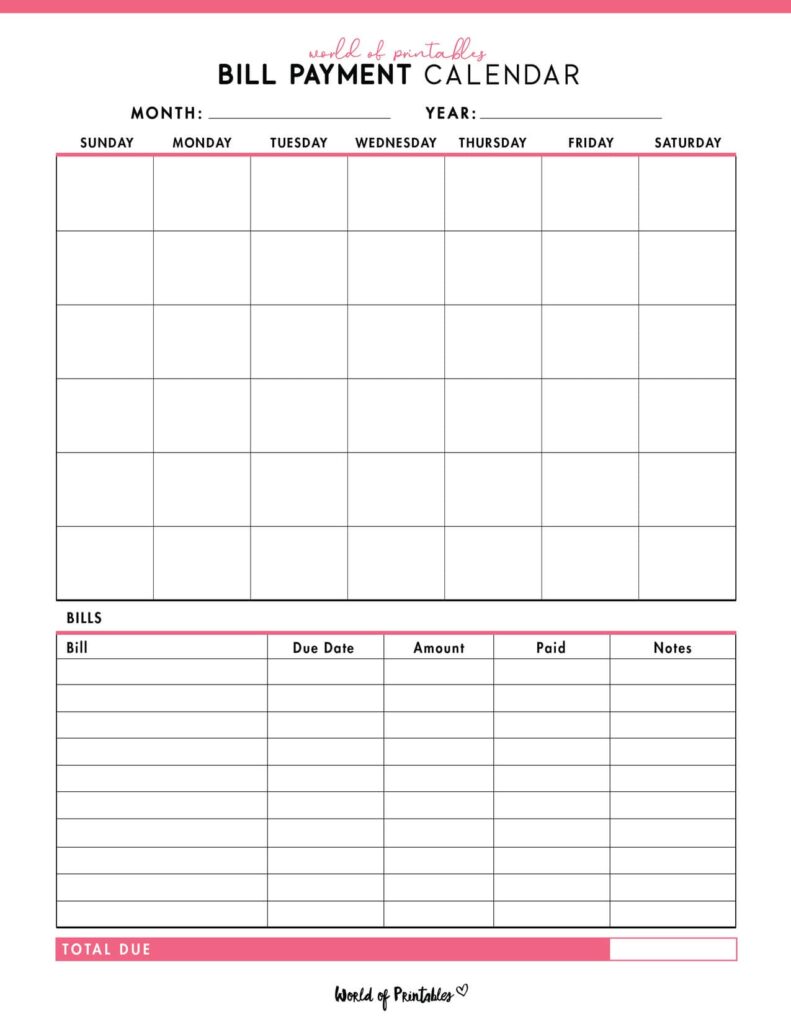
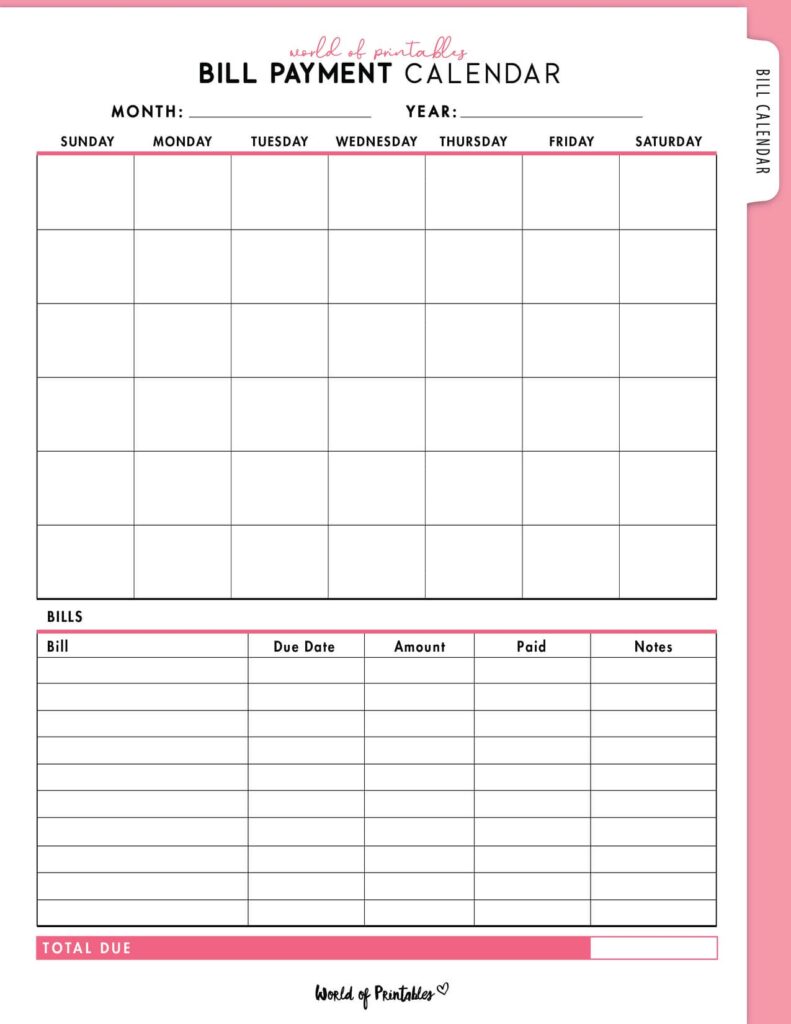
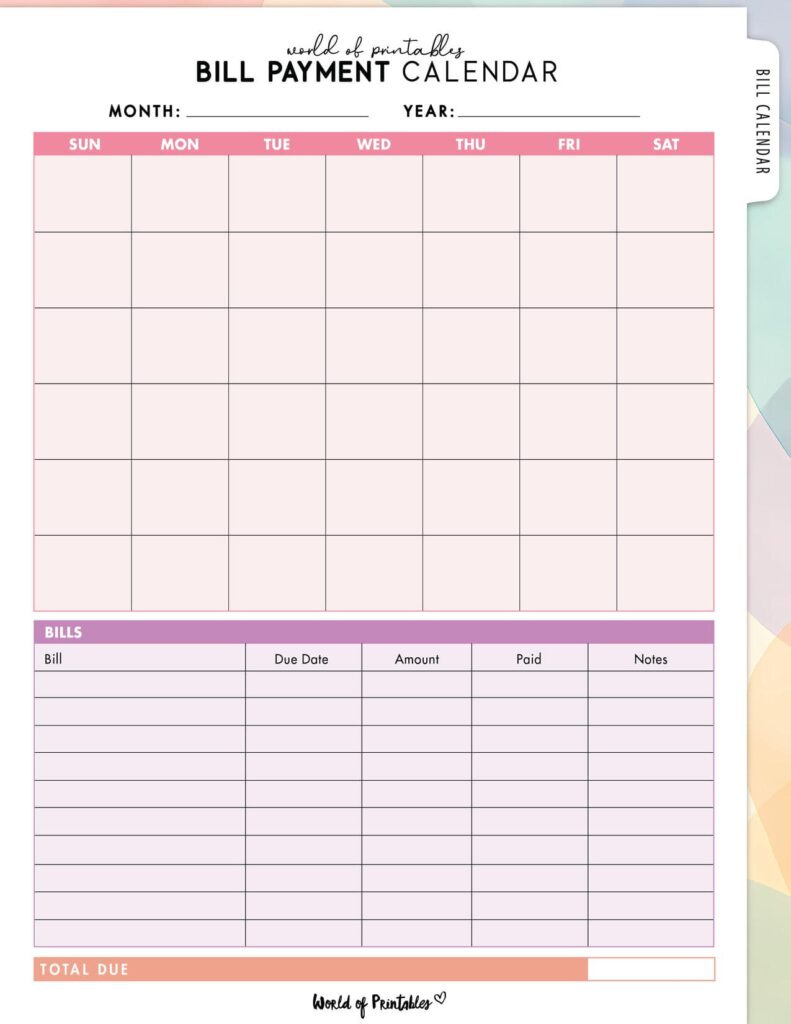
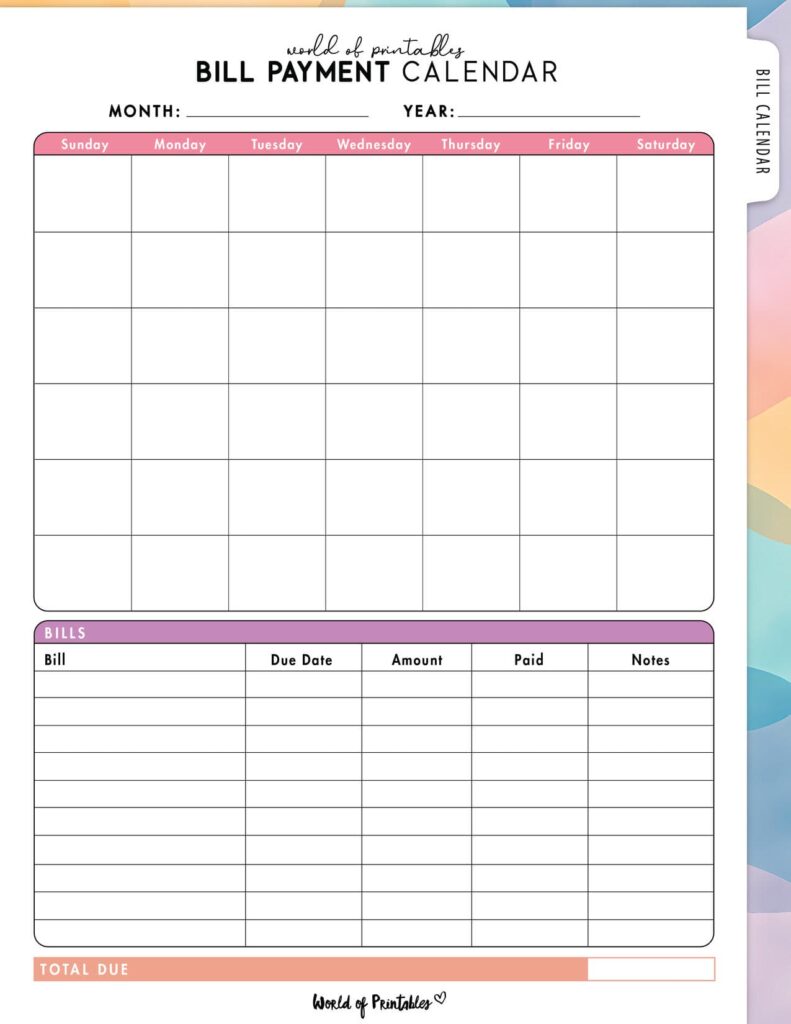
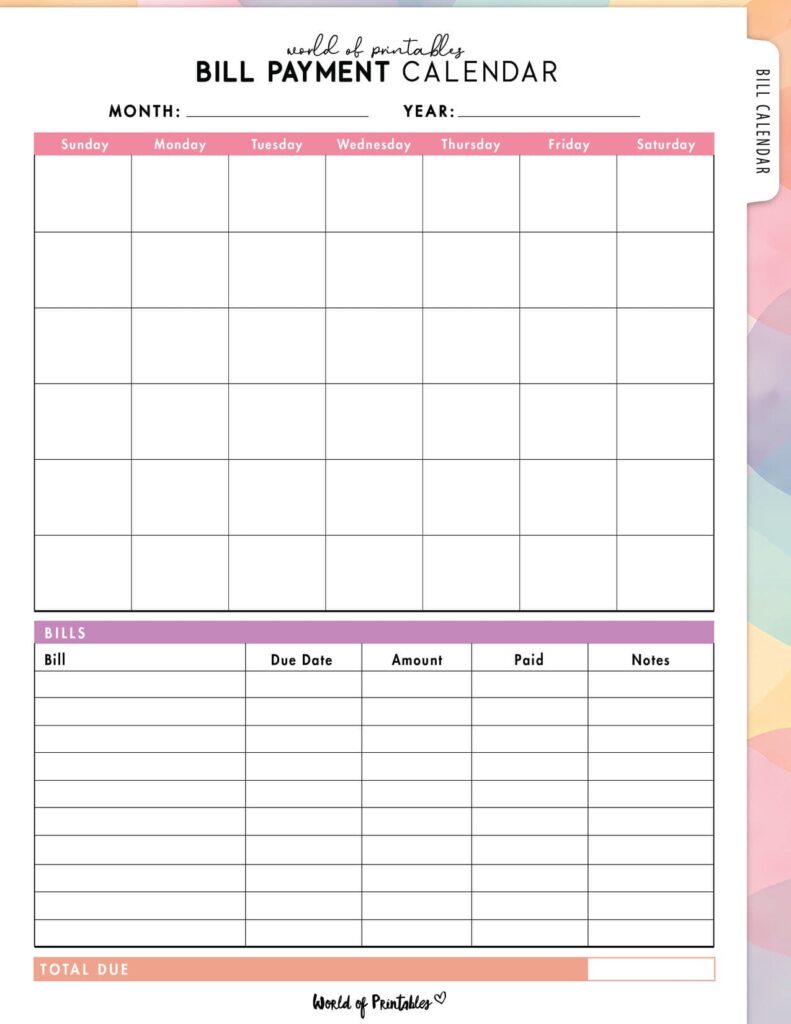
Colorful and visual styles
These are great if you like being able to separate bill types visually at a glance.
That can make it easier to spot categories like utilities, debt, subscriptions, and housing without rereading everything.
Ink-saving options
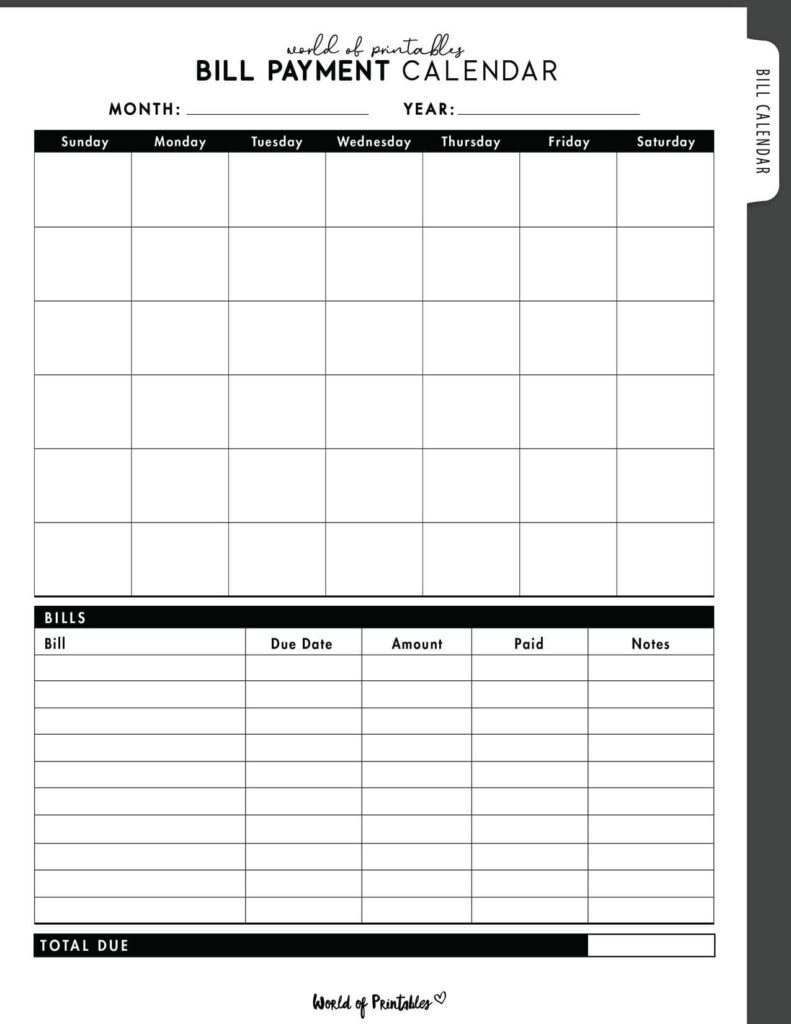
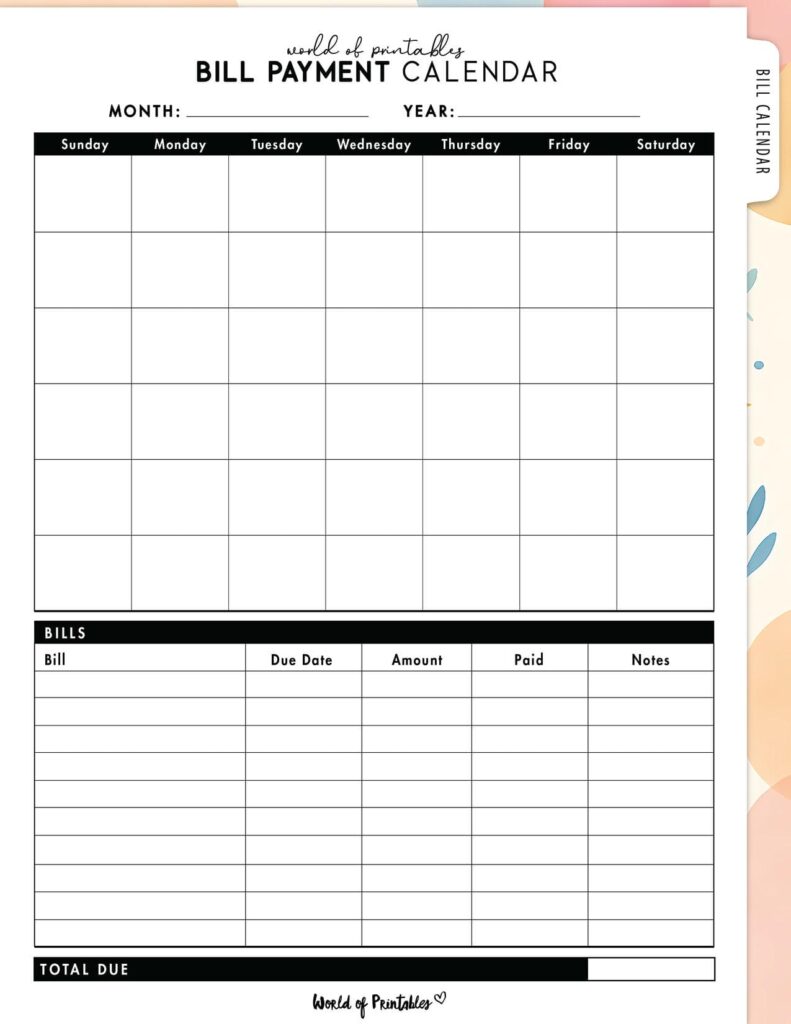
If you prefer practical, low-ink printables, these are a smart option.
They still feel tidy and professional while being efficient to print each month.
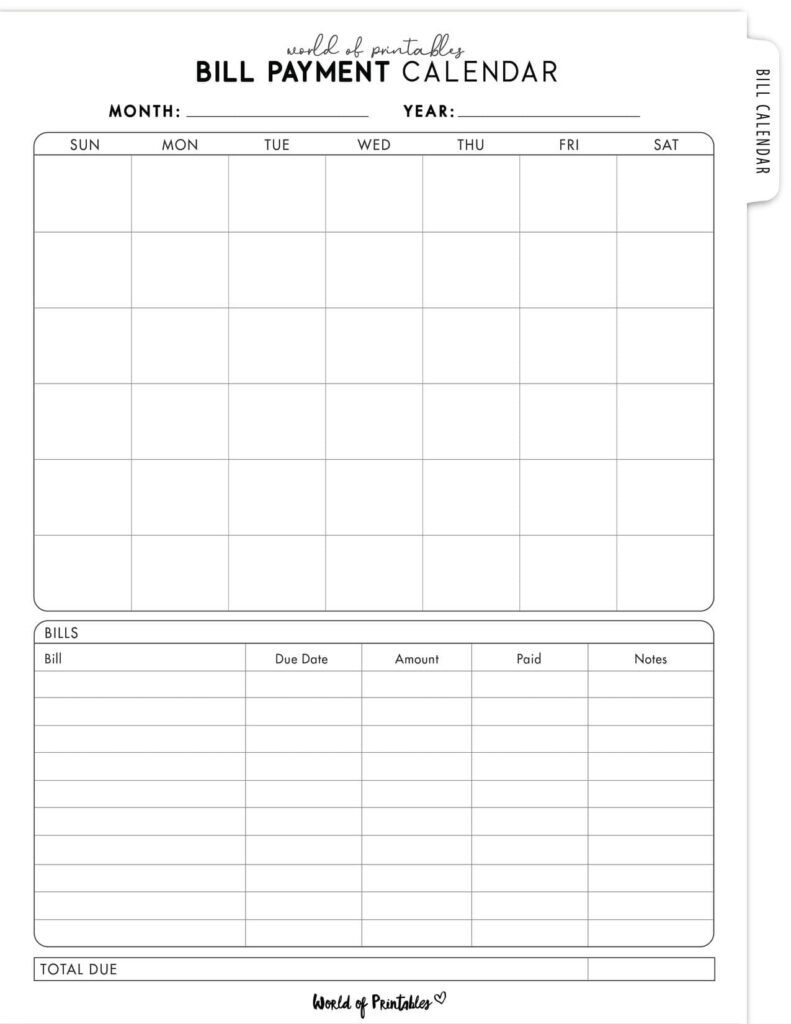
Free Download and Printing Instructions
To download your free Bill Payment Calendar, click the text link directly beneath the image of your preferred design. This will open the high-resolution PDF.
For the best printing results:
- download the PDF directly to your device
- open the file and select Print
- make sure your printer is set to US Letter
- choose Fit to Page or Scale to Fit so the margins print correctly
If you want the page to hold up well in your binder month after month, it can be worth printing it on slightly thicker paper.
A premium 28 lb or 32 lb paper gives it a more durable, high-quality feel.
How to Use a Bill Payment Calendar
This is such a visual and satisfying printable for managing household cash flow! Seeing when bills hit the bank account on a calendar makes it much easier to coordinate with paydays, which is exactly how most moms manage the monthly budget.
Here is a typical month’s example:
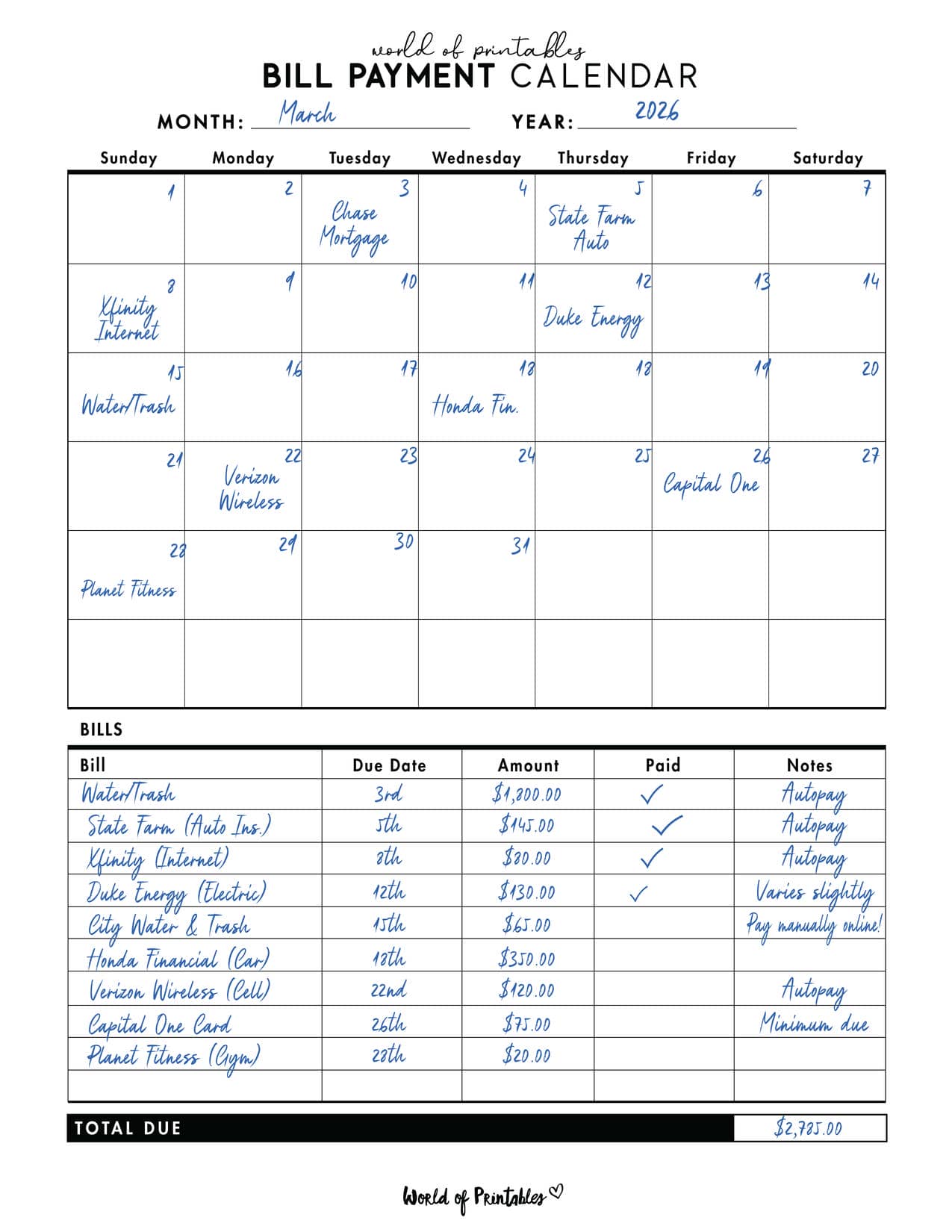
This printable is simple, but setting it up properly makes it much more effective.
Here is the best way to use it:
Step 1: Gather all your recurring bills
Before filling in the calendar, make a full list of your regular monthly liabilities.
This may include:
- rent or mortgage
- electricity, gas, and water
- council tax
- internet
- phone bills
- insurance
- car finance or loan payments
- credit card minimum payments
- subscriptions
- childcare
- any other regular monthly outflows
The easiest way to do this is to review your recent bank and card statements so nothing gets missed.
Step 2: Write in the exact due dates
Once you have your full bill list, write each bill on the date it is due.
This is where the calendar becomes really useful.
Instead of just knowing you have “lots due this month,” you can see exactly when those dates land.
That helps you spot things like:
- multiple bills hitting in the same week
- heavy payment periods before payday
- parts of the month that are tighter than others
That kind of pattern is hard to see in a normal list, but very obvious on a calendar.
Step 3: Mark whether each bill is autopay or manual
This is a small detail that makes a big difference.
For each bill, note whether it is:
- autopay
- manual payment
- direct debit
- or however you prefer to label it
This matters because not all bills require the same kind of attention.
Some need money in the account and nothing more. Others need you to actually log in and make the payment yourself.
Seeing that clearly on the page helps prevent the classic “I thought that one was automatic” problem.
Step 4: Check off each payment once it clears
As bills are paid, mark them off.
You might:
- tick them
- highlight them
- cross them off
- use a paid checkbox
This gives you immediate confirmation of what is done and what is still outstanding.
That visual progress is one of the most satisfying parts of using a bill calendar. It turns a pile of monthly obligations into a clear sequence of completed tasks.
Once your due dates are mapped out, the next step is deciding which paycheck covers each bill. Our Paycheck Planner helps you connect those dates to real paydays so your bills feel easier to manage all month long.
Why this works so well with a monthly budget
A Bill Payment Calendar and a monthly budget do slightly different jobs.
Your monthly budget tells your money where it should go.
Your bill calendar tells you when those obligations happen.
That timing matters.
Because even a strong budget can feel stressful if you do not have a clear view of due dates and payment flow.
When used together, these two pages help you answer:
- Do I have enough money in place for this week’s bills?
- Which paycheck needs to cover which dates?
- Are my bills spread out or heavily clustered?
- What still needs to be paid this month?
That is why this page works so well in a budget binder. It adds the timing layer your budget needs.
A few practical ways to use this printable
If your income is regular and monthly
A bill calendar helps you organise due dates and track what has cleared so nothing gets missed.
If your income is bi-weekly or irregular
This page becomes even more important because it helps you line up bills with incoming pay more carefully.
If you share finances with a partner
A bill calendar creates a shared visual system so both people can quickly see what is due and what has already been handled.
If you tend to feel anxious about money admin
This page helps reduce that “what am I forgetting?” feeling because everything is visible in one place.
What to include on your Bill Payment Calendar
A useful bill calendar should be clear, not crowded.
Helpful details include:
- bill name
- due date
- amount
- autopay or manual status
- paid checkbox
- notes if needed
Some people also like to add colour coding for bill types, such as:
- housing
- utilities
- debt payments
- subscriptions
- insurance
That can make the page even easier to scan at a glance.
Common bill calendar patterns this page can help you spot
Once you use this for a month or two, you may notice things like:
- too many bills are due before the same payday
- a few subscriptions are cluttering up the month
- a bill date change might make your cash flow smoother
- one week consistently feels tighter than the others
- manual payments are more likely to be forgotten than autopay ones
That is useful information.
It helps you improve your money system rather than just reacting to it.
Why this works so well in a budget binder
A Bill Payment Calendar is one of the strongest “core pages” in a budget binder because it supports the rest of your money system so well.
It works especially well alongside:
- monthly budget planners
- paycheck budgeting breakdowns
- recurring subscription audits
- daily spending logs
- annual financial goals worksheets
Those pages help you plan and review.
This page helps you execute.
It is one of the simplest tools for making your monthly finances feel calmer and more controlled.
A simple tip that makes this page more powerful
Fill out your bill calendar before the month starts, not halfway through it.
That way, you begin the month already knowing:
- what is due
- when it is due
- which payments need your attention
- which dates may feel tighter
That one habit makes the page far more useful than filling it in after bills have already started hitting.
Next Step: Build Your Complete Financial Command Binder
Knowing when your bills are due is crucial, but timing those payments with your income is what prevents overdrafts and cash flow stress.
A Bill Payment Calendar helps you stay on top of due dates, but it works even better when it is connected to the rest of your money system.
Helpful pages to add next include:
- a paycheck budgeting breakdown
- a monthly budget planner
- a recurring subscription audit
- a daily spending log
- an annual financial goals worksheet
Together, these pages help you not only know what is due, but also make sure the money is there at the right time and working toward the bigger goals you have set.
Continue optimizing your solvency system by adding the next essential tools to your binder:
- Return to the Printable Budget Binder Bundle.
- Do you get paid bi-weekly? Download the Paycheck Budgeting Breakdown to map these specific bills to your exact pay periods.
- Is your calendar too crowded? Download the Recurring Subscription Audit to identify and cancel phantom charges eating up your liquidity.
More budgeting templates
You’ll find many more budgeting templates right here on World of Printables.



AI TRANSPARENCY: Whilst the majority of our creations have been created completely traditionally, occasionally we utilize AI tools in our design process. We acknowledge the advancements in AI technology and leverage them responsibly to optimize our creative output. However, it is important to note that our utilization of AI does not compromise the human element of our work. Our commitment to delivering high-quality designs through a balanced integration of traditional expertise and AI enhancements remains paramount.