

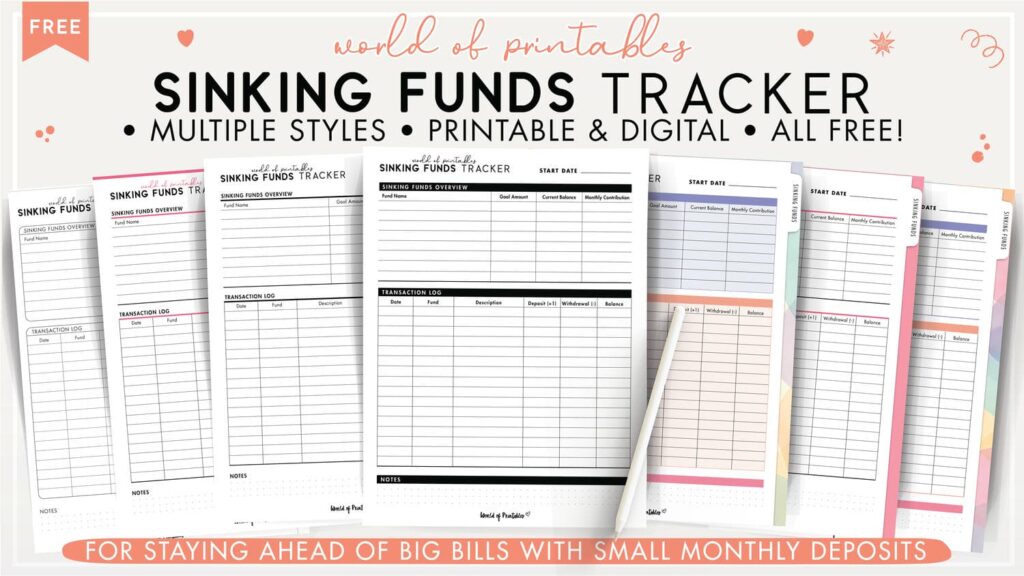
Disclaimer: We provide high-quality, free printable templates to help you organize your personal data. We are not certified financial planners or investment advisors. The tools and information provided below are for educational and organizational purposes only. Always consult a licensed financial professional before making high-stakes decisions regarding investments, asset allocation, tax strategy, or debt consolidation.
Some expenses are not emergencies. They are just expensive, predictable, and inconvenient.
Christmas comes every year. Car insurance is not a surprise. School costs show up again and again. Home repairs, annual subscriptions, birthdays, holidays, and car maintenance all have a way of landing hard when you have not set money aside for them in advance.
That is exactly why sinking funds are so useful.
A Sinking Funds Tracker helps you save gradually for known future expenses, so they do not blow up your monthly budget when they arrive. Instead of scrambling, dipping into savings, or reaching for a credit card, you already have the money waiting.
If you keep a budget binder, this is one of the most practical pages you can include because it helps turn irregular expenses into manageable monthly plans.
What is a sinking fund?
A sinking fund is money you set aside little by little for a specific future expense.
It is not your emergency fund.
Your emergency fund is for things you could not reasonably predict, like an urgent repair, sudden job loss, or an unexpected medical cost.
A sinking fund is for things you know are coming, even if they do not happen every month.
Common sinking funds include:
- Christmas and holiday spending
- birthdays
- back-to-school shopping
- car maintenance
- annual insurance payments
- home repairs
- family holidays
- subscriptions and memberships
- clothes
- vet bills
- gifts
- property taxes or other annual costs
The goal is simple: break larger costs into smaller monthly amounts so your budget stays steadier all year.
Sinking funds work best when you assign money to them as soon as each paycheck lands. Our Paycheck Planner helps you plan bills first, then decide what you can send toward future expenses with more confidence.
Why a sinking funds tracker is so helpful
A sinking fund is a great idea on its own, but the tracker is what makes it practical.
Without a tracker, it is easy to lose sight of:
- how much you are trying to save
- how much you have already set aside
- how much you still need
- which categories are on track and which are falling behind
A Sinking Funds Tracker gives you one place to see your goals clearly.
Instead of vaguely thinking, “I should probably be saving for Christmas,” you can see:
- your target amount
- your current balance
- your monthly contribution
- your progress
That clarity makes saving feel much easier and much less stressful.
Choose a design theme that fits your style
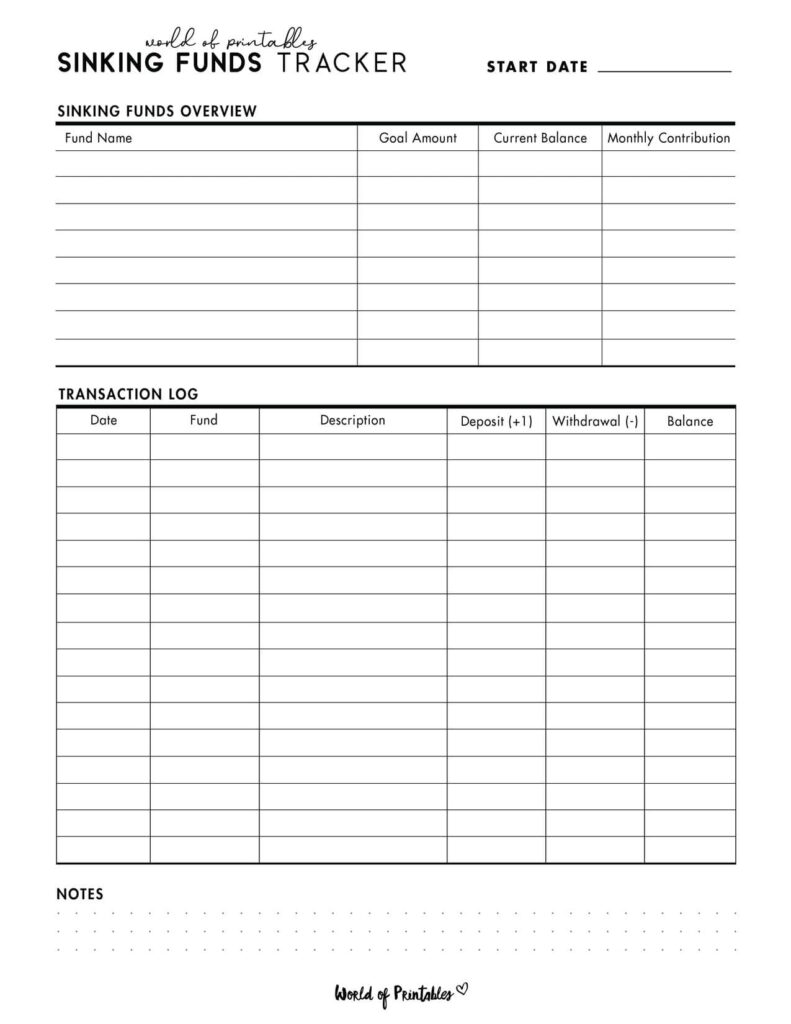
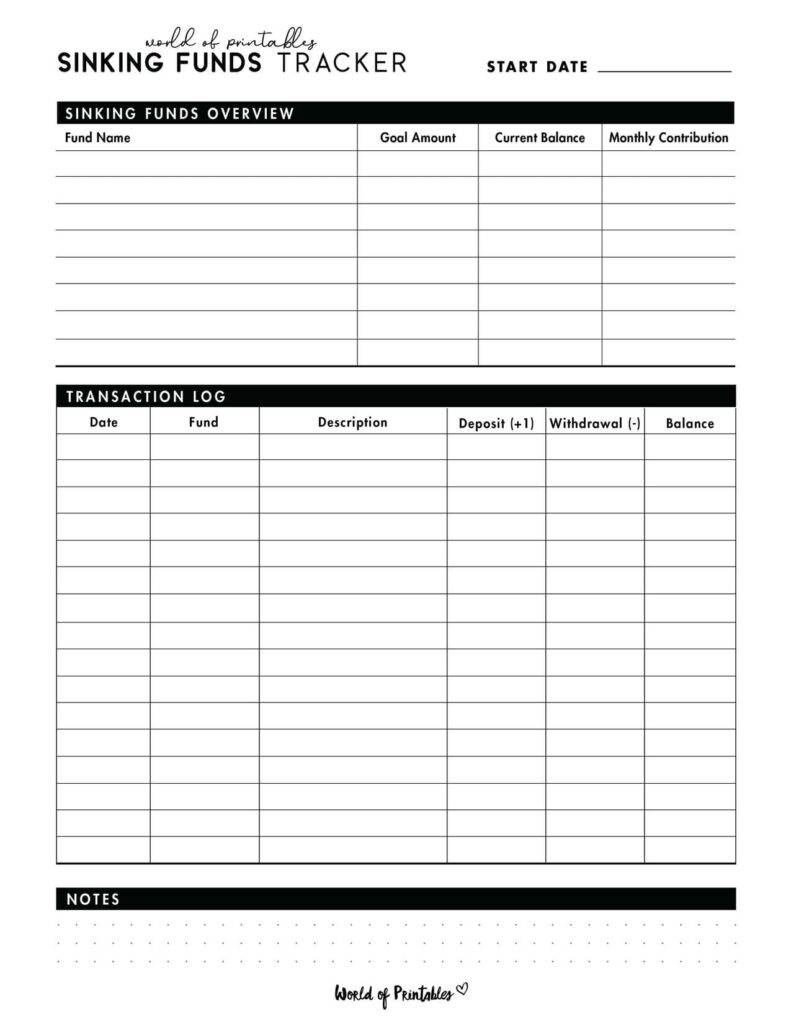
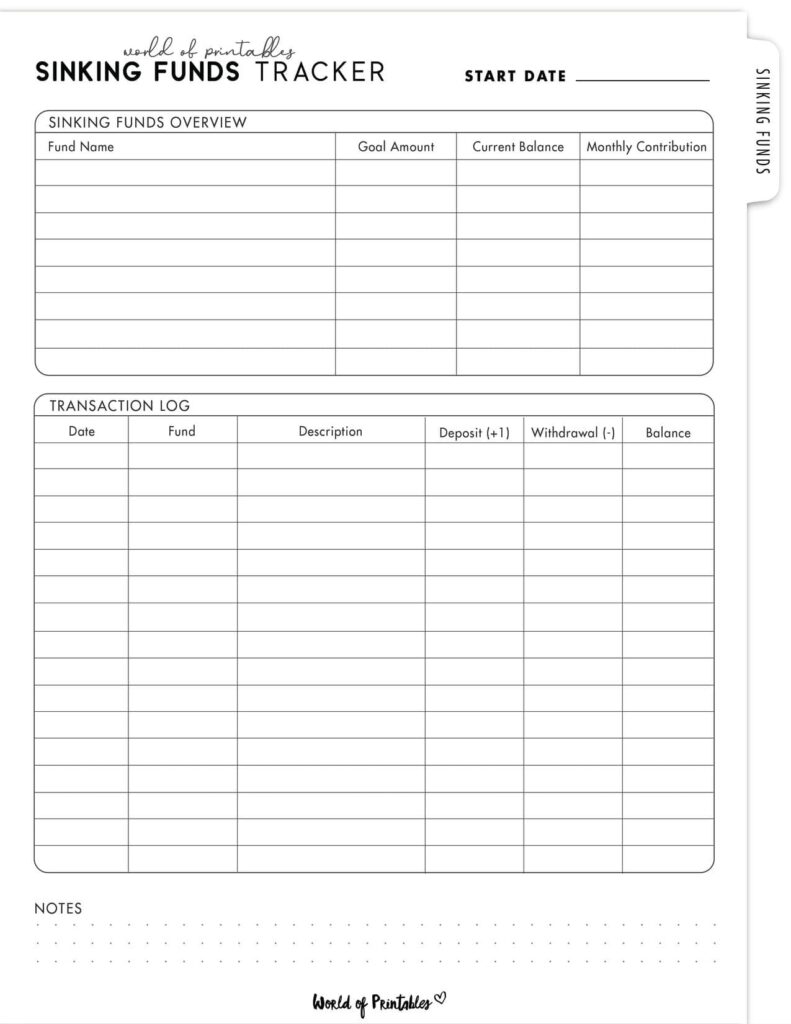
This printable comes in a range of layouts so you can choose the one that suits your binder and planning style best.
Minimalist and simple styles
These are ideal if you want a clean, simple page that keeps the focus on your goal amounts and balances.
They work especially well in a classic budget binder setup.
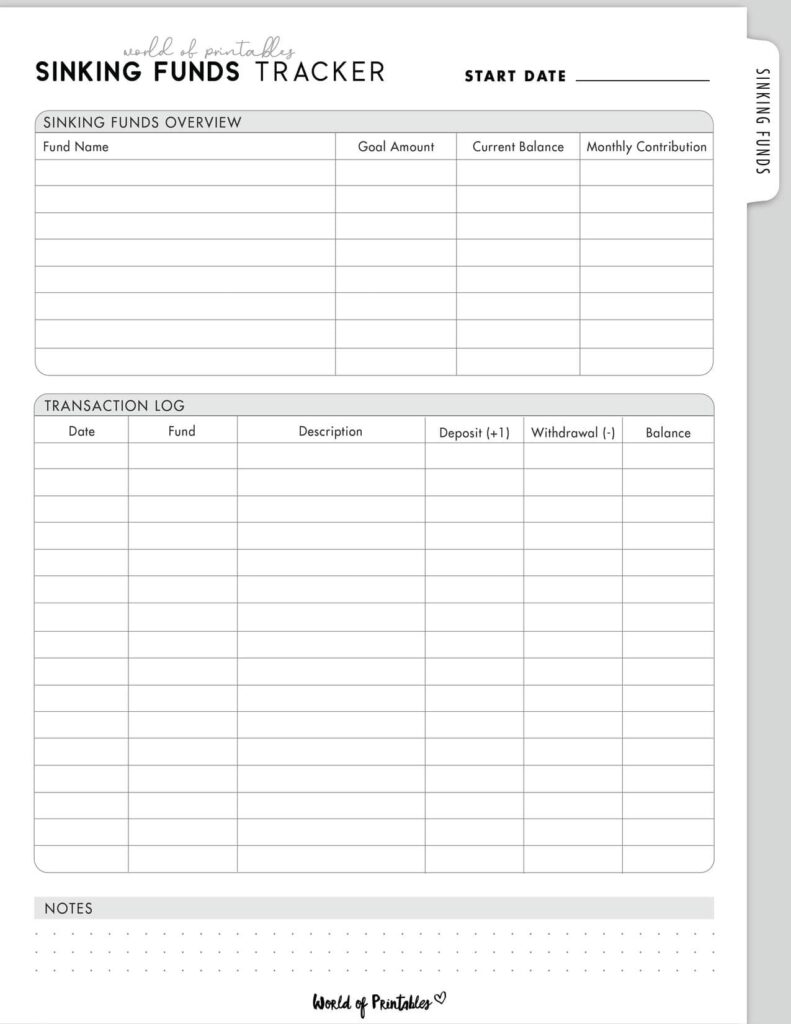
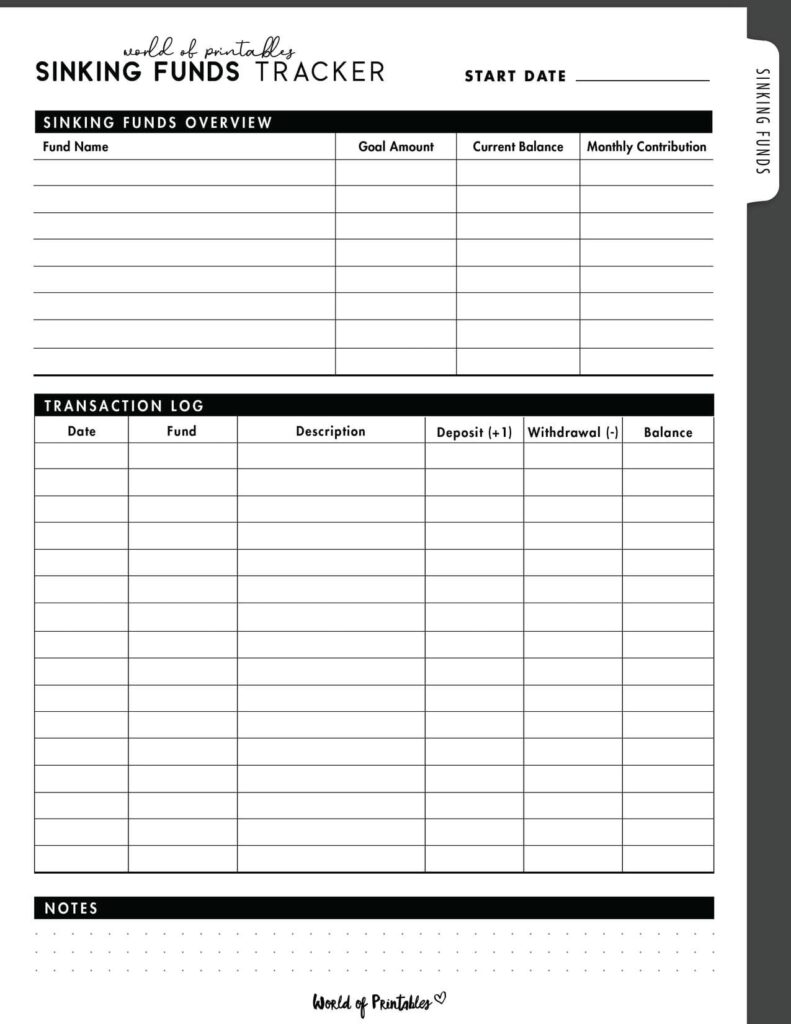
Colorful and visual styles
These are great if you manage several sinking funds at once and want to separate them visually at a glance.
They can make the page feel quicker to read and more motivating to update.
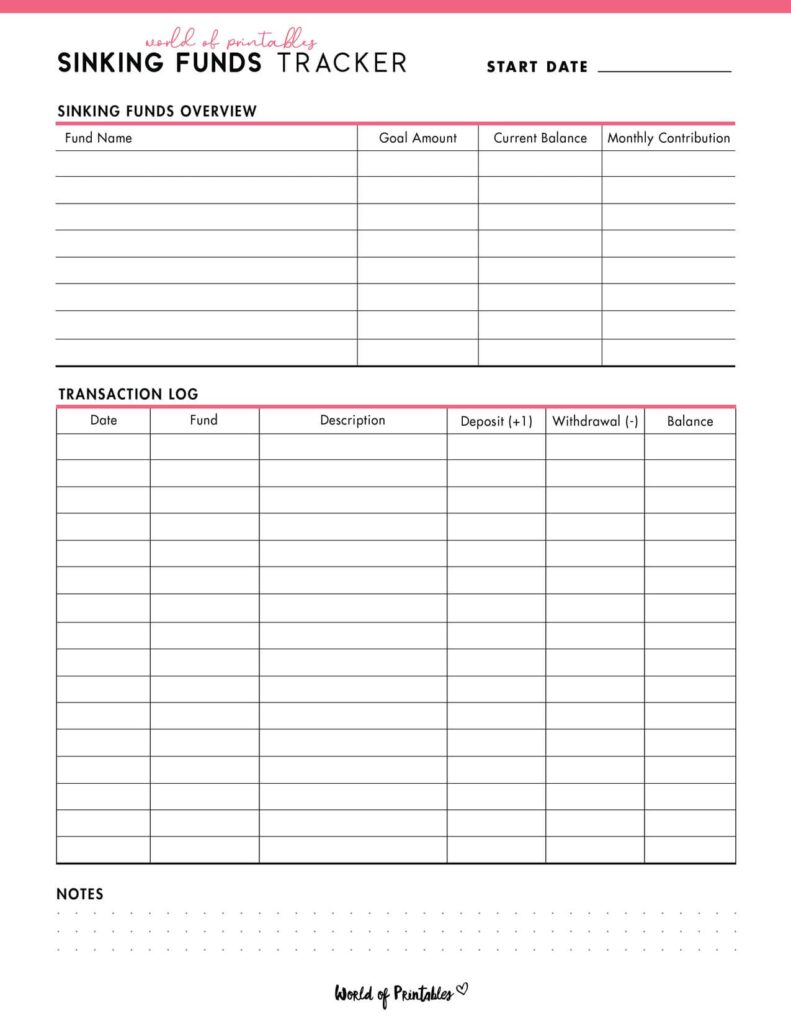
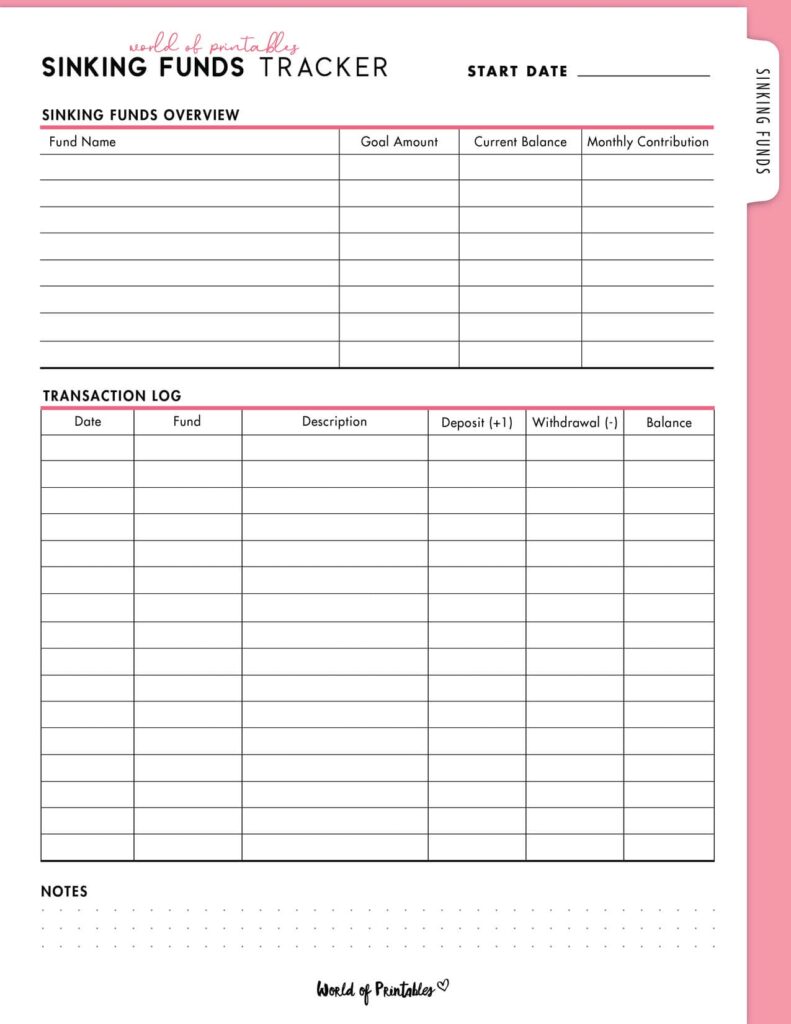
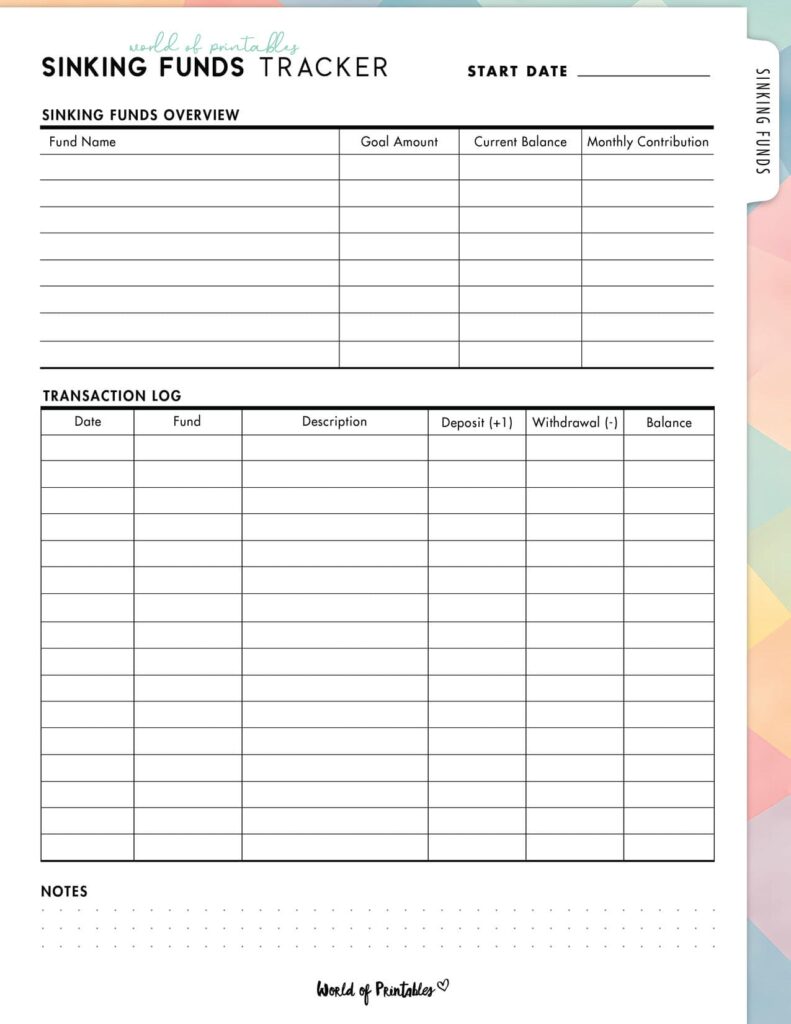
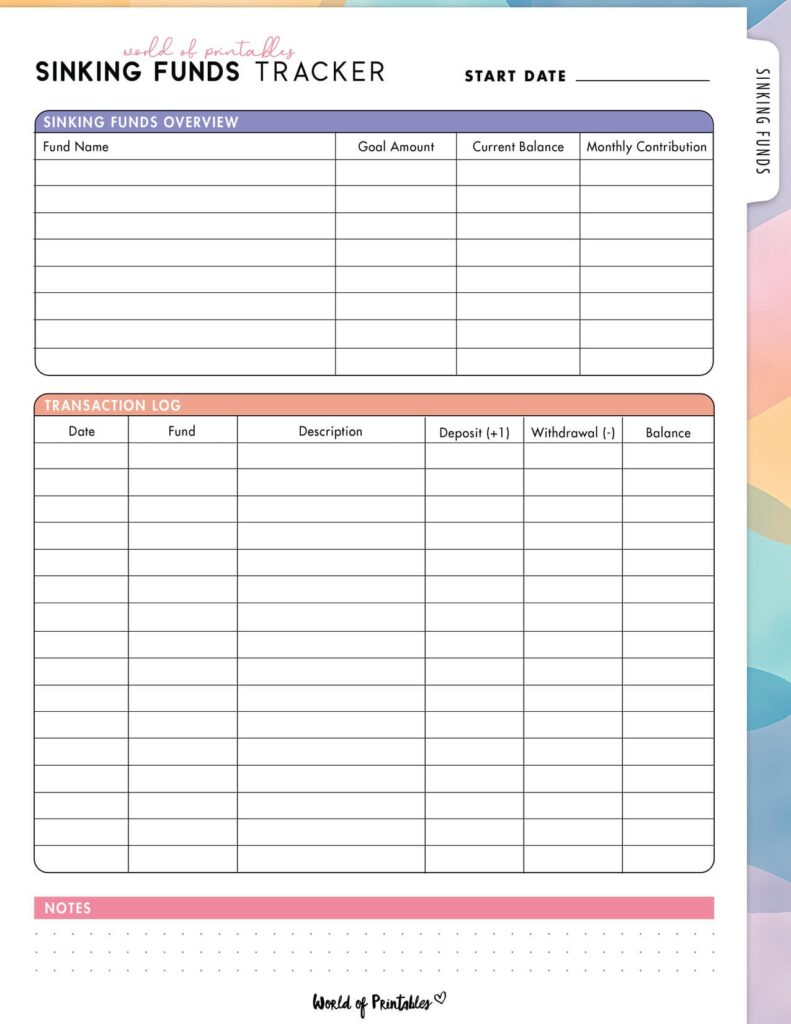
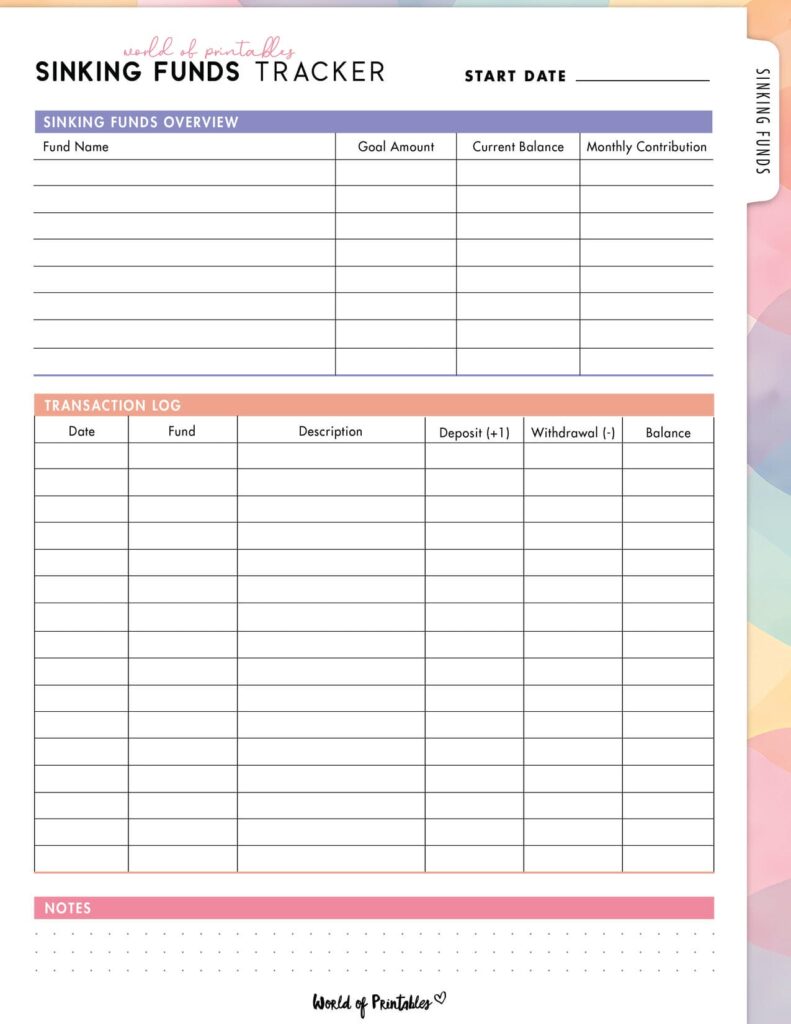
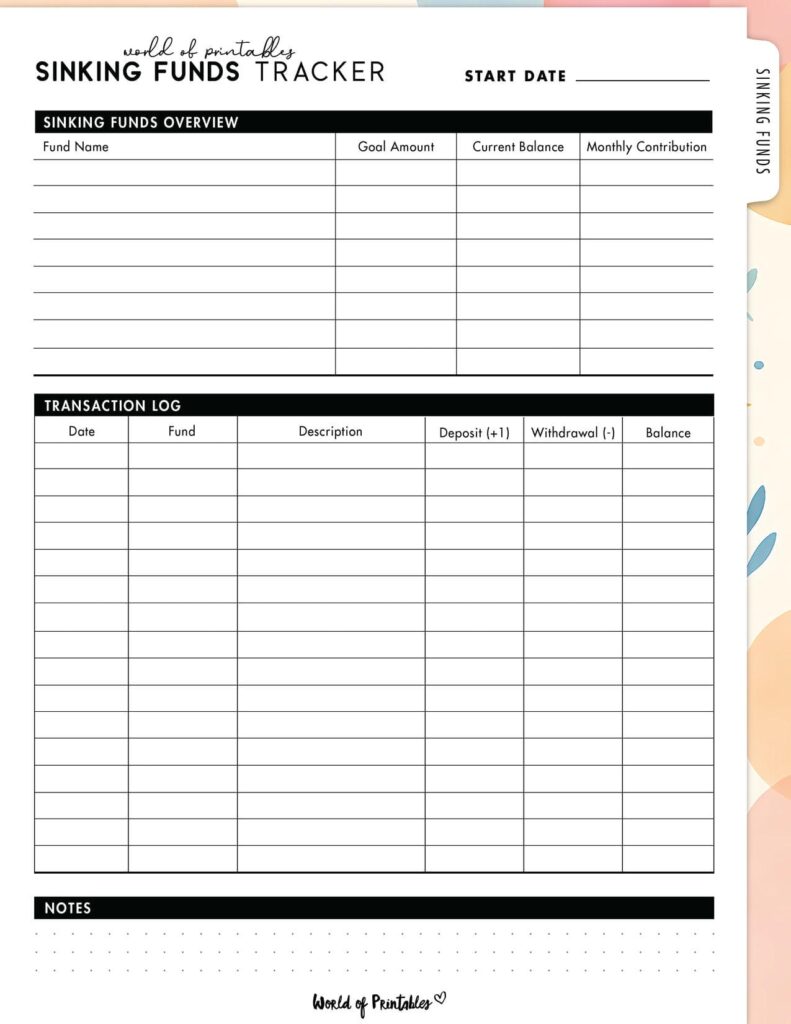
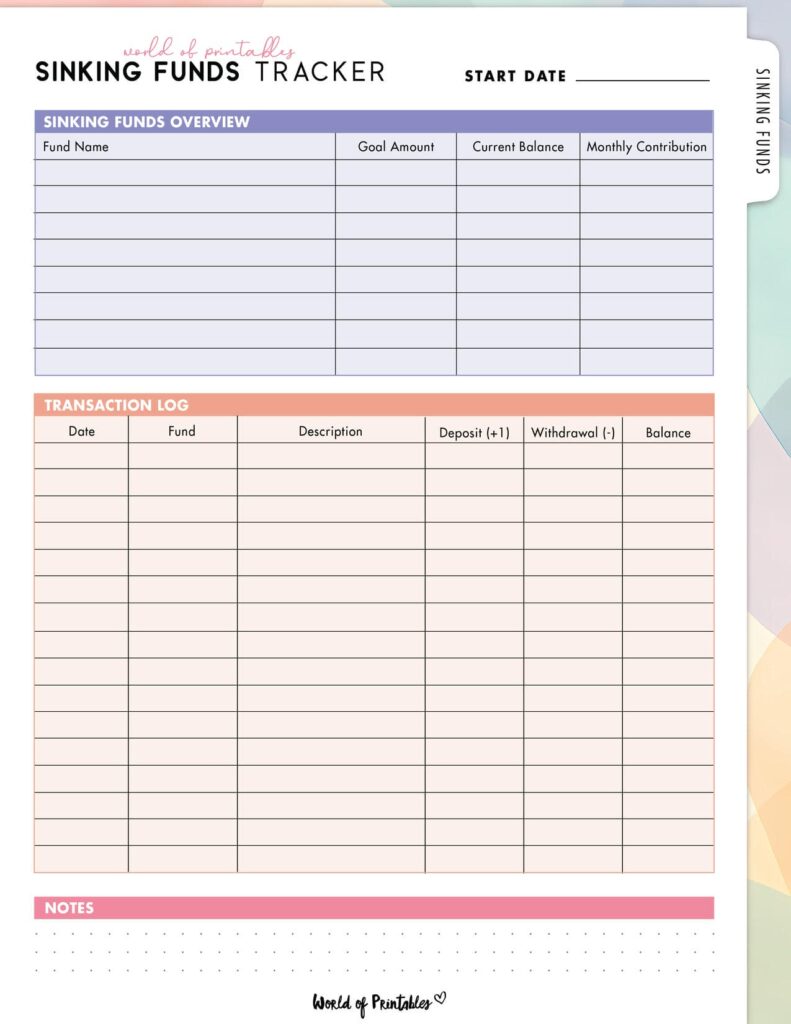
Ink-saving options
If you prefer practical, low-ink printables, these are a smart option.
They still look tidy and polished while being efficient to print.
Free Download and Printing Instructions
To download your free Sinking Funds Tracker, click the text link directly beneath the image of your preferred design. This will open the high-resolution PDF.
For the best printing results:
- download the PDF directly to your device
- open the file and select Print
- make sure your printer is set to US Letter
- choose Fit to Page or Scale to Fit so the margins print correctly
If you want the page to hold up well in your binder, it can be worth printing it on slightly thicker paper.
A premium 28 lb or 32 lb paper gives it a more durable, high-quality feel.
Why this works so well in a budget binder
This printable is one of the best “bridge pages” in a budget binder because it connects your big goals with your monthly budget.
Your:
- annual financial goals worksheet helps you decide what matters
- monthly budget tells your money where to go this month
- sinking funds tracker helps you build the specific pots that make future spending easier
It works especially well alongside:
- monthly budget planners
- emergency fund trackers
- 52-week savings challenge pages
- year-end financial summaries
When these pages work together, your finances feel more planned and much less reactive.
How to Use a Sinking Funds Tracker
Sinking funds are the absolute must-have for budgeting! They turn stressful, “unexpected” expenses (which are usually completely predictable, like Christmas or annual subscriptions) into zero-stress, planned events. Moms love sinking funds because they stop the cycle of relying on credit cards for things like summer camp or car repairs.
This example shows a snapshot from early in the year, showing a mix of saving up and actually spending from the funds (because that’s the whole point!).
Here is a highly realistic example of how to fill out your Sinking Funds Tracker:
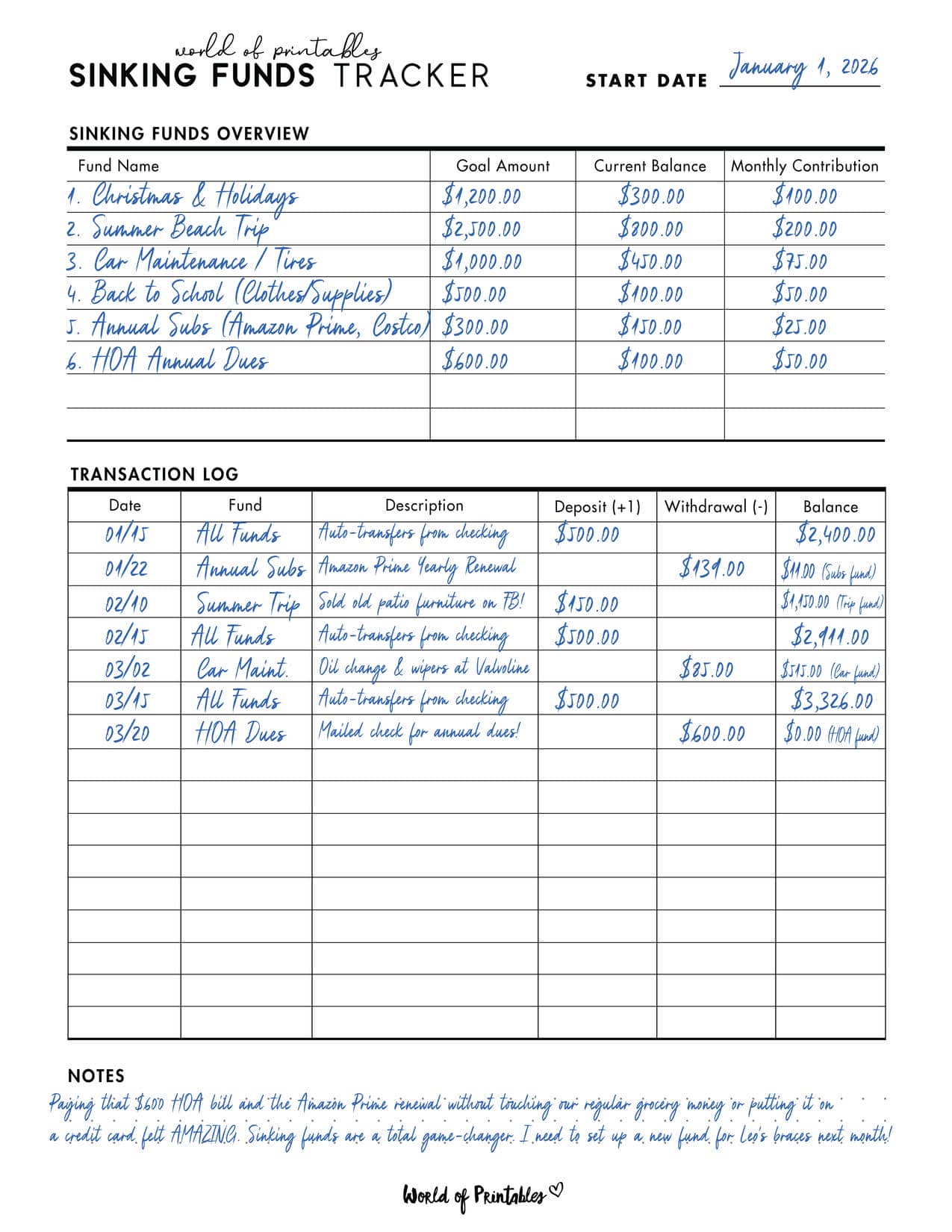
This printable is simple, but it becomes very powerful when you use it consistently.
Here is the best way to fill it out:
Step 1: List your non-monthly expenses
Start by thinking about the expenses that are not part of your regular monthly bills but still happen every year or every few months.
You might include:
- Christmas
- birthdays
- annual subscriptions
- car servicing
- MOT or repairs
- school uniforms
- family trips
- home maintenance
- clothing
- pet expenses
The easiest way to do this is to think back over the last year and ask:
What did I have to pay for that felt annoying, rushed, or expensive?
Those are usually your sinking fund categories.
Step 2: Set a goal amount for each one
Once you know what you are saving for, write down the target amount.
Examples:
- Christmas: $600
- Car maintenance: $500
- Back to school: $300
- Annual subscription renewals: $180
If you are not sure on the exact amount, estimate based on last year or choose a realistic number that would make the expense easier to handle.
It does not have to be perfect. It just needs to be useful.
Step 3: Work out your monthly saving amount
Now divide the goal amount by the number of months left until you need the money.
For example:
- $600 for Christmas over 12 months = $50 per month
- $300 for school costs over 6 months = $50 per month
- $180 annual renewal over 12 months = $15 per month
This is the step that makes sinking funds feel manageable.
You are no longer staring at one big future bill. You are looking at a small monthly amount you can actually plan for.
Step 4: Add those amounts into your monthly budget
This is the part that makes the tracker work in real life.
Once you know your monthly amount, add it into your monthly budget as a regular line item.
That way, your sinking fund is not a vague intention. It becomes part of your actual money plan.
Even if you only start with one or two sinking funds, that is enough to make a difference.
Step 5: Update your tracker as the money builds
Each time you add money to a sinking fund, update the tracker.
You can record things like:
- goal amount
- monthly contribution
- current balance
- amount still needed
This is where the printable becomes really satisfying.
Watching those balances grow gives you proof that future expenses are becoming less stressful one month at a time.
What sinking funds stop you from doing
One of the best things about sinking funds is what they help you avoid.
They help stop you from:
- raiding your emergency fund for predictable expenses
- feeling panicked when annual bills show up
- putting expected costs on a credit card
- pretending Christmas or school costs “snuck up on you”
- wrecking your monthly budget because one category suddenly hit hard
That is why sinking funds are so powerful. They bring predictability to expenses that used to feel disruptive.
Good sinking fund ideas to start with
If you are new to sinking funds, these are some of the easiest and most useful ones to start with:
1) Christmas
This is the classic one because it is so predictable and so expensive if left until the last minute.
2) Car maintenance
Even if you do not know the exact cost, setting money aside for servicing, repairs, and tyres can save a lot of stress later.
3) Birthdays and gifts
This is one of those categories that feels “occasional” but happens constantly when you actually add it up.
4) Annual bills
Subscriptions, memberships, insurance premiums, and school-related fees all fit really well here.
5) Home maintenance
Even small home costs add up. Having a house fund, even a modest one, can really help.
A simple note on where to keep the money
Some people like to keep each sinking fund in a separate savings pot or account. Others keep everything in one savings account and use the tracker to split the totals on paper.
Both can work.
The important thing is that:
- the money is set aside
- you know what each portion is for
- you update the tracker so the balance stays clear
If you are using one account for multiple sinking funds, the tracker becomes even more helpful because it gives that money structure.
What to include on your Sinking Funds Tracker
A useful sinking funds tracker should feel clear and easy to update.
Helpful sections include:
- sinking fund category
- goal amount
- target date
- monthly contribution
- current balance
- remaining balance
- notes
You can keep it as simple or detailed as you like, but those core fields are usually enough to make the page highly useful.
Who this printable is especially helpful for
This page is a great fit if you:
- feel like “random” expenses keep knocking your budget off track
- want to be more prepared for annual costs
- are building a budget binder
- like seeing progress clearly
- want to stop using savings or credit for predictable expenses
- prefer a more proactive way of budgeting
It is especially useful if your budget feels fine most months, but you keep getting hit by expenses that you really could have planned for.
A great question to ask before you set up your sinking funds
Ask yourself:
Which future expenses always make me feel financially annoyed or caught off guard?
Start there.
Those are usually the expenses that will benefit most from a sinking fund.
You do not need ten categories right away. Even one or two well-used sinking funds can make a huge difference to how steady your budget feels.
Next Step: Build Your Complete Financial Command Binder
A Sinking Funds Tracker is one of the best tools for smoothing out your budget, but it works even better when it is part of a bigger financial system.
Helpful pages to add next include:
- an emergency fund tracker
- a 52-week savings challenge
- a monthly budget planner
- an annual financial goals worksheet
- a year-end financial summary
Together, these pages help you not only save more intentionally, but also stay ready for both the expected and the unexpected.
Keep optimizing your savings system by adding the next essential tools to your binder:
- Budget Binder printables.
- Now that your planned expenses are covered, download the Emergency Fund Tracker to build your 3-to-6-month safety net for true, unpredictable emergencies.
- Want to accelerate your sinking funds? Download the 52-Week Savings Challenge to gamify your weekly liquidity build-up.
More budgeting templates
You’ll find many more budgeting templates right here on World of Printables.


AI TRANSPARENCY: Whilst the majority of our creations have been created completely traditionally, occasionally we utilize AI tools in our design process. We acknowledge the advancements in AI technology and leverage them responsibly to optimize our creative output. However, it is important to note that our utilization of AI does not compromise the human element of our work. Our commitment to delivering high-quality designs through a balanced integration of traditional expertise and AI enhancements remains paramount.