

Disclaimer: We provide high-quality, free printable templates to help you organize your personal data. We are not certified financial planners, credit counselors, or investment advisors. The tools and information provided below are for educational and organizational purposes only. Always consult a licensed professional before making high-stakes decisions regarding debt consolidation, mortgage applications, or credit repair.
Your credit score is one of those financial numbers that can quietly affect a lot more than people realise.
It can influence whether you qualify for certain credit cards, loans, or finance options, and it can also affect the rates you are offered. That means your credit score is not just a number to check when you need something. It is something worth paying attention to long before you apply for anything.
That is where a Credit Score Tracker becomes so helpful.
Instead of checking your score once in a while and forgetting what it was, this printable gives you a simple way to track it over time, spot changes, and stay more aware of your overall credit health.
If you keep a budget binder, this is a smart page to include because it helps turn a vague financial number into something visible, trackable, and easier to manage.
What is a Credit Score Tracker?
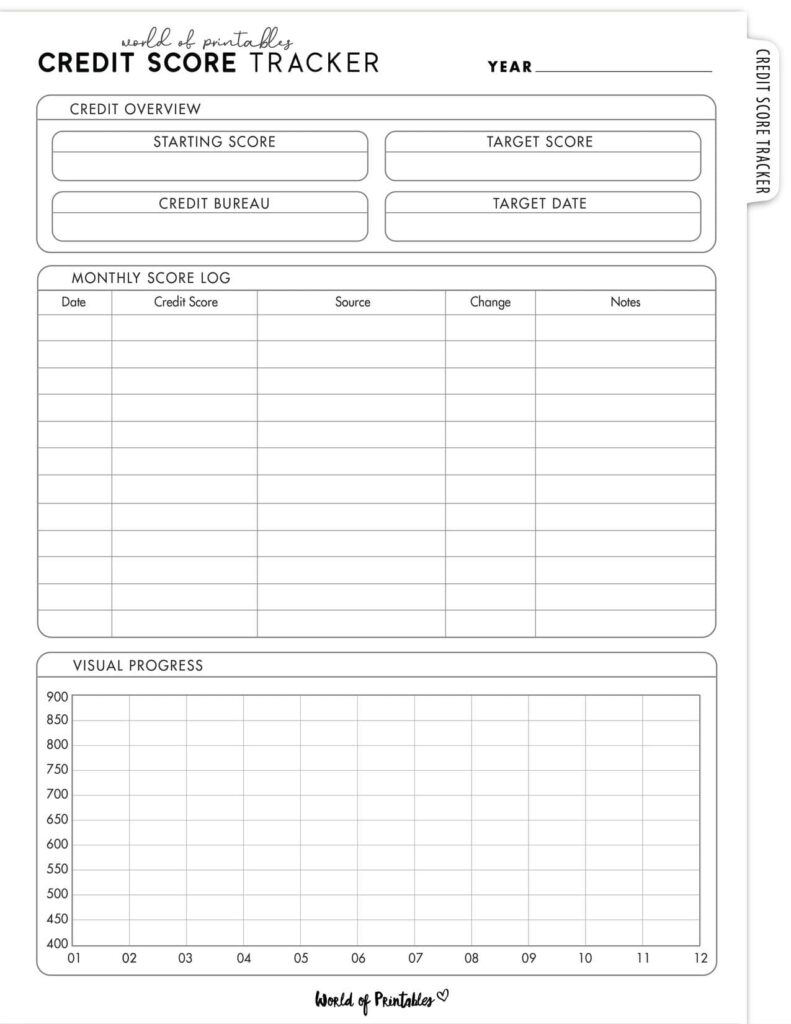
A Credit Score Tracker is a printable that helps you record your credit score regularly, usually once a month, so you can see how it changes over time.
It gives you one place to note:
- your monthly score
- the date you checked it
- any changes from the previous month
- useful notes, such as credit utilisation, new applications, or anything unusual
Instead of relying on memory, you end up with a clear record that helps you spot patterns and monitor progress.
This is especially useful if you are actively working on improving your score, paying down debt, building credit, or preparing for a future application.
Why it is worth tracking your credit score
A lot of people only look at their credit score when they are about to apply for something important.
The problem with that approach is simple: if something needs attention, you may not have much time to improve it.
Tracking your score regularly can help you:
- stay aware of your credit health
- notice whether your habits are helping or hurting
- catch unusual drops sooner
- monitor the impact of paying down balances
- feel more prepared if you plan to apply for credit later
It also makes your financial progress feel more tangible.
If you are working hard to improve your finances, it is encouraging to be able to see the results building month by month.
Improving your credit score usually comes down to staying on top of bills, debt, balances, and payment timing. Our Paycheck Planner helps you organize those moving parts around your actual pay schedule so progress feels more manageable.
Choose a design theme that fits your style
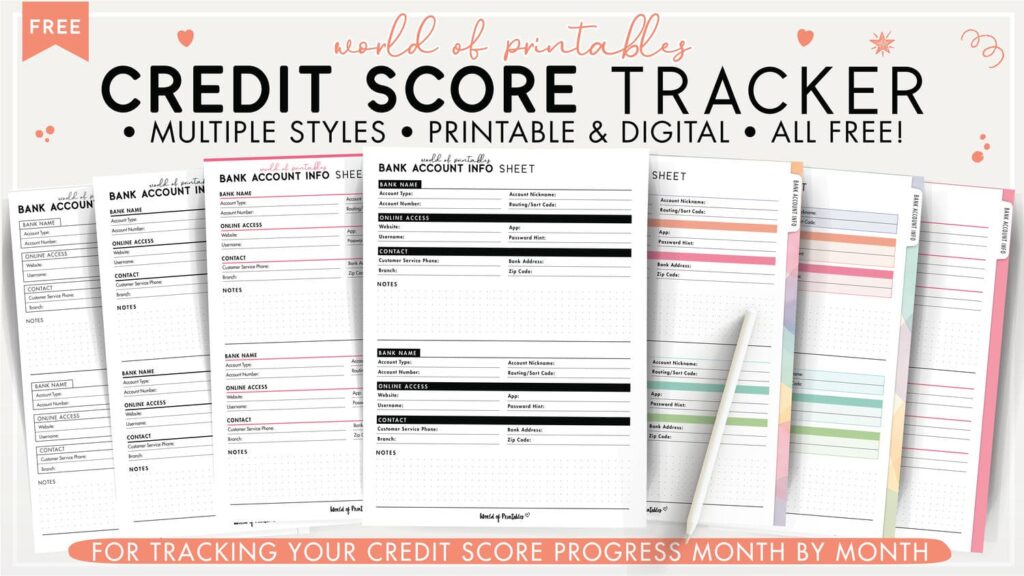
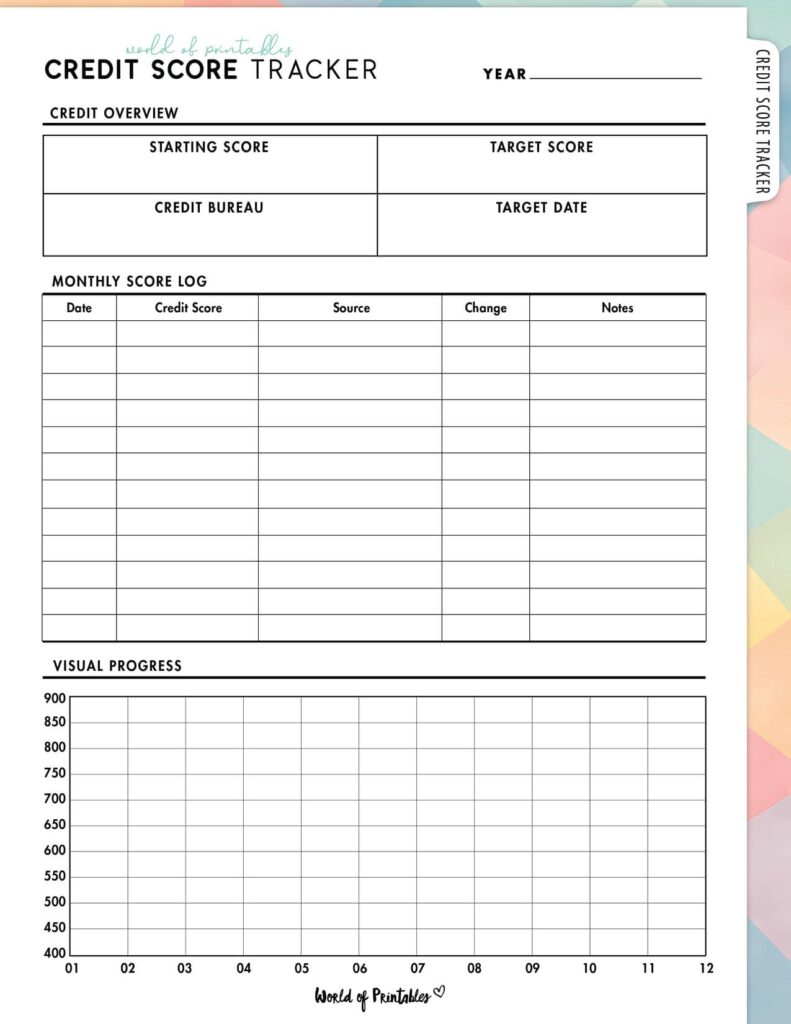
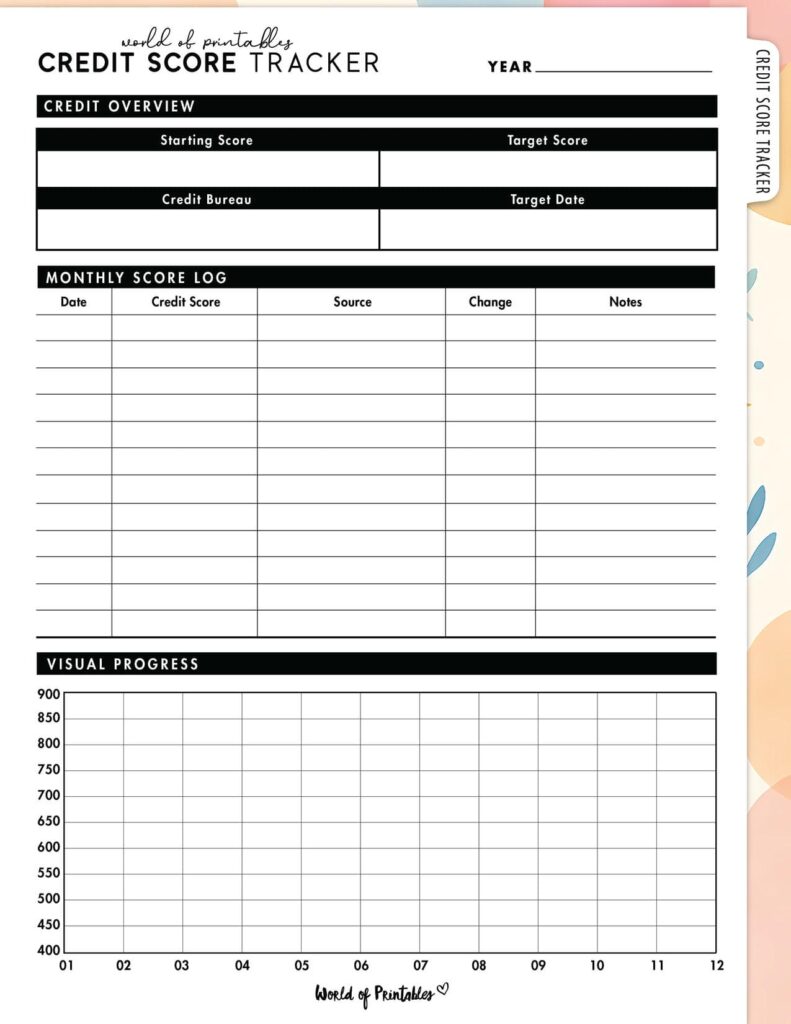
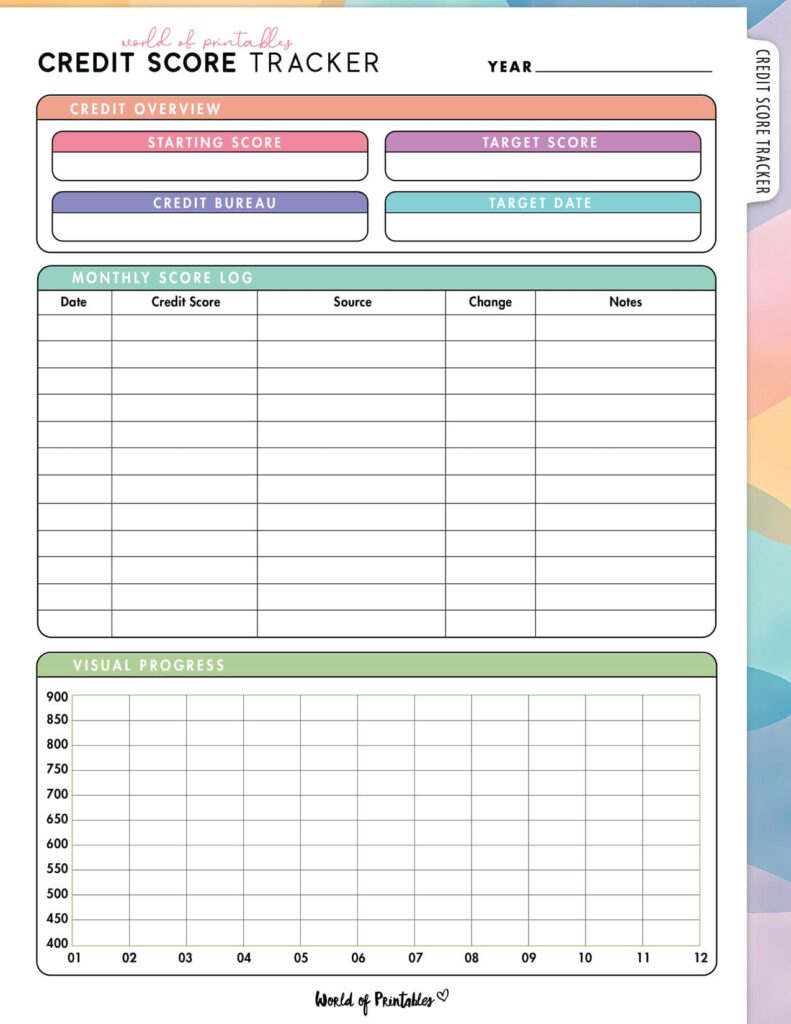
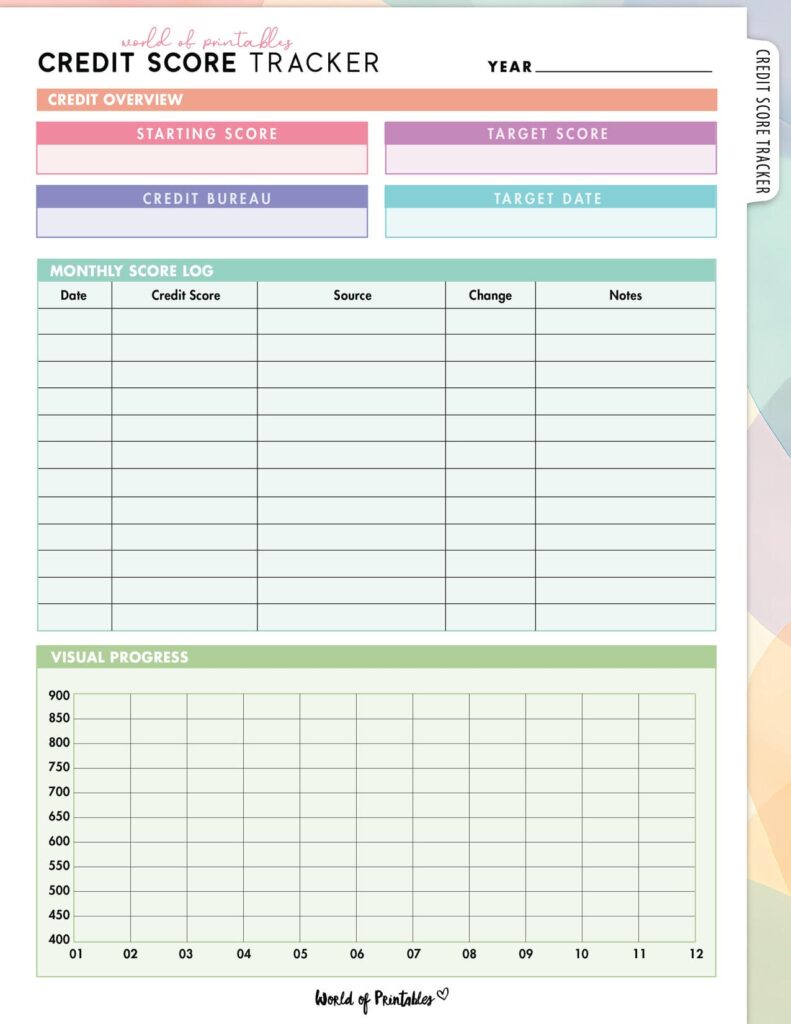
This printable comes in a variety of layouts so you can pick the version that suits your binder and planning style best.
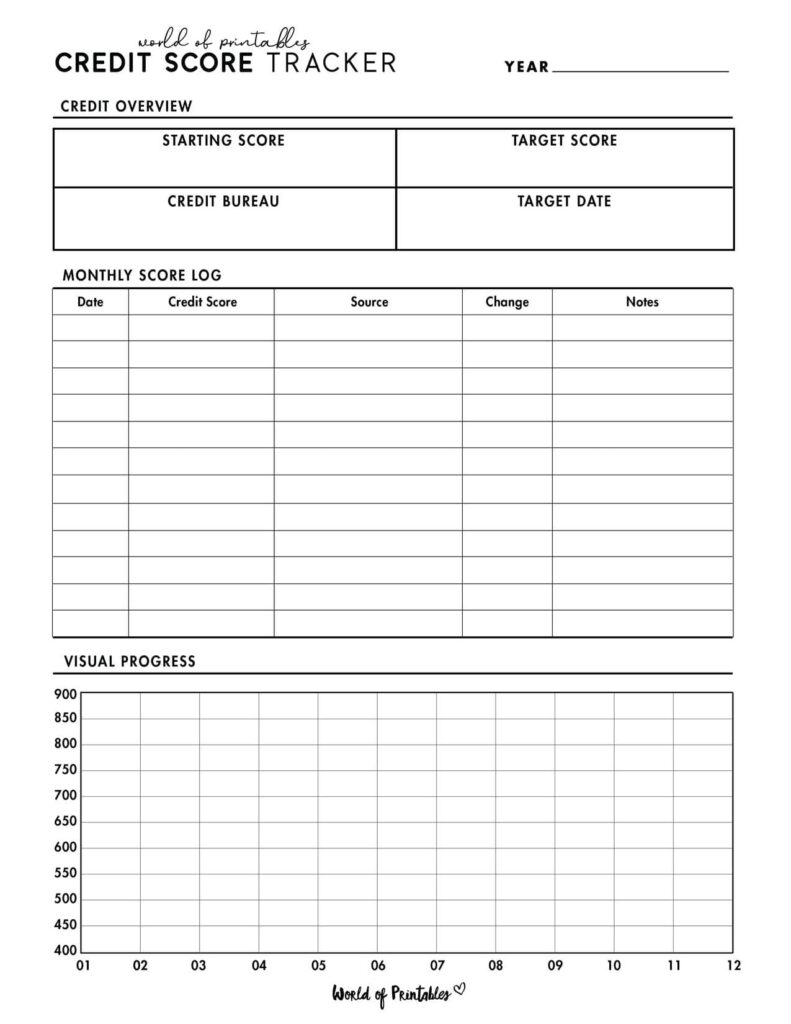
Minimalist and simple styles
These are ideal if you want a clean, structured page that keeps the focus entirely on the numbers.
They work especially well in a tidy, professional looking budget binder.
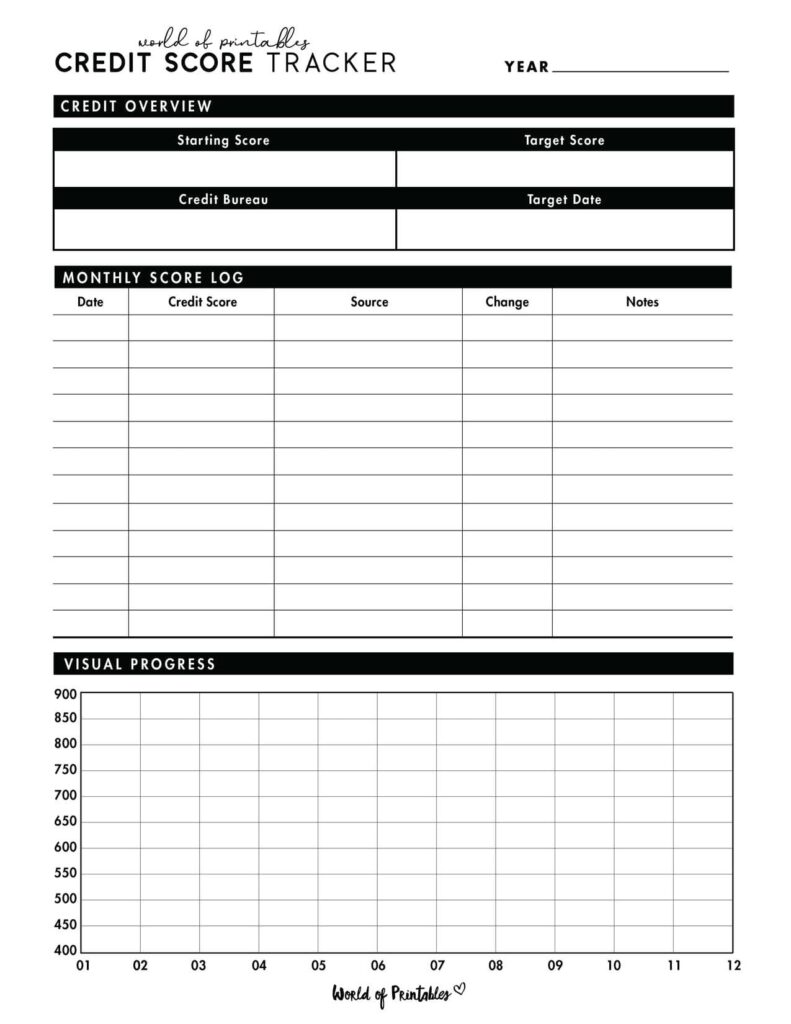
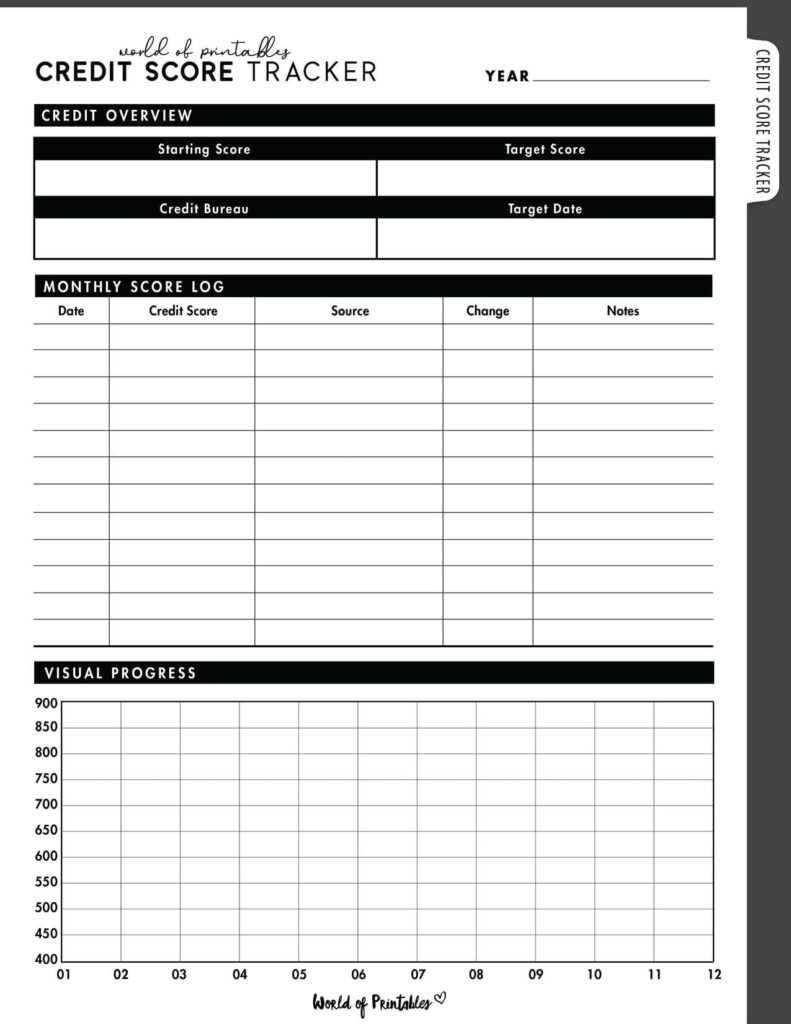
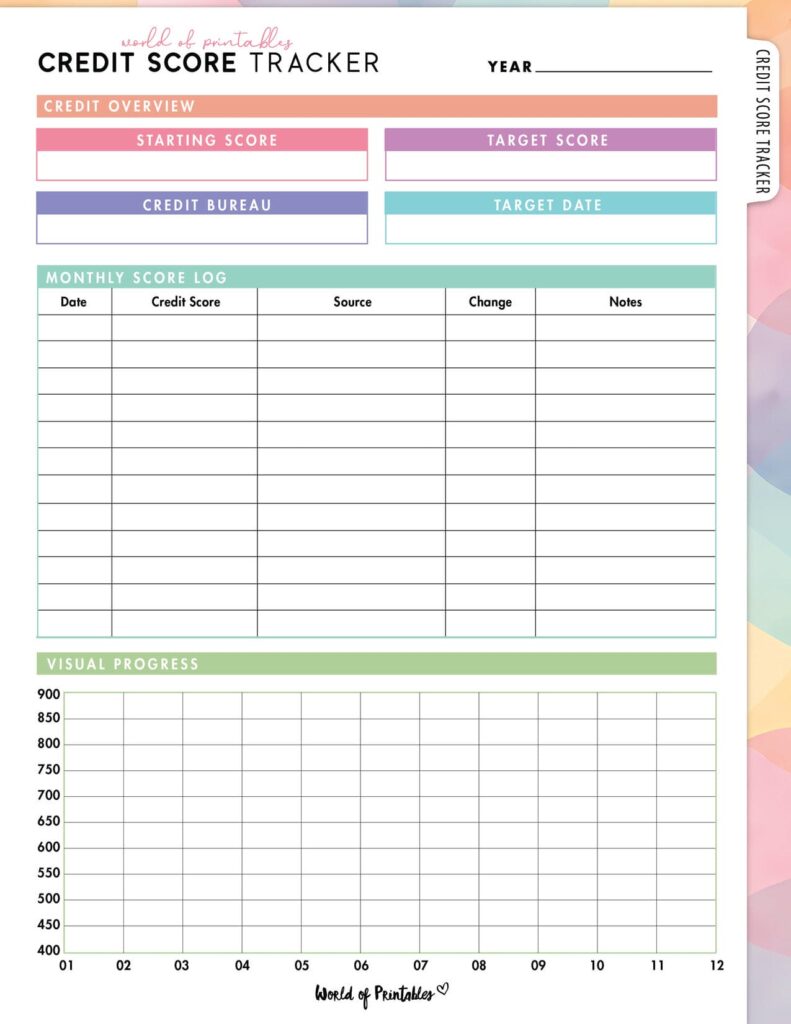
Colorful and visual styles
These are great if you like seeing your progress at a glance.
A more visual layout can make tracking feel a little more motivating, especially if you are working steadily toward improvement over the year.
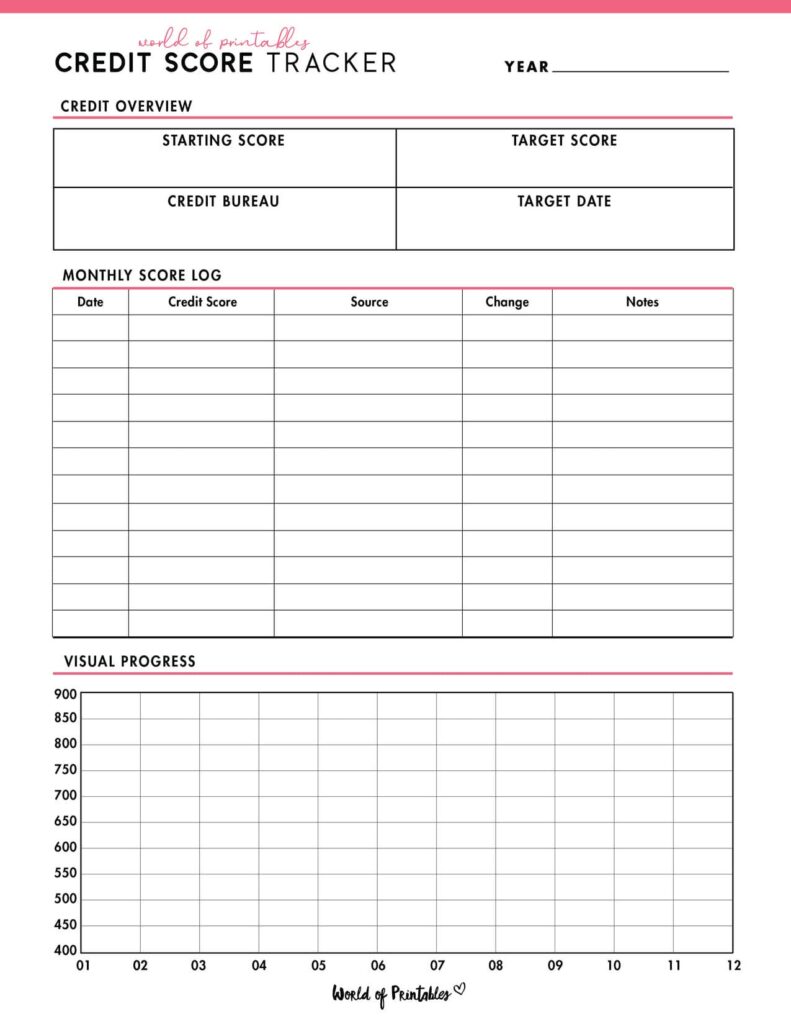
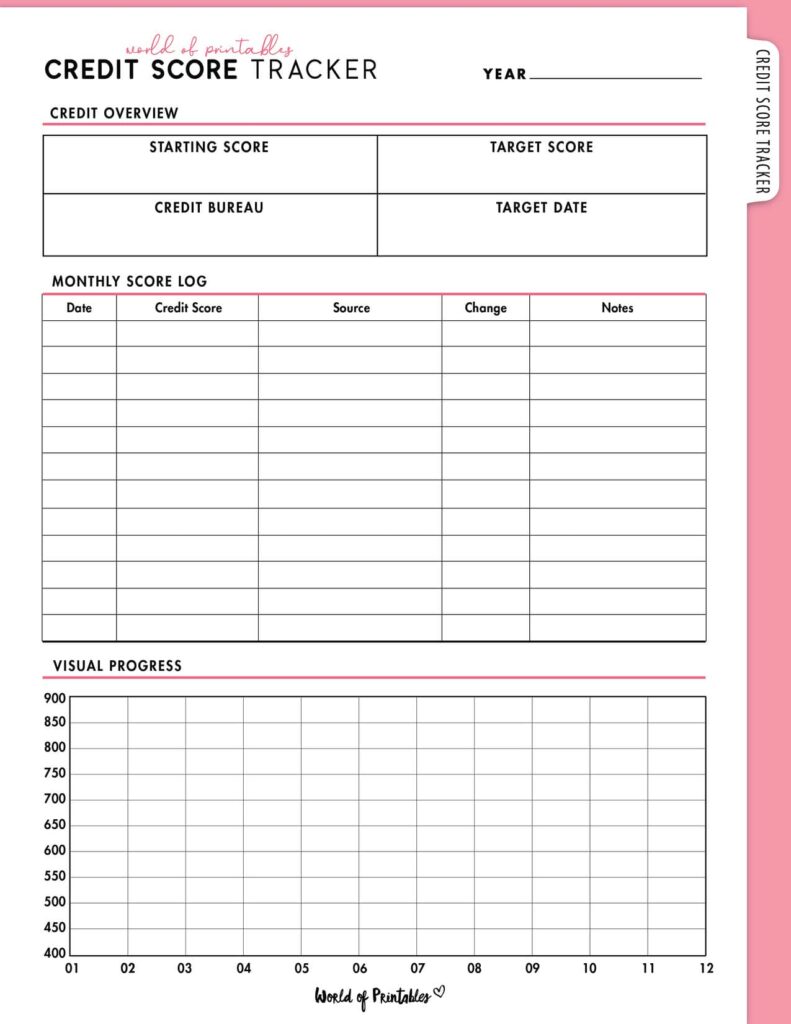
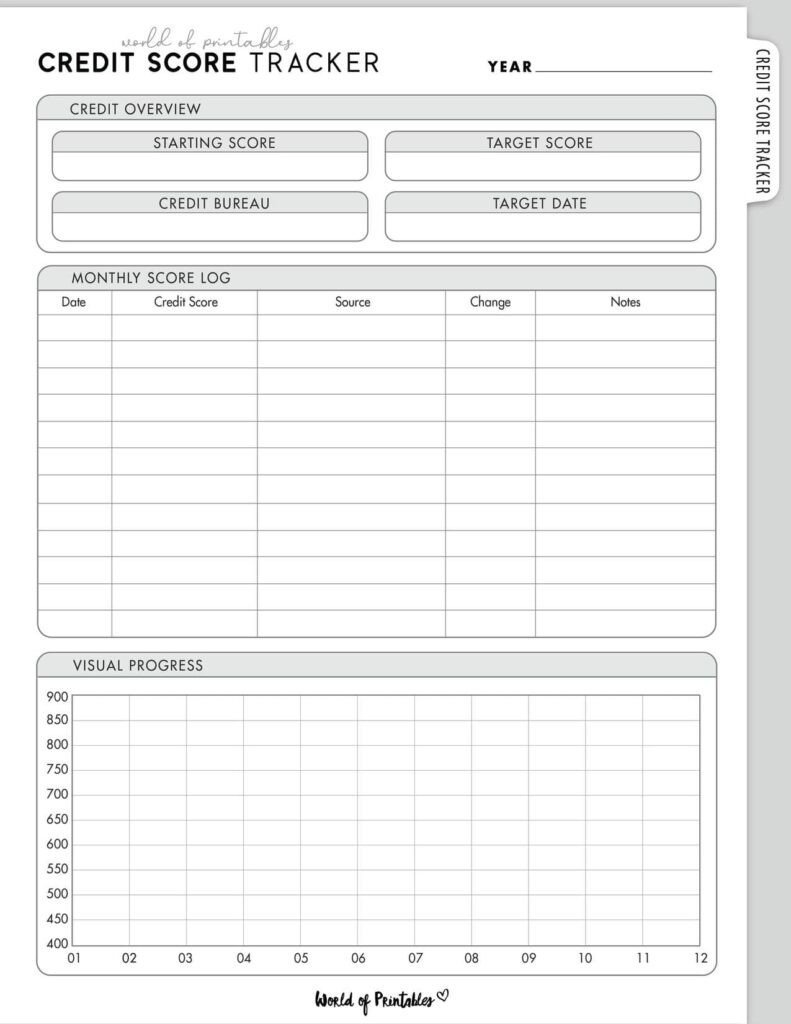
Ink-saving options
If you print a lot of finance pages, these are a practical choice.
They still look polished and clear, while using less colour ink for a page you may only need once a year.
Free Download and Printing Instructions
To download your free Credit Score Tracker, click the text link directly beneath the image of your preferred design. This will open the high-resolution PDF.
For the best printing results:
- download the PDF directly to your device
- open the file and select Print
- make sure your printer is set to US Letter
- choose Fit to Page or Scale to Fit so the margins print correctly
Because this is a page you may keep in your binder and update all year, it can be worth printing on a slightly thicker paper.
A premium 28 lb or 32 lb paper gives it a more durable, high-quality feel.
Why this printable is useful in a budget binder
A Credit Score Tracker works really well in a budget binder because it connects your day-to-day money habits with a long-term financial outcome.
Your monthly budget, debt payoff pages, and spending trackers all influence your financial picture over time. Your credit score tracker gives you another way to see that picture developing.
It works especially well alongside:
- debt payoff trackers
- credit card information sheets
- monthly budget planners
- year-end financial review pages
- financial goals worksheets
When used together, these pages create a much clearer view of where you are financially and what needs your attention next.
How to Use a Credit Score Tracker
This printable is simple to use, but a consistent routine makes it much more helpful.
Here is a realistic, relatable example for the Credit Score Tracker.
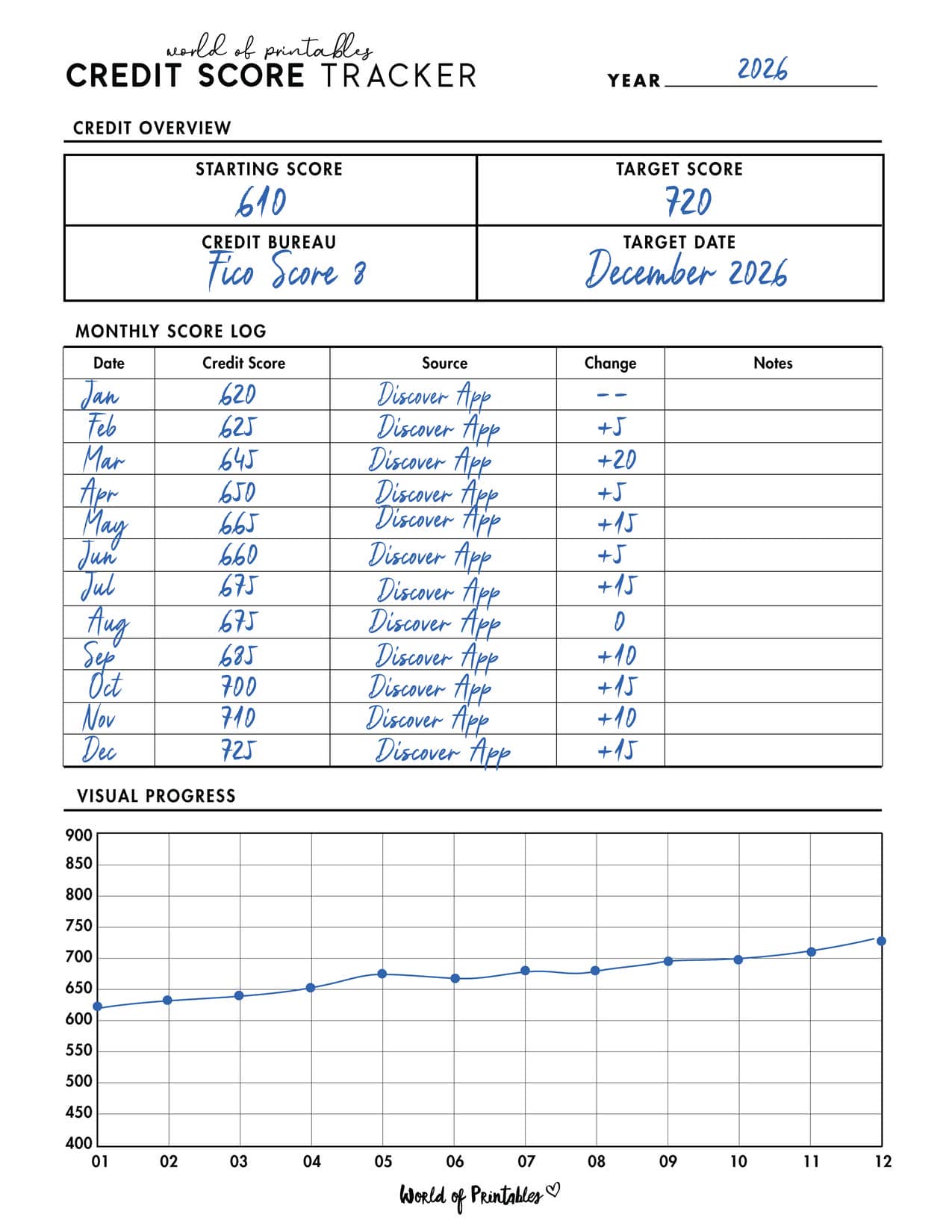
For this scenario, let’s imagine you’re working on improving your credit score over a year so your family can qualify for a better mortgage rate. You’re starting with a “fair” score due to some high credit card balances and are aiming for a “good” score.
Here is the best way to use it:
Step 1: Check your score once a month
Choose one day each month to check your score.
That consistency matters because it gives you a more useful timeline. If you check it randomly, it becomes harder to compare changes properly.
Many people use:
- the same day each month
- the start of the month
- the day after payday
- a monthly finance admin day
Use whatever routine feels easiest to remember.
Step 2: Record your score clearly
Write down:
- the date
- the score
- the source you checked it from, if helpful
- any notes about changes or context
If you check more than one score source, you may want to note that too, especially if you like keeping detailed financial records.
The goal here is not perfection. It is simply building a useful monthly record.
Step 3: Watch the trend, not just one number
Credit scores can move around a little from month to month, so it helps to look for the overall direction rather than panic over every small change.
That is why a tracker works so well.
It helps you see questions like:
- Is my score gradually improving?
- Has it been staying fairly steady?
- Did it drop suddenly?
- Has paying down debt helped over time?
Looking at the bigger pattern is often much more useful than reacting emotionally to one single number.
Step 4: Use the notes section well
The notes section can make this printable much more powerful.
Things you may want to note include:
- a new credit application
- a paid off balance
- a drop in credit card utilisation
- a missed payment
- a change in account activity
- anything unexpected you want to keep an eye on
That way, if your score moves up or down, you already have context right there on the page.
A helpful thing to track alongside your score
If you want this printable to be even more useful, track your credit utilisation as well.
This is the amount of revolving credit you are using compared with your total available credit.
For example, if you have $1,000 available and your balance is $200, your utilisation is 20%.
A lot of people find that lowering their balances helps support credit improvement over time, so noting that figure monthly can be helpful when you want to understand why your score is changing.
You do not need to overcomplicate it. Even a small note like “utilisation down this month” can make the page more informative.
What this printable can help you notice
A Credit Score Tracker is not just for improvement. It is also useful for awareness.
It can help you notice:
- positive movement as you reduce debt
- patterns after applying for new credit
- the effect of carrying higher balances
- whether your score is staying stable
- unexpected changes that may need a closer look
Having that monthly record makes it much easier to see when something is part of a normal pattern and when something feels worth investigating.
Who this printable is especially helpful for
This page is a great fit if you are:
- working on improving your credit
- paying down credit cards
- trying to become more financially organised
- preparing for a future financial application
- building a more complete budget binder
- someone who likes to track progress visually
Even if you are not actively trying to increase your score right now, it is still a useful page to keep because it helps you stay informed instead of reactive.
A simple routine that makes this page work better
If you want this tracker to become part of your financial routine, pair it with one small monthly check-in.
For example, on the same day each month you could:
- check your credit score
- review your credit card balances
- update your debt tracker
- note your utilisation
- review any recent financial applications or changes
That turns this printable from a passive page into an active part of your financial management system.
Next Step: Build Your Complete Financial Command Binder
Tracking your credit score is useful on its own, but it becomes even more valuable when you can connect it to the financial habits affecting it.
Helpful pages to add next include:
- a credit card information sheet
- a debt payoff tracker
- a monthly budget planner
- a year-end financial summary
- an annual financial goals worksheet
Together, these pages help you not only monitor your financial health, but understand what is shaping it over time.
Keep optimizing your wealth-building system by adding the next essential tools to your binder:
- Return to the Budget Binder Index.
- Need to calculate your utilization? Download the Credit Card Info Sheet to log all your available credit limits in one place.
- Ready to boost your score? Download the Debt Snowball Tracker to start aggressively paying down your balances.
More budgeting templates
You’ll find many more budgeting templates right here on World of Printables.



AI TRANSPARENCY: Whilst the majority of our creations have been created completely traditionally, occasionally we utilize AI tools in our design process. We acknowledge the advancements in AI technology and leverage them responsibly to optimize our creative output. However, it is important to note that our utilization of AI does not compromise the human element of our work. Our commitment to delivering high-quality designs through a balanced integration of traditional expertise and AI enhancements remains paramount.