

Disclaimer: We provide high-quality, free printable templates to help you organize your personal data. We are not certified financial planners or investment advisors. The tools and information provided below are for educational and organizational purposes only. Always consult a licensed financial professional before making high-stakes decisions regarding investments, asset allocation, tax strategy, or debt consolidation.
A monthly budget tells you what you plan to do with your money. A daily spending log shows you what actually happened.
And that difference matters more than most people realise.
Because most budgets do not fall apart because of one huge, dramatic purchase. They drift off course because of all the small spending that feels harmless in the moment. A coffee here, a quick online order there, a last-minute takeaway, a few “small” extras that quietly add up long before the month is over.
That is exactly why a Daily Spending Log is so helpful.
This printable gives you one simple place to record your spending as it happens, so you can see where your money is really going, stay more aware of your habits, and catch budget leaks before they turn into bigger problems.
If you are building a budget binder, this is one of the most practical pages you can add because it connects your budget to your real day-to-day choices.
What is a Daily Spending Log?
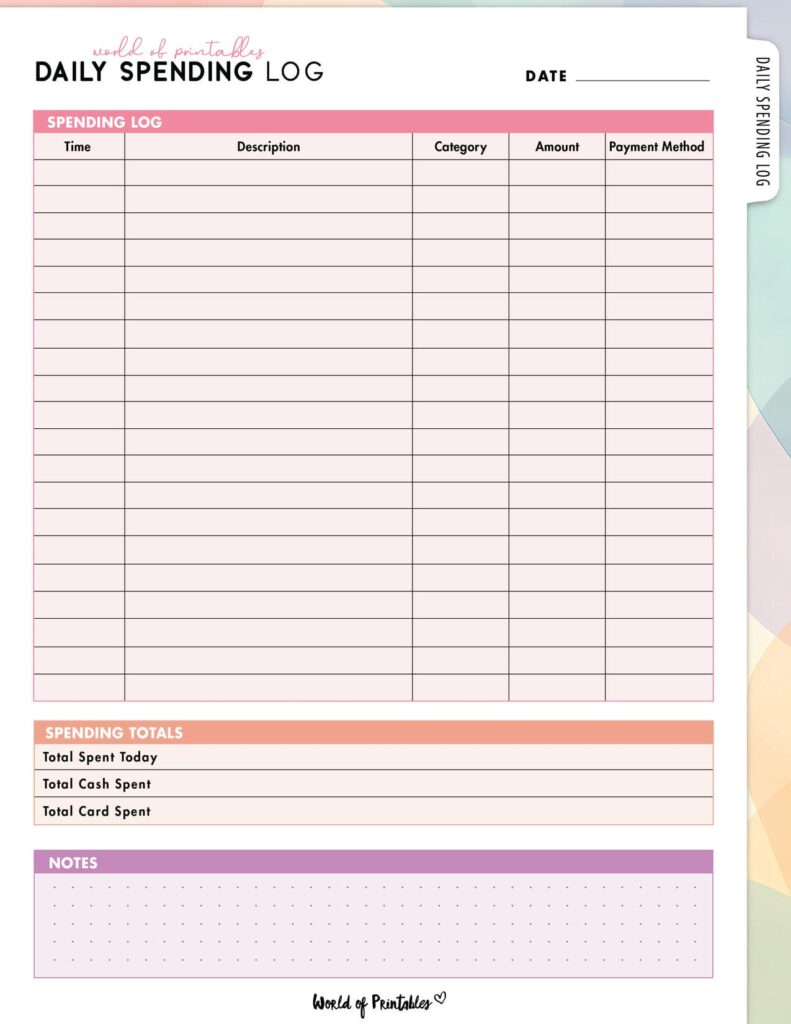
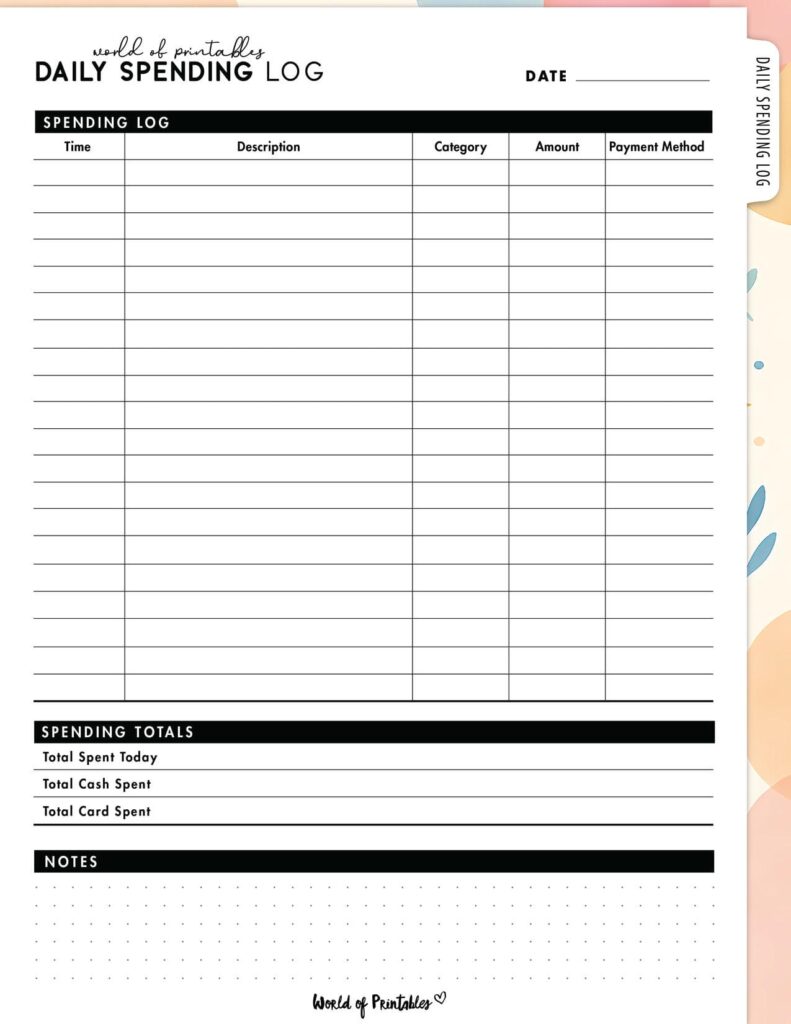
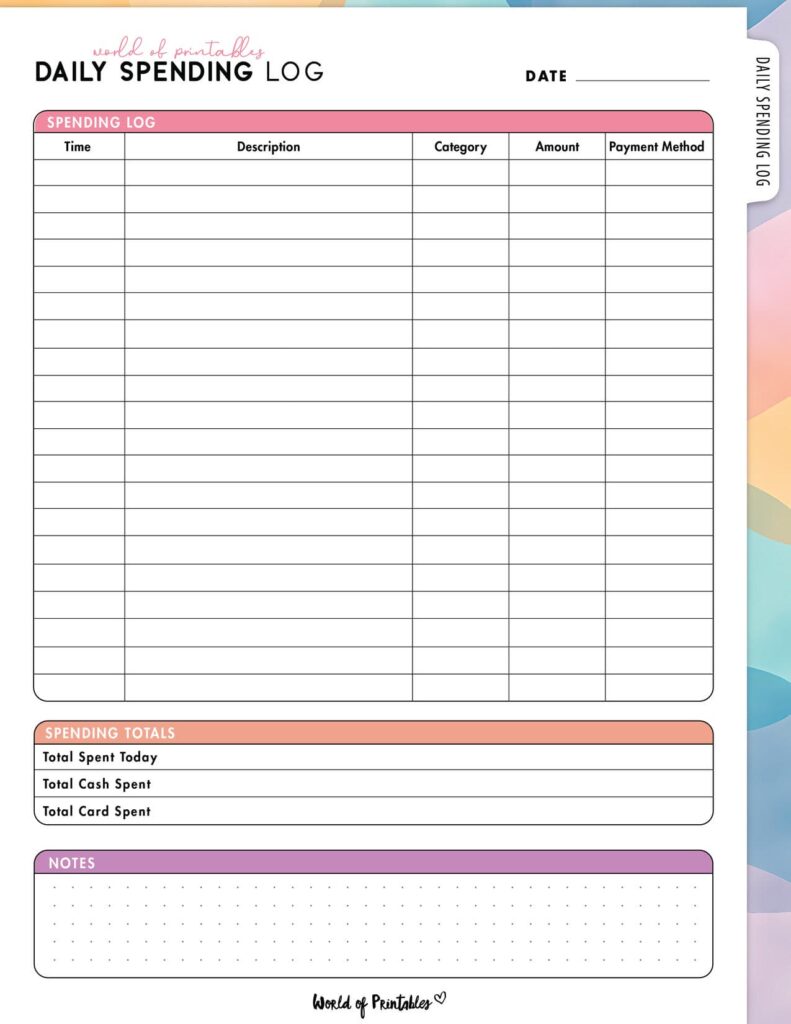
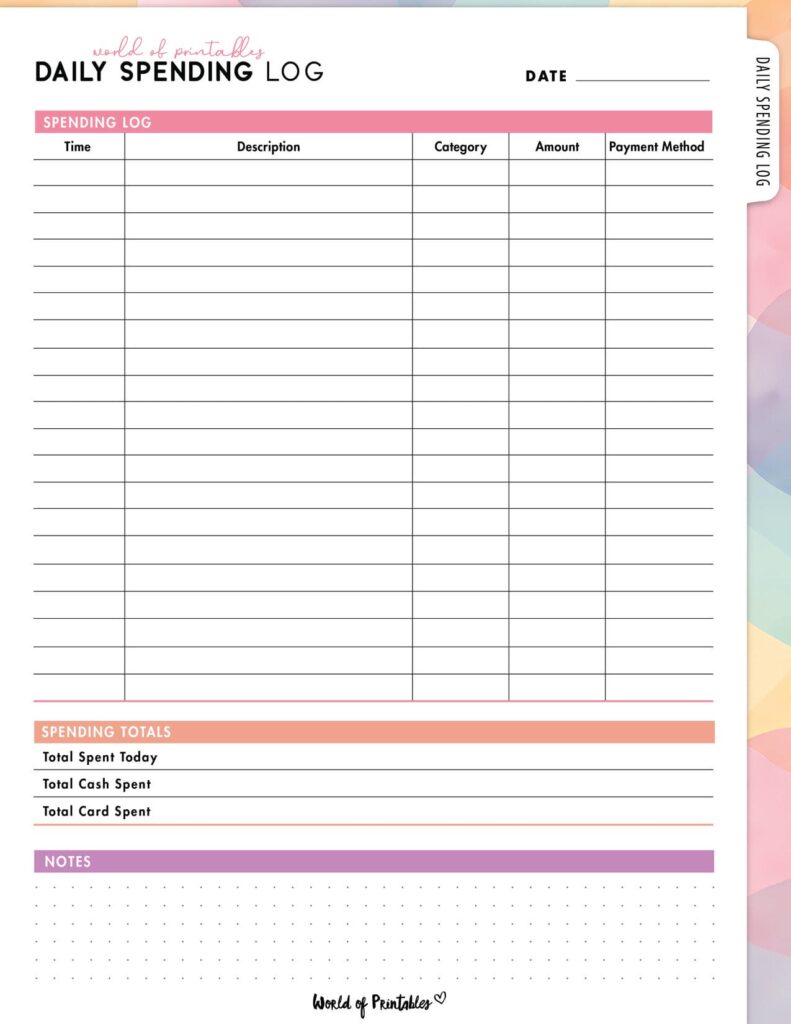
A Daily Spending Log is a printable that helps you record each purchase or transaction throughout the month.
You can use it to log:
- the date
- where you spent money
- what you bought
- how much you spent
- the spending category
- the payment method
It is not meant to replace your monthly budget. It is meant to support it.
Your monthly budget gives every pound or dollar a job.
Your daily spending log helps you see whether your actual spending is matching that plan.
Why this printable is so useful
It is very easy to spend money without fully noticing it.
Not because you are careless, but because most spending happens quickly. You tap a card, order from your phone, pay in an app, and move on. Without a record, those transactions blur together fast.
A Daily Spending Log helps by creating a pause.
That pause does two useful things:
- it makes spending more visible
- it makes you more honest about where the money is going
That is why this printable can be so effective. It is not just a record-keeping page. It is also a behaviour-awareness tool.
Why small spending matters so much
Big expenses are usually planned.
Small expenses often are not.
That is why they can be more dangerous to a budget than people expect.
A few examples:
- coffee runs
- snacks and convenience purchases
- quick Amazon orders
- app purchases
- takeaways
- “while I’m here” extras in shops
- random household buys that were not on the list
Individually, these purchases may not feel important. Collectively, they can quietly drain the part of your budget that was meant for savings, debt payoff, or simply making it comfortably to the end of the month.
A daily spending log helps bring those patterns into the light.
Choose a design theme that fits your style
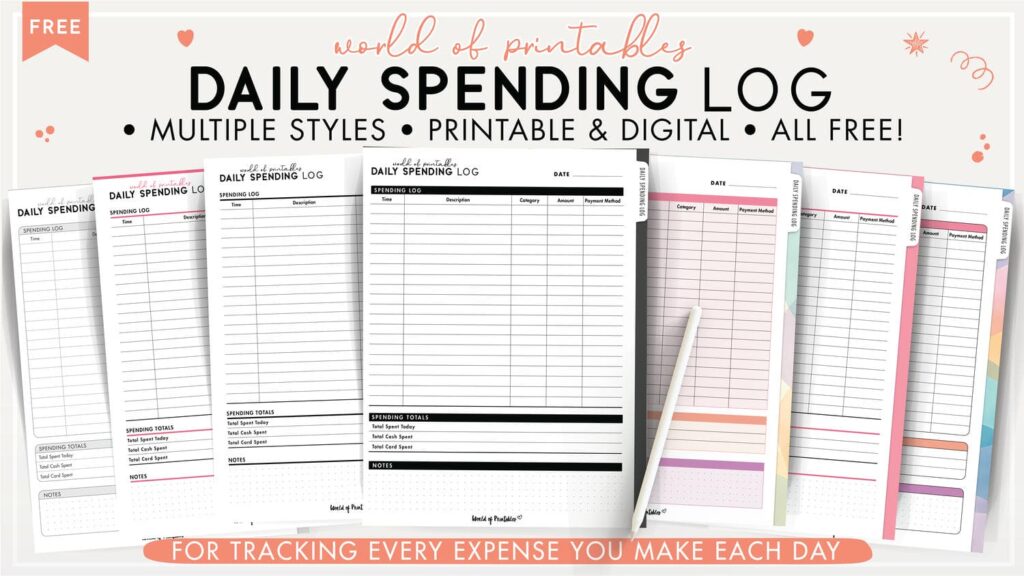
This printable comes in a range of layouts so you can choose the one that works best for your binder and planning style.
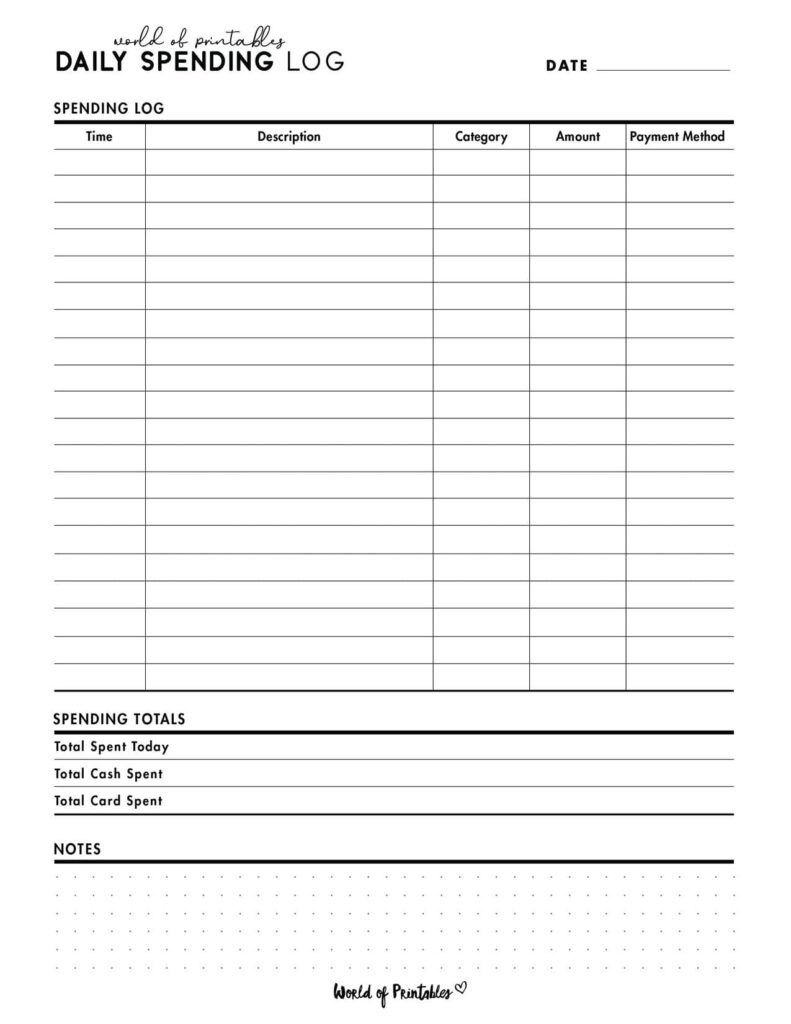
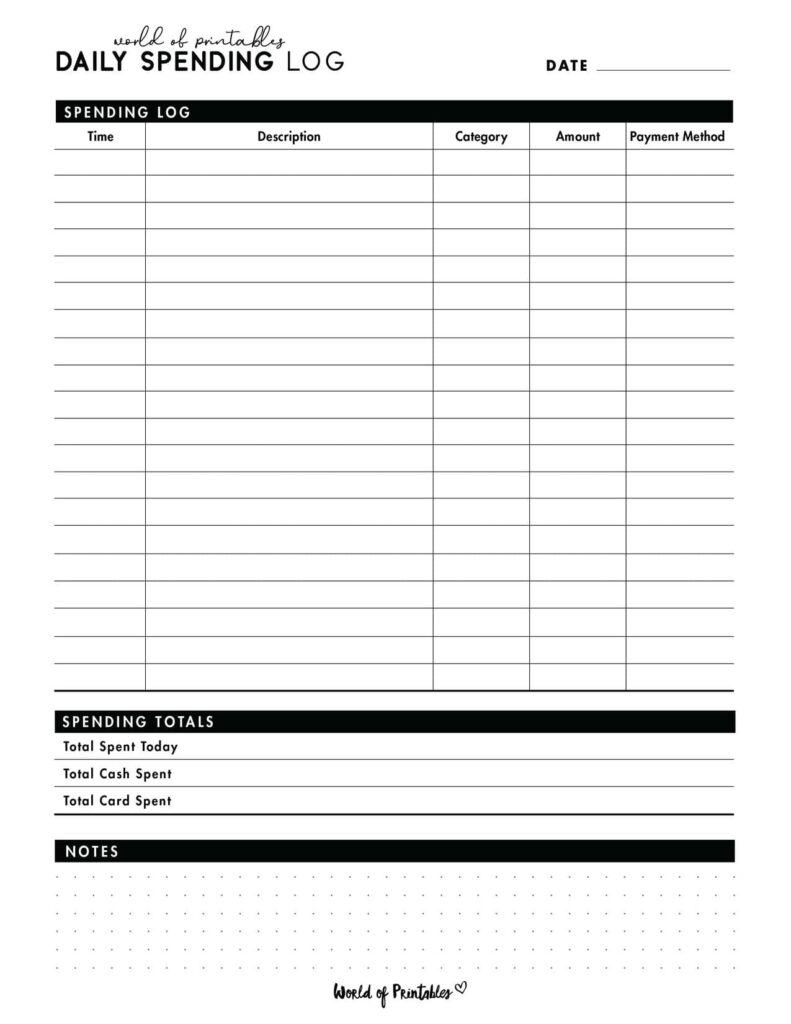
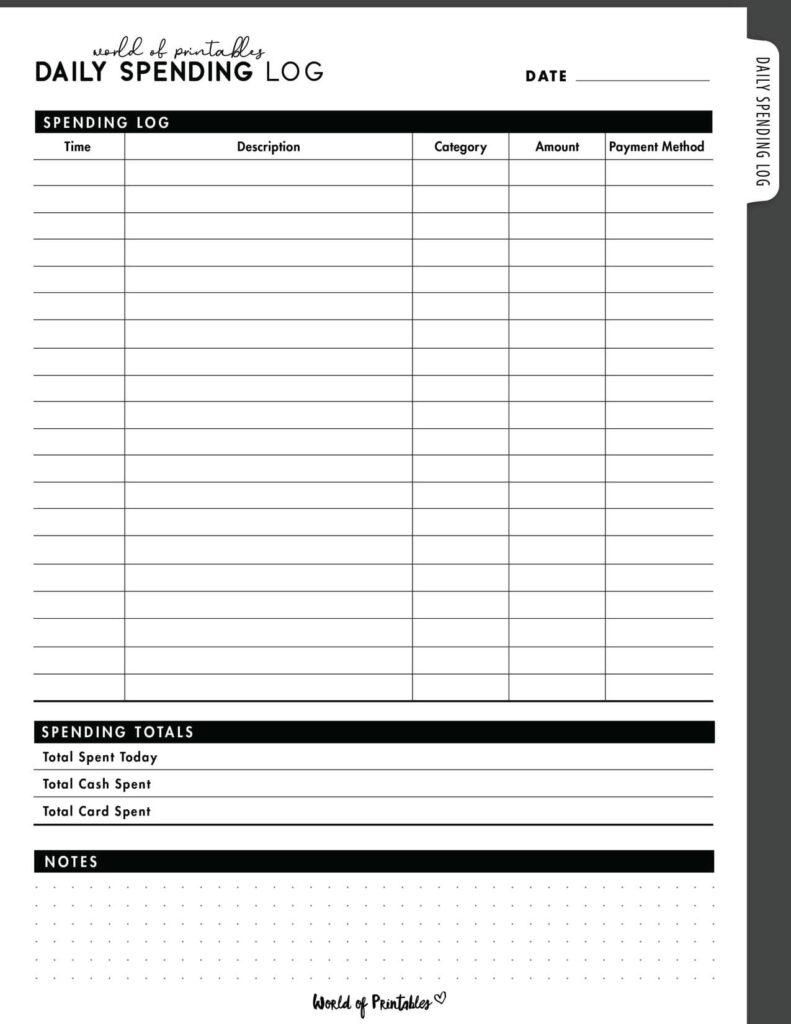
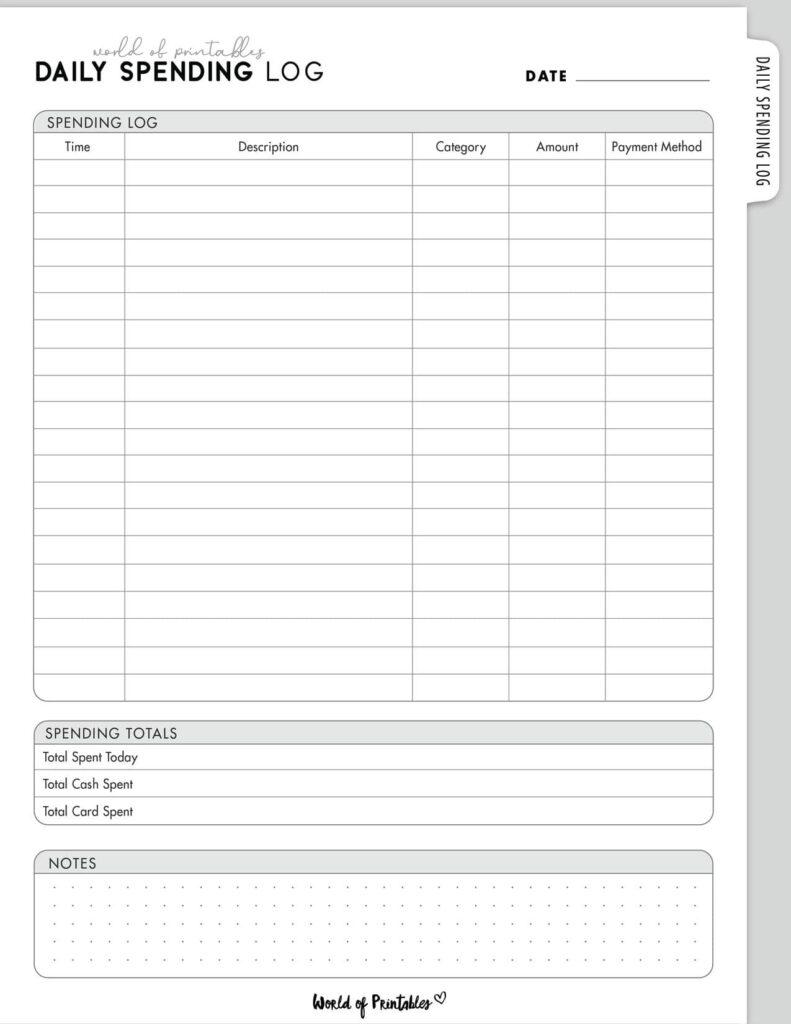
Minimalist and simple styles
These are ideal if you want a clean, straightforward layout that keeps the focus on the numbers and categories.
They work especially well if you prefer a more traditional finance binder.
Colorful and visual styles
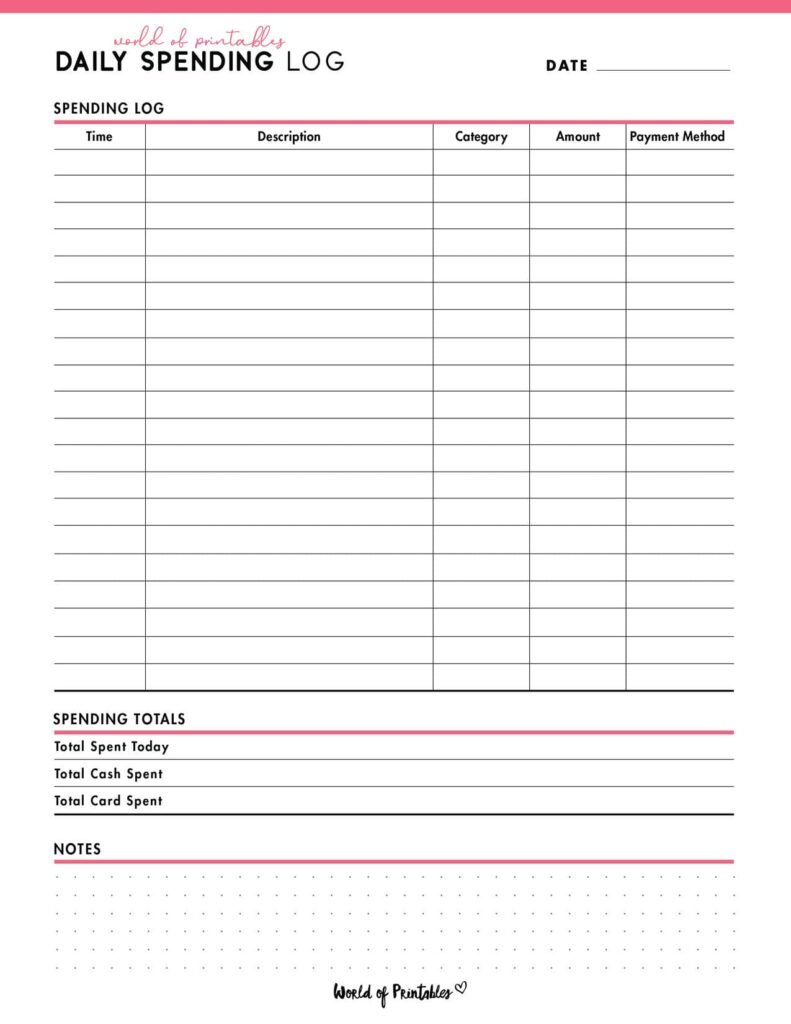
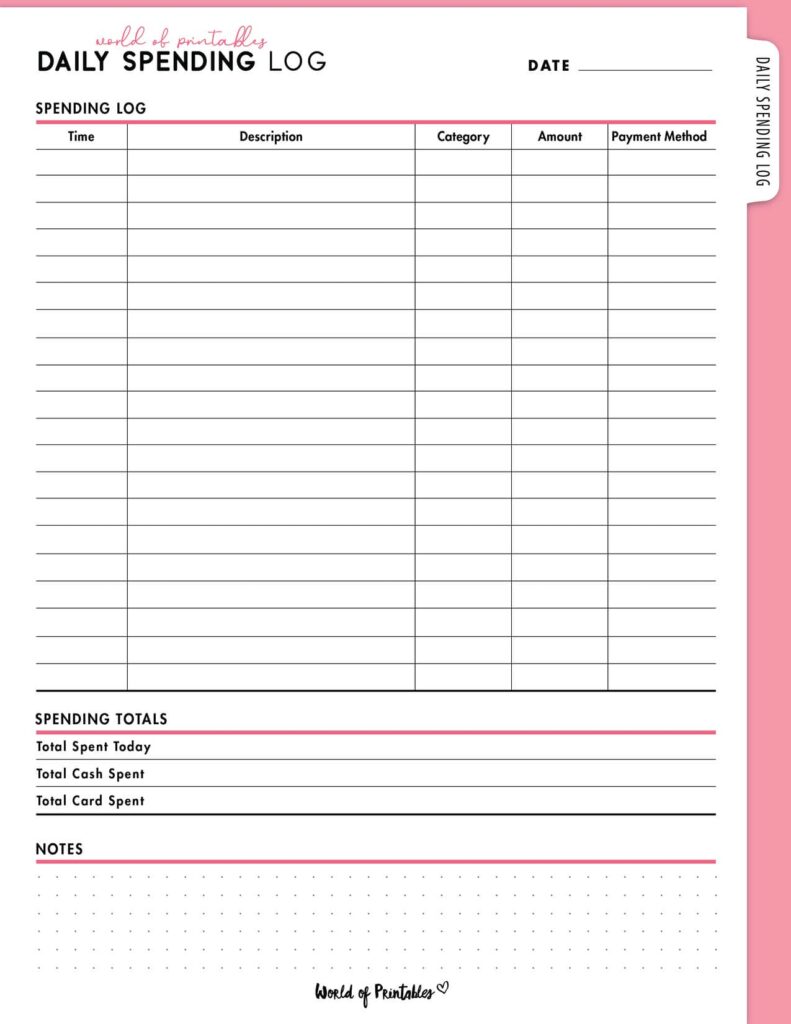
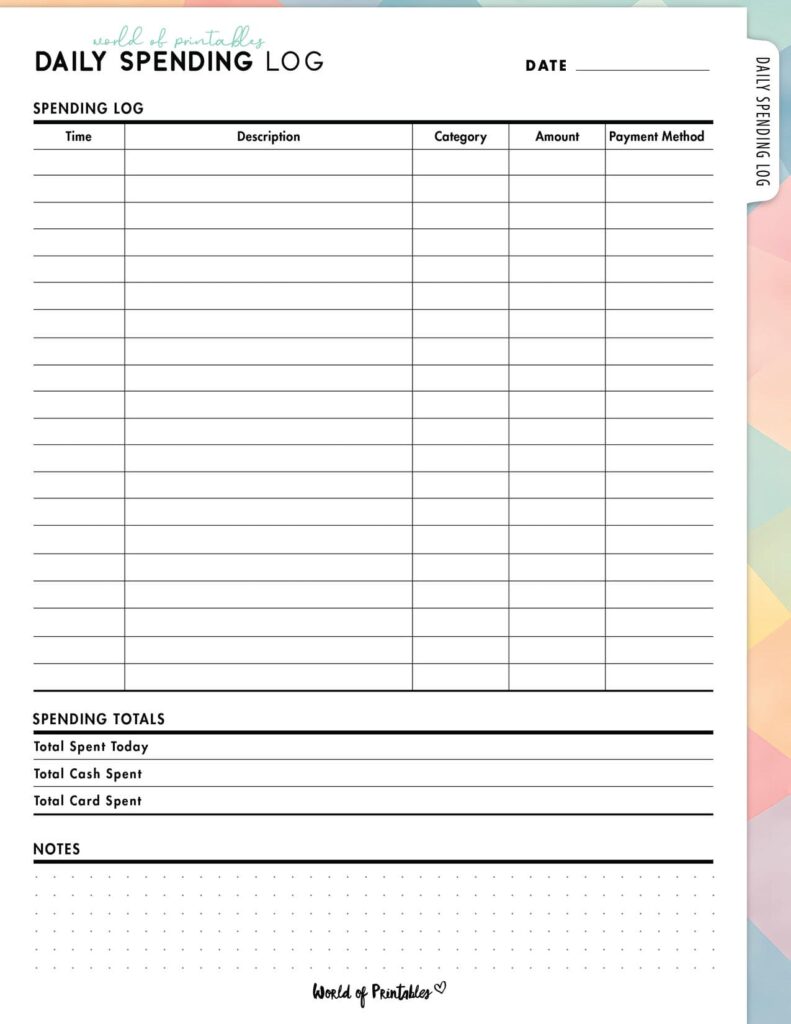
These are great if you like being able to separate categories visually at a glance.
They can make it easier to spot patterns quickly, especially if you use colour to distinguish needs from wants or key spending categories.
Ink-saving options
If you prefer practical, low-ink printables, these are a smart option.
They still feel polished and organised while being efficient to print, especially if you plan to use multiple sheets each month.
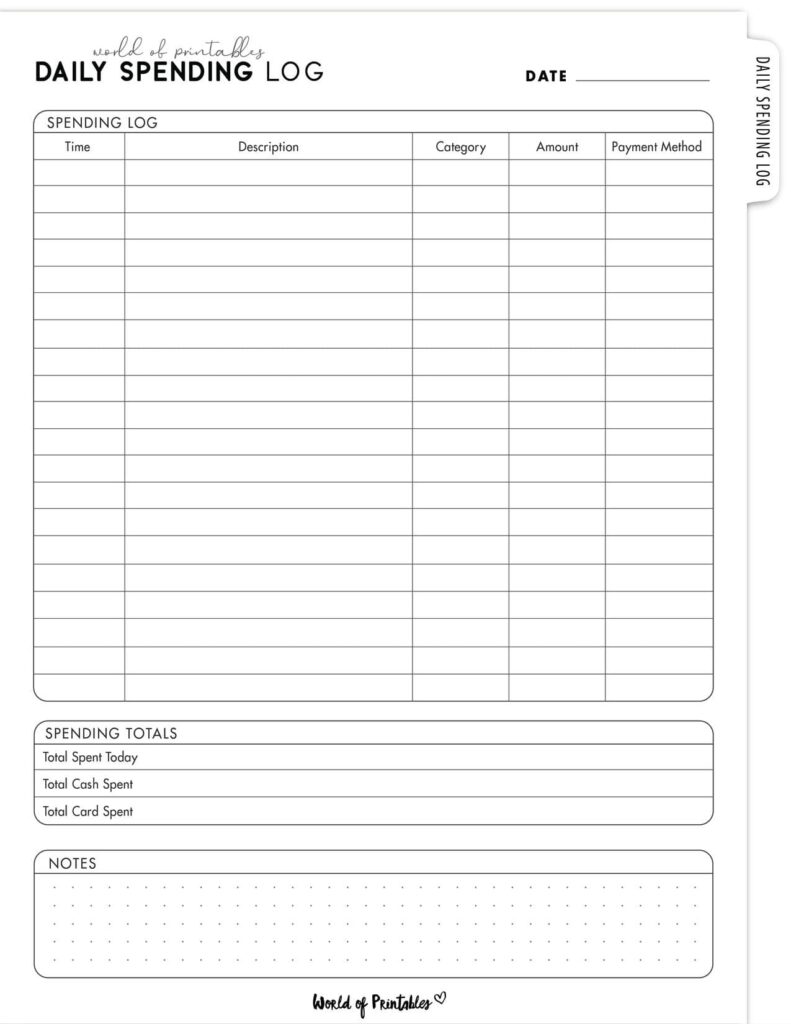
Free Download and Printing Instructions
To download your free Daily Spending Log, click the text link directly beneath the image of your preferred design. This will open the high-resolution PDF.
For the best printing results:
- download the PDF directly to your device
- open the file and select Print
- make sure your printer is set to US Letter
- choose Fit to Page or Scale to Fit so the margins print correctly
Because this is a page you may use often, it can be worth printing it on slightly thicker paper if you want it to hold up well in your binder.
A premium 28 lb or 32 lb paper gives it a more durable, high-quality feel.
Why this works so well in a budget binder
A Daily Spending Log fits beautifully into a budget binder because it acts as the real-life companion to your monthly budget.
It works especially well alongside:
- monthly budget planners
- no-spend challenge trackers
- online shopping trackers
- savings challenge pages
- year-end financial summaries
Your budget shows the plan.
Your spending log shows the reality.
Together, they help you make better decisions next month.
How to Use a Daily Spending Log
This is a brilliant printable for awareness. Sometimes the best way to figure out where the budget is leaking is to write down literally every single transaction for a few days. Moms know that the “$5 here and $10 there” trap is incredibly real, especially on busy weekdays with school drop-offs and sports practices.
Let’s do a classic, chaotic “Wednesday in the life of a busy mom” for this example. It will show a mix of necessary spending, impulse buying, and cash versus card transactions.
Here is the highly relatable sample content for your Daily Spending Log:
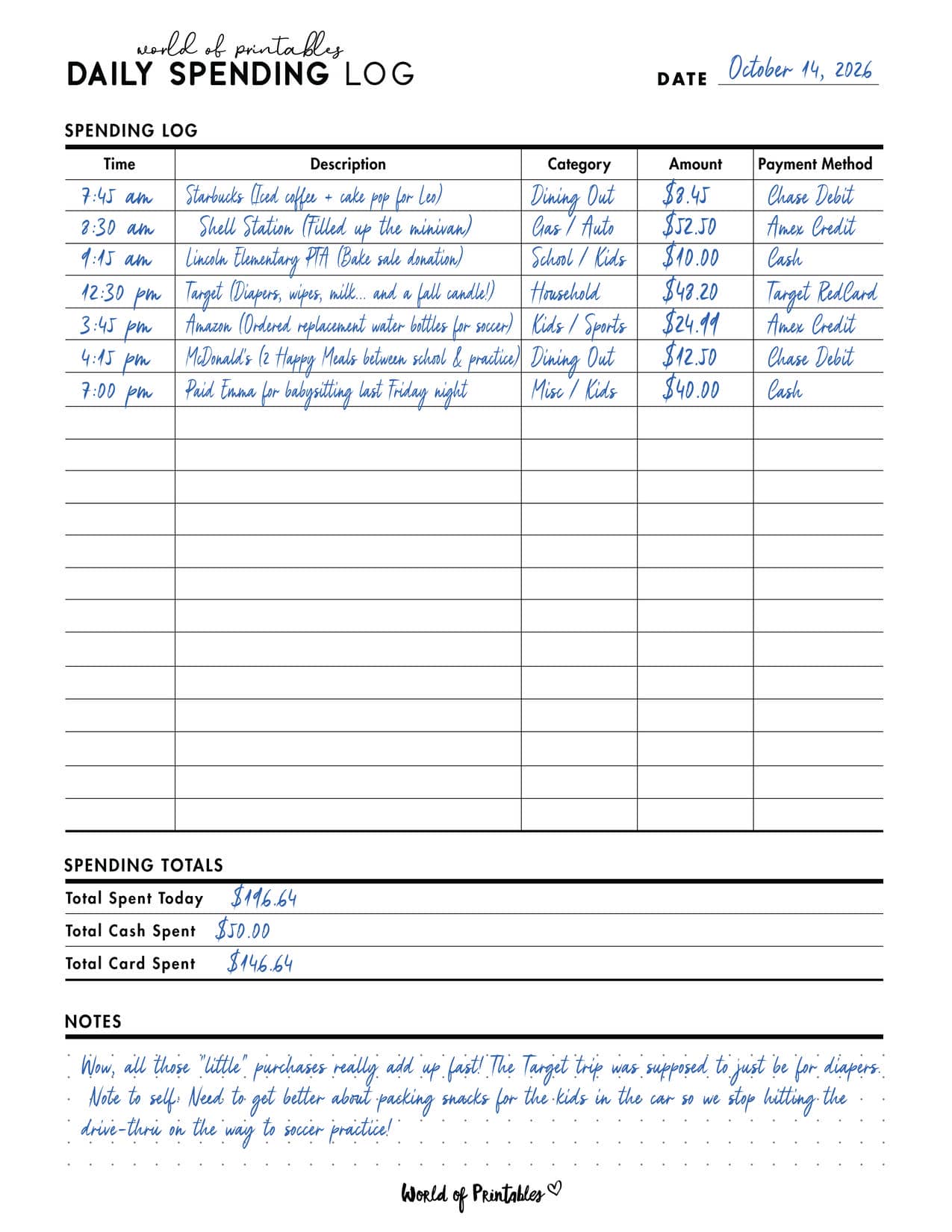
This page is simple, but it works best when you keep it current instead of trying to fill it in from memory later.
Here is the best way to fill it out:
Step 1: Log spending as close to the moment as possible
The best time to log a purchase is right after you make it.
That might sound obvious, but it makes a huge difference.
If you wait until the end of the week, you will almost always forget:
- small purchases
- exact amounts
- where the money went
- why you spent it
Logging it sooner keeps the page more accurate and makes the spending feel more real.
Even if you do a quick scribbled note and tidy it later, that is still better than relying on memory.
Step 2: Write down the category
Each purchase should be assigned to a category.
That could be something like:
- groceries
- fuel
- dining out
- household
- entertainment
- kids
- personal spending
- online shopping
This is what turns the page from a list into a genuinely useful tool.
Once spending is categorised, you can start seeing patterns. You can tell whether you are going over in certain areas, whether your spending matches your budget, and which categories need closer attention next month.
Step 3: Note how you paid
It is also helpful to include the payment method.
For example:
- cash
- debit card
- credit card
- online payment app
This can make weekly or monthly review much easier, especially if you want to cross-check spending against your bank or card statements.
It is a small detail, but a useful one.
Step 4: Review it at the end of the week
This is where the spending log becomes really valuable.
At the end of each week, take five or ten minutes to review it.
Ask yourself:
- Where did most of my money go this week?
- Which spending categories felt necessary?
- Which purchases were impulsive?
- Am I tracking close to my budget, or drifting?
- Is there anything I need to pull back on before the month gets away from me?
A short weekly review can stop a budget problem from becoming a month-end surprise.
A daily spending log is even more useful when it sits inside a bigger payday plan. Our Paycheck Planner helps you map bills, plan spending, and then track what really happens between one paycheck and the next.
What to include on your Daily Spending Log
A practical spending log should be easy to fill in and quick to read back.
Helpful columns include:
- date
- store or vendor
- description
- category
- amount
- payment method
- notes
You do not need anything too complicated. The more usable the page feels, the more likely you are to keep updating it.
Why writing it down can change spending behaviour
One of the most powerful things about this printable is that it adds a little bit of friction to spending.
That is a good thing.
When spending feels completely invisible, it is easier to keep doing it without thought.
When you know you have to write it down, something changes.
You start asking:
- Do I really want this?
- Is this worth logging?
- Is this in the budget?
- Am I going to be annoyed seeing this on the page later?
That moment of pause is often enough to reduce unnecessary spending all by itself.
Who this printable is especially useful for
This page is a great fit if you:
- keep wondering where your money went
- have a monthly budget that looks good on paper but still feels hard to follow
- want to become more mindful with spending
- notice lots of little impulse purchases
- are trying to save more or pay off debt
- want a realistic view of your spending habits
It is especially useful during months when spending tends to get messier, such as holidays, summer, back-to-school season, or any time life feels busier than usual.
A simple way to make this page even more useful
Try separating spending mentally into two broad groups:
- needs
- wants
You can either add that as a separate column or just note it in your category system.
This makes your weekly review much more revealing.
A spending log becomes even more useful when it helps you distinguish between:
- money that had to be spent
- money that was chosen in the moment
That is where behaviour change begins.
A good question to ask after a week of tracking
At the end of the week, ask yourself:
What spending category surprised me most?
That one question can tell you a lot.
Maybe it is dining out. Maybe it is little convenience spending. Maybe it is online shopping. Whatever the answer is, that is usually the category worth paying closer attention to in your next monthly budget.
Next Step: Build Your Complete Financial Command Binder
A Daily Spending Log is one of the best pages for understanding where your money is actually going, but it works even better when it connects to a bigger system.
Helpful pages to add next include:
- a monthly budget planner
- a no-spend challenge tracker
- an online shopping tracker
- a savings challenge page
- an annual financial goals worksheet
Together, these pages help you not only track your money, but understand your habits and make more intentional choices with it.
Keep optimizing your cash flow system by adding the next essential tools to your binder:
- Return to the Ultimate Budget Binder Index.
- Take the data from your Daily Spending Log and use it to build a more accurate Monthly Budget Planner (Zero-Based) for next month.
- Did your daily log reveal too much impulse shopping? Download the No-Spend Challenge Tracker to gamify your spending freeze and reset your habits.
More budgeting templates
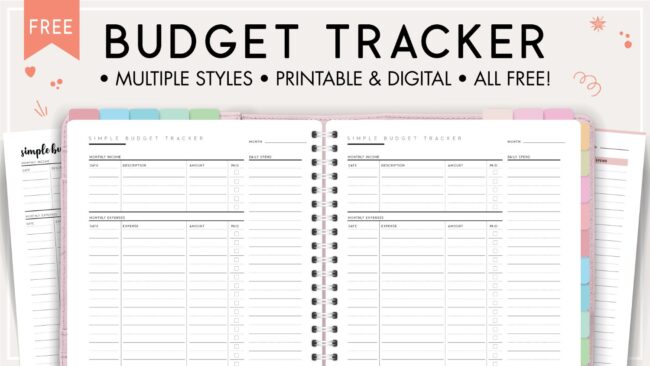
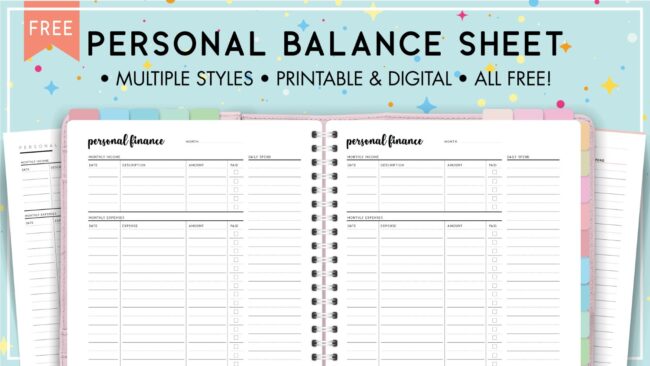
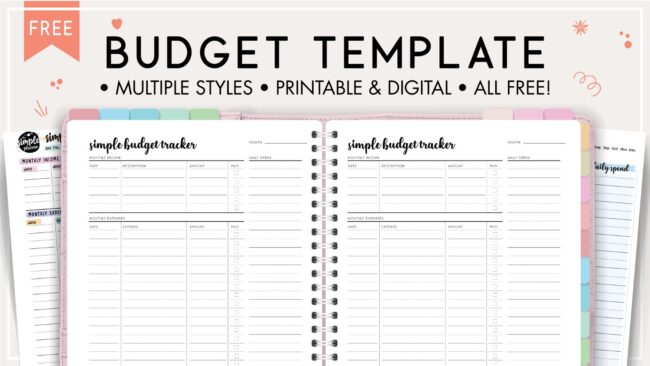
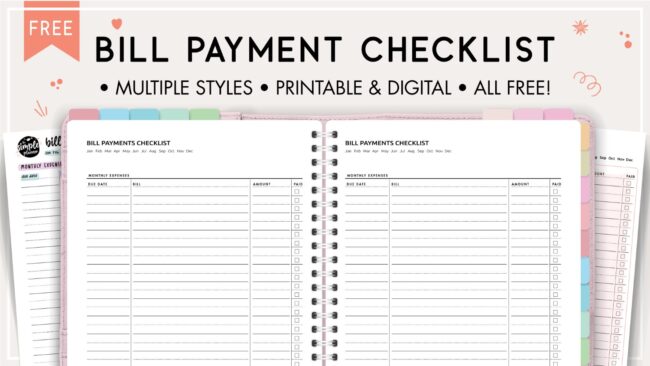
You’ll find many more budgeting templates right here on World of Printables.

AI TRANSPARENCY: Whilst the majority of our creations have been created completely traditionally, occasionally we utilize AI tools in our design process. We acknowledge the advancements in AI technology and leverage them responsibly to optimize our creative output. However, it is important to note that our utilization of AI does not compromise the human element of our work. Our commitment to delivering high-quality designs through a balanced integration of traditional expertise and AI enhancements remains paramount.