

Disclaimer: We provide high-quality, free printable templates to help you organize your personal data. We are not certified financial planners or investment advisors. The tools and information provided below are for educational and organizational purposes only. Always consult a licensed financial professional before making high-stakes decisions regarding investments, asset allocation, tax strategy, or debt consolidation.
Paying off debt is not just about making progress. It is also about how much that progress costs you along the way.
Because if you are sending extra money to the wrong balance while a higher-interest debt keeps growing in the background, you could end up paying much more over time than you need to.
That is exactly why the Debt Avalanche Method is so powerful.
Instead of choosing debts based on the smallest balance, this method focuses on the highest interest rate first. It is the more maths-driven approach to debt repayment, and for many people, it is the most efficient way to reduce the total amount paid in interest.
If you are building a budget binder, a Debt Avalanche Tracker is one of the best pages to include because it gives you a clear system, a visible payoff plan, and a way to stay focused while your balances come down.
What is the Debt Avalanche Method?
The Debt Avalanche Method is a debt payoff strategy where you pay all minimum payments as usual, then put any extra money toward the debt with the highest interest rate first.
Once that debt is paid off, you move to the debt with the next highest rate, then the next, and so on.
The order is based on APR, not balance size.
That means if you have:
- one card at 24%
- one loan at 12%
- one balance at 6%
the 24% debt comes first, even if it is not the smallest.
The reason is simple: the highest-interest debt is costing you the most.
Why this method is so effective
The Debt Avalanche Method is popular because it is mathematically efficient.
By focusing on the highest APR first, you reduce the amount of interest building up across your debts. Over time, that can mean:
- less money lost to interest
- faster overall financial progress
- more money freed up for savings, goals, and future planning
In other words, this method helps your extra payments work harder.
If you are the kind of person who likes the most efficient route from A to B, this approach usually makes a lot of sense.
The debt avalanche method is powerful, but it still works best when your paydays are planned clearly. Our Paycheck Planner helps you see what each paycheck needs to cover so extra debt payments feel more structured and doable.
Choose a design theme that fits your style
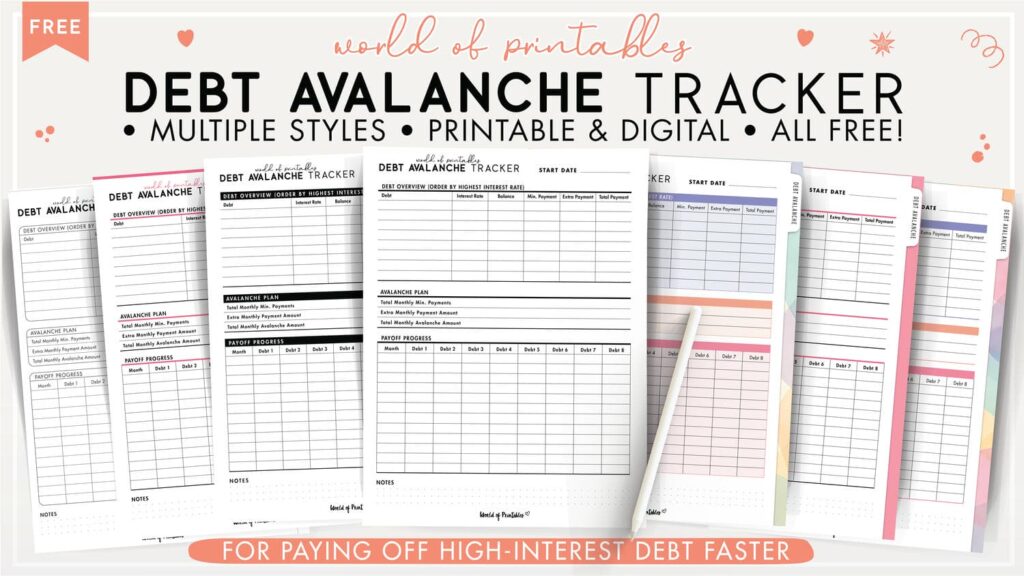
This printable comes in a range of layouts so you can choose the version that suits your binder and planning style best.
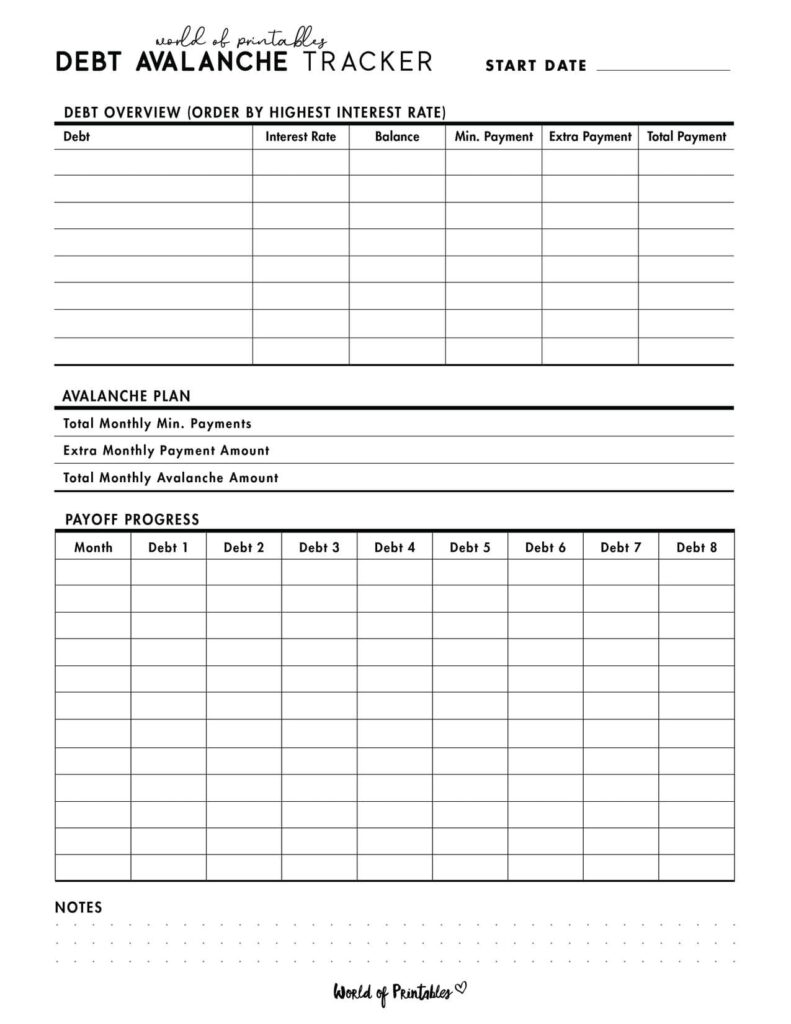
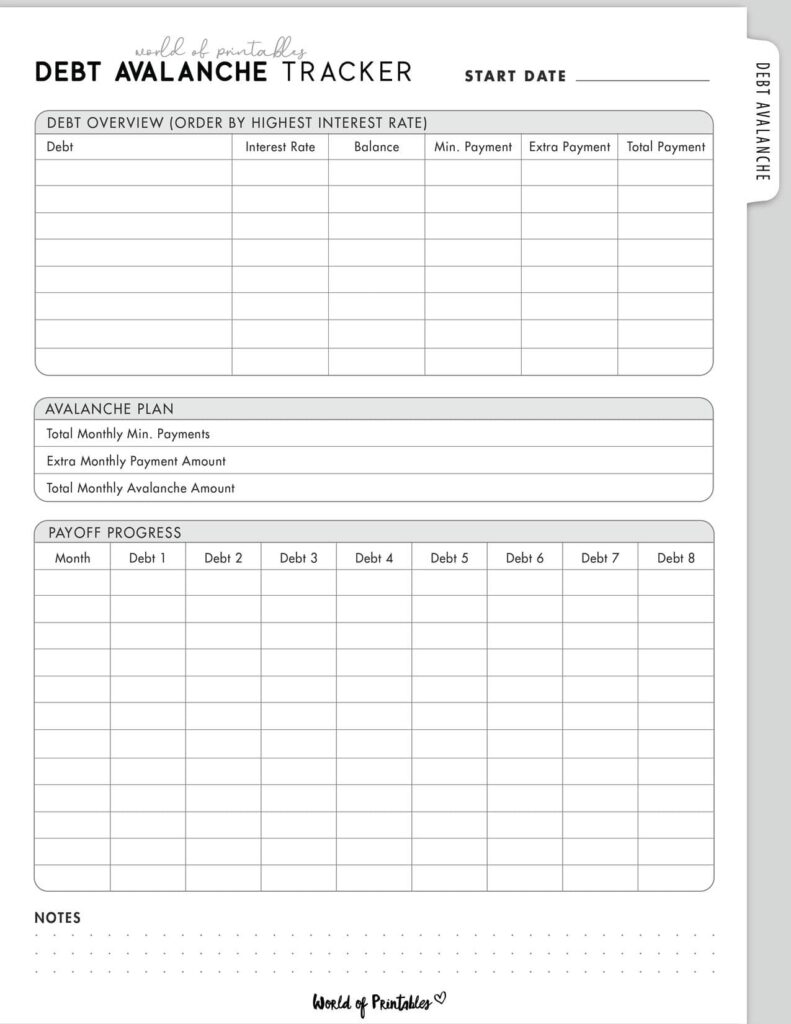
Minimalist and simple styles
These are ideal if you want a clean, data-focused page that keeps all the attention on the balances, APRs, and payoff order.
They work especially well in a more traditional budget binder setup.
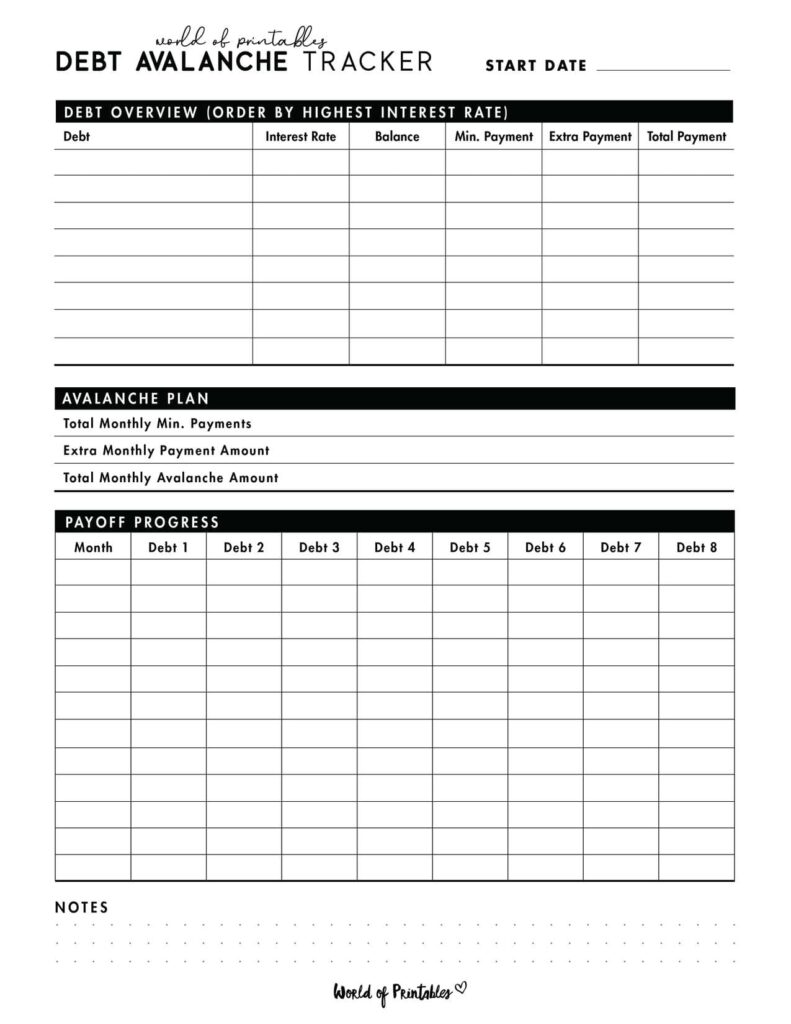
Colorful and visual styles
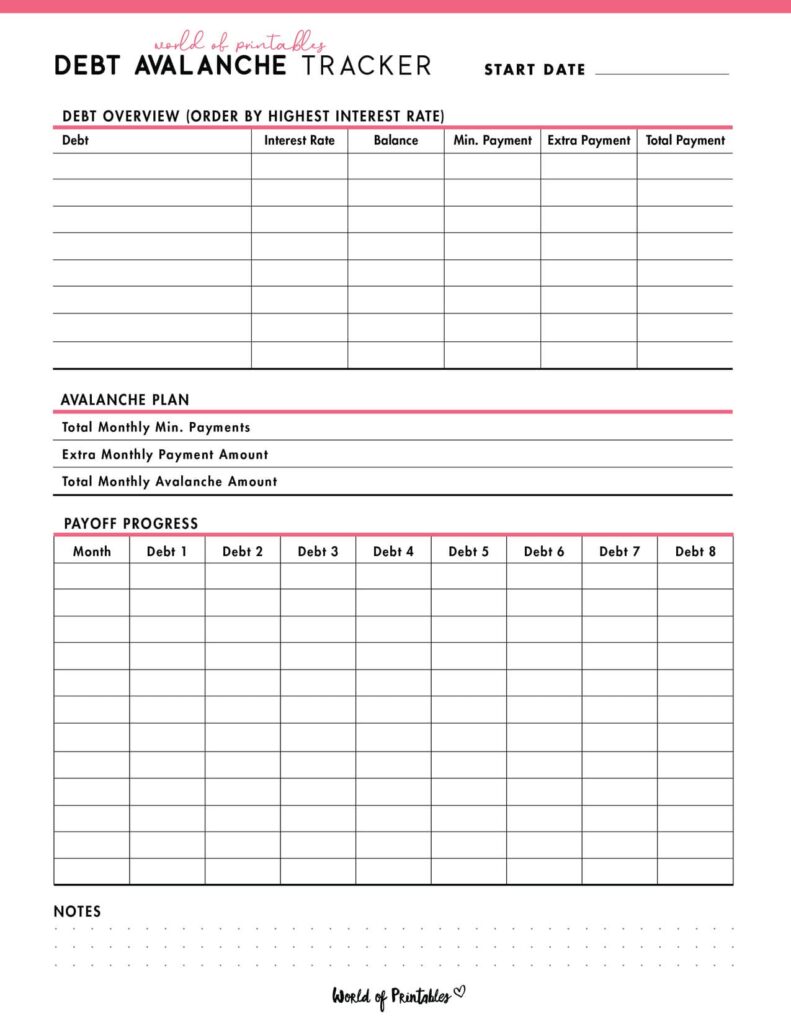
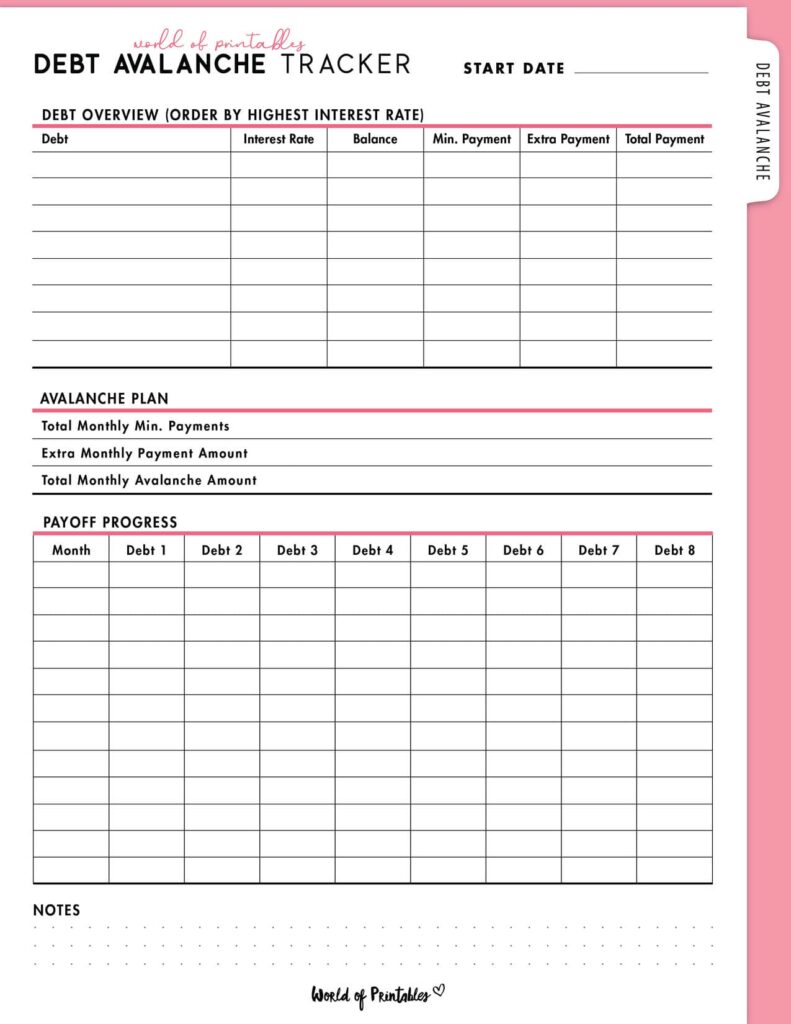
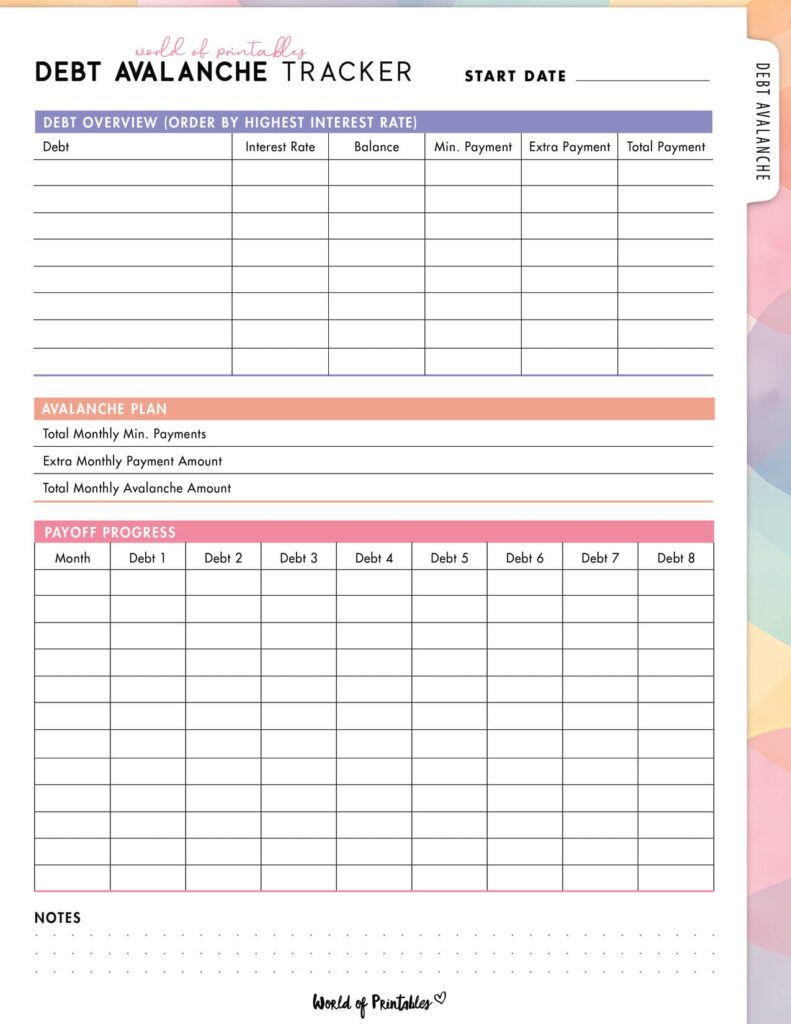
These are great if you want to separate higher-interest debts from lower-interest debts more clearly at a glance.
They can make the payoff structure easier to read and more motivating to update.
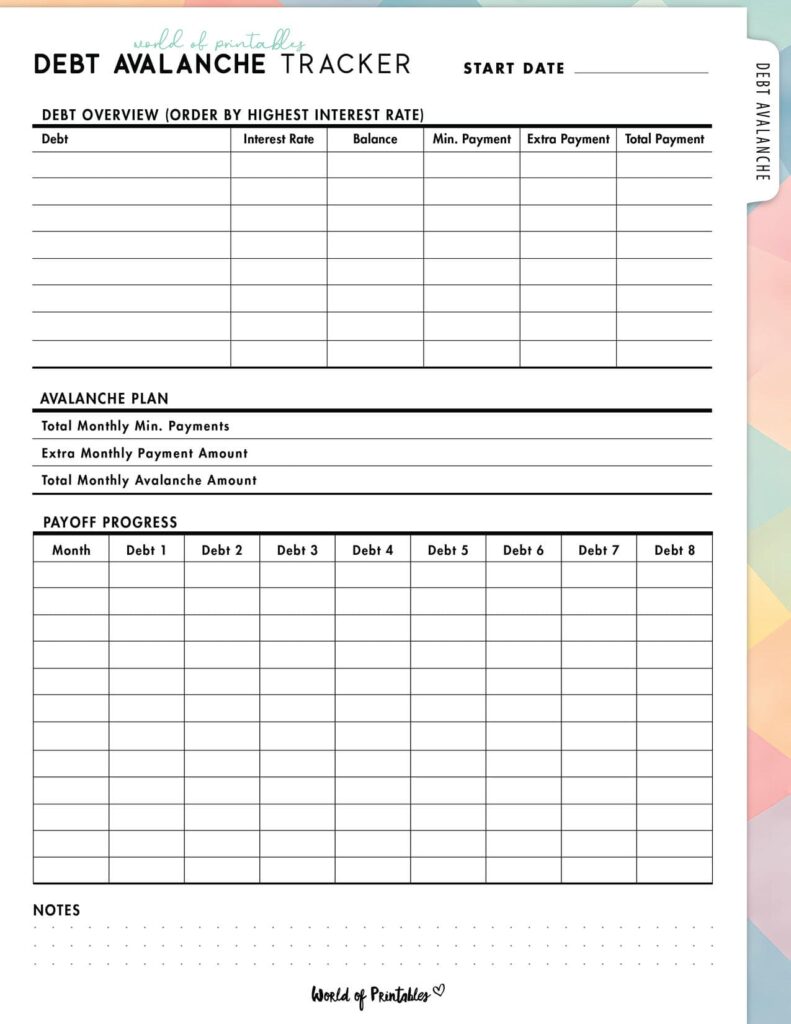
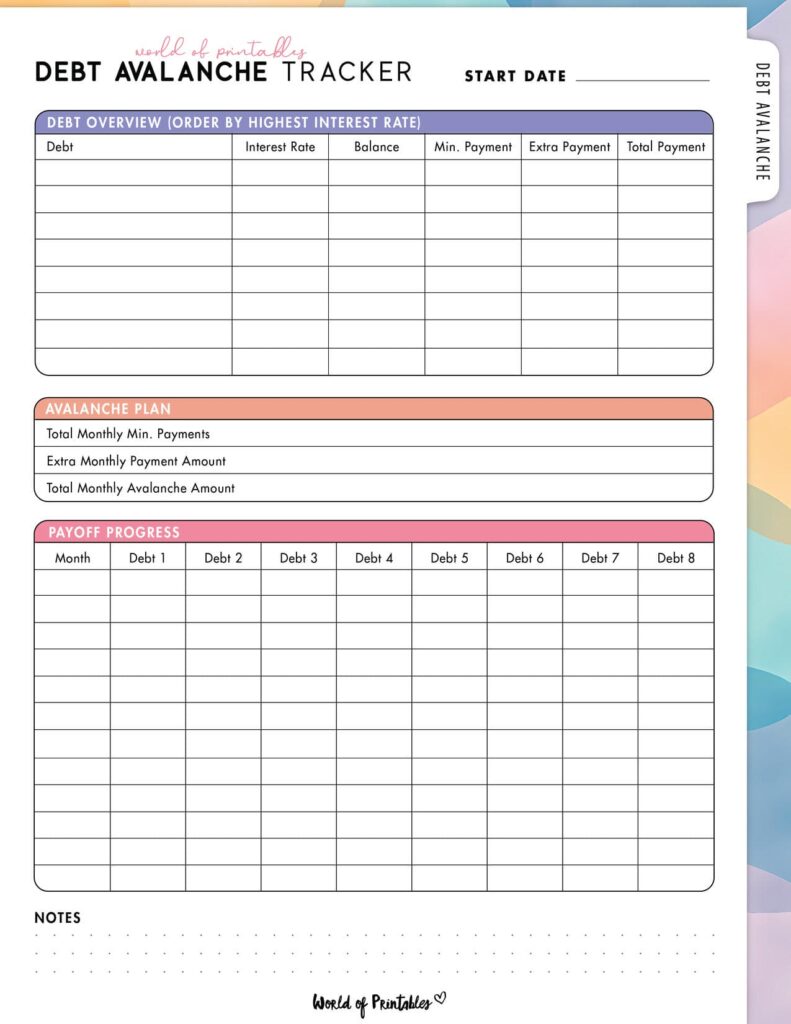
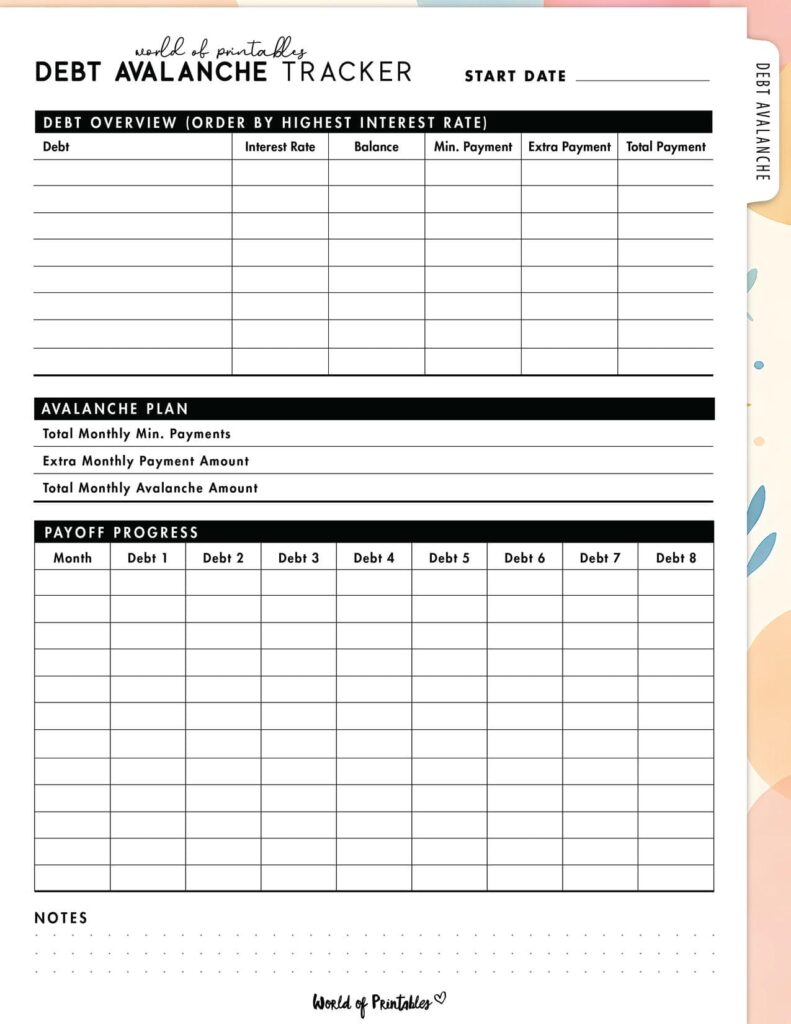
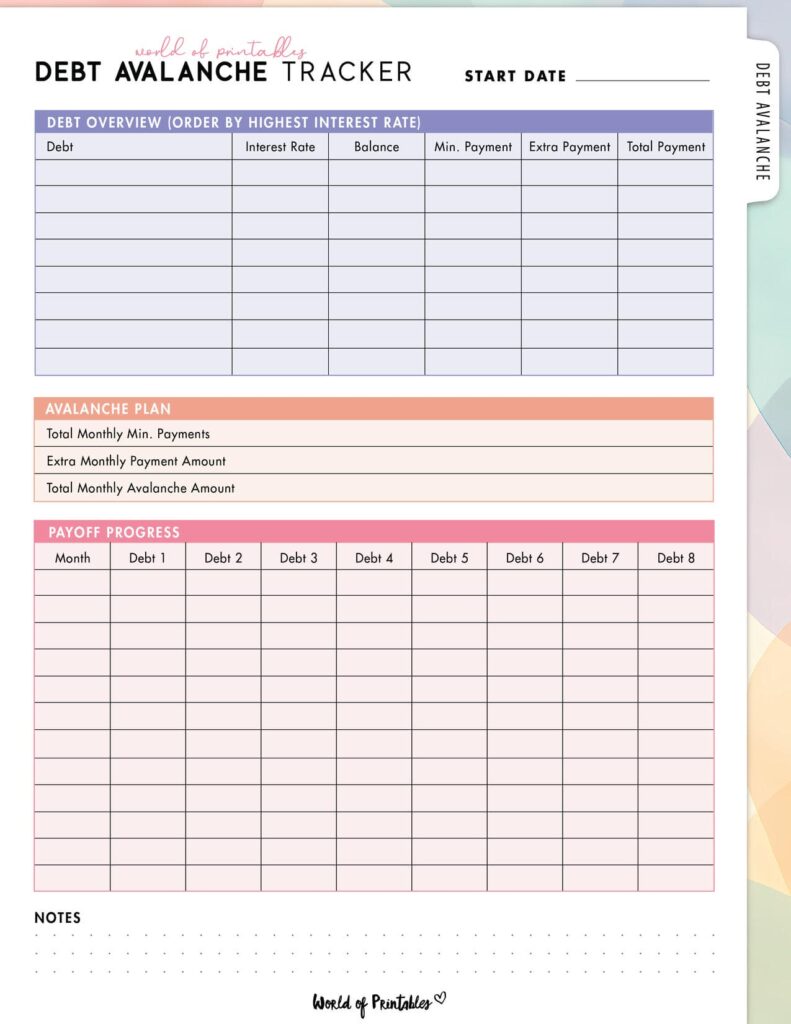
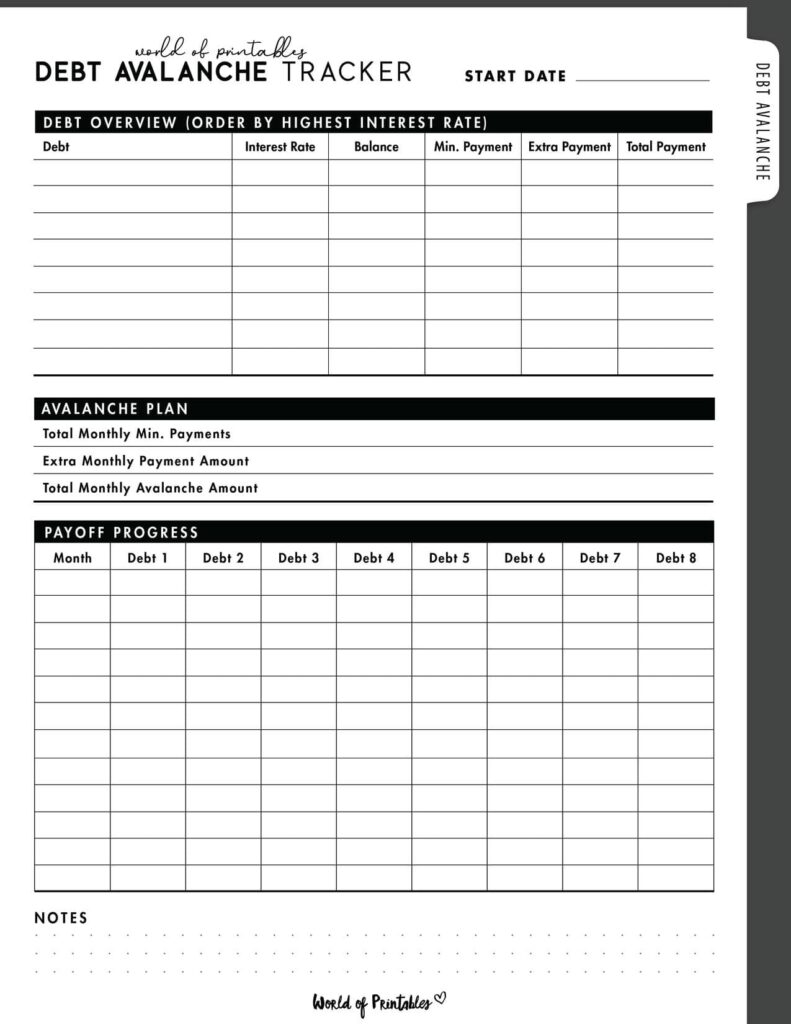
Ink-saving options
If you prefer practical, low-ink printables, these are a smart option.
They still feel polished and organised while being efficient to print.
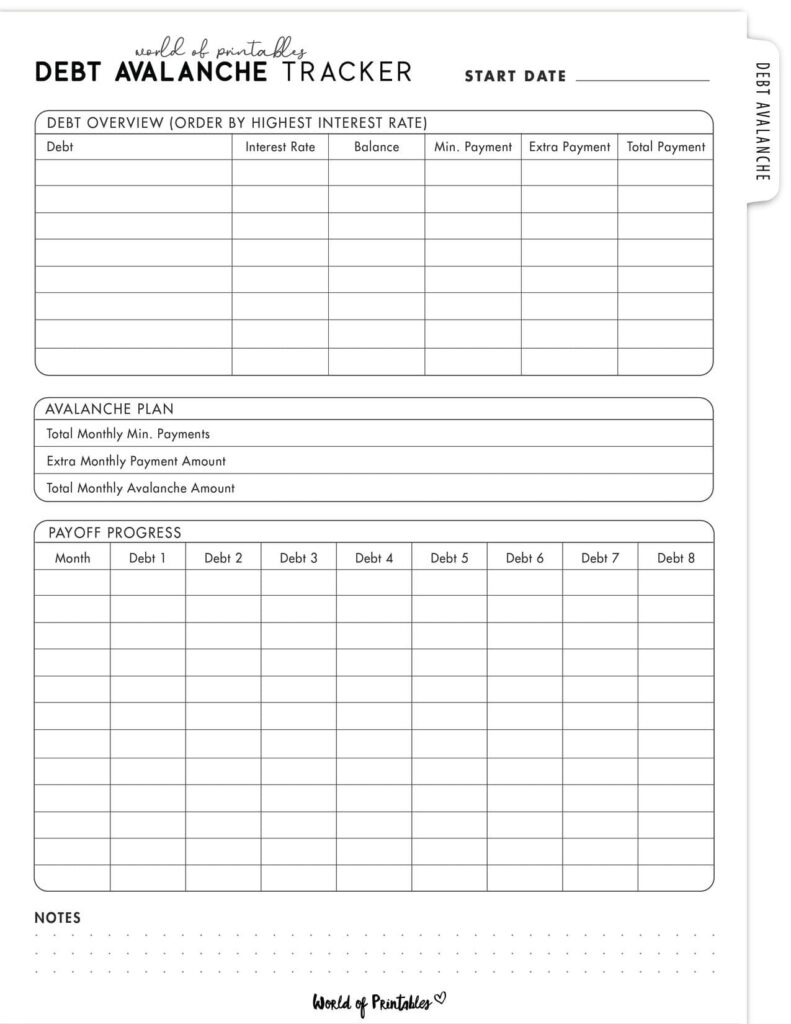
Free Download and Printing Instructions
To download your free Debt Avalanche Tracker, click the text link directly beneath the image of your preferred design. This will open the high-resolution PDF.
For the best printing results:
- download the PDF directly to your device
- open the file and select Print
- make sure your printer is set to US Letter
- choose Fit to Page or Scale to Fit so the margins print correctly
If you want the page to hold up well in your binder, it can be worth printing it on slightly thicker paper.
A premium 28 lb or 32 lb paper gives it a more durable, high-quality feel.
Debt avalanche vs debt snowball
The two most common debt payoff methods are:
Debt avalanche
You pay off the highest interest rate first.
Best for:
- people who want the most cost-efficient approach
- people motivated by logic and long-term savings
- people comfortable with a slower first win if needed
Debt snowball
You pay off the smallest balance first.
Best for:
- people who want quicker psychological wins
- people who stay motivated by seeing accounts disappear sooner
- people who need momentum more than maximum efficiency
Neither method is “wrong.” The best one is the one you will actually stick to.
But if your main goal is to minimise interest and be as efficient as possible, the debt avalanche is usually the stronger strategy.
How to Use a Debt Avalanche Tracker
While the Snowball method focuses on the smallest balance for quick emotional wins, the Avalanche method tackles the highest interest rates first. This saves the most money mathematically over time, which is super important for families dealing with high-APR credit cards.
The golden rule for this printable is that the debts MUST be ordered by Highest Interest Rate to Lowest, regardless of how big the balance is.
Here is a typical example for yhow to use a debt avalanche tracker:
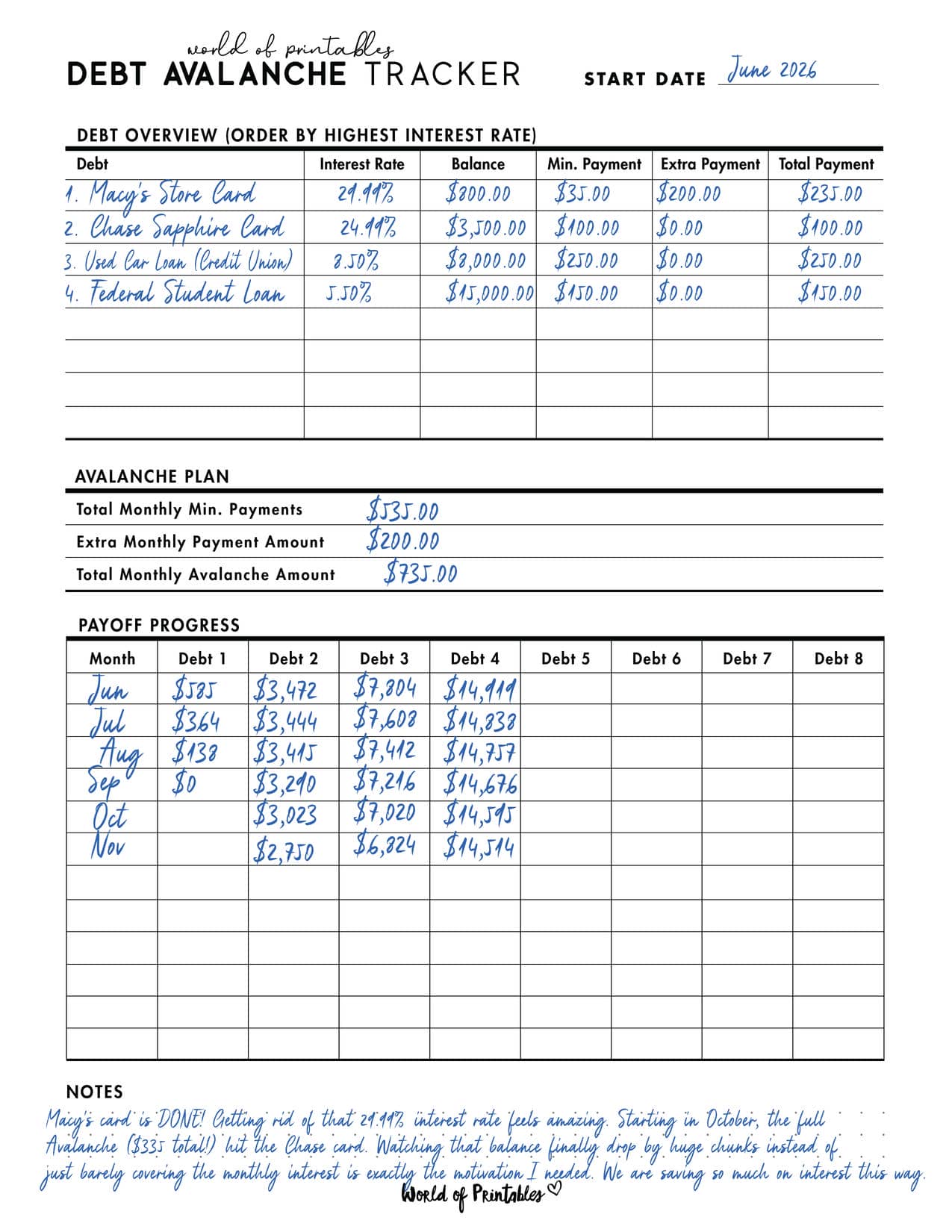
A Debt Avalanche Tracker helps you take the method off the screen and put it into a visible system you can actually follow.
Here is how to use it:
Step 1: List all of your debts
Start by writing down every debt you want to include.
This might include:
- credit cards
- personal loans
- store cards
- overdrafts
- car finance
- other consumer debt
For each debt, record:
- creditor name
- current balance
- interest rate or APR
- minimum monthly payment
This gives you the full picture before you decide the order.
Step 2: Rank them by interest rate
Now sort the debts from highest APR to lowest APR.
That ranking becomes your payoff order.
This is the part that matters most, because the Debt Avalanche Method is built around interest rate priority, not emotional preference or convenience.
Even if a smaller balance feels tempting, the goal here is to stay focused on what is costing you the most.
Step 3: Pay minimums on everything else
To keep your accounts in good standing, continue making the minimum payment on every debt.
This is non-negotiable.
The method only works properly if you stay current across the board while focusing your extra money on one target debt at a time.
Step 4: Put every extra payment toward the top debt
Once your minimums are covered, send any extra money you can toward the debt at the top of your list.
This is your avalanche target.
That may be:
- an extra $20
- an extra $50
- an extra $200
Whatever you can manage, the important thing is that the extra goes to the highest-interest debt first.
Step 5: Roll the payment down when one debt is gone
When the first debt is fully paid off, do not stop.
Take the full amount you were paying toward that debt, including:
- the minimum payment
- plus any extra money
and roll it onto the next debt on your list.
That is what creates the “avalanche” effect.
As each balance disappears, your payment power grows, and the next debt gets hit harder.
Why a tracker makes this method easier to follow
A debt payoff plan feels much easier to stick with when you can see it.
A Debt Avalanche Tracker helps by giving you one place to:
- list your debts in the correct order
- see which balance is the current target
- record minimums and extra payments
- watch balances fall
- keep the strategy visible
That matters because debt can feel mentally heavy when it is vague. A tracker makes it concrete.
Instead of “I need to sort out my debt,” you have:
- a ranking
- a target
- a clear next move
That alone can make the whole process feel more manageable.
What to include on your Debt Avalanche Tracker
A useful debt avalanche page should be clear and practical.
Helpful sections include:
- creditor name
- current balance
- APR
- minimum payment
- extra payment
- payoff order
- progress notes
Some people also like to include:
- starting balance
- target payoff date
- total interest awareness notes
If you enjoy seeing visual progress, you may also want a payoff bar or progress section for each debt.
Why this works so well in a budget binder
A Debt Avalanche Tracker fits beautifully into a budget binder because it gives your debt payoff plan structure.
It works especially well alongside:
- monthly budget planners
- credit card information sheets
- credit score trackers
- net worth trackers
- annual financial goals worksheets
Those pages help you manage your wider money picture.
This page helps you focus your debt strategy and stay consistent.
It is especially useful if you want your binder to feel like a real financial system rather than just a collection of separate pages.
Who this printable is especially helpful for
This page is a great fit if you:
- want to pay off debt as efficiently as possible
- like using logic and numbers to make financial decisions
- have several debts with different interest rates
- want a clear order to follow
- are building a budget binder
- stay motivated by seeing a system work over time
It is especially useful for credit card debt, where interest rates can vary wildly and the cost of delaying the wrong balance can add up fast.
A helpful tip before you start
Before you fill in your tracker, double-check that you are using the current APRs and current minimum payments from your latest statements.
That matters because rates, balances, and minimums can change, and you want your tracker to reflect reality as closely as possible.
A debt plan is always easier to trust when the numbers are current.
A good question to ask yourself before choosing avalanche
Ask yourself:
What will keep me going when the first win takes a little longer?
Because that is the main trade-off with this method.
It may save you more money in interest, but depending on your balances, it may not always give you the fastest emotional win at the start.
If that does not bother you, and efficiency matters most, the avalanche is a very strong choice.
Next Step: Build Your Complete Financial Command Binder
A Debt Avalanche Tracker helps you target the most expensive debts first.
As you systematically crush your high-interest liabilities, you will see a direct, positive impact on your overall financial health.
This printable works even better when it is part of a bigger financial system.
Helpful pages to add next include:
- a monthly budget planner
- a credit card information sheet
- a credit score tracker
- a net worth tracker
- an annual financial goals worksheet
Together, these pages help you reduce debt with more clarity, more structure, and a much stronger sense of progress.
Keep optimizing your system by adding the next essential tools to your binder:
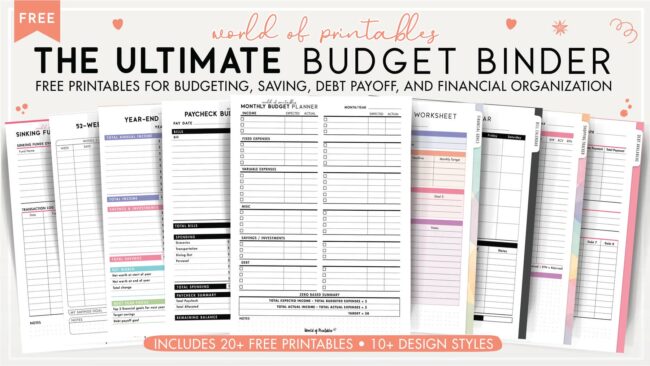
- Return to the Ultimate Budget Binder Index.
- Prefer psychological momentum over pure math? Switch tactics and download our Debt Snowball Tracker instead.
- Watch your liability reduction directly increase your wealth. Download the Net Worth Tracker to measure your progress.
More budgeting templates
You’ll find many more budgeting templates right here on World of Printables.

AI TRANSPARENCY: Whilst the majority of our creations have been created completely traditionally, occasionally we utilize AI tools in our design process. We acknowledge the advancements in AI technology and leverage them responsibly to optimize our creative output. However, it is important to note that our utilization of AI does not compromise the human element of our work. Our commitment to delivering high-quality designs through a balanced integration of traditional expertise and AI enhancements remains paramount.