

Disclaimer: We provide high-quality, free printable templates to help you organize your personal data. We are not certified financial planners or investment advisors. The tools and information provided below are for educational and organizational purposes only. Always consult a licensed financial professional before making high-stakes decisions regarding investments, asset allocation, tax strategy, or debt consolidation.
Subscriptions are sneaky. Not because they are always expensive, but because they are easy to ignore.
A few pounds here, a few dollars there, one streaming service, one app, one membership, one auto-renewal you meant to cancel three months ago. On their own, they do not always feel like a big deal. But together, they can quietly drain a surprising amount of money from your budget every single month.
That is exactly why a Recurring Subscription Audit can be so useful.
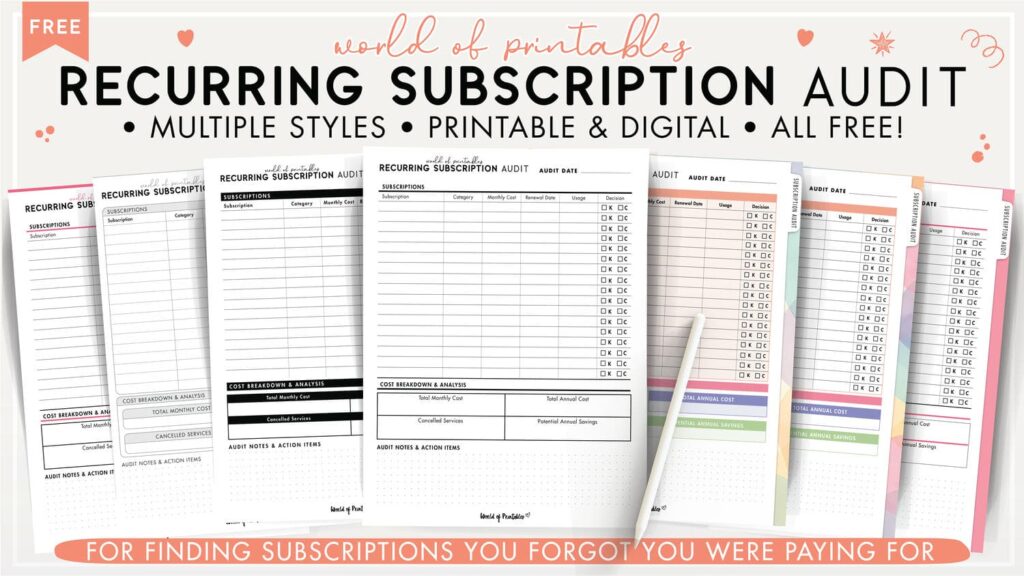
This printable gives you one place to review all your recurring charges, decide what is still worth paying for, and cut the ones that are no longer serving you. If you are building a budget binder, this is one of those pages that can lead to quick wins because it helps you find money that is already leaving your account without much thought.
What is a Recurring Subscription Audit?
A Recurring Subscription Audit is a printable designed to help you review all of your ongoing subscription payments in one place.
That can include things like:
- streaming services
- app subscriptions
- software memberships
- gym memberships
- digital storage plans
- beauty boxes
- meal subscriptions
- recurring household deliveries
- online memberships
- auto-renewing trial offers
Instead of letting these charges sit quietly in the background, this page helps you pull them into view and decide which ones still deserve a place in your budget.
Why this printable is so helpful
Recurring payments are easy to forget because they are designed to feel effortless.
They often:
- renew automatically
- come out on different dates
- sit buried in card or bank statements
- feel too small to matter individually
- continue even when you barely use the service
That is why subscription spending can become such a budget leak.
A Recurring Subscription Audit helps you answer questions like:
- What am I paying for every month?
- Which subscriptions do I actually use?
- Which ones have quietly become dead weight?
- How much are these charges costing me in total?
- What could I do with that money instead?
This printable gives you the full picture in a way that is much harder to ignore.
Why this matters even if each subscription feels small
One subscription at $7.99 does not usually feel dramatic.
But several of them together might look more like:
- $7.99 for one service
- $10.99 for another
- $5.99 for an app
- $14.99 for a membership
- $8.99 for storage
- $12.99 for a platform you barely use
Suddenly you are looking at a monthly total that could have gone toward:
- savings
- debt repayment
- sinking funds
- groceries
- an emergency fund
- more breathing room in your budget
That is why auditing subscriptions can be such an effective reset. It often frees up money without making you feel like you are cutting into essentials.
Recurring charges are much easier to spot when you can see how they fit between paydays. Our Paycheck Planner helps you organize bills and spending around your actual pay schedule so sneaky subscriptions are harder to ignore.
Choose a design theme that fits your style
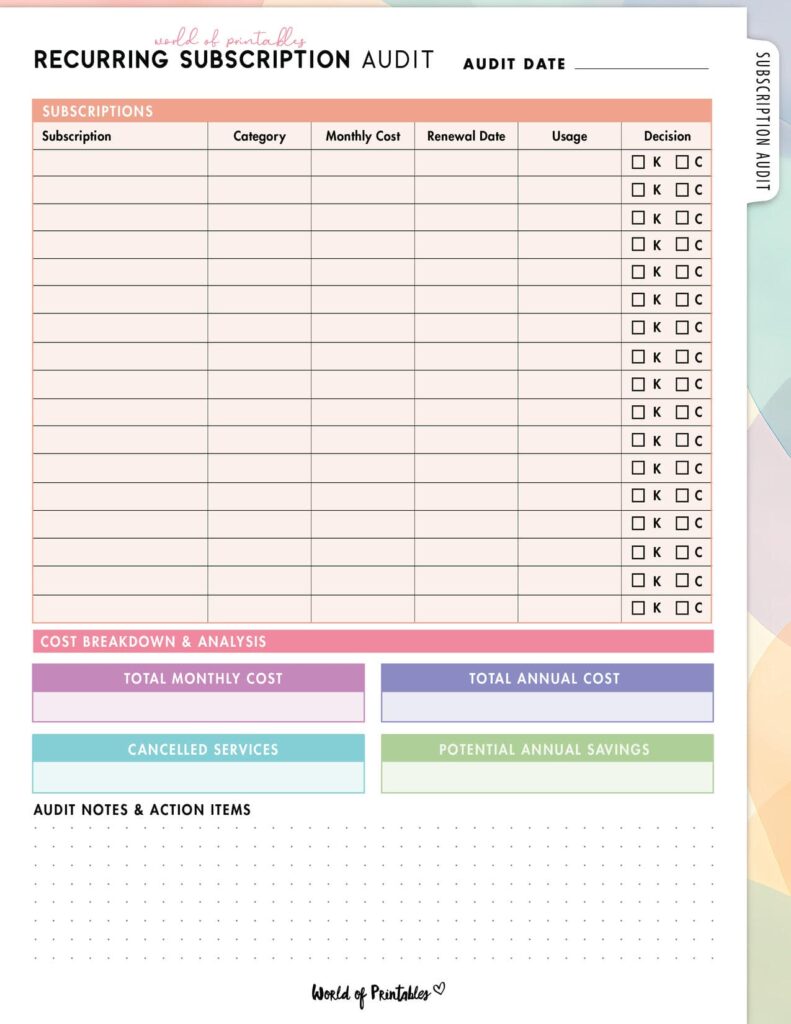
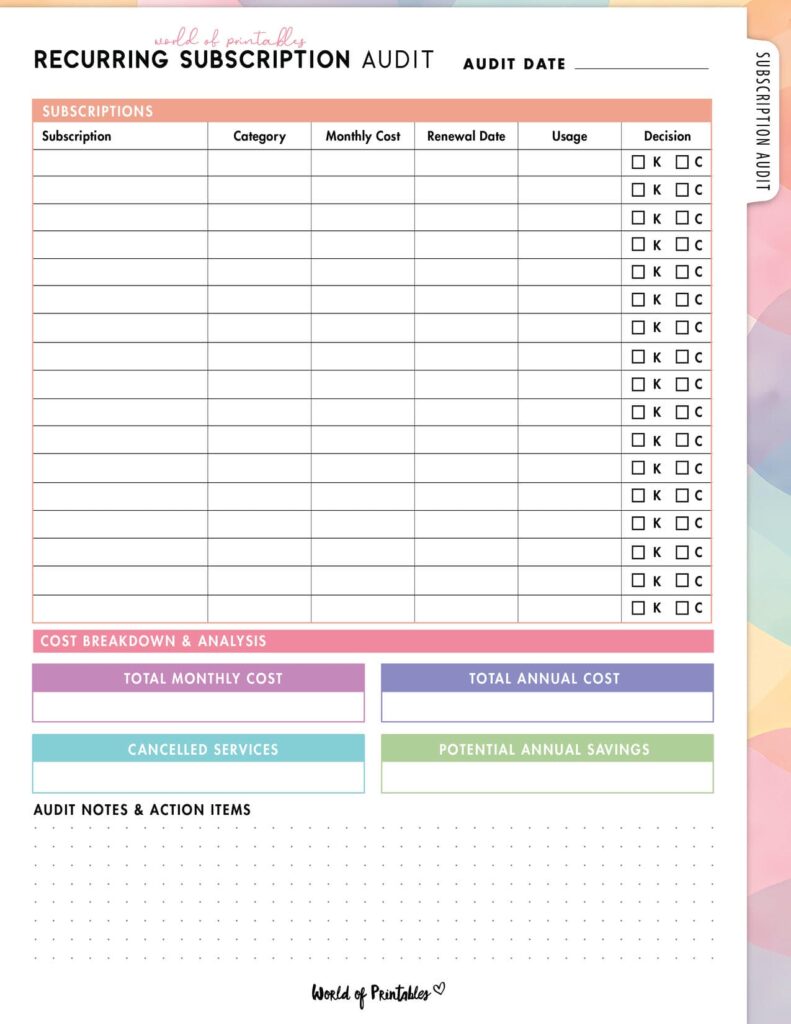
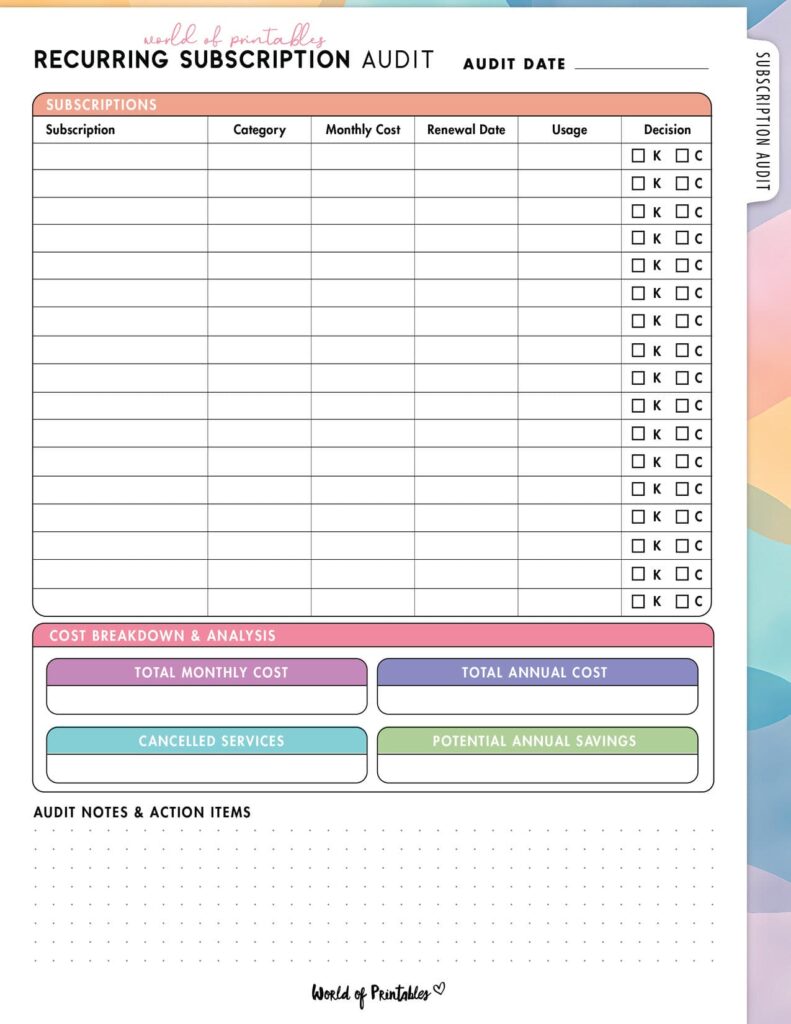
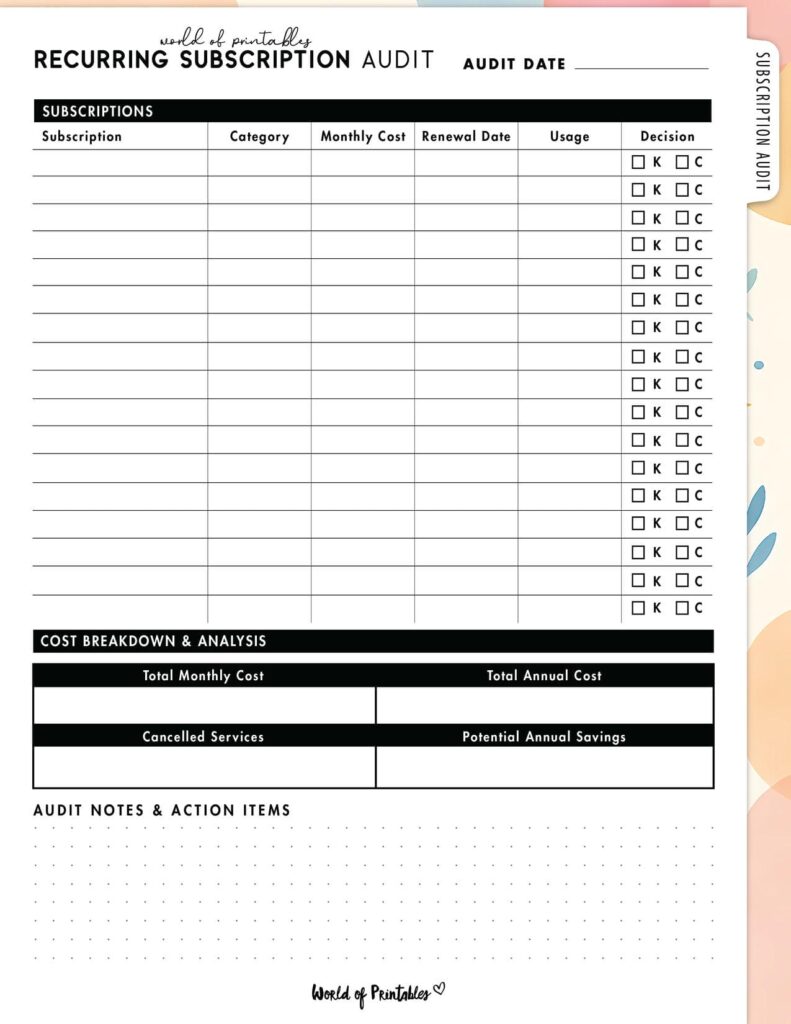
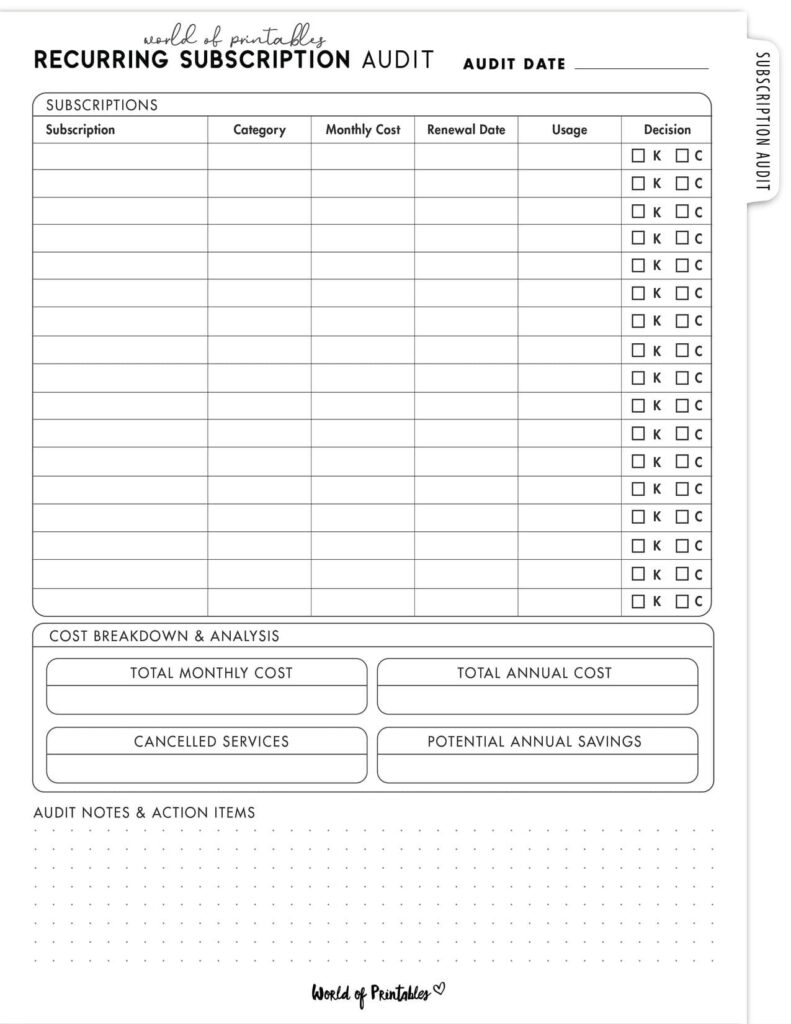
This printable comes in a range of layouts so you can choose the one that suits your binder and planning style best.
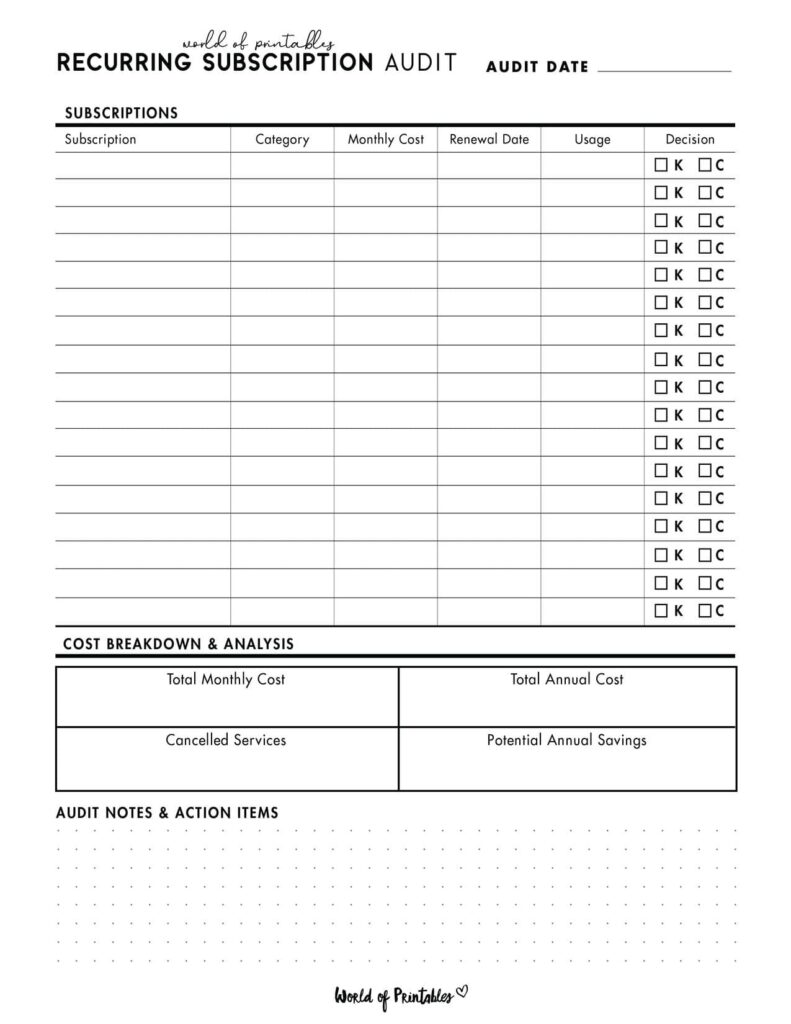
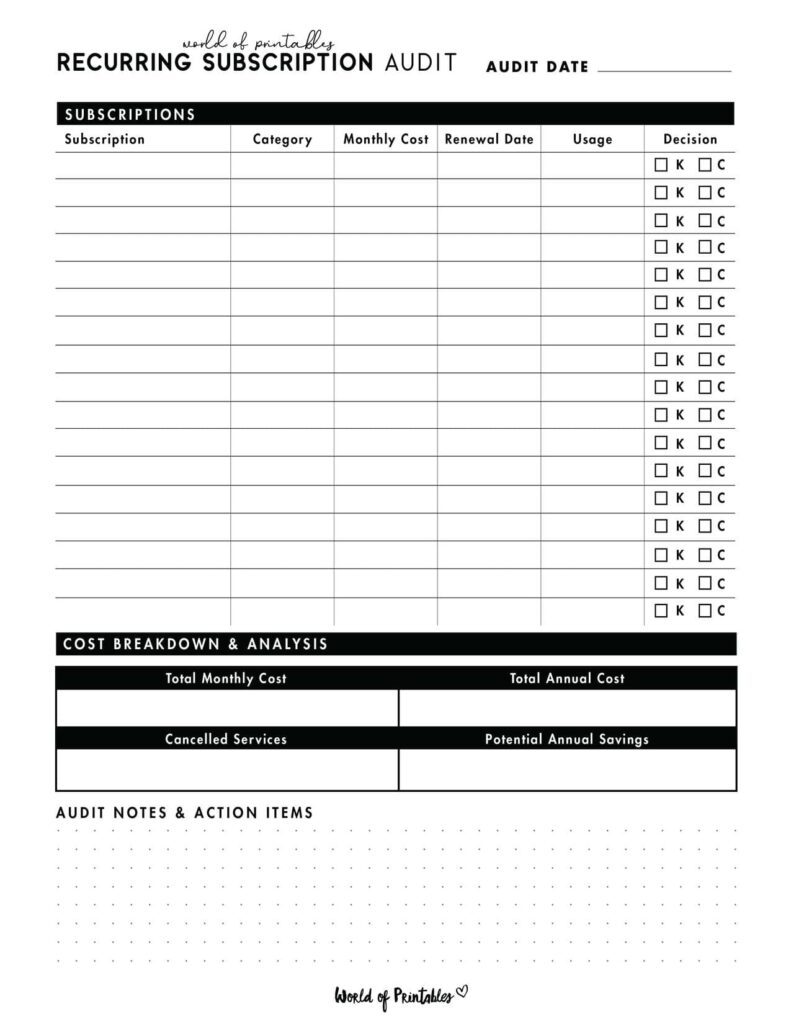
Minimalist and simple styles
These are ideal if you want a clean, straightforward audit page that keeps the focus on the numbers and decisions.
They work especially well in a more classic budget binder setup.
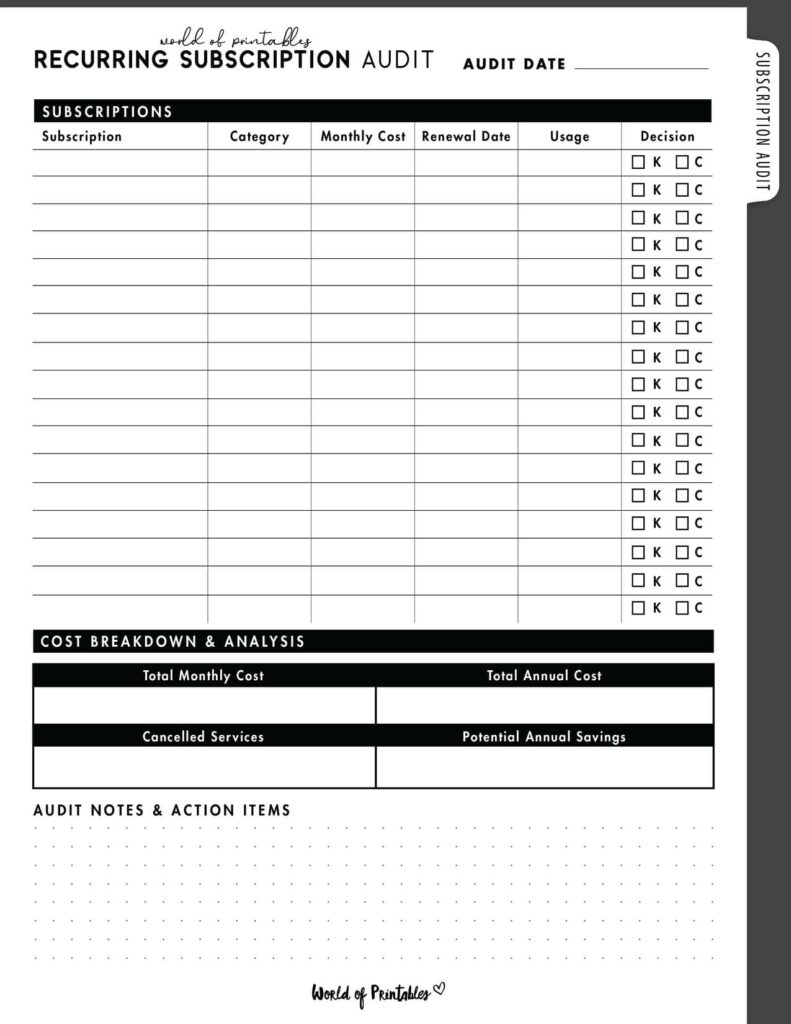
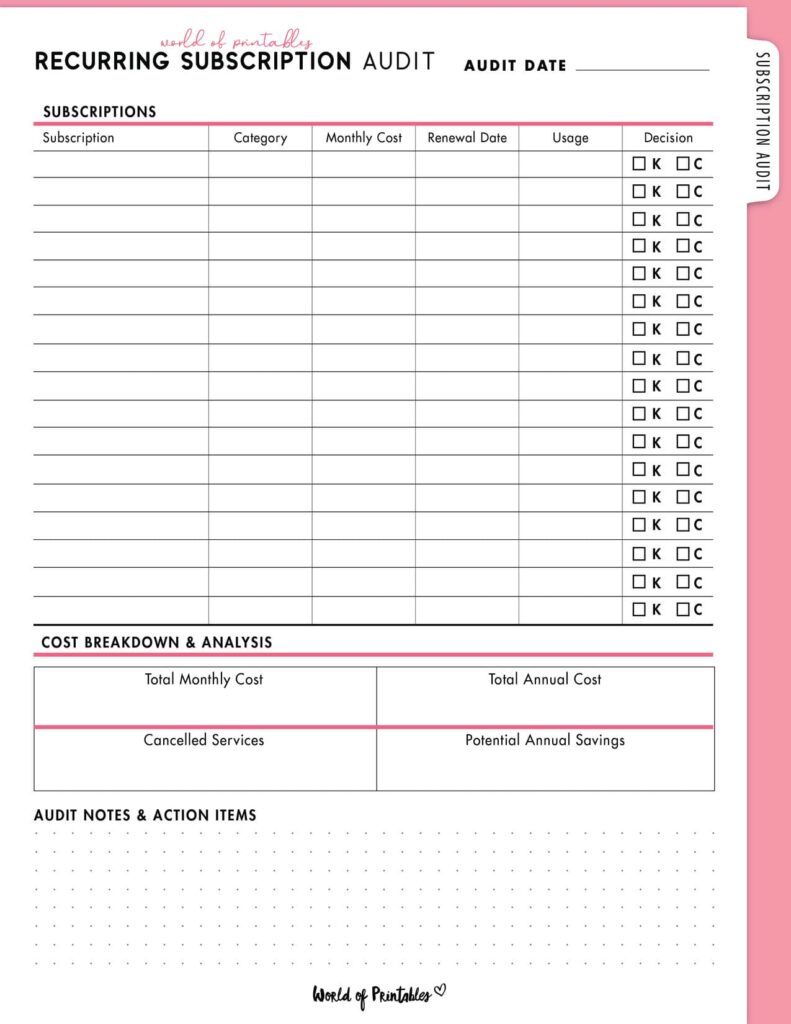
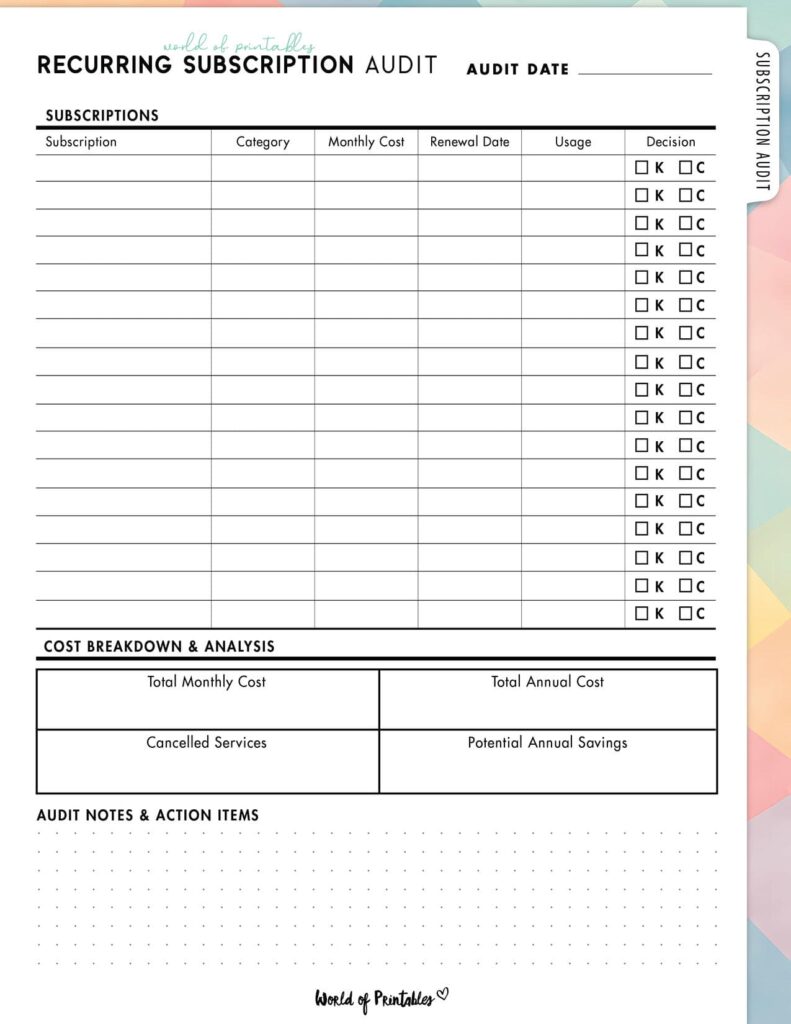
Colorful and visual styles
These are great if you want to separate categories more easily at a glance, such as:
- entertainment
- household
- business
- fitness
- digital tools
That visual structure can make the page quicker and easier to review.
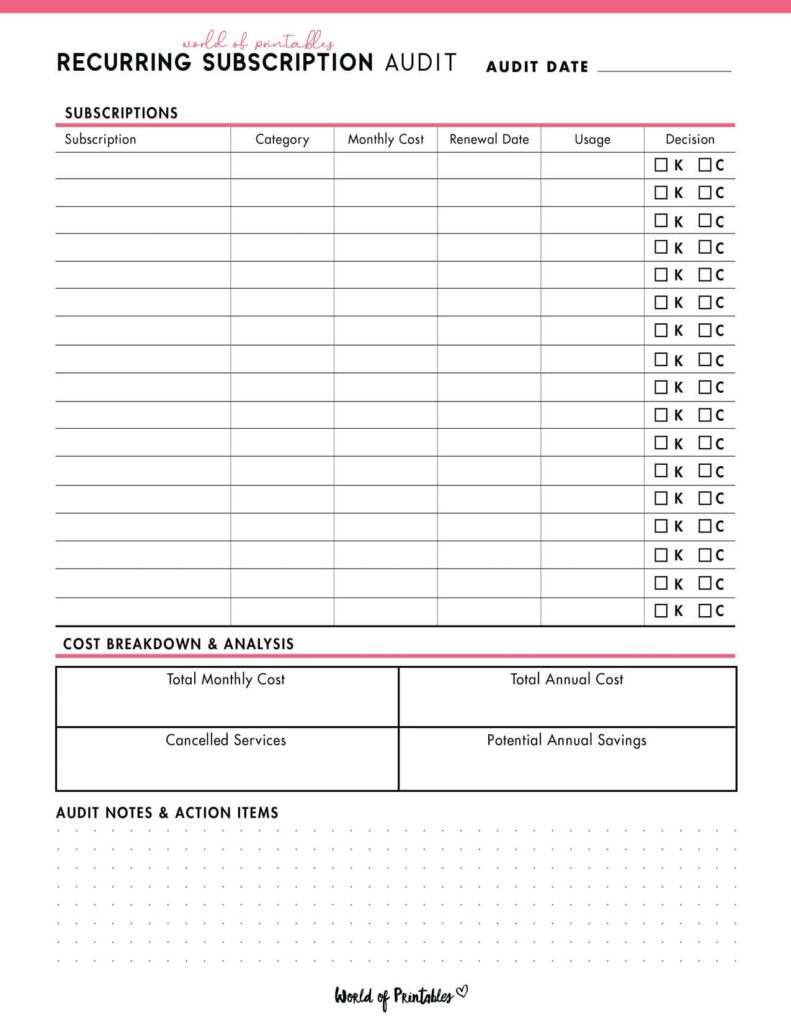
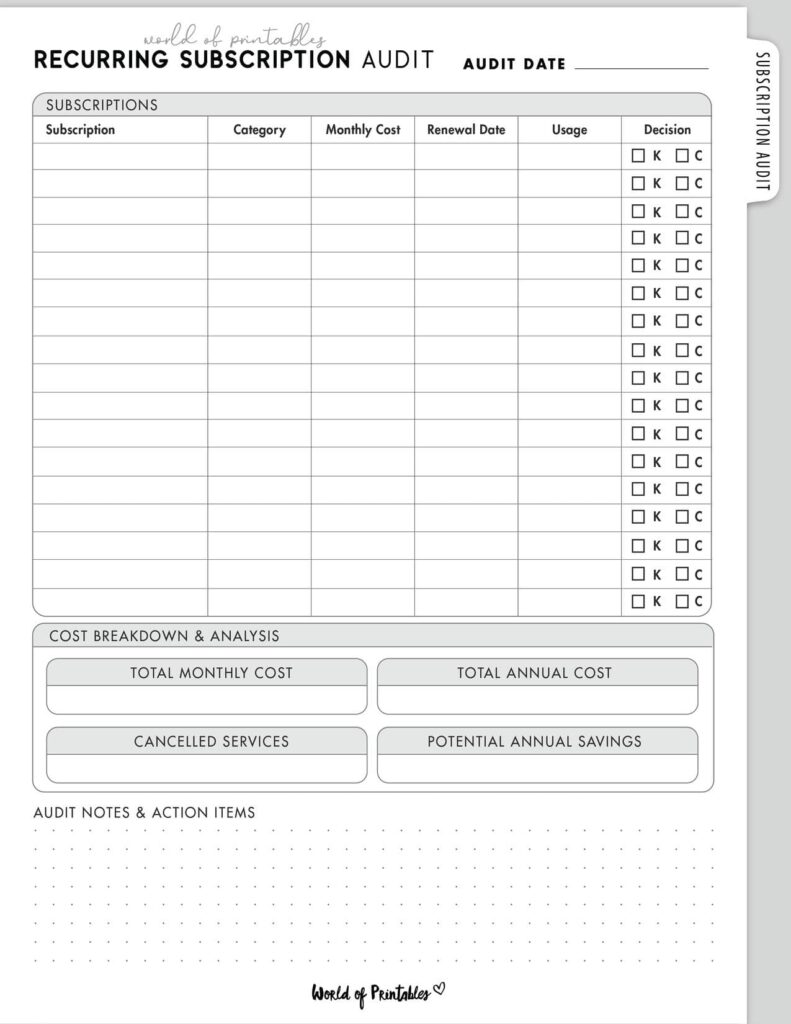
Ink-saving options
If you prefer practical, low-ink printables, these are a smart option.
They still feel polished and organised while being efficient to print.
Free Download and Printing Instructions
To download your free Recurring Subscription Audit, click the text link directly beneath the image of your preferred design. This will open the high-resolution PDF.
For the best printing results:
- download the PDF directly to your device
- open the file and select Print
- make sure your printer is set to US Letter
- choose Fit to Page or Scale to Fit so the margins print correctly
If you want this page to hold up well in your binder for future audits, it can be worth printing it on slightly thicker paper.
A premium 28 lb or 32 lb paper gives it a more durable, high-quality feel.
How to Use a Recurring Subscription Audit
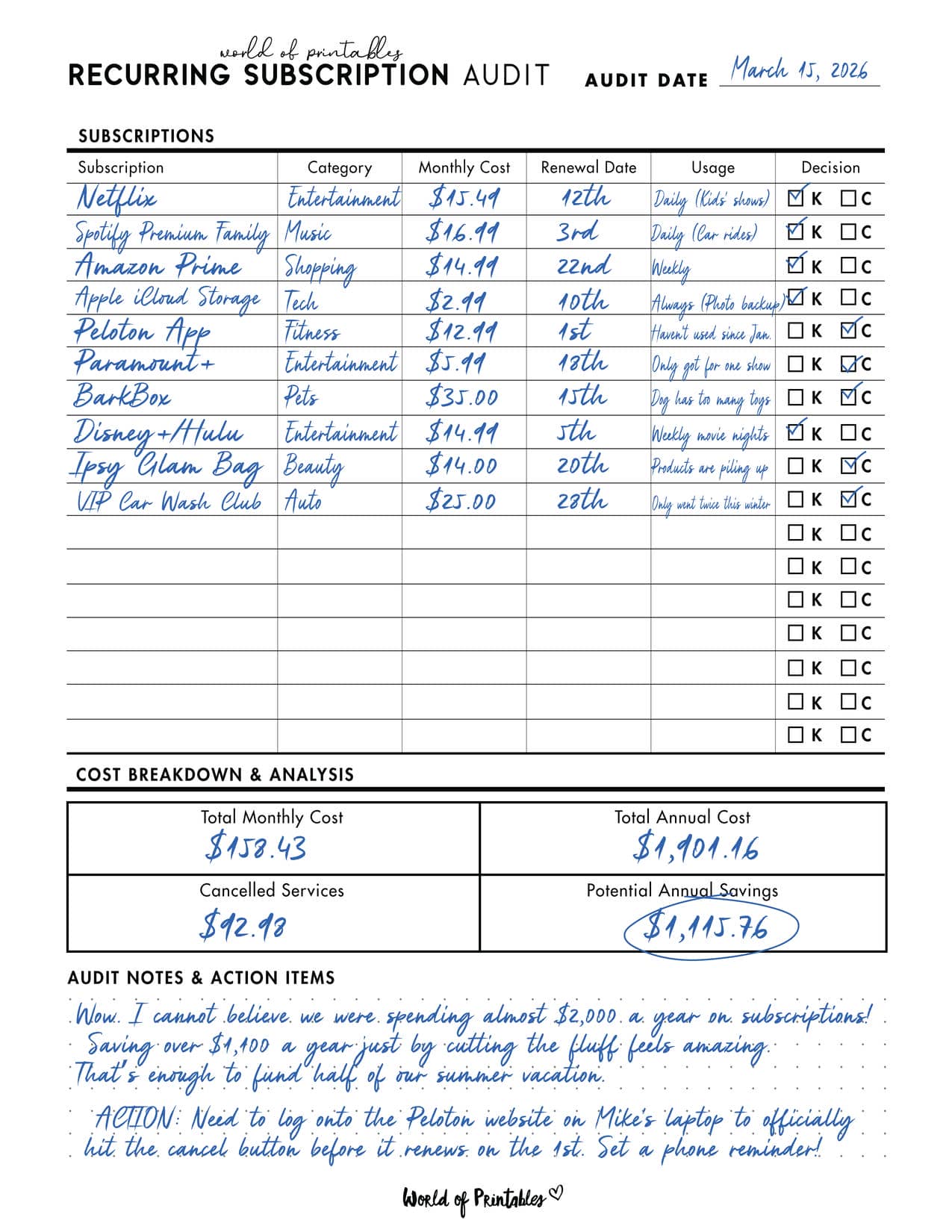
This is an incredibly eye-opening printable! “Subscription creep” is a massive pain point for the average household right now. Between streaming services, app subscriptions, and monthly physical boxes, families are often shocked to see how much money is leaving their checking accounts on autopilot.
This example shows a realistic mix of standard household subscriptions (like Netflix and Amazon), a few “forgotten” app subscriptions, and a physical box subscription or two.
Here is the perfect example to show exactly how much money doing a “subscription audit” can save:
This printable works best as a periodic review page rather than something you fill in once and never revisit.
A good rhythm is to do a subscription audit:
- every 3 months, or
- twice a year
That is often enough to catch forgotten renewals and spending drift without making it feel like a chore.
Here is the best way to fill it out:
Step 1: Check your recent statements
Start by reviewing your last one or two months of:
- bank statements
- credit card statements
- PayPal or other payment accounts
- app store subscriptions
- Google Play or Apple subscriptions
- Amazon or similar recurring delivery services
Go line by line and look for recurring charges.
This part can be surprisingly eye-opening.
A lot of people discover at least one payment they forgot about entirely.
Step 2: Write each subscription on the tracker
For each recurring charge, write down:
- the provider or service name
- the amount
- how often it is charged
- the payment method
- the renewal date if you know it
This gives you a clear list of what is actively leaving your account.
You can keep it simple, but the more clearly you log it, the easier the page becomes to use later.
Step 3: Decide whether to keep, pause, or cancel
This is the part that matters most.
For each subscription, ask:
- Do I actually use this?
- Do I use it enough to justify the cost?
- Would I notice if it disappeared?
- Is this still something I want in my budget right now?
Then give it one of three decisions:
- Keep
- Pause
- Cancel
That simple structure makes the page much more useful than a standard spending list because it pushes you toward action.
Step 4: Act on the decision straight away
This is important.
Do not fill out the audit, circle “cancel,” and then leave it for later.
If you have decided to cancel something, do it while the page is open.
That is what turns this from a nice idea into actual money saved.
If you want, you can also use the notes section to record:
- the date you cancelled
- when access ends
- whether you want to review it again later
A simple rule that makes this page more effective
If you have not used a subscription in the last 30 days, give it real scrutiny.
That does not automatically mean it has to go, but it is usually a sign that it deserves a closer look.
Some subscriptions are worth keeping even if they are not used daily. Others are simply hanging around because cancelling them has not made it onto your to do list yet.
This printable helps you separate the useful from the forgotten.
What to include on your Recurring Subscription Audit
A practical audit page should feel clear and quick to scan.
Helpful columns include:
- provider or service
- category
- monthly or annual cost
- payment method
- renewal date
- keep, pause, or cancel
- notes
You may also want a small totals section so you can add up:
- total monthly subscriptions
- total annual subscriptions
- total amount cancelled
That can be very motivating, especially if you are redirecting the savings toward something specific.
Why this works so well in a budget binder
A Recurring Subscription Audit is one of those pages that works beautifully in a budget binder because it helps you catch spending that often slips past normal budgeting.
It works especially well alongside:
- monthly budget planners
- bill payment calendars
- daily spending logs
- no-spend challenge trackers
- annual financial goals worksheets
Your budget tells you what should be happening.
This page helps you check what is quietly happening in the background.
That makes it a really useful review tool, especially if you want your budget binder to be proactive, not just reactive.
A smart question to ask for every subscription
Ask yourself:
If I were not already paying for this, would I sign up for it again today?
That question cuts through a lot of the mental clutter. It helps you stop thinking in terms of habit and start thinking in terms of value.
If the answer is no, that subscription probably deserves a closer look.
Who this printable is especially useful for
This page is a great fit if you:
- feel like too many little payments are leaving your account
- want to cut back without touching essentials
- have multiple subscriptions across apps, streaming, and memberships
- are building a budget binder
- want a realistic way to free up money quickly
- like practical “financial reset” printables
It is especially useful after busy spending seasons or whenever you feel like your budget needs a clean-up.
A great next step after you finish the audit
Once you total up the subscriptions you cancelled, decide exactly where that saved money will go.
That could be:
- debt repayment
- an emergency fund
- a sinking fund
- general savings
- more margin in your monthly budget
That step matters because it helps the savings turn into something useful rather than just disappearing into general spending again.
Next Step: Build Your Complete Financial Command Binder
A Recurring Subscription Audit is brilliant for finding forgotten spending, but it works even better when it connects to a bigger money system.
Helpful pages to add next include:
- a bill payment calendar
- a monthly budget planner
- a daily spending log
- a no-spend challenge tracker
- an annual financial goals worksheet
Together, these pages help you spot the quiet leaks, tidy up your spending, and give more of your money a clear purpose.
Keep optimizing your cash flow system by adding the next essential tools to your binder:
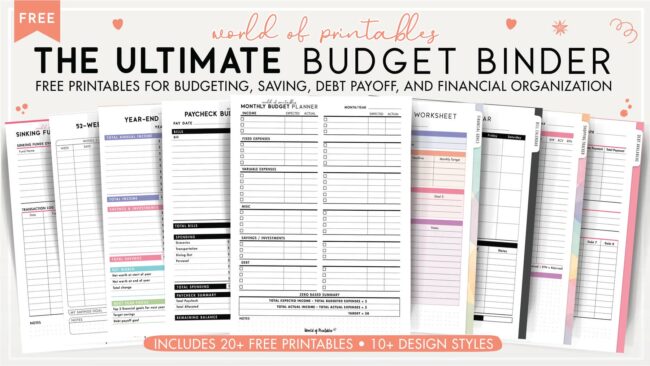
- Return to the Ultimate Budget Binder Index.
- Take the subscriptions you decided to “Keep” and map them onto your Bill Payment Calendar to ensure you never miss a due date.
- Subscriptions aren’t the only way you leak cash. Download the Daily Spending Log to track your discretionary spending leaks mid-month.
More budgeting templates
You’ll find many more budgeting templates right here on World of Printables.


AI TRANSPARENCY: Whilst the majority of our creations have been created completely traditionally, occasionally we utilize AI tools in our design process. We acknowledge the advancements in AI technology and leverage them responsibly to optimize our creative output. However, it is important to note that our utilization of AI does not compromise the human element of our work. Our commitment to delivering high-quality designs through a balanced integration of traditional expertise and AI enhancements remains paramount.