

Disclaimer: We provide high-quality, free printable templates to help you organize your personal data. We are not certified financial planners or investment advisors. The tools and information provided below are for educational and organizational purposes only. Always consult a licensed financial professional before making high-stakes decisions regarding investments, asset allocation, tax strategy, or debt consolidation.
Sometimes the problem is not your budget. Sometimes the problem is all the little extra spending that slips past it.
A takeaway here, a coffee there, an online order you did not really plan for, a few “small” purchases that somehow turn into a frustrating total by the end of the week. It does not always feel dramatic in the moment, but over time, those habits can quietly drain money that could have gone toward savings, debt payoff, or simply giving you more breathing room.
That is exactly why a No-Spend Challenge Tracker can be so helpful.
This printable gives you a simple, visual way to pause unnecessary spending for a set period of time and build awareness around where your money tends to leak. It is part reset, part challenge, and part motivation tool, which makes it a really useful page to add to a budget binder.
If you have ever felt like your spending needs a reset, this is a great place to start.
What is a No-Spend Challenge?
A No-Spend Challenge is a short-term challenge where you avoid all non-essential spending for a set period of time.
That usually means you continue paying for true necessities, such as:
- rent or mortgage
- bills
- fuel for essential travel
- basic groceries
- childcare
- medical needs
- minimum debt payments
But you pause spending on wants, such as:
- takeaways
- coffees out
- impulse online shopping
- entertainment purchases
- extra treats
- non-essential browsing buys
It helps you step out of autopilot spending, keep more of your money for a while, and prove to yourself that you can go without the extras for a set period of time.
Why this printable works so well
A No-Spend Challenge Tracker gives the challenge structure.
Instead of vaguely thinking, “I should stop spending so much,” you have:
- a clear time frame
- a visual record of your progress
- a daily reason to stay consistent
- a simple way to keep the challenge front of mind
That visual element matters more than people think.
It is one thing to say you are trying not to spend. It is another thing entirely to mark off day after day and actually see your streak building.
That is what makes this printable so motivating.
Choose a design theme that fits your style
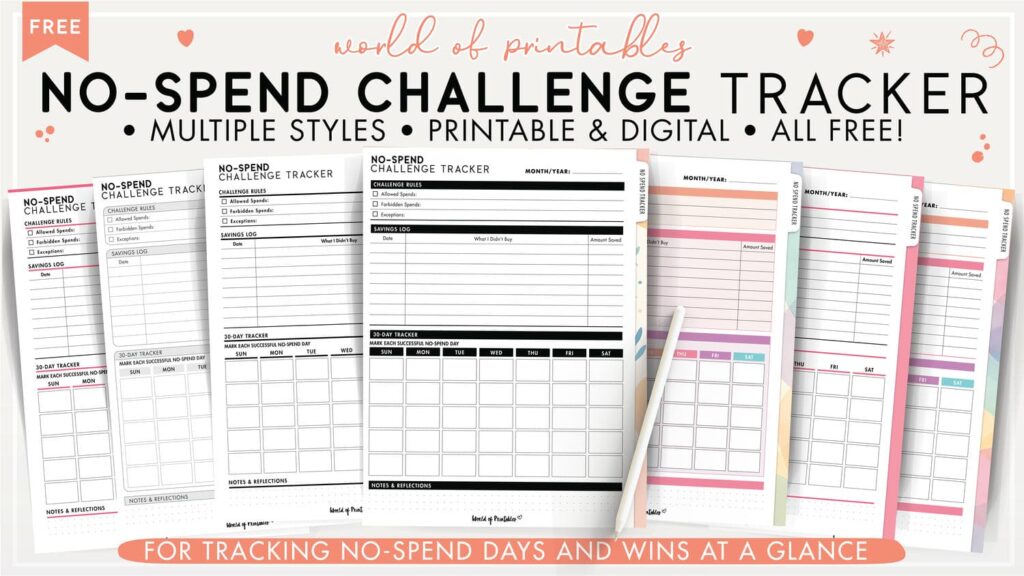
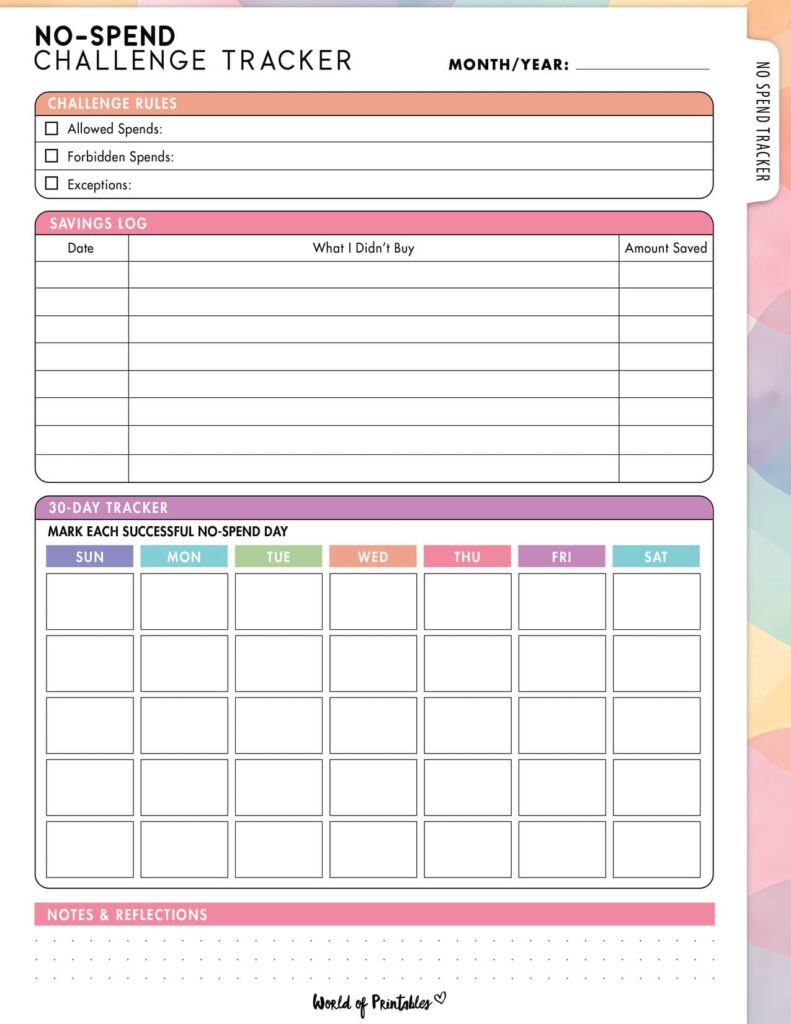
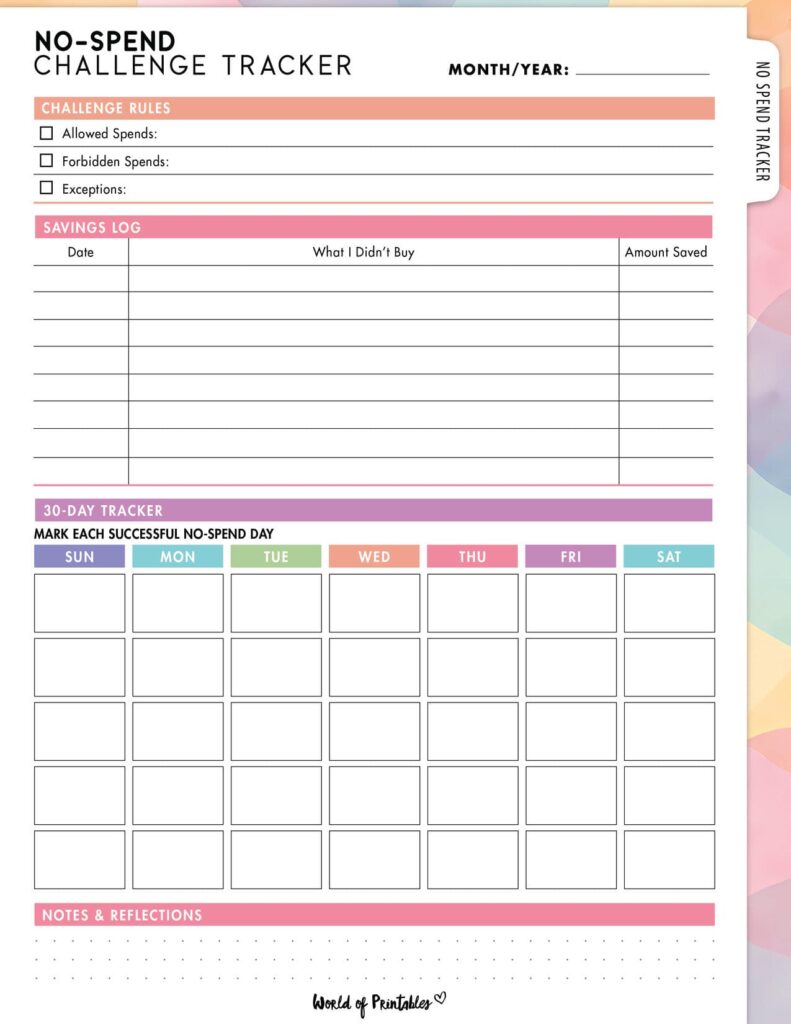
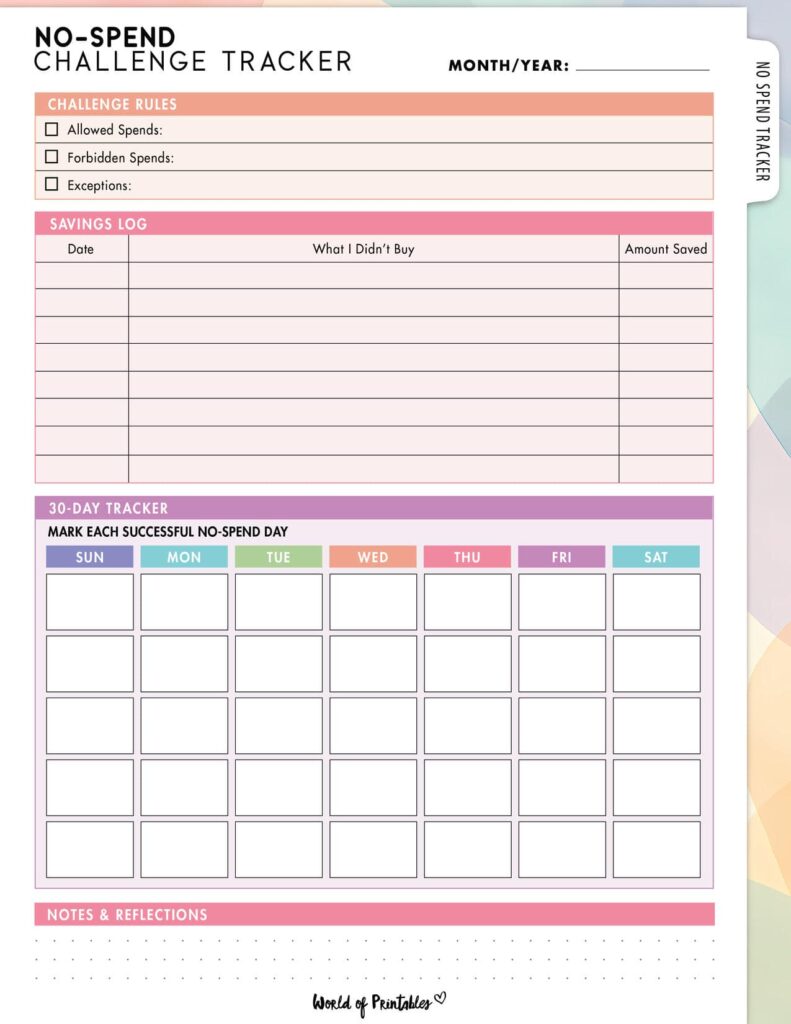
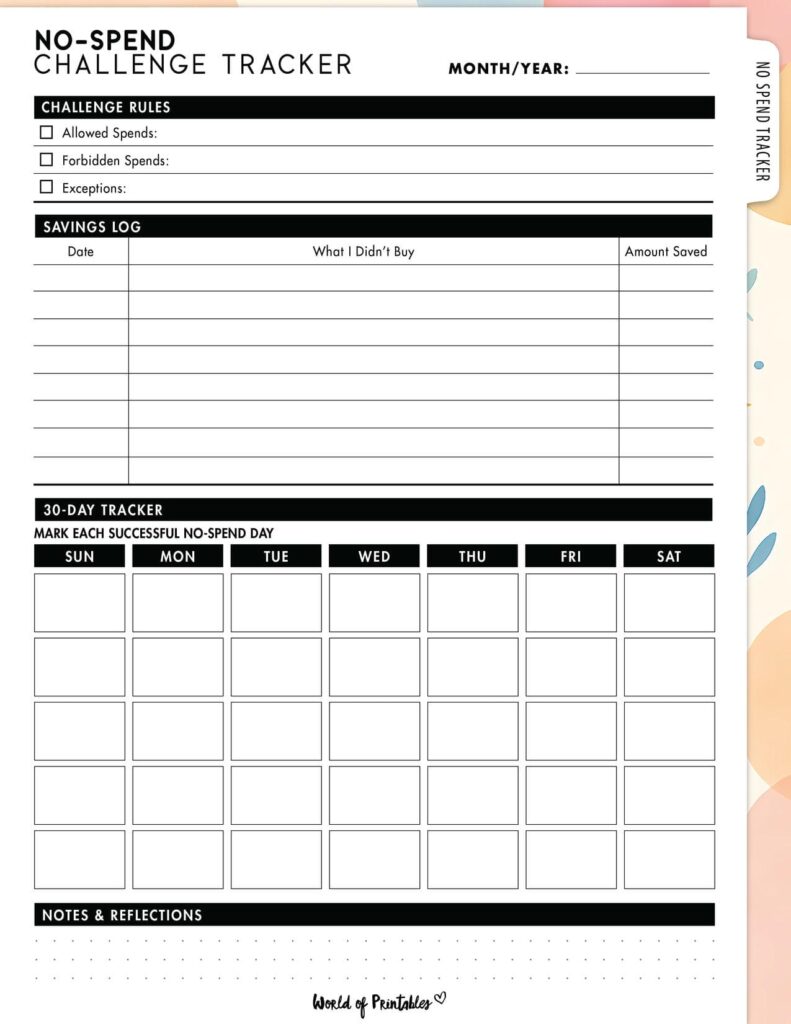
This printable comes in a range of layouts so you can choose the one that suits your binder and planning style best.
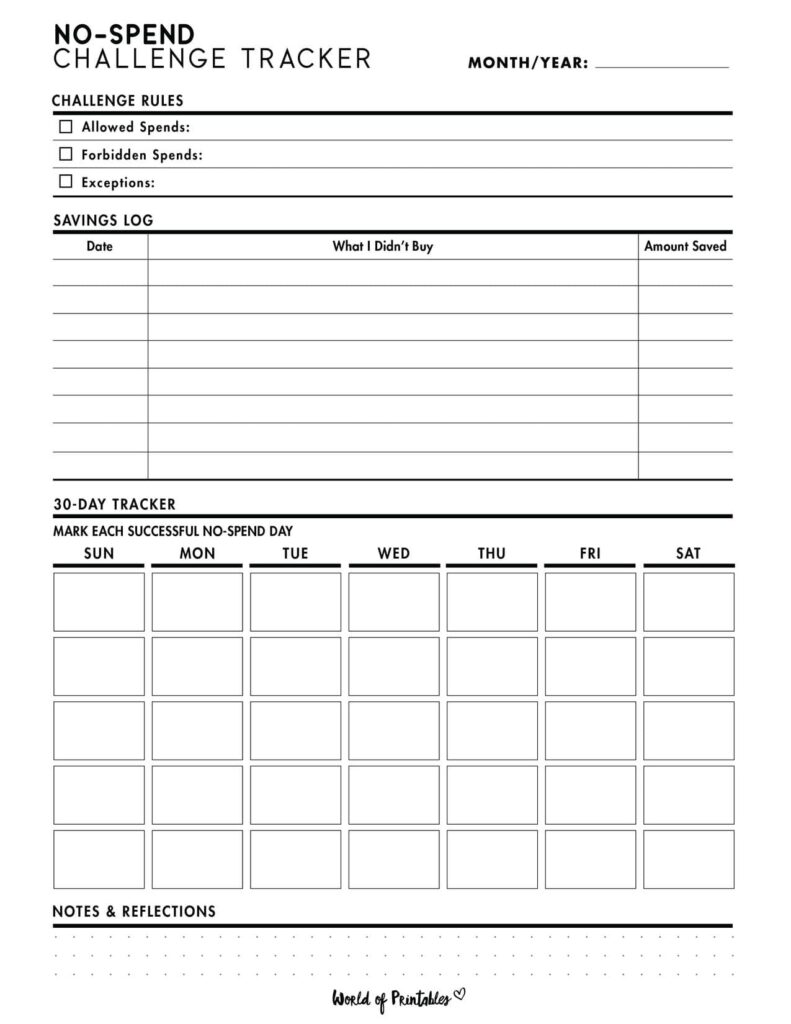
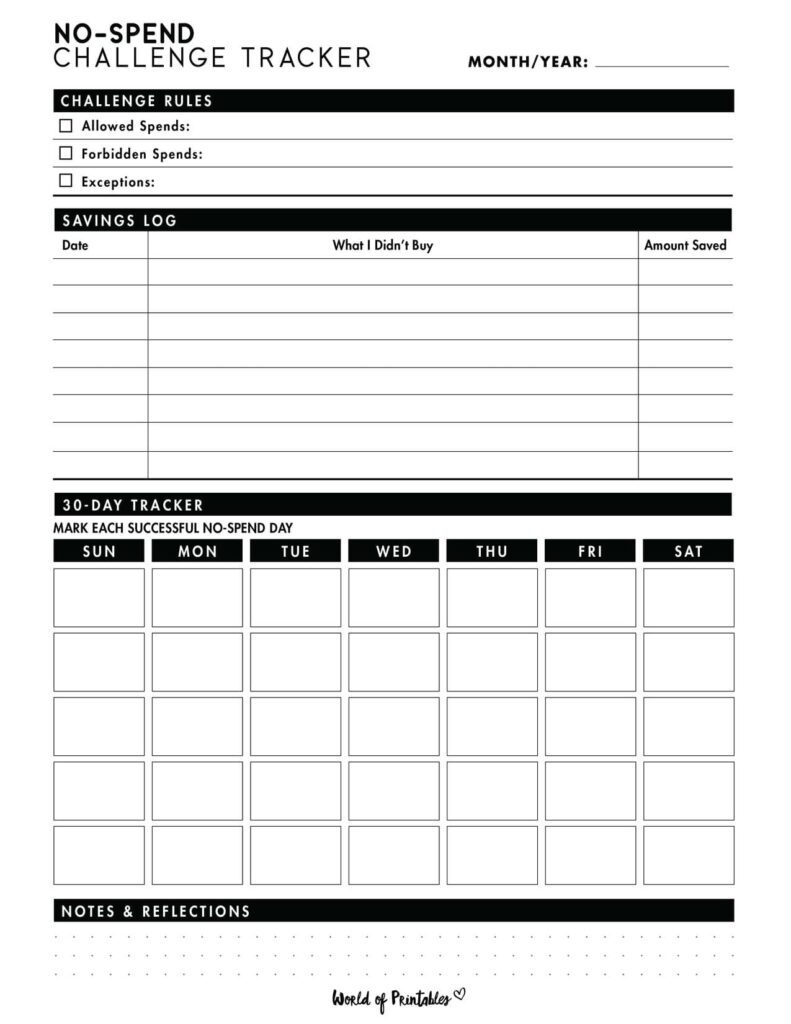
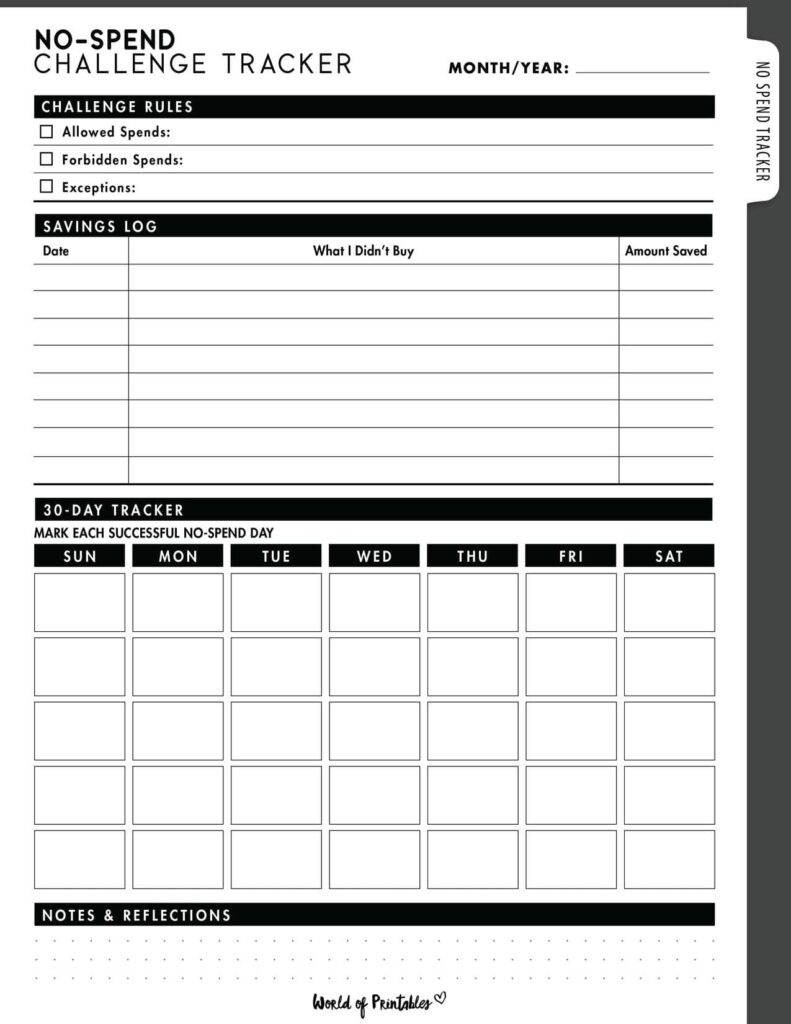
Minimalist and simple styles
These are ideal if you want a clean, simple tracker that keeps all the focus on your streak and progress.
They work especially well if you prefer a more structured finance binder.
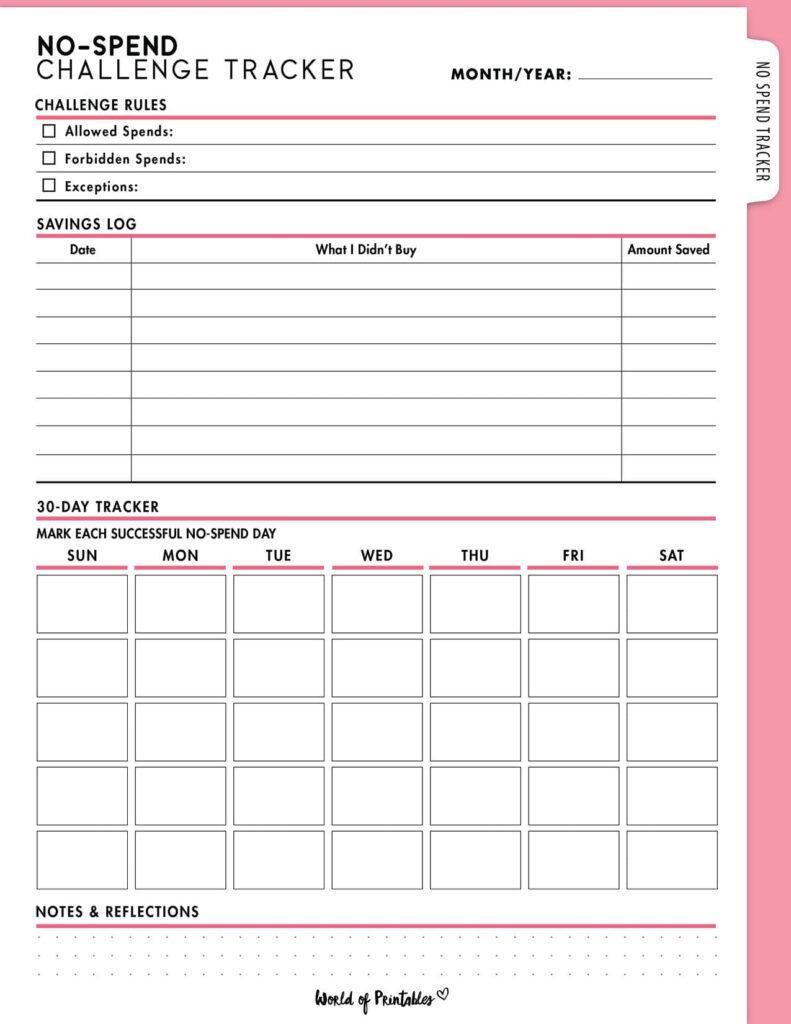
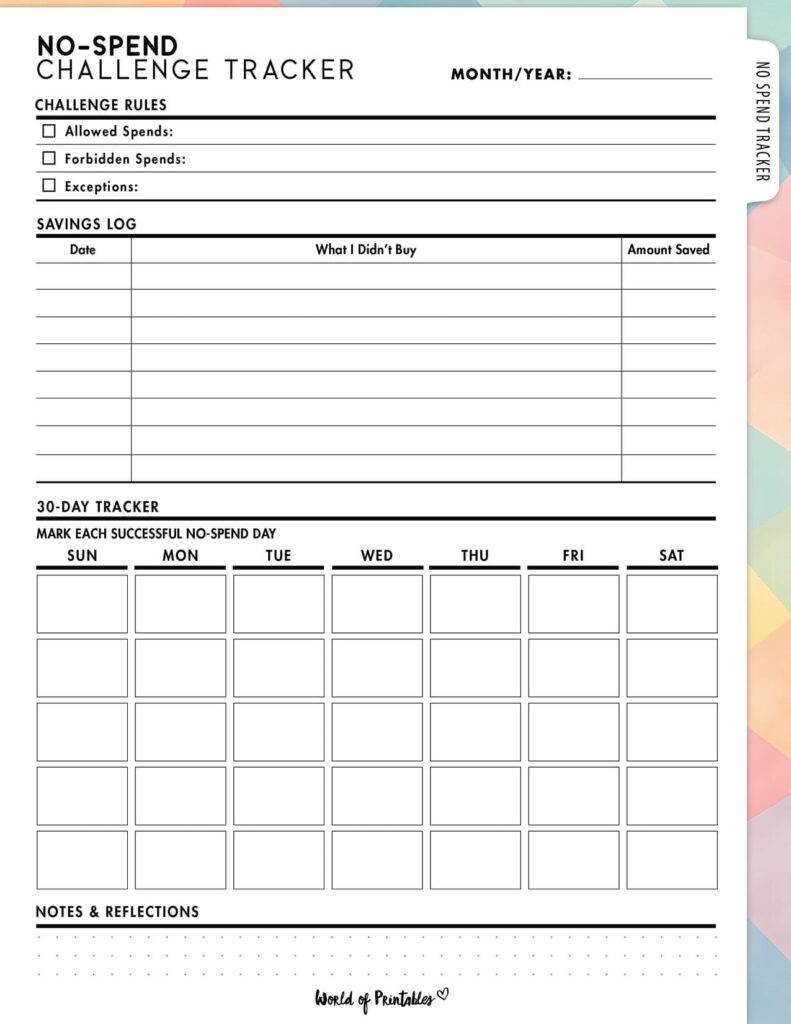
Colorful and visual styles
These are perfect if you like a challenge that feels motivating and satisfying to complete.
They often make it more enjoyable to mark off your days and keep the streak going.
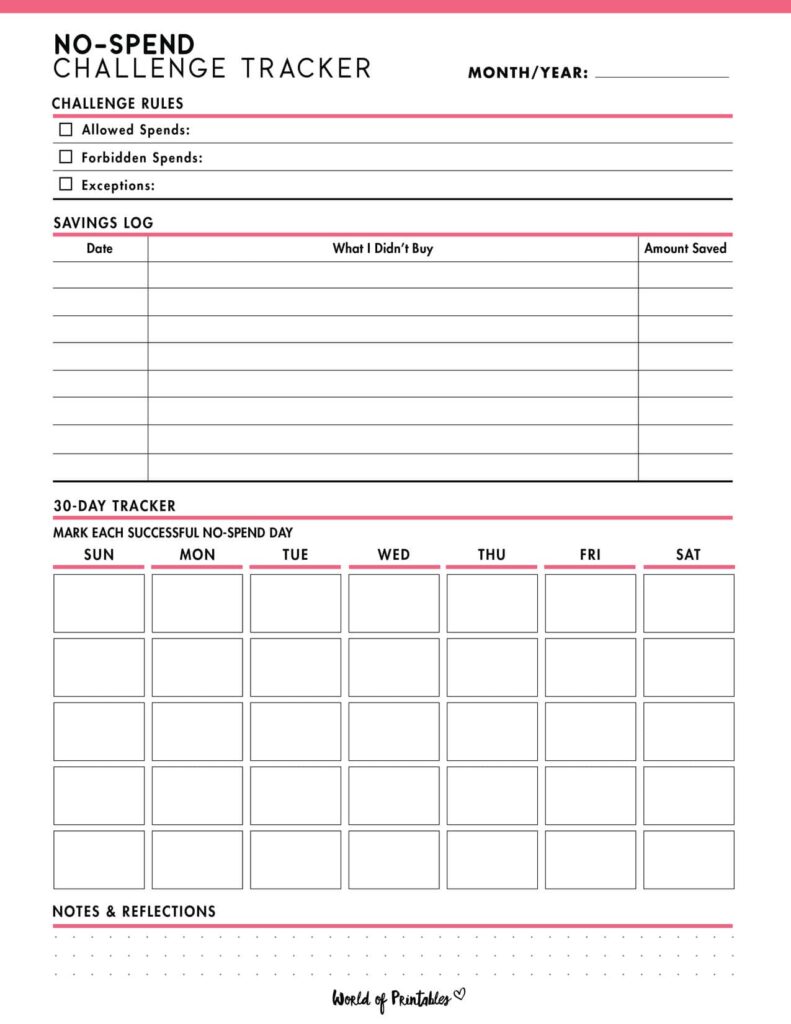
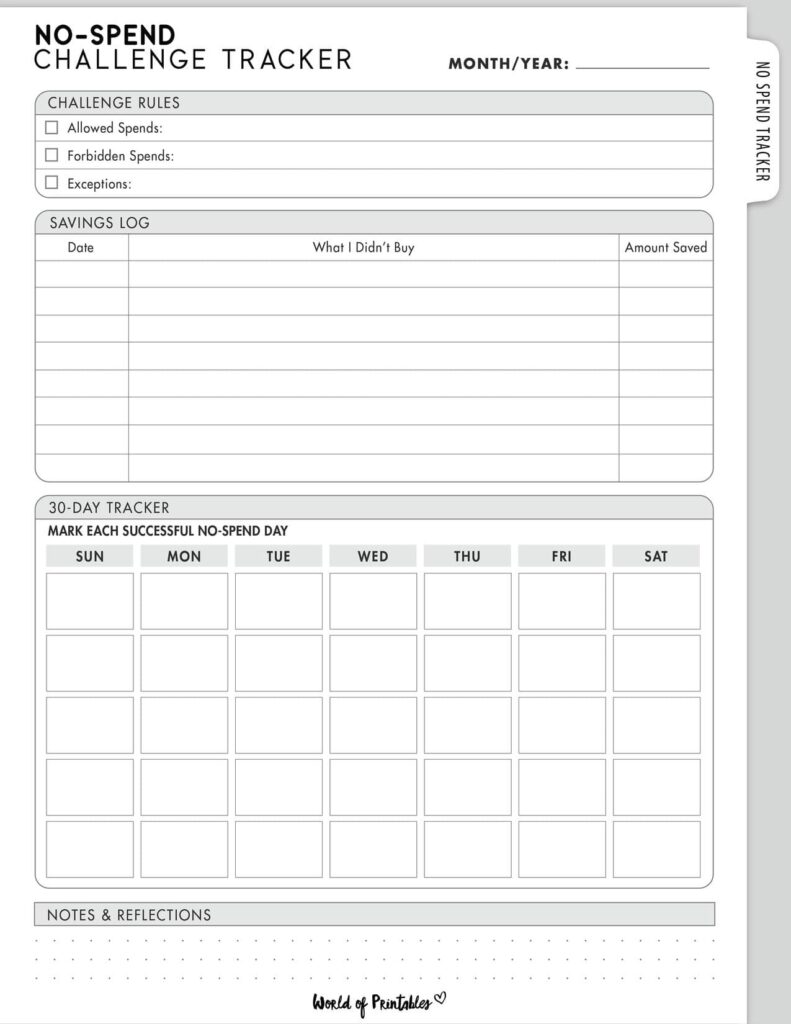
Ink-saving options
If you prefer practical, low-ink printables, these are a smart option.
They still feel tidy and polished while being efficient to print.
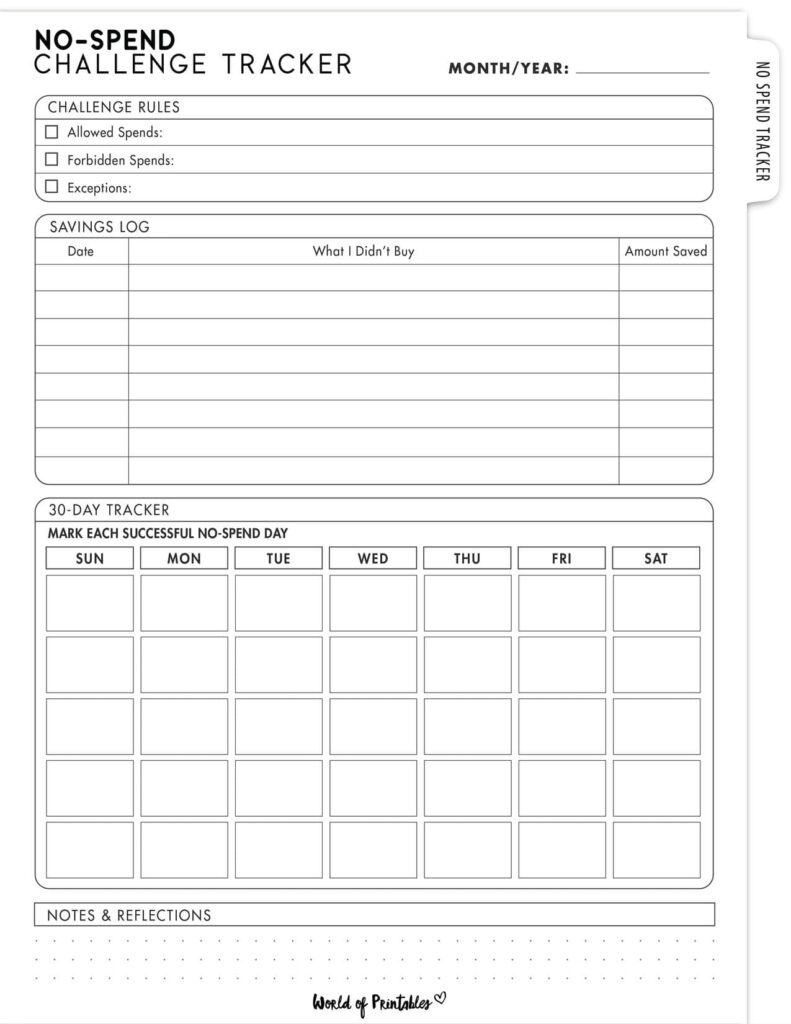
Free Download and Printing Instructions
To download your free No-Spend Challenge Tracker, click the text link directly beneath the image of your preferred design. This will open the high-resolution PDF.
For the best printing results:
- download the PDF directly to your device
- open the file and select Print
- make sure your printer is set to US Letter
- choose Fit to Page or Scale to Fit so the margins print correctly
If you want this page to hold up well throughout the challenge, it can be worth printing it on slightly thicker paper.
A premium 28 lb or 32 lb paper gives it a more durable, high-quality feel in a binder.
Why people do a no-spend challenge
People start this kind of challenge for all sorts of reasons.
You might want to:
- reset after a month of impulse spending
- save money quickly for a specific goal
- get back on track after overspending
- build awareness around emotional spending
- reduce online shopping habits
- free up money for debt payoff or savings
- prove to yourself that small spending really does add up
It can also be surprisingly useful if you feel like your budget looks fine on paper, but your bank balance keeps telling a different story.
How to Use a No-Spend Challenge Tracker
The “No-Spend Challenge” is huge in the budgeting community, especially for moms trying to do a financial “reset” after the holidays (like a “No-Spend January”) or trying to save up for a specific goal.
A true no-spend month doesn’t mean buying nothing – it means buying zero unnecessary things.
Here is a highly relatable, realistic example for your No-Spend Challenge Tracker:
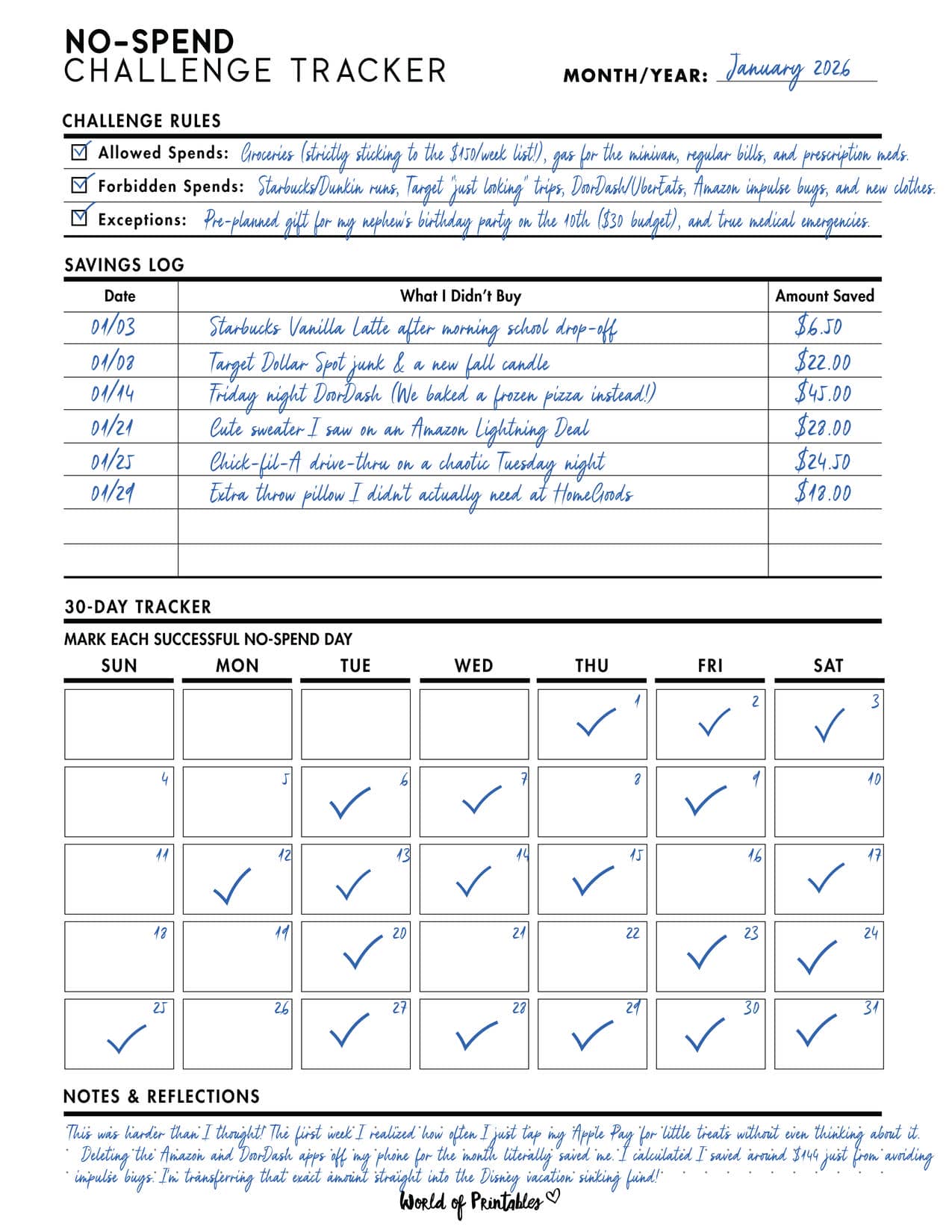
This printable is easy to use, but setting your challenge up properly makes a huge difference.
Step 1: Decide your rules before you start
This is the most important part.
A no-spend challenge works best when you clearly define what counts as allowed and what does not.
Allowed spending usually includes:
- essential groceries
- fixed bills
- fuel for work or school runs
- medical needs
- emergency expenses
Not allowed spending often includes:
- takeaways
- snacks and treats
- random Amazon orders
- clothes shopping
- home decor buys
- non-essential beauty spending
- little “while I’m here” extras
You do not need to make the rules harsh. You just need to make them clear.
If the rules feel fuzzy, it becomes too easy to keep making exceptions until the challenge no longer means anything.
Step 2: Pick your challenge length
One of the best things about this printable is that you can make the challenge fit your situation.
Popular options include:
- 7 days for a quick reset
- 14 days for a stronger spending pause
- 30 days for a full habit reset
If this is your first time doing a no-spend challenge, starting with 7 or 14 days is often the best approach. It feels achievable, which makes you more likely to complete it.
If you already know your spending needs a bigger reset, a 30-day challenge can be a really helpful boundary.
Step 3: Keep the tracker visible
This printable works best when you can see it.
Good places to keep it include:
- the front of your budget binder
- on the fridge
- on a family noticeboard
- clipped near your desk or planner
The more visible it is, the more likely you are to stay aware of the challenge throughout the day.
It is much easier to pause before a casual purchase when the challenge is sitting right in front of you.
Step 4: Mark off each successful day
Every day you complete without non-essential spending, mark it off on the tracker.
You can:
- tick a box
- cross out the day
- colour in a section
- highlight your streak
This is where the printable becomes genuinely motivating.
That visible progress gives the challenge momentum. It turns one good choice into a streak, and once you have a streak going, you are much less likely to want to break it for something you probably did not need in the first place.
Step 5: Decide where the saved money will go
This part is important.
A no-spend challenge feels much more powerful when the money you did not spend gets redirected with purpose.
You could send that money toward:
- an emergency fund
- a sinking fund
- a holiday fund
- debt repayment
- a savings challenge
- a specific upcoming expense
That way, the challenge is not just about saying no. It is about making your money do something better.
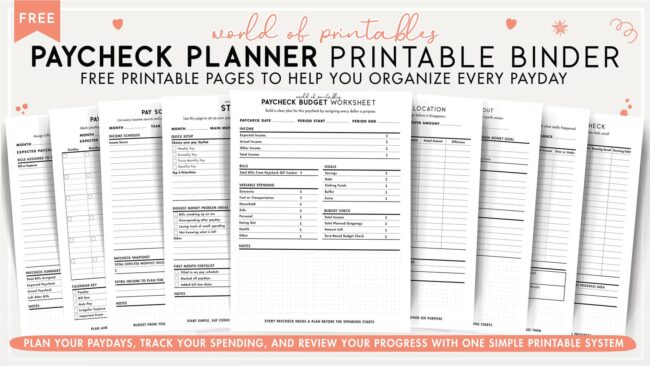
A no-spend challenge is much easier to stick with when the rest of your money already has a plan. Our Paycheck Planner helps you work out bills, spending, and what is left before you try to cut back even further.
What this challenge actually teaches you
A no-spend challenge is not only about saving money for a week or a month.
It also teaches you:
- what your common spending triggers are
- how often you spend out of boredom or habit
- whether online shopping has become too automatic
- how much “small spending” was really adding up
- how quickly you can improve cash flow just by pausing wants
That is why this printable can be so eye-opening.
It makes your everyday choices visible in a way that a monthly total often does not.
A realistic note: this is not about perfection
A no-spend challenge should help you, not make you feel awful.
If you slip up once, that does not mean the whole thing is ruined.
You can:
- restart
- continue and note the spend
- treat it as a learning point rather than a failure
The goal is awareness and progress, not creating a perfect month that proves something about your willpower.
A tracker helps because it gives you a visual way to keep going, even if the challenge is not flawless.
What to include on your No-Spend Challenge Tracker
A helpful tracker often includes:
- numbered days
- a place to mark each successful day
- the challenge length
- your goal or reason
- a notes section
- a total amount saved, if you want to calculate it
If you like to make the challenge more motivating, you can also pair it with a simple reward that does not involve spending, such as:
- a cosy night in
- a film you already have access to
- a quiet reset day
- time set aside for something enjoyable
Why this works so well in a budget binder
A No-Spend Challenge Tracker fits beautifully into a budget binder because it gives you a short-term behaviour reset that connects directly to your bigger money goals.
It works especially well alongside:
- daily spending logs
- debt payoff trackers
- savings challenges
- monthly budget planners
- annual financial goals worksheets
Those pages help you manage the bigger system.
This one helps you stop the leaks when spending starts to drift.
It is especially helpful if you want your binder to do more than just record finances. It also helps shape behaviour.
Who this printable is especially useful for
This page is a great fit if you:
- feel like impulse spending is creeping in
- want a quick financial reset
- need to save money fast for a goal
- like visual motivation
- want to become more mindful with money
- are building a budget binder with both planning and habit pages
It is also a brilliant page to use after a spending-heavy season, like Christmas, birthdays, holidays, or back-to-school shopping.
A great question to ask before you begin
Ask yourself:
What am I trying to interrupt?
Is it boredom spending? Stress spending? Convenience spending? Online shopping? Food spending?
When you know what habit you are trying to reset, the challenge feels much more purposeful and useful.
Next Step: Build Your Complete Financial Command Binder
Congratulations on successfully halting your cash flow leaks.
A No-Spend Challenge Tracker is a great way to reset your spending habits, but it works even better when it leads into a bigger financial plan.
Helpful pages to add next include:
- a debt payoff tracker
- a daily spending log
- a monthly budget planner
- a savings challenge
- an annual financial goals worksheet
Together, these pages help you not only pause unnecessary spending, but also direct the saved money toward something that actually improves your financial life.
Keep optimizing your wealth-building system by adding the next essential tools to your binder:
- Return to the Ultimate Budget Binder Index.
- Take the cash you saved during this challenge and use it to instantly destroy a liability. Download the Debt Snowball Tracker to start.
- Challenge over? Don’t go back to bad habits. Download the Daily Spending Log to monitor your micro-transactions going forward.
More budgeting templates
You’ll find many more budgeting templates right here on World of Printables.



AI TRANSPARENCY: Whilst the majority of our creations have been created completely traditionally, occasionally we utilize AI tools in our design process. We acknowledge the advancements in AI technology and leverage them responsibly to optimize our creative output. However, it is important to note that our utilization of AI does not compromise the human element of our work. Our commitment to delivering high-quality designs through a balanced integration of traditional expertise and AI enhancements remains paramount.